Daily insights for city builders, delivered every morning at 6 AM ET. I’m Brandon Donnelly — a Toronto-based real estate developer and founder of Globizen. I’ve been writing here since 2013.

  • An example of city building doublethink

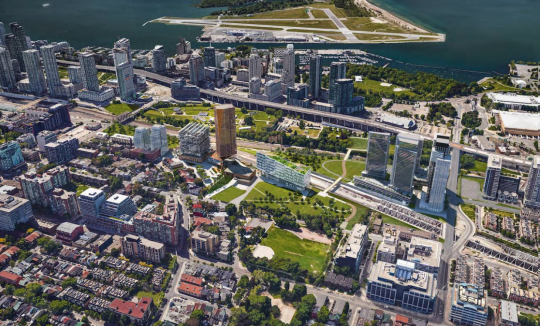
    Earlier this month, Shane Dingman wrote a piece in the Globe and Mail talking about TAS’ proposed development for 2 Tecumseth Avenue here in Toronto – the former home of Quality Meat Packers, a slaughterhouse. In the article there’s a quote from Mazyar Mortazavi, which I posted to my Instagram (as a story), but that I have been meaning to also post to the blog. So here it is: 

    “It’s not a conversation about towers good, towers bad: Mid-rise is the most expensive construction typology and it delivers effectively luxury housing, so it doesn’t respond to the needs of affordability,” he said. “We didn’t buy Tecumseth to build a bunch of condos and move on. We bought it because we wanted to pursue a vision around city building. You need density … the question is how do we actually deliver density that’s relevant today and relevant 50 years from now?”

    He’s of course right about mid-rise construction costs. There are diseconomies of scale and other construction inefficiencies that we have talked about many times before on this blog. The result is one of the Catch-22s of city building. Mid-rise and small scale infill is often seen as desirable, but we also say that we need more affordable housing.

    It’s doublethink.

    Image: 2 Tecumseth by KPMB Architects for TAS
  • Shift toward the center

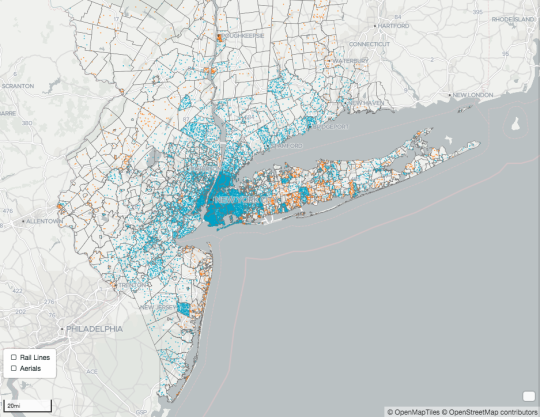
    The New York City Department of City Planning has a very cool “metro region explorer” online that allows you to explore population, housing, and employment trends in the tri-state NYC Metropolitan Region. Start here and then click on “Learn More” to cycle through the slides and data.

    One interesting takeaway is that population growth continues to centralize in the region’s core. Since 2010, 60% of the region’s population growth has taken place in the five boroughs of New York City, and in particular it has occurred in neighborhoods with strong rail transit.

    There has also been a slowing in terms of the number of residents leaving New York City. Historically, people moved to the city in their 20′s and left in their 30′s. That trend is slowing.

    I suspect this has to do with a combination of factors, including the shift toward a city-centered knowledge economy; the desire for walkability and urban amenities; the phenomenon of people getting married later in life (if at all); and so on.

    The people who do leave the city are also more likely to leave for other parts of the U.S. than other parts of the region. This has led to a decline in the number of prime age (25-54 years old) workers in the suburbs.

    Check out the Metro Region Explorer, here. There’s a lot of good stuff in there.

  • DANCHI DREAMS

    Below is an interesting Kickstarter project by photographer and art director Cody Ellingham. I think many of you will appreciate it. It is a photobook of Japanese public housing apartments, which are known as Danchi. All of the photos were taken by Cory at night, hence the dream part. The book is about the promise that these projects represented in the post-war years, but it is also about their decline in the subsequent decades.

    https://www.kickstarter.com/projects/cbje/danchi-dreams-a-photobook-of-japanese-public-housi/widget/video.html

  • City building reading list (and an event)

    Today’s post is going to be about a handful of things that have caught my attention.

    – Gary Hack, who is the former dean of the University of Pennsylvania School of Design, recently published a book called Site Planning: International Practice. It is a textbookish guide to planning processes, new technologies, and sustainability, with an emphasis on rapidly urbanizing countries. Thank you to my friend Michael Geller for bringing this to my attention.

    – Sidewalk Labs Toronto is opening a new experimental workspace here in Toronto at 307 Lake Shore Boulevard East (Queens Quay & Parliament) on Saturday, June 16th from 12 – 6pm. It’s an old fish processing plant that they have turned into their office. The team will work there during the week and on the weekends they will open to the public to showcase what they’re up to. Register for the June 16th event, here. I just did.

    – Alexandra Lange has a recent piece in the New Yorker called, The Hidden Women of Architecture and Design. It’s about the important role that women have played in the “design of childhood”, which is the title of a book by Lange. There’s also a short but interesting story about Detroit’s Lafayette Park (Mies van der Rohe) at the beginning of the article.

    – Finally, here is a blog post by Witold Rybczynski where he talks about the shortcomings of architectural education. Obscure theories. Technical or made-up jargon. And no concern for budgets and schedules. I have always shared a similar view and have long felt that there needs to be more business school in architecture school.

    Hopefully there’s something in here that is of interest to you.

  • Toronto Community Council voted unanimously in favor of laneway suites

    It happened.

    Today, Toronto and East York Community Council voted unanimously in favor of adopting a planning framework that would allow laneway suites on lands within the Toronto and East York District that are designated as “Neighbourhoods.” 

    If you’d like to see the actual vote (and the clapping that ensued), check out this YouTube video at the 41 minute mark. There are also some great speeches prior to the vote by Councillor Bailão, Councillor Perks, and others.

    Now, it still needs to go through City Council, but today remains an important milestone and a positive step forward. So kudos to everyone who has been working tirelessly to push this initiative forward.

    I would also like to take this opportunity to address some of the comments that I recently received about this blog, one of which is that I continue to offer a one-sided perspective on this issue of laneway housing in Toronto.

    Think of this blog – and I’m stealing this analogy from another blogger – as a bar. I am the bartender and I show up here pretty much every day. I’ve been doing that consistently for almost 5 years now.

    At this bar I sip on negronis – okay, it’s probably beer – and I talk about topics and issues that excite me and that are usually related to city building. If it doesn’t excite me, I don’t talk/write about it. And I get lots of emails every day asking me to write about things that do not excite me.

    If you would like to take a seat at the bar, have a drink, and join the conversation, you are more than welcome to do that in the comment section at the bottom of every post. In fact, it’s encouraged. I make a mean vodka soda.

    So maybe I’ll see you at the bar. The bartender is a fairly open-minded guy who enjoys good conversation.

  • Planners on bikes getting coffee

    Over the weekend, Jason Thorne, who is the General Manager of Planning and Economic Development at the City of Hamilton, tweeted this out. He said, if Jerry Seinfeld can do Comedians In Cars Getting Coffee, then he was going to do Planners On Bikes Getting Coffee. And that’s exactly what he did in Barrie with their Chief Planner, Andrea Bourrie.

    I immediately responded by asking: Is this really a thing you are doing? Because if not, it is something you should absolutely start. He was kidding but I think the response he received on Twitter got him reconsidering if he should make it a thing. I think this is a great idea, and so I hope he does consider it. If you agree, maybe send him a tweet.

    I have a GoPro, gimbal stabilizer, and a bicycle. So if this doesn’t become a thing, maybe there needs to be a Developers On Bikes Getting Coffee.

  • Toronto laneway suites go back to Community Council

    Last month the Official Plan Amendment and Zoning By-law Amendment that would have permitted laneway suites as-of-right in Toronto was deferred by Community Council. 

    So the “Changing Lanes” policy has been updated – to obviously make it more restrictive – and it will head back to Toronto and East York Community Council this week on Wednesday, June 6th. 

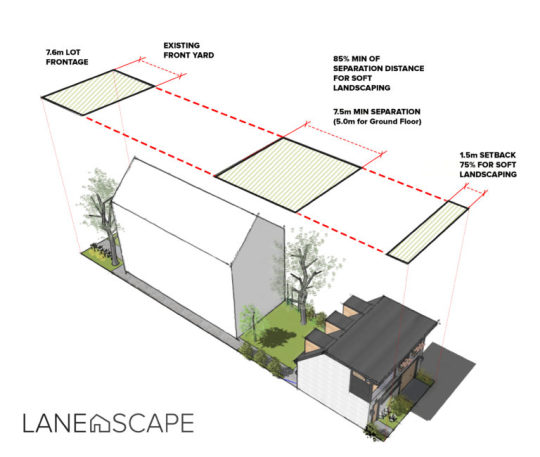
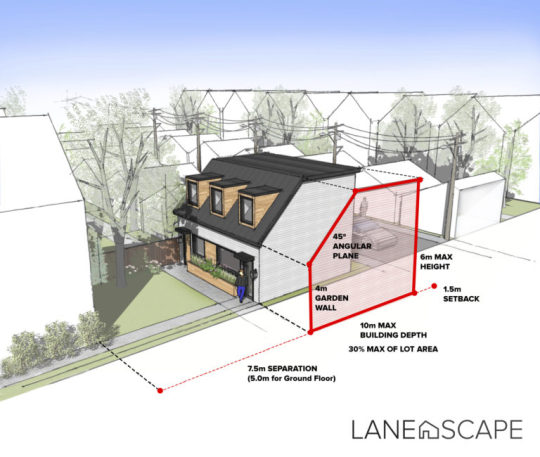
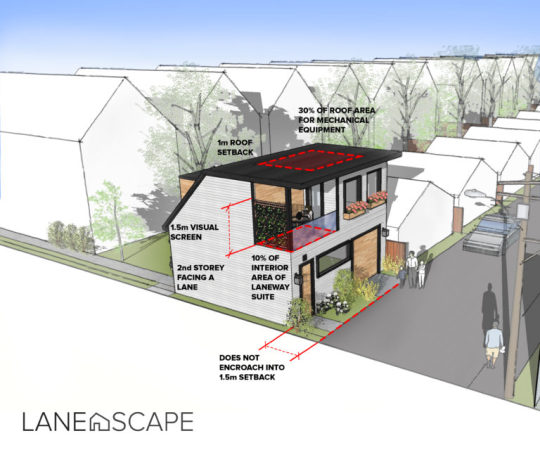
    Lanescape did a great job summarizing some of the updates on their blog. Here are a couple of their images:

    If you haven’t already, now is the time to write your local Councillor and TEYCC to tell them that you support laneway suites and the proposed Changing Lanes policy. I did that last month and I did it again this month. I hope that many of you will do the same.

  • Relationship between female literacy and total fertility rate

    This recent post by Sam Karam at NewGeography illustrates the relationship between female literacy and total fertility rates in Sub-Saharan Africa, India, and China. The overarching argument, which won’t surprise any of you, is that, “higher female literacy is a reliable predictor of lower fertility and improved prosperity.”

    The following graph uses data from populyst, the UN Population Division and UNESCO. The time period for the dataset varies by country but approximately corresponds to the latest 2000′s. All Sub-Saharan countries are represented, except for the Congo, Somolia, and South Sudan.

    image

    Noteworthy about this dataset is that the biggest decline in the total fertility rate happens precipitously after female literacy reaches and exceeds 80%. What is also interesting, but not surprising, if that the countries with the lowest gender equality rankings tend to also have high fertility rates. And that’s because low gender equality tends to translate into lower female literacy rates. 

    According to populyst, the above phenomenon – precipitous decline in TFR with rising female literacy – has already proved itself out in China. 

    Based on data from the World Bank, China’s total fertility rate dropped from 6.38 in 1966 to 2.75 in 1979. And since the one-child policy was only enacted in 1979, it doesn’t appear to be driven by that. (I would have initially expected some sort of surge in births prior to that policy.) From 1982 to 2000, the female literacy rate in China rose from 51% to 87%. Today it is 99.6%, which is basically the same as it is for males.

    For a more detailed look at the above data, check out this populyst post.

  • Urban American life before the car

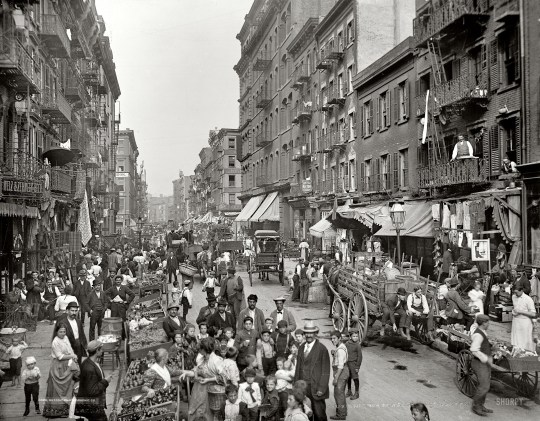
    This morning I stumbled upon an old (2013) post from Rebel Metropolis that documents urban American life through street photos taken before the automobile. 

    Above is Little Italy, New York City, 1900. All of the photos in the post are from Shorpy

    The photos are beautiful architecturally and from a photography standpoint. But as is pointed out in the post, they also speak to a different kind of street:

    What’s more, the street here is not purely the thoroughfare – it is the essential common gathering place for demonstrations, for buying and selling food, for children to play in, for celebration, for lingering and people watching.

    That sounds like a great street. And now I am off to start my day. Because I have meetings all around the city today, I’ll be driving to the office.