Daily insights for city builders, delivered every morning at 6 AM ET. I’m Brandon Donnelly — a Toronto-based real estate developer and founder of Globizen. I’ve been writing here since 2013.

  • Preliminary design ideas for Toronto’s Quayside

    Last week Sidewalk Toronto held a roundtable discussion here in the city and released some preliminary design ideas and strategies for Quayside. (That’s why Dan Doctoroff was talking on BNN Bloomberg.) 

    I went through the full presentation this morning and below are a bunch of slides that I thought you all might find interesting.

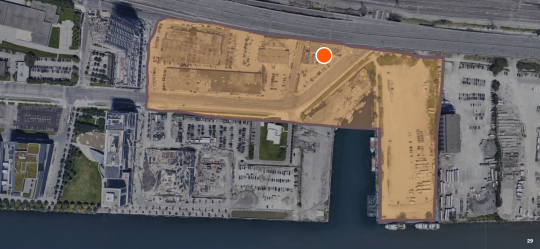
    Here is the extent of “Quayside” along the waterfront. The current land use permissions allow for about 3 million square feet of space and towers as tall as 50 storeys.
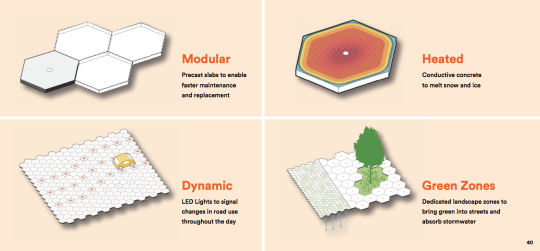
    Here is a paving system being explored for the area. It is modular. It may melt snow. And perhaps most interestingly, it would allow for dynamic changes in road use throughout the day. This sort of thing already happens to a lesser degree on streets like Jarvis. This technology could take that much further.
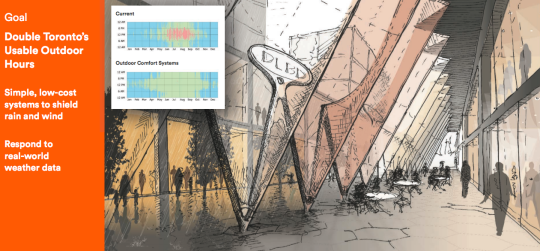
    One of their primary goals is to double Toronto’s usable outdoor hours. To do that, they are proposing simple weather shields (pictured below) and weather-responsive systems.
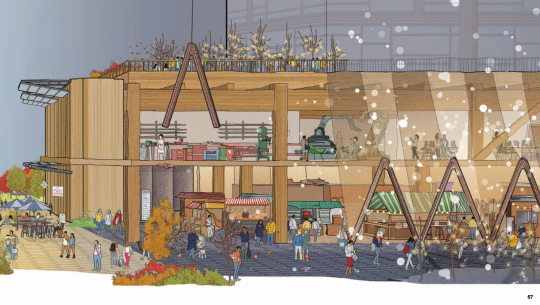
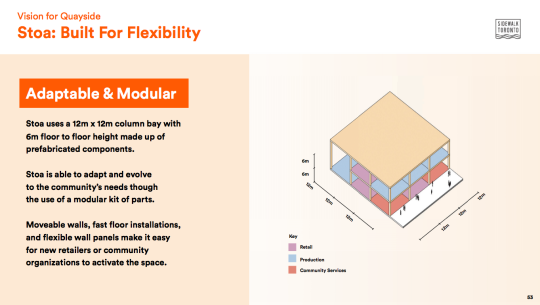
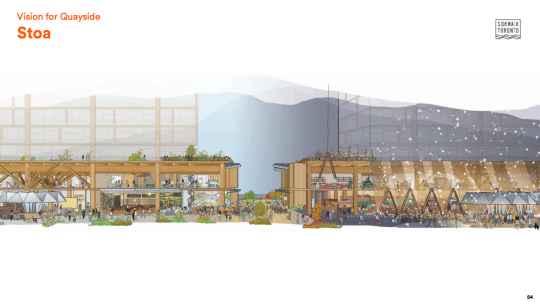
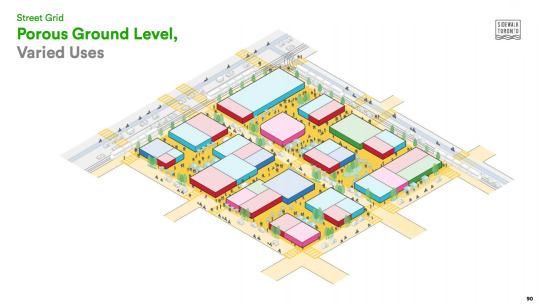
    They are spending a lot of time thinking about the ground floor of buildings, which they are calling Stoa. The idea is to create flexible and porous spaces that respond quickly to changing needs and that integrate more seamlessly with the surrounding public realm.
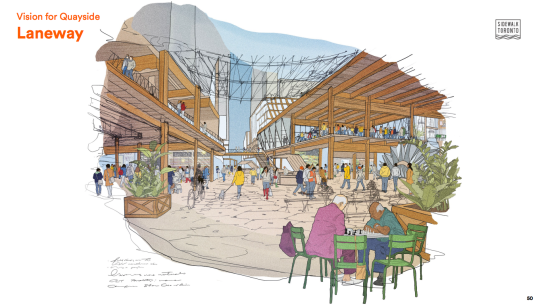
    There’s a lot on the potential hierarchy of the street network and how each will function for transit, conventional cars, AVs, cyclists, pedestrians, and so on. I was happy to see “laneways” as a core part of the pedestrian network. They are designed for walking speeds. Access would be restricted for things that move too quickly.

    This image ties in the street grid and Stoa.
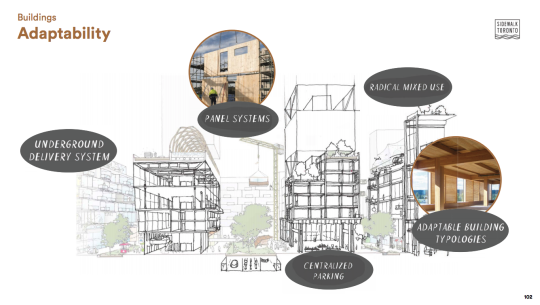
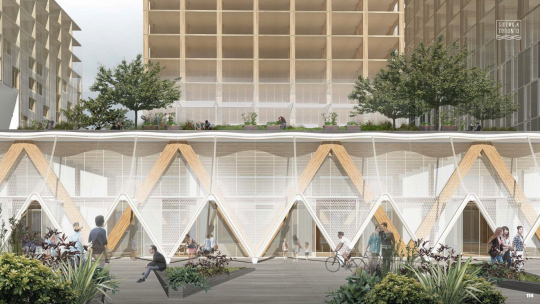
    Finally, the goal is to build the neighborhood entirely out of timber, and more specifically, Canadian timber. If they follow through on this, I think it would really push adoption of this material forward in the city.
    I would encourage you to check out the full package, which you can do here. I can’t wait for these projects to get underway along Toronto’s waterfront.

  • Long live the neon

    image

    I like this article and photo essay in the Guardian talking about “Hong Kong’s fight to save its neon shimmer.” Neon lights have been a ubiquitous feature of the Hong Kong nightscape since about the middle of the 20th century. They were an outcropping of increasing economic prosperity. And in many ways they really represent the culture of the city – a frenetic free market where entrepreneurs have no choice but to compete for attention. 

    But thanks to more restrictive sign ordinances and new technologies (though LED can be made to look pretty similar to neon), there’s growing concern that a fundamental part of Hong Kong’s urban landscape may be disappearing. The article mentions a newish (2017) advocacy group called the Hong Kong Neon Heritage Group, which is trying to raise awareness about the city’s remaining lights.

    Love live the neon.

    Photo by Sean Foley on Unsplash

  • North American cities with the most construction cranes

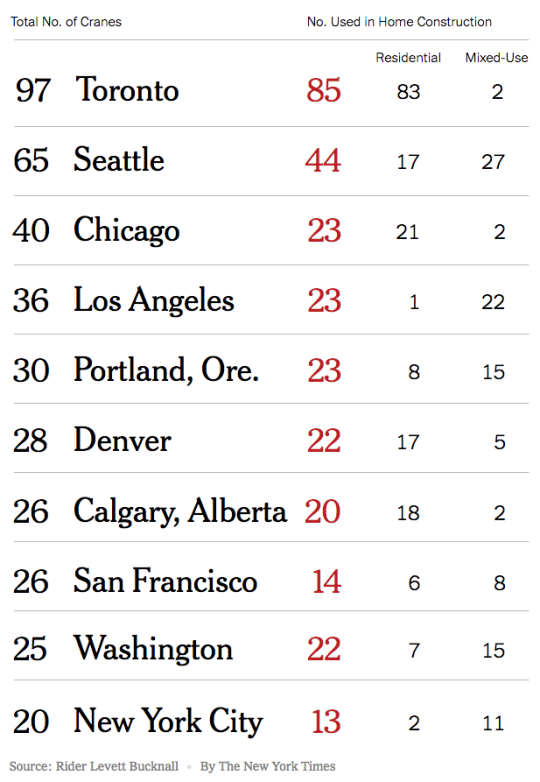
    Rider Levett Bucknall recently released its RLB Crane Index for Q3-2018. Here are the top 10 cities in North America (table via the New York Times):

    For the third consecutive reporting period, Toronto has taken the number one spot at 97 cranes – 85 of which are being used on residential projects. 

    I’m not at all sure how the study defines “mixed-use” projects. But given that Toronto only has 2 of them, it must not include projects with grade-related retail.

    Across North America, residential and mixed-use projects (whatever they are) make up approximately 70% of the total crane count. 

    I am surprised that Miami didn’t make the list.

  • A global hub for urban innovation

    Dan Doctoroff, the CEO of Sidewalk Labs (and the former deputy mayor of New York City), was recently interviewed by BNN Bloomberg about the company’s plans and ambitions for Quayside here in Toronto. 

    He talks about the project; their interest in timber construction; how the company, Sidewalk Labs, might ultimately make money; and how their mission is to create a global hub for urban innovation.

    This last point is, of course, the most exciting opportunity – both for Sidewalk Labs/Alphabet and for Toronto. And it’s why many people believe that Quayside will end up a far greater (economic development) coup compared to HQ2.

    The interview is only 10 minutes. If you can’t see it embedded below, click here.

    https://webapps.9c9media.com/vidi-player/1.5.1/share/iframe.html?currentId=1461888&config=bnn/share.json&kruxId=InSaVlLc&cid=%5B%7B%22contentId%22%3A1461888%2C%22ad%22%3A%7B%22adsite%22%3A%22ctv.bnn%22%2C%22adzone%22%3A%22ctv.bnn%22%7D%7D%5D

  • Cities with perfect climates

    Last year Nolan Gray mapped out “the cities of the world where you don’t need AC or heat.” And just recently he updated his data with the help of Guardian Cities for their “sweltering cities” series. As part of the study, they projected out average temperatures, in both the summer and winter, to 2059, showing which cities may become more dependent on air conditioning. The answer looks to be many.

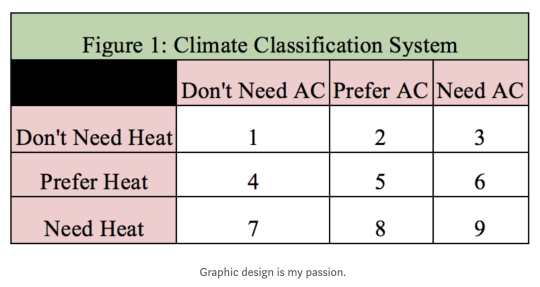
    In his original study, Gray had 9 climatic categories, all of which were based on average high and low temperatures throughout the year. Category 1 was you definitely don’t need AC or heat. These cities are essentially perfect year round. And category 9 was you definitely need heat and AC. These cities are basically the worst places on earth to occupy from a climate perspective.

    Here is that climate classification system in lovely chart form (note his caption):

    The climatic utopias ended up being places like Bogotá, Guatemala City, Lima, Mexico City, San Diego, São Paulo, and Sydney. The worst places were the southeastern United States, Central Asia, and northern East Asia.

    But one factor that is not included in the study is humidity, which Gray rightly points out has a meaningful impact on comfort. Toronto, for example, is classified in his system as category 7. Heat needed. But AC definitely not needed. Personally, I would bump us up to category 8: AC preferred, but not needed.

    Still, this is an interesting study. There are relatively few cities with so-called perfect climates. And I have always found these sorts of climates fascinating because they empower a very different kind of relationship to outside spaces.

  • Building height fallacy

    Studio Gang has a project currently under construction in New York City called 40 Tenth Avenue. It is also known as the “solar carve tower.” Here are a couple of progress photos taken by Timothy Schenck. The glass is beautiful. (If you can’t see the embedded tweet below, click here.)

    https://platform.twitter.com/widgets.js

    This is one of my favorite buildings by Studio Gang and one that we all studied when we were kicking off One Delisle

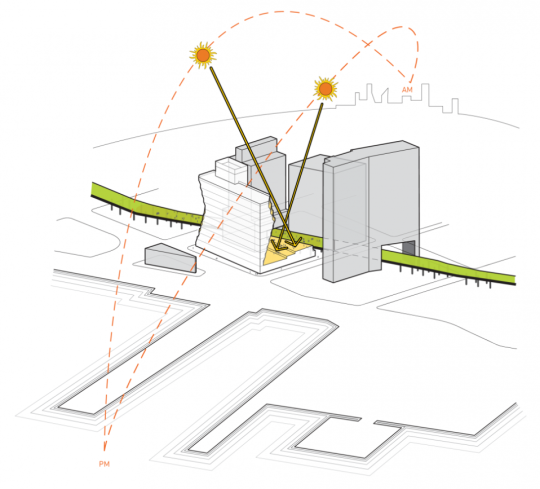
    The geometry of the building is a result of carve outs that maximize the amount of sunlight that is able to reach the adjacent High Line (public space). It is form driven by functional logic. Here is a diagram from Studio Gang showing the carve outs that result from the sun’s rays.

    image

    The other thing I like about this project is that it is a clear proof of something that I’m going to call the “building height fallacy.” There can be a tendency to overfocus on building height, which I have argued against before on this blog. 

    In this case, a shorter and squatter building without these solar carve outs, would have actually been worse for the High Line and the surrounding environment in terms of access to light and air.

    The building is responding to site-specific criteria – which is what great architecture should do.

  • Building on stilts

    image

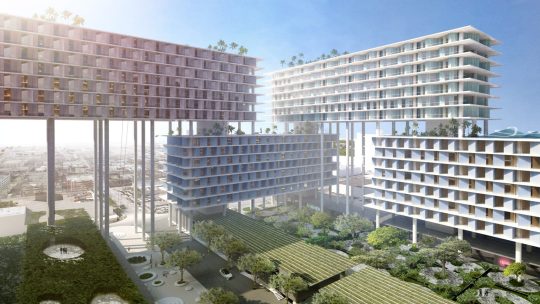
    Last week Bjarke Ingels Group and UIA Management announced a 125,000 square meter mixed-use complex in Allapattah, Miami called the Miami Produce Center. 

    The proposed project includes office, residential, and hotel uses on stilts over three existing warehouse buildings. The existing buildings will be transformed into restaurants, shops, cafes, and a school. And supposedly, at least according to the renderings, the parking garage will be designed so that it can be transformed into a club at a night. This is Miami after all.

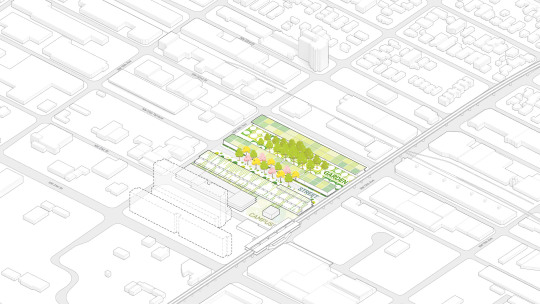
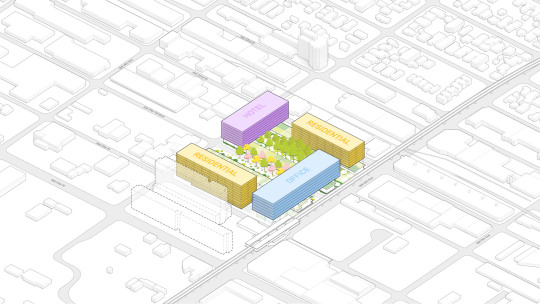
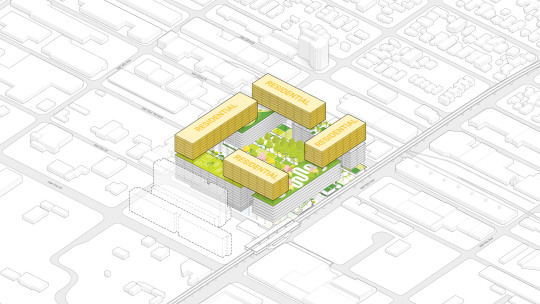
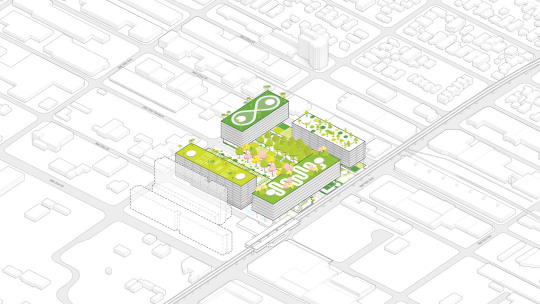
    Here are a few diagrams from BIG showing the build up:

    imageimageimageimage

    Perhaps best known for its warehouses and Dominican population, investors have been speculating for years that Allapattah would eventually become the next Wynwood. Here’s some evidence that it already has the requisite bars and artsy things.

    Does this project signify a tipping point for the area? Feels like it. But those of you who know Miami better than I do would be in a better position to comment.

    Images via Dezeen

  • A language map of Toronto

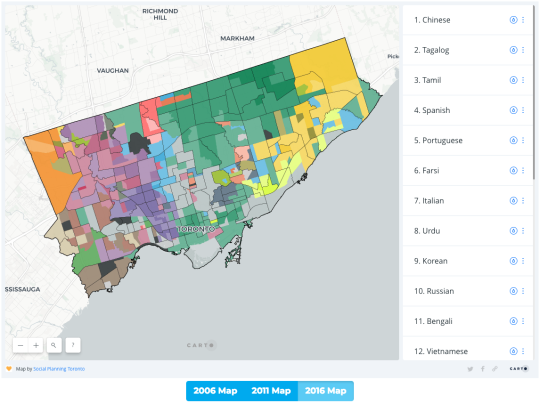
    This is a language map of Toronto showing the most commonly spoken non-official languages at home. (It only counts individuals who reported speaking a single non-official language most commonly at home, as opposed to multiple ones.) The map you see below is based on 2016 census data, but if you’d like to check out the previous census years, as well as an interactive version, you can do that here at Social Planning Toronto.

    image

    The top languages are also listed on the right of the map, with the exception of the gray areas. These areas indicate census tracts where English > 90%. I don’t know why French shows up as #13, since this map is supposed to be non-official languages.

    In any event, green represents Chinese (includes Cantonese, Mandarin, and so on). Sky blue is Tagalog. And yellow is Tamil. I’ll let you play around with the map to explore the others. There shouldn’t be many surprises if you know Toronto well, but it’s still interesting to explore the clustering and the percentages. Some of the census tracts have a single non-official language representing 90%+ of the responses.

    The biggest gains over the last decade – following the same methodology as the above mapping – were Tagalog, Farsi, Bengali, Arabic, and Pashto. And the biggest declines over this same time period were Italian, Tamil, Urdu, Punjabi, and Polish. But this data is only for the City of Toronto and so I suppose that a decline could also be because of people relocating to other parts of the region.

    A big part of Toronto’s strength comes from exactly what you see in this map: the world in a city.

  • The biggest challenge in revitalizing the Rust Belt

    image

    Jason Segedy, who is the Director of Planning and Urban Development for the city of Akron, Ohio, recently penned a two-part series in the American Conservative about urban revitalization in the Rust Belt. Part two is specifically about the importance of new housing in “cities left for dead.”

    As I was reading through the piece, my first thought was that it would be a good follow-up to yesterday’s post on “winner-take-all-urbanism.” The contrast between alpha cities like San Francisco and Rust Belt cities like Akron is stark.

    The former city can’t build housing fast enough. And the latter city was forced to implement a citywide, 15 year, 100% residential property tax abatement program just to induce new investment. Any and all new housing is eligible.

    But as I got further down the article, I was struck by something else. I was surprised to hear Segedy say that, rather than market forces, community opposition is “perhaps the biggest challenge of all” when it comes to delivering new housing in these markets.

    Here is a longish excerpt that I would encourage you to read:

    Although you might think that people living in neighborhoods with a large number of abandoned houses and vacant lots would be thrilled to see new houses being built, you might be surprised to learn how often this is not the case. Sometimes neighbors prefer to have the vacant lot remain as green space. Sometimes they worry that the new housing will not be expensive enough, and will bring their property values down. Other times, they worry that the new housing will be too expensive, and will bring their property values (and taxes) up.

    When it comes to new housing, everyone is a critic. I have heard people complain that housing which they will never live in is too dense; that housing which they will never purchase is too expensive; that housing which they will never be inconvenienced by will generate too much traffic; and that housing which they will never look at is not architecturally appealing.

    After 23 years as an urban planner, I can honestly report to you that, contrary to popular belief, most people are strongly in favor of heavy-handed and draconian government regulation of private property—as long as it is someone else’s private property, and not their own.

    Residents and community activists who are opposed to new housing often demonize the real estate development profession as being “greedy”, overlooking the fact that their own home was developed by a developer, built by a builder, and sold by a realtor—most likely for a profit. This isn’t to argue that every development professional is a white knight, but it is important to remember that the vast majority of people who work in the real estate and construction sectors are not the enemy of neighborhoods. Without them, there would be no neighborhoods.

    According to Segedy, Akron has lost 32% of its peak population. Cleveland has lost 58%. And Detroit has lost 64%, leaving almost 1/3 of its land parcels vacant. (These are 2017 figures.) Surprisingly, this doesn’t appear to change how many people feel about new development. 

    No more new housing. We’re full. Unless, of course, that housing is for me.

    Photo by Nolan Issac on Unsplash

  • Winner take all

    We have talked a lot on this blog about the concentration of economic activity in global cities. Here is an old post about a paper called “winner-take-all-cities”, which documents the overrepresentation of talent, economic activity, innovation, and wealth creation in a select number of alpha cities.

    But this same phenomenon is playing out in a myriad of different ways. Aaron Renn calls this the “superstar effect” and has been writing about it for years. Another more recent example is this post by Richard Kerby called: Where did you go to school?

    Kerby looked at where venture capitalists in the US went to school and discovered that around 40% of them have gone to one of two schools: Stanford or Harvard. His argument is that not only is the venture capital industry lacking in gender and racial diversity, but it’s also lacking in cognitive diversity.

    My point with this post, though, is one of hyper-concentration. Tech is a dominant force in today’s economy. And in 2017, nearly 45% of all venture capital investment in the US went to companies located in the Bay Area – meaning San Francisco and San Jose.

    So here is an example of a select number of schools training a select number of minds that then go on to invest in a select number of cities. Fred Wilson, who is a venture capitalist, has a good response to this problem of diversity in the VC industry.

    But, of course, this is bigger than just the VC business.