Daily insights for city builders, delivered every morning at 6 AM ET. I’m Brandon Donnelly — a Toronto-based real estate developer and founder of Globizen. I’ve been writing here since 2013.

  • Why 2029 will be the bottom for Toronto housing supply

    November 23, 2025 · View original


    > Tweet: Contrary to some reports, we’re not actually building much rental housing in Toronto these days. https://t.co/t20UiwpQzV

    Rental apartment completions in the Greater Toronto & Hamilton Area (GTHA) are expected to exceed condo completions for the first time in a very long time starting in 2028. But what does this mean for the overall market, and is it actually going to be enough new housing? Let’s look at some of the numbers.

    Last year, the GTHA recorded 29,671 new condo completions. This was some sort of a record. This year, condo completions are projected to total around 31,396 homes. Even higher. But then completions start to fall off, with 17,487 homes scheduled for completion in 2026. By 2029, this number is expected to be close to 1,000. So let’s call it zero for argument’s sake.

    If we are to crudely assume that 50% of these new condominiums ultimately make it to the secondary condo rental market, then we are expecting nearly 16,000 condo rentals this year, just under 9,000 condo rentals in 2026, and ultimately no new condo rentals by around 2029 (or some number close to it).

    Now let’s consider the purpose-built rental side of the equation.

    The 10-year average for purpose-built rental apartment starts in the GTHA is only 2,819 homes. This is a far cry from the volume of rental housing that we delivered in the 60s and 70s. Of course, with the new condominium market largely shut off, there’s renewed interest in building purpose-built rentals.

    In 2024, purpose-built rental apartment completions totalled 5,537 homes. And in the first half of this year, 3,156 homes reached the occupancy stage. Extrapolating out, I’m guessing that puts us somewhere around 6,000 new purpose-built rental apartment homes by the end of 2025.

    If we pause and think about only 2025, we’re on track to deliver roughly 37,000 new condo/rental apartments and ~22,000 new rental homes (again assuming 50% of the new condominiums become secondary rentals). I view this as our peak supply year for this cycle.

    There’s a lot of talk about a “record” number of purpose-built rental apartments now under construction, and while it is true that the numbers are elevated compared to the latest 10-year average, it is not a long-term record compared to the 60s and 70s and, more importantly, it is not enough to offset our dwindling new condominium supply.

    Even if purpose-built rental completions spiked to 8,000 or even 10,000 new homes next year, we are still going to see a drop in new rentals and new housing overall in the GTHA. 2026 is the turning point year where new supply turns south. And it’s going to keep going south until probably 2029, which is when I believe we will see supply bottom out.

    Nothing in this post should be construed as investment or development advice, but here’s the way I’m thinking about it:

    – 2025: ~37,000 new condominium/apartment homes (peak supply year resulting from the pandemic boom) – 2026: ~25,000 new homes (supply begins its decline) – 2027: ~18,000 new homes – 2028: ~10,000 to 13,000 new homes – 2029: ~8,000 to 10,000 new homes (supply bottom)

    I have no idea what will happen with interest rates, immigration, investor sentiment, and the countless other factors that impact a housing market, but even if things started to turn around next year, it would be mostly impossible to avoid the housing supply bottom that I believe we have coming in 2029. Buildings take a long time to build.

    Conclusion: I think that 2026 will prove to be an excellent year to buy assets (land, unsold inventory, IPP, and so on), and that 2028 onward will be an excellent time to be delivering new homes. By then, we should be dramatically undersupplying the market. It doesn’t feel that way today, but eventually the bill from our frozen development market will come due.

    Cover photo by Adam Vradenburg on Unsplash
  • How 15-minute is your city?

    November 22, 2025 · View original


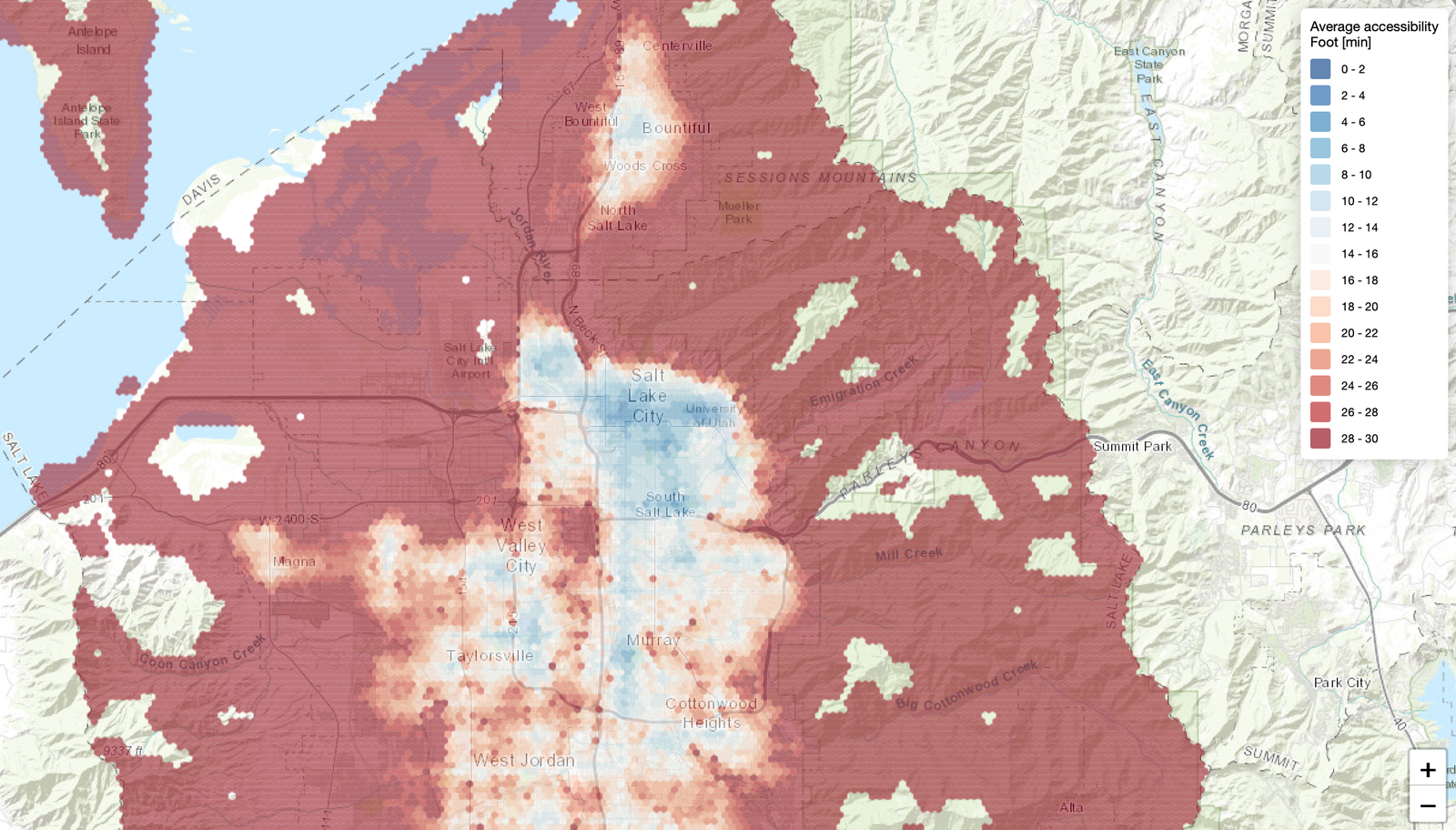
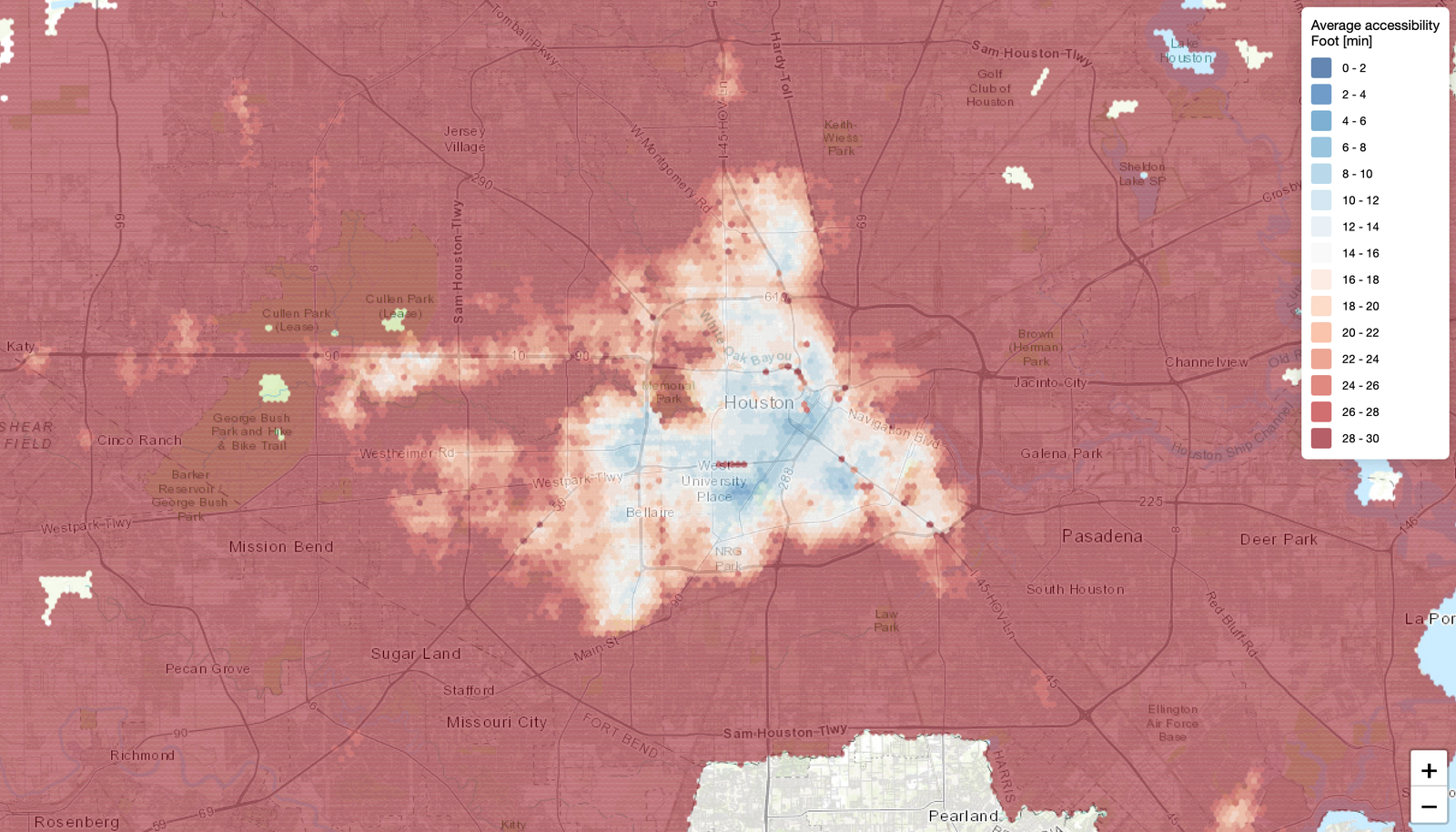
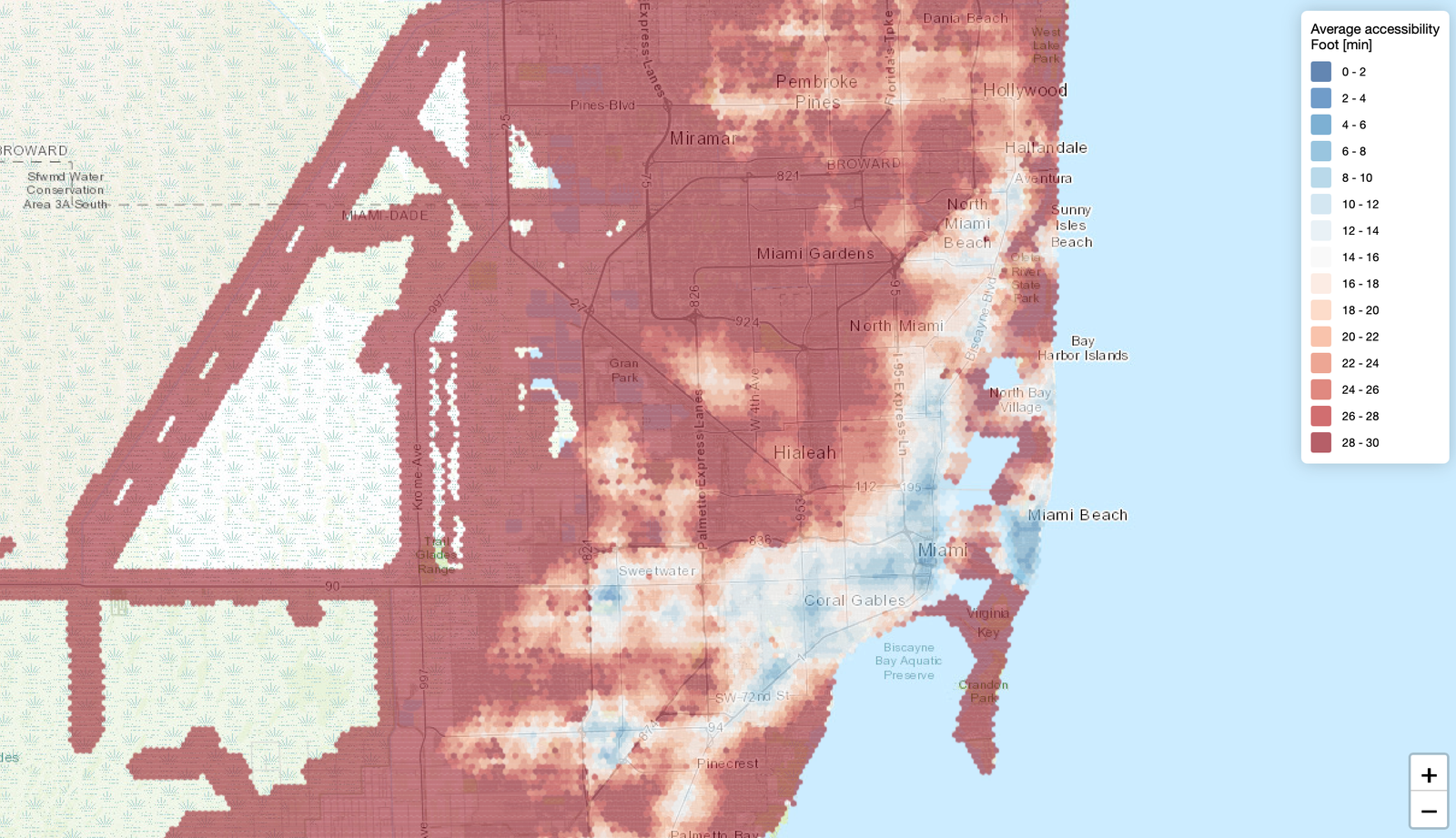
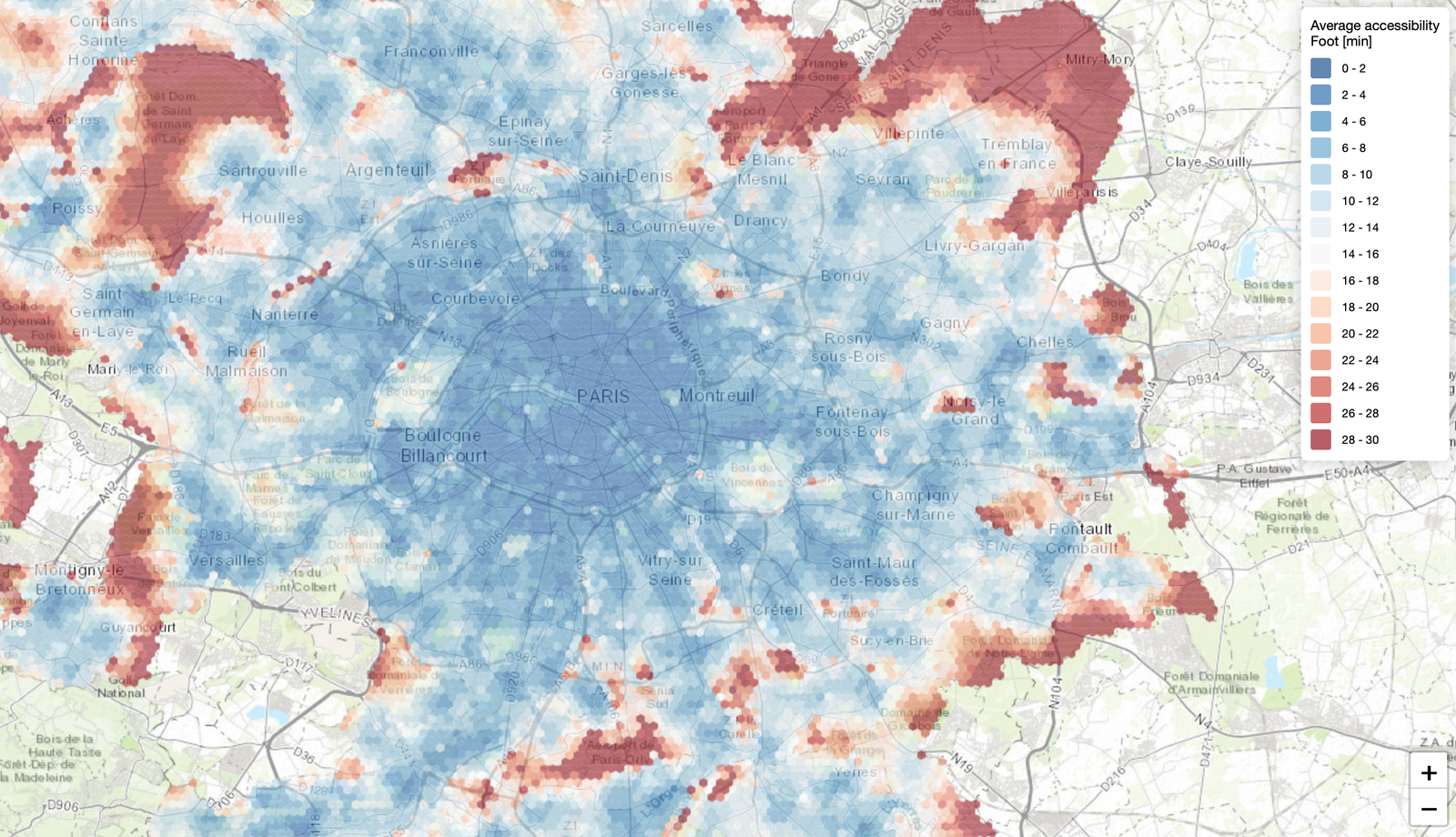
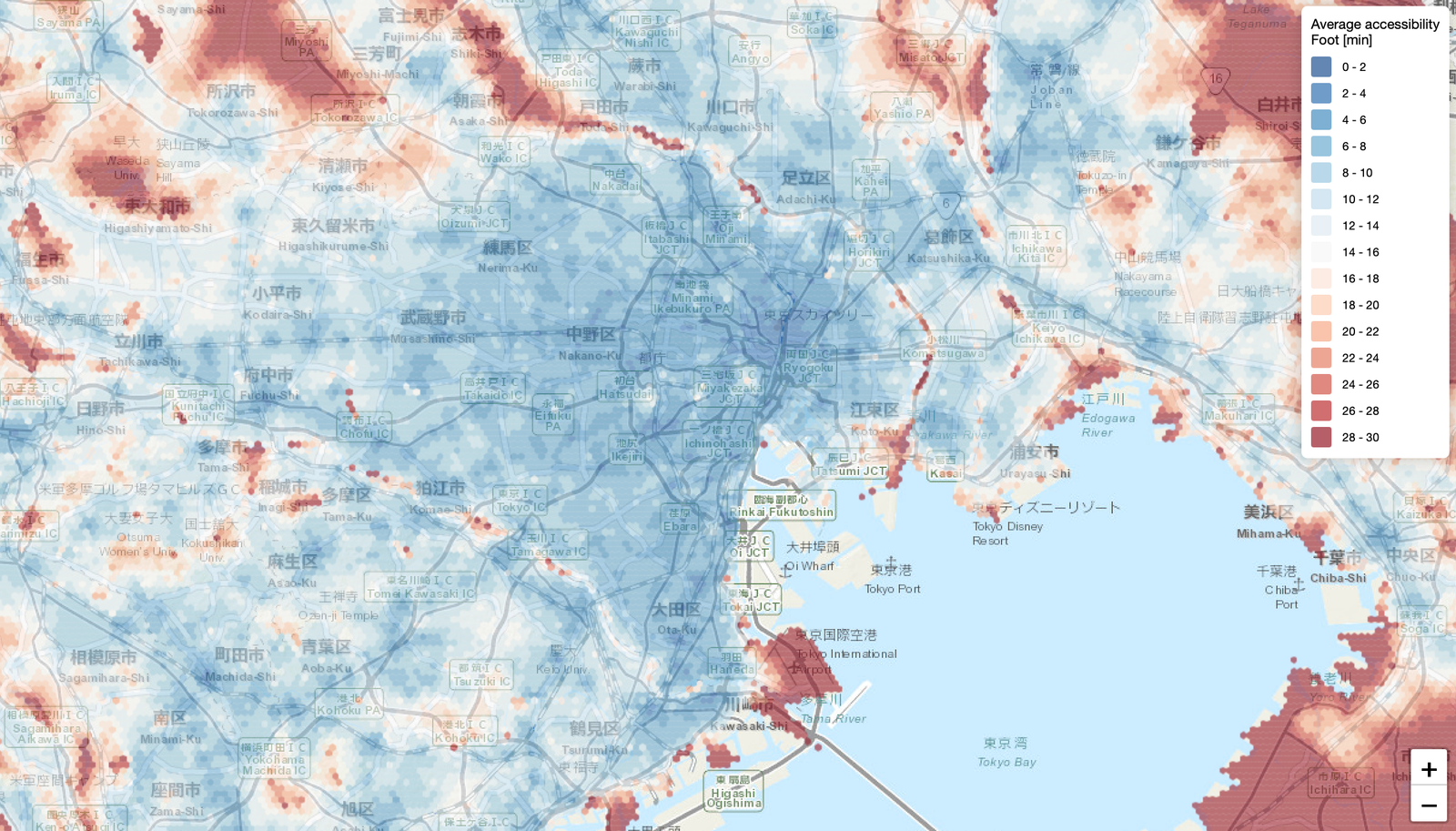
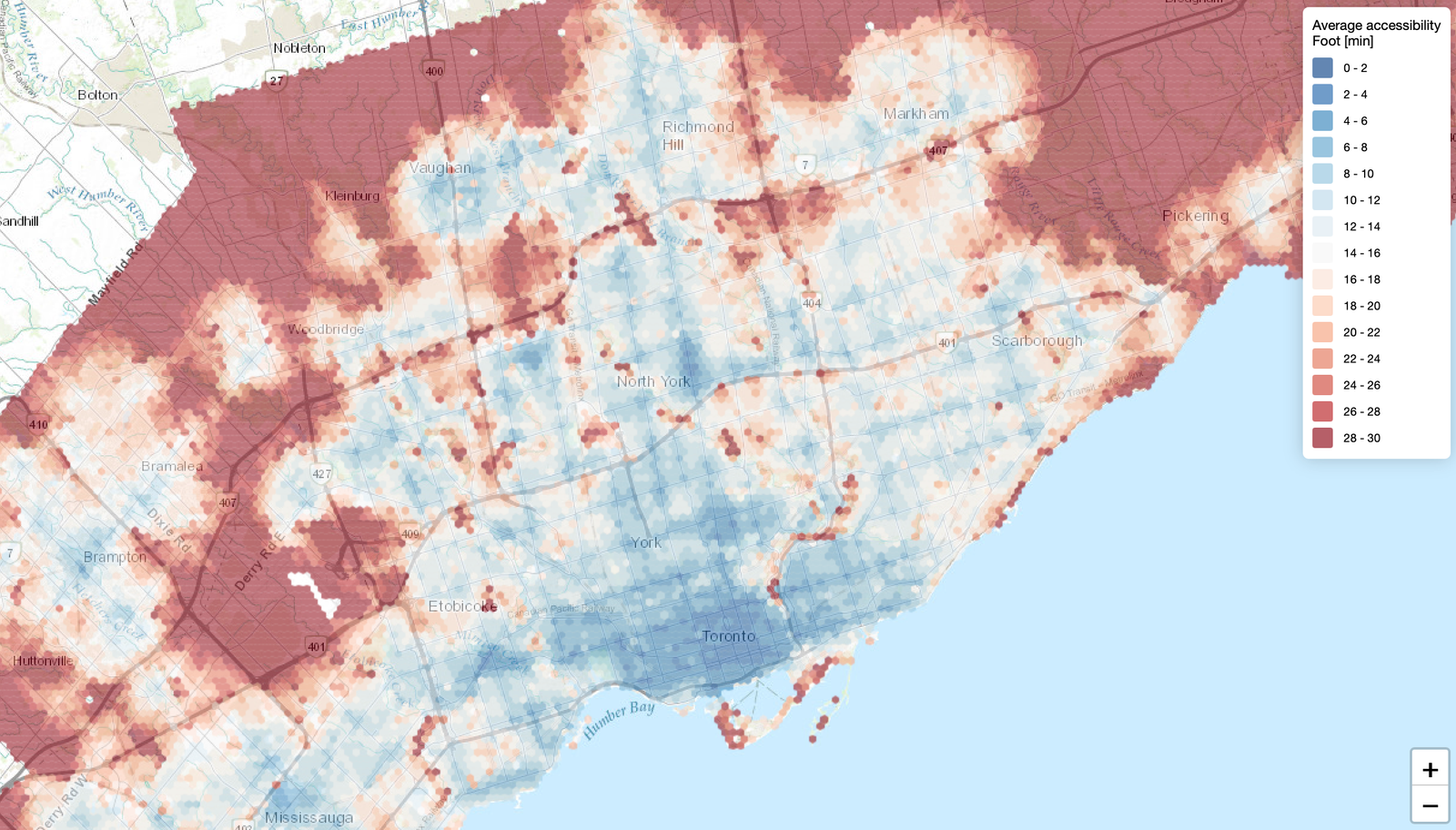
    We all know the concept. Now here’s an interactive map that allows you to explore cities around the world and see how 15-minute they are. In the default case, it is based on how many points of interest somebody could walk to in under 15 minutes (but there’s also a bike toggle). A blue cell means the walk time is less than 15 minutes. And a red cell means it’s greater than 15 minutes.

    Here’s Toronto:

    Salt Lake City:

    Houston:

    Miami:

    Paris:

    Tokyo:

    I tried not to adjust the scale at all, but the amount of blue/red you see will depend on the cropping of each map. Still, it’s pretty clear that Tokyo and Houston are not the same kind of city. What a contrast.

    In some cases, though, I think the blue areas could be, in a way, overstated. Technically, I’m sure the data is right, but practically speaking, a blue area may not be very pedestrian oriented, meaning most people still drive. This is where good urban design factors. A 15-minute walk will feel very different depending on what you’re walking on and through.

    Maps from 15-min-City; cover photo by HANVIN CHEONG on Unsplash

  • What is real anymore? It doesn’t matter.

    In development, visuals are persuasion. AI makes them infinite.

    November 21, 2025 · View original


    > Tweet: Gemini 3 Pro Image vs GPT-Image 1 https://t.co/B2Jl6Jnj4V

    In case you missed it, Google released Gemini 3 this past week. And boy is it awesome. The images it creates — see the tweet above — are completely undetectable as the work of AI, and this is just one particular use case. From an overall sentiment standpoint, it is also amazing to see how quickly things have changed for Google. This past summer, the narrative was that AI was going to kill Google’s golden goose — its search business. But now all of a sudden, it feels like Google is the king of AI.

    I know we all know this, but it’s hard not to keep thinking about how profoundly this is all going to change the global economy. Let’s take real estate development. Development is a future-oriented business. It’s about imagining what the future could be, and then going out and trying to create it. Because of this, I think you could also describe it as an industry of visual persuasion. Renderings, photos, diagrams, and many other tools are used to sell a specific kind of future.

    In the olden days, these tools used to cost a lot of money, especially if you were preparing for something like a condominium sales launch. When it came to renderings, we used to have to book the best companies months in advance, and then once work actually started, it would take several weeks of iteration before the final renderings were ready. In parallel to this, you’d also be working on your photography. And because no developer wants to photograph dormant winter trees and sidewalks shellacked in road salt, you also needed to carefully plan ahead for when you’d be taking these.

    Then, once you had all your visuals ready, you sent them off to the printers, so that sales brochures and other marketing collateral could be physically printed. It’s a long and expensive process. Of course, AI collapses this entire workflow. It dramatically reduces both time and cost (down to an almost zero marginal cost), and opens up a world of unlimited visual possibilities. Want a photograph of a couple walking in New York City in the snow during Christmas? Done.

    So what does this mean for development and all of the service providers who help to visualize projects into existence? In my view, it means the low-value-add ones go away. AI easily replaces them. But for the high-value ones who bring incredible creative direction to projects, I think they get better and become even more important. AI is creative rocket fuel. But you still need someone who can direct, who has taste, and who can decide what story the project should tell.

    Cover photo by Serhii Hanushchak on Unsplash

  • Stop blaming. Start building.

    November 20, 2025 · View original


    I recently started reading Marginal Revolution. This recent post, called “Illegal Immigrants Didn’t Break the Housing Market; Bad Policy Did,” covers many of the things that we talk about on this blog:

    > If “fixing” housing scarcity means blaming whichever group is politically convenient, you end up cycling through targets: illegal immigrants first, then legal immigrants (as Canada has done), then the children of immigrants, then wealthy buyers, then racial or religious minorities. Indeed, one wonders if the blame is the goal.

    > If you actually want to solve the problem of housing scarcity, stop the scapegoating and start supporting the disliked people who are actually working to reduce scarcity: the developers. Loosen zoning and cut the rules that choke what can be built. Redirect political energy away from trying to demolish imagined enemies and instead build, baby, build.

    As a developer, I naturally chose the most self-serving excerpt to quote, but that doesn’t mean that what Alex Tabarrok wrote is incorrect. Blame is, of course, the goal. Such is the reality of politics. Here’s another excerpt, this one from one of Howard Mark’s investing memos:

    > I’ve always gotten a kick out of oxymorons — phrases that are internally contradictory — such as “jumbo shrimp” and “common sense.” I’ll add “political reality” to the list. The world of politics has its own, altered reality, in which economic reality often seems not to impinge. No choices need to be made: candidates can promise it all. And there are no consequences. If something might have negative consequences in the real world, politicians seem to feel free to ignore them.

    This is why immigrants are blamed, foreign buyers are banned, rent freezes are proposed (counterproductive), and we continue to do very little to actually fix traffic congestion in our cities, among an endless list of other things. The real solutions are simply too politically inconvenient; it’s more advantageous to blame scapegoats.

    Meanwhile, our problems persist.

    I woke up this morning to an email from one of our partners with a link to this article talking about a three-storey, 10-unit housing project (plus garden suite) that was just refused by the Committee of Adjustment here in Toronto. It’s five minutes from a major subway station. Why?

    Because it’s always easier to blame someone else.

    Cover photo by Frames For Your Heart on Unsplash

  • Is this really the end of urbanism?

    November 19, 2025 · View original


    Ben Thompson is an American technology analyst who writes a widely read newsletter called Stratechery. He also used to live in Taipei, where he lived continuously for 12 years.

    But this past summer he moved back to Wisconsin, trading his urban life for a suburban one. And so his latest article starts with a more personal note, talking about what it’s like to return to the US (though the larger point of the post is the intersection of robotaxis and suburbia).

    I spent a summer in Taipei in my early 20’s and grew to love the place after the first few weeks, and so I was expecting his re-acclimation to have been a bit more jarring. But it turns out, Ben is happy to be back and, in particular, he’s happy to be back living in the suburbs.

    His post even goes on to question whether the mobility transformations we are seeing today might be about to cement some kind of “end to urbanism”:

    > What is worth considering, however, is if the last wave of urbanism, which started in the 1990s and peaked in the 2010s, might be the last, at least in the United States (Asia and its massive metropolises are another story). The potential physical transformation in transportation and delivery I am talking about is simply completing the story that started with entertainment and television in the first wave of suburbia, and then information and interactivity via the Internet, particularly since COVID. There are real benefits to being in person, just like there are to living in the city, but the relative delta to working remote or living in the suburbs has decreased dramatically; meanwhile, offices and urban living can never match the advantages inherent to working from a big home with a big yard. > > Whether or not this is good thing is a separate discussion; I will say it has been good for me, and it’s poised to get even better.

    I grew up in the suburbs of Toronto. I initially made the mistake of going to university in Waterloo, but I immediately started to envy my friends who were living downtown and going to the University of Toronto. So I course-corrected and transferred.

    When it came time to go to grad school, I had learned my lesson: a proper urban center was a non-negotiable item. So I moved to Philadelphia and absolutely fell in love with the city’s walkability, historic scale, and nightlife. It also didn’t hurt that I could take a Chinatown bus to Manhattan for $10.

    In fact, when I temporarily returned to the suburbs of Toronto after school — before once again moving into the city — I vividly remember missing Philly. I missed its urbanity. I missed walking everywhere. It was either that, or I just missed the good old “special” at Bob and Barbara’s on South Street.

    Since moving back to Toronto after school, I have yet to live beyond the confines of High Park, St. Clair Avenue, and the Don River. Maybe one day I will, or maybe I won’t. The oldest parts of our city have always felt the most like home to me.

    Sure, I also have a deep love for the mountains, but when I daydream about places where I could really live, my mind always goes to big cities like Paris, Tokyo, and Rio de Janeiro (city and mountains!).

    I’m not here to impose my views (just write about them). We all have our lifestyle preferences. And I can appreciate that, for many, like Ben, the suburbs offer a compelling value proposition. His view is also supported by history: new technologies do often have a decentralizing effect on cities.

    Cover photo by TangChi Lee on Unsplash

  • We need pipelines to build a post-oil Canada

    November 18, 2025 · View original


    I’m not sure that oil is Canada’s only economic hard power, but it has to be our largest:

    > “To effectively use oil, Canada’s only economic hard power, Carney needs to get not just one, but two pipelines built,” said Adam Waterous, chief executive of Calgary’s Waterous Energy Fund, a major oil sands investor.

    It’s hard to imagine a more strategically important investment for Canada. Right now, virtually all of Canada’s oil exports go to the US. That gives us zero leverage. We are price takers! To correct this, we need to diversify our customer base. And the only way we do that is by building pipelines to our coastlines and then selling to the rest of the world.

    But beyond shoring up our economy, I’d argue that this is also the way we accelerate decarbonization. Here’s the plan: We get rich, and then reinvest the profits into renewable energy, the world’s largest sovereign wealth fund, and critical nation-building infrastructure like housing, transport, and education.

    Oil and gas profits won’t last forever. This is about building for that future.

    Cover photo by Chris Liverani on Unsplash

  • Salt Lake is at that point in the development cycle

    November 17, 2025 · View original


    Real estate may be local, but a lot of markets appear to be correlated. I felt that way this past summer when I was meeting with developers in Paris and I continue to feel this way when I read articles about other markets. Here’s a recent one from Building Salt Lake talking about the state of Utah’s multi-family market.

    Based on the article, cap rates appear to be in the mid-4s for newish product, which is too low right now:

    > Investors aren’t jumping at the 4.6 cap deals they can typically find in Utah today, she added, when they could get over 5.5 in other major markets. > > “Salt Lake, a 4.6 cap, I personally think it’s a little mispriced relative to where else we can put our money,” Schultz said.

    This means that there aren’t the asset trades to support new development. To justify ground-up development, developers need to see a positive spread between their development yield and the exit cap — one that compensates them for the additional risk of construction. If that spread isn’t there, or if it’s unclear what it might actually be, development shuts off.

    Rents and values coming down also doesn’t help:

    > Back in 2022, which was the peak of the market, you could underwrite double-digit rent growth on a typical 250-apartment deal Downtown. Now, he said, “we’re seeing that effective rents down about 8.25%.”

    > Overall multifamily values are down 26%, King said, though he added that’s not indicative of every single project or every deal. He also said that decline came after four years of record supply and double-digit rent growth.

    What should be clear from these excerpts is that Salt Lake City is not at the point in the cycle where developers are jumping to deliver new ground-up multi-family product. They’re at the point in the cycle where firms are looking and hoping to buy distressed assets below replacement cost.

    Cover photo by Saul Flores on Unsplash

  • The median age of all US homebuyers is now 59 years old

    November 16, 2025 · View original


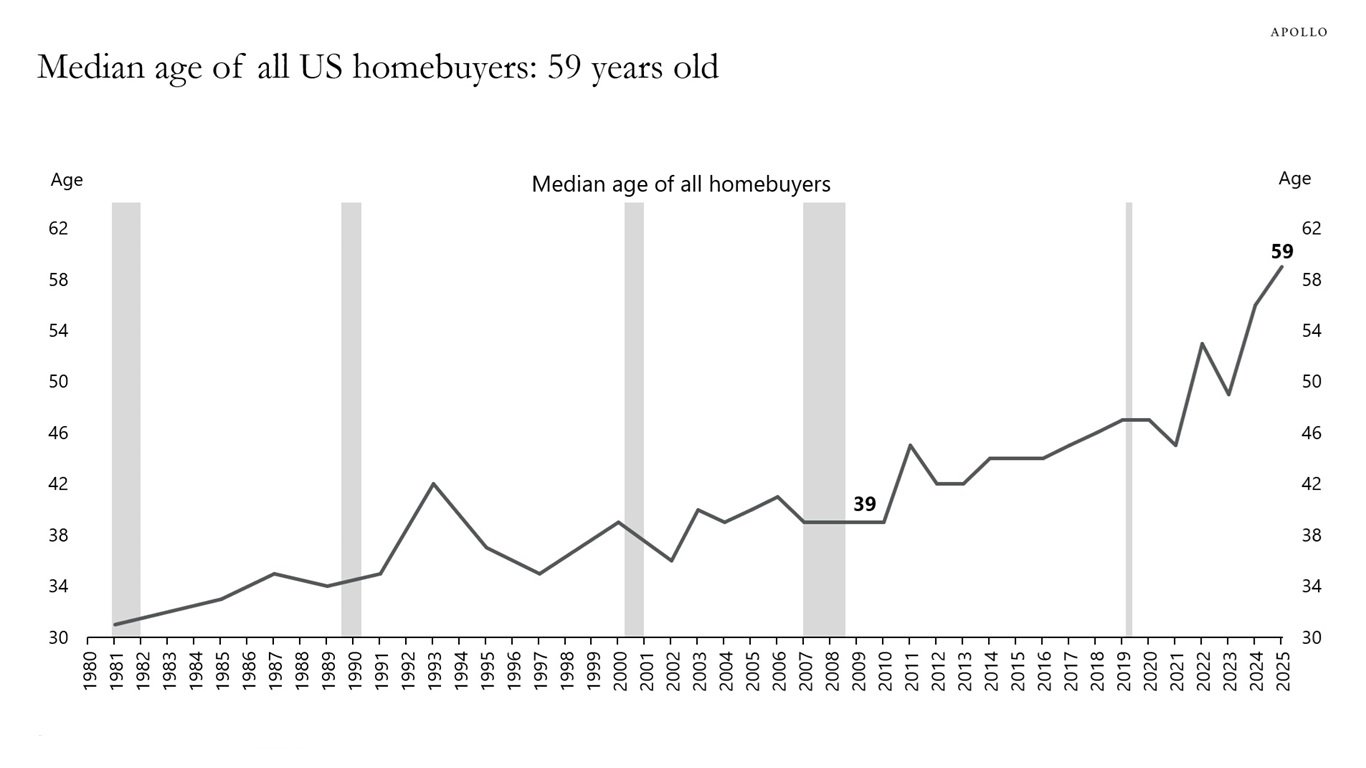
    Yesterday morning, my dad sent me the above chart from Apollo and said, “frightening, do you have one for Canada?” In 2010, the median age (not mean) of all US homebuyers was 39 years old. Today, it is 59 years old. And it has jumped significantly since the start of the pandemic.

    The obvious explanation, and long-term trend line, is that housing continues to become more expensive relative to incomes, so it is taking longer for people to save up and afford to buy.

    But “first-time buyers waiting longer” can’t be the only reason, because homeownership is typically a life-cycle behavior. If you’re in your 60s and you still haven’t made the decision to buy a home, the probability is low that you will then become a first-time buyer.

    As of this month, the share of first-time homebuyers in the US dropped to a record low of 21% and the median age was 40. What this suggests is that the above chart must also be the result of a compositional change in buyers.

    Wealthy older people must be buying vacation homes, retirement homes, and/or relocating (maybe for better weather and maybe for lower taxes). Combine this with fewer first-time buyers (and I’m sure some other factors), and you get the above chart.

    So what about Canada?

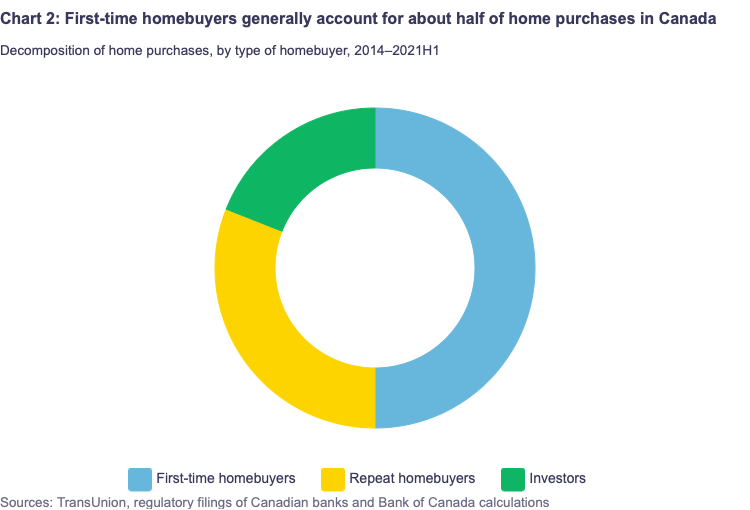
    I couldn’t find an exact equivalent chart, but I did find this Bank of Canada note from 2022.

    As of 2021, first-time buyers still accounted for roughly half of all home purchases in Canada. The rest were repeat buyers, and the smallest percentage were investors, which includes people buying a property as an investment or buying a property to live in while at the same time converting an existing residence into an investment property.

    The median age for a first-time buyer was 36 years and the average age for all other buyers was 50 years. If we assume that this split is roughly 50/50, based on the above chart, then we get to an average homebuyer age somewhere around 43 years old. Intuitively, this seems at least directionally right.

    (Note, this data is from 2021, which misses most of the pandemic period.)

    Canada has a much higher percentage of first-time buyers driving the market. Canada does not have the same wealth inequality as the US. The 55+ age group in the US owns somewhere around 71% of all housing wealth and 69% of all stocks/equity funds.

    And, Canadians tend to be less mobile than the US population within the country. Canada doesn’t have warm, low-tax provinces attracting older rich people (though I would support us having one or two somehow).

    In summary: You’re right, dad, it is a frightening trend line.

    Cover photo by Valeriia Neganova on Unsplash

  • Toronto re-embraces small-scale retail

    November 15, 2025 · View original


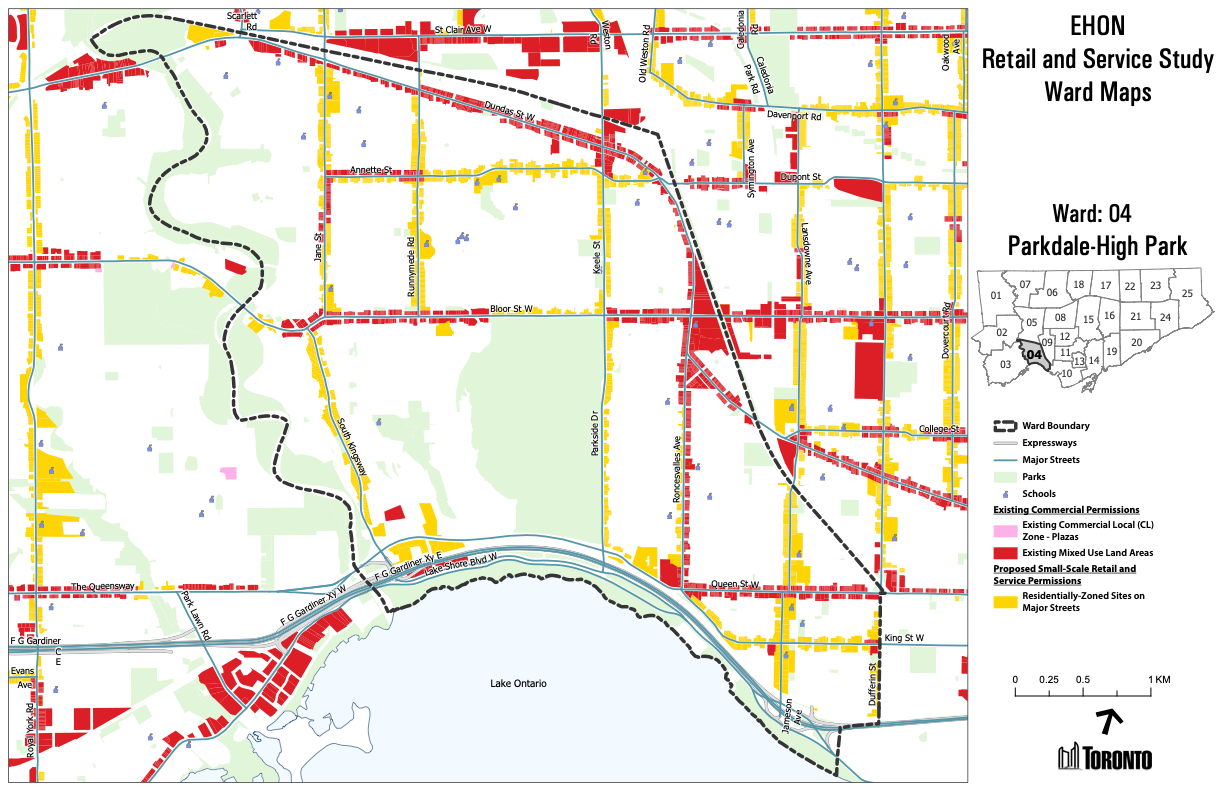
    Good news: If you would like to open a small-scale retail business in Toronto — and you have a property that is residentially zoned on a major street (in one of the approved areas), or you have a corner property on a designated “community street,” or you have a property that abuts a non-residential use such as a park or public school — you may now be allowed to do it, with some restrictions. (Consult your local planner for exact details.)

    This, as we talked about recently, is meaningful progress for Toronto. But as is always the case, it was not easy. Toward the end, local community groups even started using AI slop in an attempt to terrify the public into thinking that this would be a harbinger of littering hoodlums loitering in all of our neighborhoods.

    Thankfully, this city has people like Dan Seljak, Blair Scorgie, and many others — including, of course, the EHON team at the City — who have been instrumental in getting something passed, even if it had to change a little along the way. City building ain’t easy. They should all be proud of what they’ve accomplished. I look forward to seeing what kind of local entrepreneurship this unlocks. Go Toronto.

    Cover photo by Joe Yu on Unsplash

  • A simple framework for thinking about value engineering

    November 14, 2025 · View original


    We all know what value engineering is when it comes to buildings. Generally speaking, it is the process of trying to identify high-cost items with relatively low perceived value. Once you identify these items, you then remove them (if you can), replace them with alternatives, or find other creative solutions. All projects have to do this at one point or another because, well, money doesn’t grow on trees.

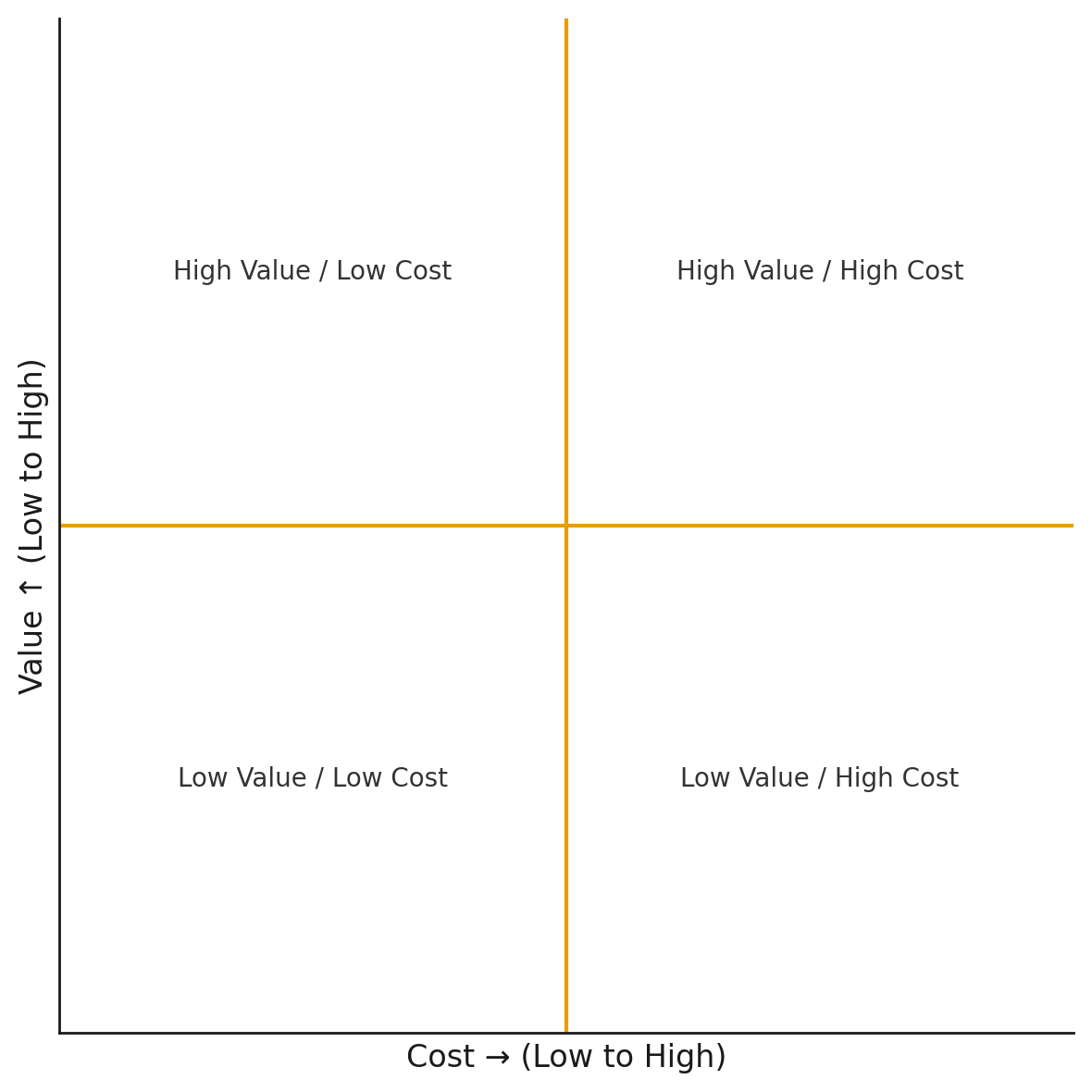
    One way to think about this is in terms of the following four-quadrant chart:

    Low-value and low-cost items aren’t expensive, so you will probably just leave them alone. But if you can move them up to the next quadrant, that’s even better.

    High-value and low-cost items are the ideal place to be. One example might be a low-cost material that gets applied in a creative way so as to create high perceived value. This is where design really becomes alpha.

    Low-value and high-cost items are the fertile ground for value engineering exercises. If the perceived value is low, why spend the money on it? Surely there must be other options.

    High-value and high-cost items, on the other hand, require the most thought and debate. How high value is it? Do we really need or want to spend the money on it? One example of this would be the architectural facade lighting at One Delisle. Sadly, it was not free.

    Years ago, the team presented it as a possible value-engineering option. But ultimately, we viewed it as being fundamental to the overall design. Its perceived value was off the charts. I mean, why invest so much in the architecture only to cut the very thing that helps prominently display it? So a decision was made to keep it and, boy, am I glad we did.

    There’s nothing else going up in Toronto like it.

    Cover photo by EJ Yao on Unsplash