Daily insights for city builders, delivered every morning at 6 AM ET. I’m Brandon Donnelly — a Toronto-based real estate developer and founder of Globizen. I’ve been writing here since 2013.

  • I just launched a writer coin

    November 5, 2025 · View original


    Some of you may remember that about a year ago I moved this blog onchain from WordPress to a platform called Paragraph. I’ve been happy with the move, though I know that my daily emails have been ending up in many of your junk boxes since then. Sorry. Hopefully that gets better over time. Given my enthusiasm for crypto, it just made sense to make the switch. I’m trying to move as much as I can onchain.

    This blog is now also featured on Paragraph’s homepage:

    At the same time, things still feel very early. Paragraph, for example, has been experimenting with ways for writers to monetize their work. I don’t care about that for this blog, but I am interested in seeing how the business models may evolve.

    Up until recently, the way to make money on Paragraph was to have readers collect your posts: Writer publishes something, readers mint it as an NFT, and then writer receives small payments in their crypto wallet. I’ve had a few people collect my posts over the past year, but it has not been anything of significance.

    Now Paragraph is testing something new called writer coins. Instead of collecting individual posts, readers can now buy a writer’s coin and support them more broadly. I just set this up on my publication and so there is now a brand-new coin in existence called $BRANDON.

    One of the interesting things that I was able to do was automatically distribute this new coin to anyone who has collected one of my posts in the past and who is subscribed to my blog (with a connected wallet). If you are one of these people, you should have received something.

    In theory, $BRANDON coin should increase in value as this blog develops incredible international notoriety, but in practice, who the hell knows? These experimentations are all part of the journey onchain. Some stuff will work, but many other things won’t. Already though, I think you can feel product-market fit for things like stablecoins. Maybe one day the same will be true of $BRANDON.

    If you’d like to try out this new feature and support the blog, click here.

  • We were just a few millimeters off

    November 4, 2025 · View original


    After Game 5’s win, I was feeling confident that the Toronto Blue Jays would win the World Series. History placed us at roughly a 75% probability of success. Polymarket had even flipped in favor of the Jays for the first time. We were up 3–2 in the series and heading home.

    But of course that didn’t happen on Saturday. Toronto lost.

    We Torontonians will always remember the 2025 Blue Jays and how fun of a season it was, but history doesn’t care about second place. What history will remember is that the Los Angeles Dodgers went back-to-back and strengthened their baseball dynasty. This is to be expected.

    But here’s the thing, if you watched the series, you’ll know that it could have gone either way. We lost in Game 7 in extra innings, after looking like the better team throughout most of the series.

    What if Isiah Kiner-Falefa had taken a slightly bigger lead at third? What if that ball had never gotten improbably wedged under the outfield padding? What if Andy Pages had collided with Kiké Hernandez and not made the catch? The list goes on.

    My point is not to be a sore loser — congratulations to Los Angeles — my point is that a few millimeters are all it takes to separate sadness from celebration. (Inches also work, but I prefer to use the international standard for weights and measures.)

    It’s a good lesson for life and business. Small, consistent changes can be all that it takes, especially because over time they compound.

    It reminds me of something that chef Daniel Hadida says in this video when talking about Restaurant Pearl Morissette (in the Niagara Benchlands). He says, “I’m willing to go significantly harder to achieve slightly better.” And that’s because slightly is all it takes.

  • Where do families go to afford three bedrooms?

    November 3, 2025 · View original


    In Ontario, couples with children overwhelmingly live in ground-oriented ownership housing. This form of housing is still the majority for all other households (at least according to 2021 Census data), but apartment rentals make up a much larger share.

    Given these figures, it is not surprising that the Missing Middle Initiative has found that family migration patterns within southern Ontario tend to correlate strongly (r = 0.71) with where ground-oriented ownership housing is being built, which largely means outside of the Greater Toronto Area.

    This is an important finding if you’re worried about Canadians not having enough babies. But this correlation doesn’t tell us exactly what’s going on. The data suggests that families with children have a clear preference for ground-oriented ownership — even if it means moving farther out — but what other options do they really have?

    Three-bedroom apartments remain a relatively elusive housing type because demand is low. But as we have talked about, demand is a function of price, and multi-family buildings are more expensive to construct than low-rise housing. So how much of this perceived consumer preference for ground-oriented housing is actually just people driving until they qualify?

    In other words, how many people are simply solving for X amount of space/bedrooms at Y price? And what would happen if we made large three-bedroom apartments in walkable transit-oriented communities the most affordable option? It still wouldn’t be for everyone, but I bet that we would see demand adjust.

    More importantly, it would give people options.

    Charts from the Missing Middle Initiative; cover photo by Jason Ng on Unsplash

  • The market for three-bedroom apartments isn’t what you think

    November 2, 2025 · View original


    Erica Alini of The Globe and Mail just published this article called, “The era of the shoebox condo is over.” You should read it, and not just because I’m quoted in it. One thing that I appreciate about the article is that it gets into some of the development economics underlying new projects.

    The high-level math provided by Bryn Davidson of Lanefab (Vancouver) once again shows that land is the residual claimant in a pro forma and that the price developers can feasibly pay needs to be greater than the status-quo value. It’s exactly what I was getting at in this recent post about the Impossible Toronto publication.

    The other thing I’d like to highlight is the following chart showing the share of three-bedroom apartments in newly built condominiums and purpose-built rentals in the city:

    What’s interesting about this six-year period of completions is that there isn’t a meaningful difference between condominiums and rentals. Average unit sizes as a whole tend to be slightly larger in rental projects, but in terms of the share of three-bedroom suites and the average size of those three-bedrooms, the differences aren’t meaningful.

    This suggests that it’s less about investors “distorting” the market (see pundits talking about the condo market), and more about the fact that the demand isn’t there. And the reason the demand isn’t there is because these types of homes are expensive. If you can afford $5,000 per month in rent, you generally have some options.

    Table from the Globe and Mail; cover photo by Lotus Design N Print on Unsplash

  • A three-meter-wide home in Tokyo

    November 1, 2025 · View original


    > Tweet: Zero-setback house in Tokyo, designed by Haryu Wood Studio & Selma Masic. Three levels, family of four, and just 63 square meters in total area. https://t.co/8mNdI7PrUm

    I am endlessly fascinated by some of the small homes that get built in Tokyo. This one, also pictured above, is called the Borderless House.

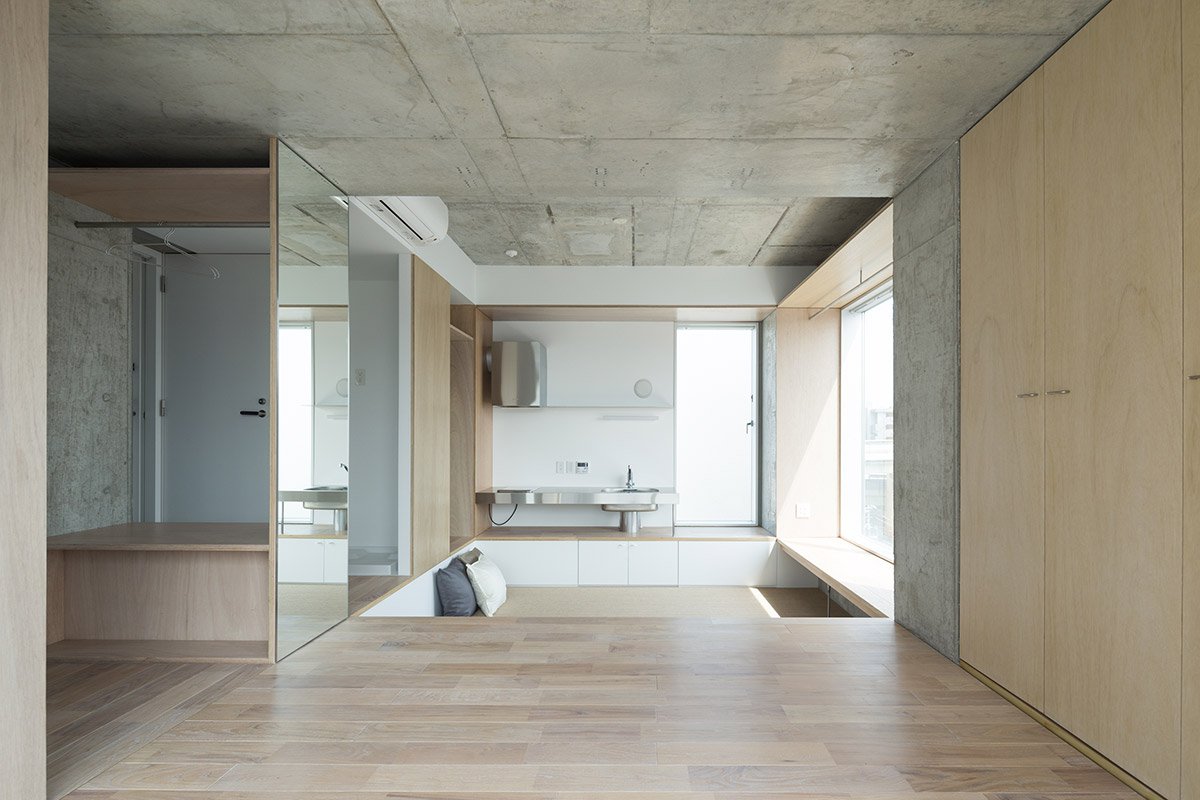
    Designed by Selma Masic — in collaboration with Sei Haganuma (Haryu Wood Studio) — the house sits on a 3-meter-wide lot, has a total area of 63 square meters across three floors (~678 square feet), and allegedly houses a family of four. Bridgestone also appears to be its immediate neighbor.

    To put these dimensions into perspective, 3 meters is roughly the width of a “typical” new apartment living room here in Toronto. Usually, if you have a floor plate that can accommodate an outboard bedroom up at the glass, you design for a structural grid somewhere between 6–6.5 meters.

    This gives you around 10 feet for the living room and around 10 feet for the bedroom. (As a a Canadian, it’s important to always bounce back and forth between metric and imperial.) In this case, the entire lot is only 3 meters wide, though a corner lot always enhances a floor plan.

    All of this is fascinating because, compared to North America, it represents a completely different way of conceptualizing space. Of course, the point of posts like this one is not to suggest that this is what all homes should be like. The point is that there are benefits to allowing those who would like such a home to be able to build it.

    Cover photo by Selma Masic

  • The slow march back to small-scale neighbourhood retail

    October 31, 2025 · View original


    Baby steps:

    > A decision on legalizing small businesses like cafés and corner stores in the interior of Toronto’s neighbourhoods — under a framework city planners had winnowed down since last year in the face of heavy opposition from residents’ associations — has once again been punted into the future.

    > At Toronto’s Planning and Housing committee on Thursday, officials decided to defer a decision on allowing more small businesses in neighbourhood interiors, instead green-lighting changes only along major streets and to the rules for home-based businesses, which still require final approval from city council.

    Planning changes always seem to happen slowly, painfully, and incrementally. I remember giving presentations on laneway housing back in 2013-2014, and I would always say “this is inevitable — it’s a question of when, not if.”

    At the time, this felt like a bold statement because it was nearly impossible to get a laneway house approved. You had to be cunning, willing to fight for years and, even then, you might not be successful. Now they’re permitted as-of-right and they, frankly, no longer feel novel. They’re just something we do around here.

    Of course, the same will eventually be true of small-scale neighbourhood retail. Especially because it was what we used to do before we created rules against it. But as always, things happen slowly, painfully, and incrementally.

    If you’d like to download the proposed Major Streets Zoning By-law Amendment, click here, and if you’d like to download the proposed Home Occupations Zoning By-law Amendment, click here.

    Cover photo by Dan Burton on Unsplash

  • Rizzo’s House of Parm

    October 30, 2025 · View original


    About 35 minutes south of Project Bench is a waterfront community on Lake Erie called Crystal Beach. And within Crystal Beach is a restaurant owned by celebrity chef Matty Matheson called Rizzo’s House of Parm. This is a Niagara Region restaurant that has been on our team’s list since it opened in 2022, but we’ve just never been able to make it work — until yesterday.

    If you’re in the mood for some Italian-American comfort food and are somewhat proximate, I would definitely recommend it. The food is solid, the portions make me happy, and the place has a great overall vibe. But here’s what I would also say: you don’t need to make a special drive from Toronto. Save that for you know what.

  • Does quality of life have to decline as a city grows?

    October 29, 2025 · View original


    When it comes to cities, quality of life is a subjective measure. Some people may prefer a small city where homes are more affordable and commute times are negligible, while others may find the unique amenities of a big city more appealing — enough to outweigh the negatives.

    Whatever the exact case, there are some obvious negatives that come with urban scale. The usual suspects are high housing costs, traffic congestion, noise and pollution, crime and safety concerns, and the list goes on. But is it universally true that quality of life has to decline as a city grows?

    I don’t think so at all. I wasn’t able to find a good primary source on this topic, but the obvious example and outlier that comes to mind is Tokyo. It is both the largest metropolitan area in the world and a city that consistently ranks near the top of most quality of life indices.

    So how do they do it?

    There are lots of ingredients that go into a city like Tokyo, but I would argue that one of if not its most important, is its transit network. Tokyo has one of the highest rail modal splits and one of the lowest driving rates in the world. And it’s the only way a city of this scale could actually function as efficiently as it does.

    This is not me being an ideologue (which I am sometimes called); it is me being a pragmatist. Show me a big global city with more than 10 million people that is oriented around the car and does not have a traffic congestion problem, and I’ll happily change my mind.

    Cover photo by Leongsan on Unsplash

  • Rivian spinoff Also introduces flagship e-bike

    October 28, 2025 · View original


    YouTube video

    Rivian makes electric vehicles designed for adventure. But in addition to this (I’m deliberately avoiding the word also), they’ve just spun out another company called Also, which makes e-bikes, quads, and other mobility products. This month, they revealed their new flagship product called the TM-B (transcendent mobile – bike). If you can’t see the embedded video above, click here.

    I’m not sure how big the market will be for a US$4,500 e-bike, at least in the short term, but the tech seems pretty awesome. And I think the bigger deal here is that this is now a well-funded company focused on “form factors that are all sub-car.” Rivian is a car company, but they recognize that to really drive sustainability into our transportation networks, we need to also think beyond the car.

    Cover photo: Also

  • Exactly how impossible is a dense, urban Toronto?

    October 27, 2025 · View original


    Back in the summer, I wrote about the publication Impossible Toronto that my friends Gabriel Fain, Francesco Valente-Gorjup, and Aleris Rodgers authored for the Neptis Foundation. (If you’d like to purchase a copy of the book, you can now do that online here.) And this past weekend, Alex Bozikovic of The Globe and Mail wrote about it in an article called, “A dense, urban Canada? It’s possible.

    Here’s an excerpt:

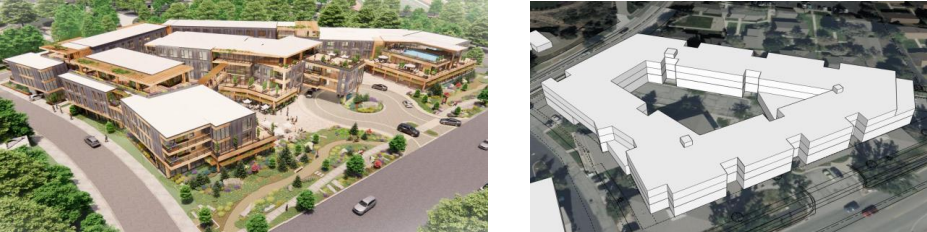
    > The formula is simple: Replace century-old houses in the middle of the city with courtyard blocks – apartment buildings of four to six storeys, lined up side by side along the street and leaving a doughnut-hole of green. Their apartments have windows facing both the street and a green space at the centre of the block. Such buildings make up the fabric of many Western European cities.

    > Yet they are impossible to build in Canada for a variety of regulatory reasons. Most important: Our building codes require every apartment to have two separate exit stairs. If you eliminate that rule and follow the lead of Switzerland and Germany (two officious, safety-conscious states), everything changes. Buildings become much less bulky. Apartments gain light and fresh air in every room. Homes become more square, with better layouts and better rooms. This means a dramatic improvement in residents’ quality of life.

    Alex is exactly right that required exiting is a major hindrance to the housing type proposed in Impossible Toronto. We talk a lot about this on the blog, and as an industry. But big picture, it is only one item in a long list of things that will need to change if we actually want to emulate the housing types that are typical of most Western European cities.

    My contribution to Impossible Toronto was a handful of high-level development pro formas (pages 94-95). I was asked to model what is permissible today under the new “Expanding Housing Options in Neighbourhoods” (EHON) policies, and then model the Impossible Toronto typology. Finally, we decided to toggle this second pro forma to show what it would take to make it financially feasible, including removing things like development charges and site plan control.

    It’s important to point out that our current EHON permissions — which support as-of-right 6 storey apartments on all major streets — are already challenging to underwrite and have not yet been proven to work at scale. The starting problem is that developers need to be able to arrive at a residual land value that is greater than the as-is value of what’s there today — usually that’s a single-family home in the case of the EHON policies.

    This can happen in two ways. Developers need to be able to get enough density to justify a higher land value and/or the development cost structure needs to be low enough that enough value can be attributed to the land. This is where things like single-stair buildings come into play. They allow for more efficient designs, which help with project viability on a few different dimensions.

    Without a viable acquisition, housing projects do not start. So in my view, we need to attack this impossible problem from two sides. First, as-of-right densities need to translate into land values that are greater than the status quo. This is what will motivate landowners to sell. Second, the end result needs to be high-quality livable housing that as many people as possible can afford.

    If we can achieve these two outcomes, then we have a chance to not only make the impossible, possible, but we have a chance to scale it across Toronto and Canada.

    Cover photo by Aditya Chinchure on Unsplash