Daily insights for city builders, delivered every morning at 6 AM ET. I’m Brandon Donnelly — a Toronto-based real estate developer and founder of Globizen. I’ve been writing here since 2013.

  • Blue Zones

    Over the weekend I learned about Dan Buettner’s Blue Zones. These are cities and parts of the world where, according to Dan, people have a much longer life expectancy. The five regions he identifies as Blue Zones are: Okinawa (Japan); Sardinia (Italy); Nicoya (Costa Rica); Icaria (Greece); and Loma Linda (California).

    Many of you have probably heard of this finding from Malcolm Gladwell. I think he writes about it in Outliers. I had. But I didn’t know about Dan Buettner and his efforts to teach these “secrets” to other regions around the world. 

    I can’t speak for the efficacy of his consulting practice, but I think it’s interesting that some of the characteristics of these Blue Zones include a strong sense of family and community, as well as constant moderate physical activity. In other words, activity that is integral to normal life, such as lots of hills in a mountain town.

    The links between urban form, walking and biking (instead of driving), and health outcomes are something that get a lot of air time. It is, of course, one of the reasons why denser cities are thought to be healthier cities. They encourage more active forms of mobility.

    But what else could we be doing to make physical activity an inseparable part of urban life? In Rio de Janeiro, they often incorporate fitness facilities into their public spaces, whether it’s a parklet or the beach. That probably doesn’t qualify as inseparable, but it’s certainly a start.

  • Risk game

    “Francis is one of the most decisive people I know. He made a commitment to invest in our first venture capital fund in a five-minute cab we shared to work one morning.”

    —Fred Wilson, Co-Founder, Venture Capitalist, and Blogger, Union Square Ventures

    Francis Greenburger, who is founder and CEO of the real estate investment and development firm Time Equities, recently appeared on Barry Ritholtz’s Masters in Business Podcast.

    They touch on a number of topics, including why development sometimes produces more bankruptcies than billionaires; why development margins are compressed in Toronto; and how Francis popularized the co-op in New York. 

    Francis is also the author of Risk Game: Self Portrait of an Entrepreneur. So if you like the podcast – which is a great listen – there’s also a book for you. Click here for the podcast.

  • Director, Real Estate

    The University of Toronto is looking for a Director, Real Estate to manage their tri-campus portfolio of income producing real estate, as well as the development opportunities that they have on and adjacent to their three campuses. The downtown campus alone is over 120 buildings across 130 acres.

    A good friend of mine is helping with this search; I went to the University of Toronto (twice); and I believe that institutions, such as U of T, play an important city building function. So I’m sharing this opportunity with all of you today. For more on the University’s development strategy, click here.

    They are looking for someone with 10+ years of experience. The salary will be competitive and commensurate with this level of experience. And you would be reporting directly to the Chief of University Planning, Design & Construction. 

    If you’re interested, you can apply here. You have until January 25, 2019 to do that. I hope the position gets filled with a star. Also, sorry if this post isn’t relevant to you. Regularly scheduled programming will resume tomorrow.

  • On good design

    Last summer, Zach Mortice published this article in Metropolis talking about two new buildings in Chicago. Here is his architectural description of the first:

    Ross Barney’s design is unabashedly cosmopolitan, yet welcoming. Conceived as a series of interlocking Miesian pavilions, it comprises a glass cube containing the dining room and a smaller opaque volume, which holds the kitchen. The glass envelope shows off the restaurant’s burly cross-laminated timber beams, the first time this ultra-strong, low-carbon structural system has been used in Chicago. The exterior pergola is clad with solar panels and provides shade across an entire city block while also generating most of the restaurant’s energy. With a landscaped plaza and outdoor seating, there’s a strong focus on attracting pedestrians to this green-starved section of the city, with a landscaped plaza and outdoor seating.

    Zach is describing the then new flagship McDonald’s in the River North area of Chicago. That’s maybe not what you were thinking as you were reading the description, but it is, of course, part of a broader transformation for the brand:

    “We don’t need to be loud anymore,” says David Vilkama, McDonald’s global creative director. “We’re trying to move away from the old, cheap, plasticky, in-your-face fast food culture.”

    It is a clear example of the value of good design and also how it has seemingly become table stakes for many firms and industries. 

    But as Zach points out in this article, is this also evidence that brands need to, not only invest in good design, but also move upmarket in order to maintain growth?

    In other words: Does good design inevitably equal more expensive?

  • And we’re back

    Welcome to 2019.

    I am currently in transit and catching up on some internet reading and email on my way back to Toronto.

    At this time of year it is, of course, common to reminisce (or lament) about what happened over the last year, as well prognosticate what may come.

    Over the last few years, I have done a bit of that on the blog. But I clearly didn’t do that this year while in Brazil (and away from any semblance of a workspace).

    So here’s what others have been writing and thinking about over the holidays:

    – 2018’s tech trends and tribulations in 14 charts. RecodeLink

    – 2018 was the year of the YIMBY. CityLab. Link

    – A cool girl’s guide to Toronto. Vogue. Link

    – Amazon’s annual Christmas press release. Link

    – Best travel posts of 2018. Design Milk. Link

    – Here’s (Almost) Everything Wall Street Expects in 2019. Bloomberg. Link

    – Here’s what to expect in cybersecurity in 2019. TechCrunch. Link

    – Naive to hope Toronto can change in 2019? That means we have work to do. Shawn Micallef. Link 

    – The 10 largest US venture rounds of 2019. TechCrunch. Link

    – What is going to happen in 2019. Fred Wilson. Link

    – Will a recession hit in 2019? Alan Murray. Link

    – Year in search 2018. Google. Link

  • Documenting a city

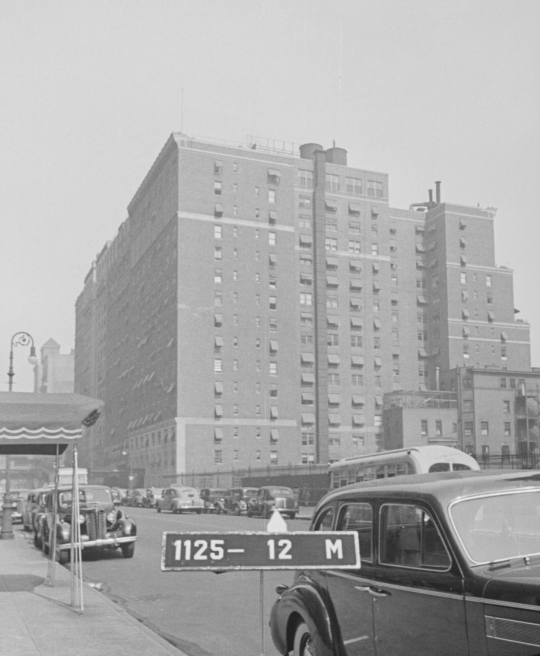
    Starting in the late 1930s, New York City began hiring photographers to document each and every building in the city. It did this to improve the accuracy of its tax assessments, and so every photo was taken with a sign board indicating the building’s block and lot number. The photos looked like this (taken from here):

    image

    The initiative produced over 700,000 black and white photos, all of which have been recently digitized according to the New York Times. The Times also recently published this interactive piece where they go back to these archival photos to see how the city has and hasn’t changed. 

    In the late 1930s and early 1940s, documenting a city and its buildings was clearly a manual endeavor. Today we have Google Street View (launched in 2007), which has now photographed much of the world. Many countries, including all of North America, are reported as having “mostly full coverage.”

    But already autonomous vehicles (and their supporting services) are starting to scan and map our cities in new ways. So it will be interesting to see what ends up getting built on top of this data. I am certain it will empower much more than just better tax assessments.

    Happy New Year, friends. Thanks for reading over the last year.

  • Neural machine translation

    I have been using Google Translate a lot on this trip. Few people here in Rio de Janeiro speak English.

    It is an incredible app that also works without cell service. You just download whatever language(s) you need to your phone.

    There’s a conversation feature that allows you to go back and forth with someone in real time (almost). 

    There’s a camera feature that is invaluable for translating restaurant menus.

    And there are a number of smaller features that I have also found really useful. 

    For example, if you rotate your phone into landscape mode, it will show you your translation in big text like a flash card.

    It looks like this (trust me it is useful):

    imageimage

    I also just learned that, since November 2016, the Translate app has been using a neural machine translation system developed by Google.

    It is capable of understanding and translating complete sentences, and that has reduced translation errors by about 60% compared to the previous system.

    Rather than translate word-by-word or phrase-by-phrase, Google’s NMT network encodes the “semantics of sentences.”

    To learn more about GNMT, click here.

  • Impact of temperature on economic production

    In 2015, Marshall Burke, Sol Hsiang, and Ted Miguel published a paper in Nature that looked at the relationship between temperature (climate) and economic output. They examined the historical impact of temperature changes (1960-2010) on 166 countries and then used this data to try and predict the potential future impacts of climate change on GDP per capita.   

    What they discovered is that temperature has a non-linear impact on economic production. Put differently, there’s an optimal annual average temperature. And it turns out to be 13 degrees celsius. If a country sits below this average number, then warming increases productivity. But if a country sits above this number, then warming has a negative impact on productivity. And the impact gets worse (stronger negative correlation) at higher temperatures.

    Some of you are probably wondering whether the correlations they found should be interpreted as causation. For what it’s worth, the study tries to correct for non-temperature related economic changes (such as a recession or policy changes) and it also looks at how individual countries perform against themselves during temperature fluctuations. So the control and treatment groups are arguably pretty tight.

    All of this suggests that there are a number of countries that stand to benefit from climate change (at least from this perspective). They are the ones that are cold today. 

    For more on the study, click here.

  • A door and a street — walking Copacabana

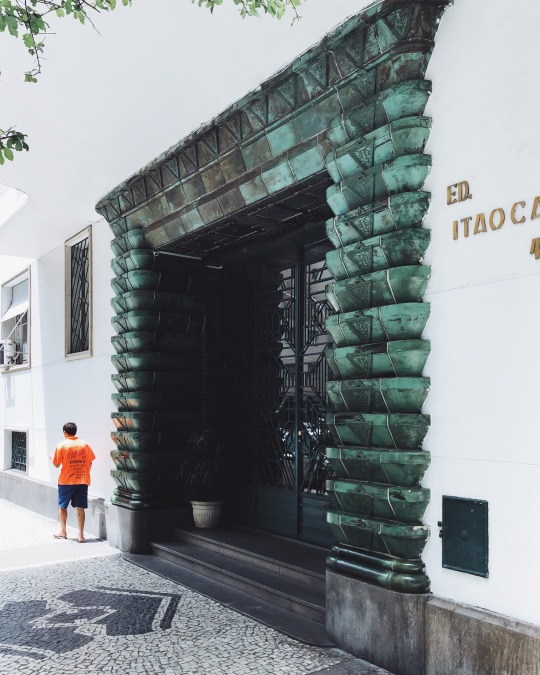
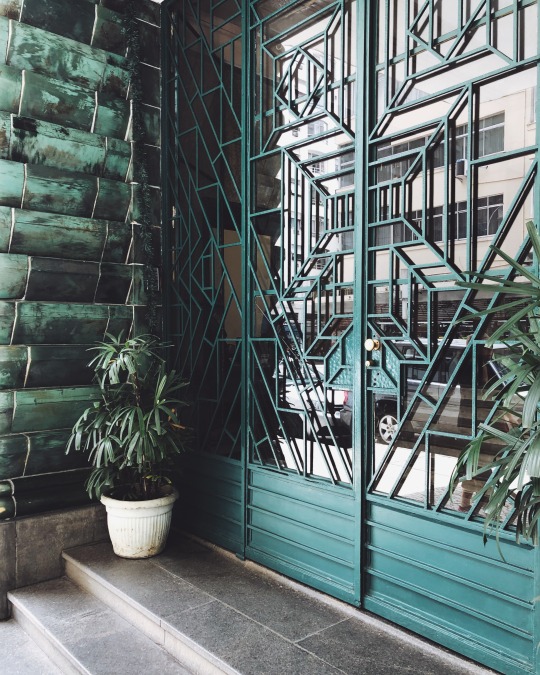
    Rio de Janeiro has some pretty spectacular entranceways. Here is one that I found today on Rua Duvivier in Copacabana:

    imageimage

    It is a magical front door located exactly one block from the beach.

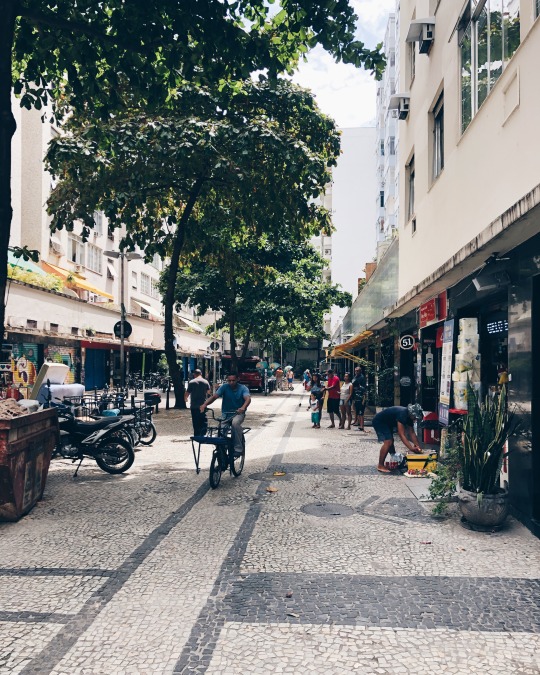
    The other gem I stumbled upon today was Rua Carvalho de Mendonça, pictured here:

    image

    Toward the left (above) is a narrow bollard-separated lane for cars. The rest of the right of way is dedicated to pedestrians and bicycles.

    When I was there today the sun was shining and the retail was in full swing.

    image

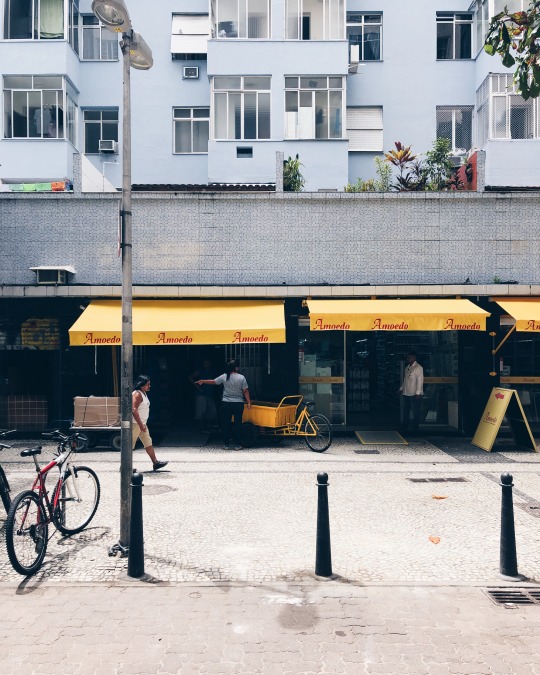
    But perhaps my favorite thing about this street is the residential terraces sitting on top of the single storey “retail podiums.”

    They add life (and eyes) to the street.

  • Gustavo Capanema Palace

    Brazil has been on my travel bucket list for many years, if not decades. Whenever I tell someone that they often ask me why that is the case.

    In addition to its breathtaking natural beauty, sunny beaches, beautiful people, and lively culture, Brazil is also one of the first countries outside of Europe to have adopted modern architecture.

    The best example of this is, arguably, Gustavo Capanema Palace, which is also known in architectural circles as the Ministry of Health and Education Building. At the time of its construction, Rio de Janeiro was the capital of Brazil. Brasilia took its place in 1960.

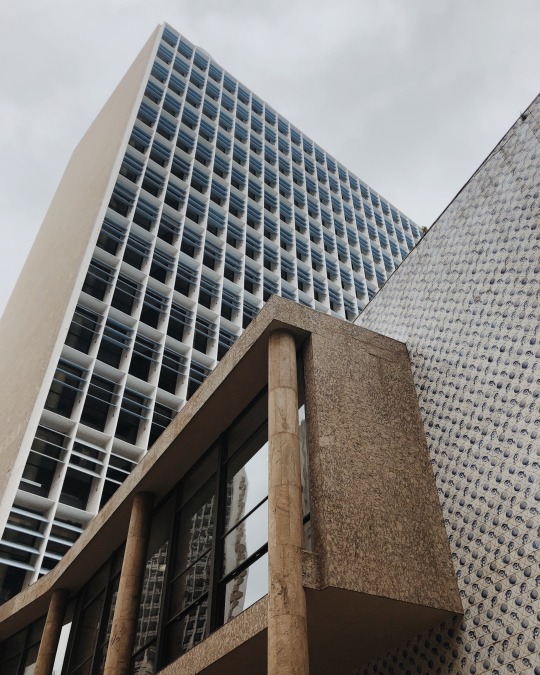
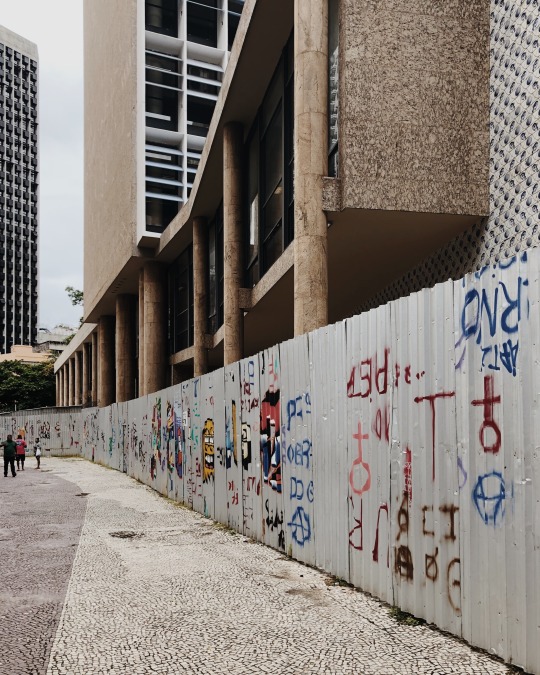
    Here are two photos of the building from this afternoon:

    imageimage

    Sadly, the building is currently under renovation and I wasn’t able to get as close as I would have liked.

    All the same, Gustavo Capanema Palace is one of the first modernist buildings in Brazil and, apparently, the first modernist government building in all of the Americas.

    Designed in the 1930s, there were a whole slew of architects involved in this project, including Lucio Costa (master planner for Brasilia), Affonso Eduardo Reidy, Ernani Vasconcellos, Carlos Leão, Jorge Machado Moreira, Roberto Burle Marx, and Oscar Niemeyer.

    But most notable in the roster was Le Corbusier. And the building is everything you would expect from the Swiss-French architect. Pilotis. Brises-soleil. Glass facades. And mid-level programming.

    However, it also incorporated local elements, such as azulejos (glazed tilework common to Portuguese and Spanish buildings). And in my view that makes it a more interesting varietal of modernist architecture.

    So even though I wasn’t able to get inside today, I am still glad that I was able to finally see Gustavo Capanema Palace.