Daily insights for city builders, delivered every morning at 6 AM ET. I’m Brandon Donnelly — a Toronto-based real estate developer and founder of Globizen. I’ve been writing here since 2013.

  • Statistics Canada publishes its wastewater-based estimates of drug use

    In March 2018, Statistics Canada launched the largest “wastewater-based epidemiology pilot test” ever conducted in North America. Over a 12 month period, it collected wastewater samples across the country in order to test for traces of cannabis and other drugs. The pilot captured 8.4 million people in Vancouver, Edmonton, Toronto, Montréal, and Halifax. And it was allegedly timed to coincide with the legalization of cannabis in Canada on October 17, 2018.

    This week Statistics Canada published its findings. While the study does cover over 8 million people, it was not intended to be representative of the entire Canadian population. Some sites, such as Vancouver, had nearly complete coverage of the metro area population. While others, such as the Halifax site, only covered about half of the metropolitan area. In any event, the findings are interesting.

    Above is one example: methamphetamine load per capita for the five study cities. The y-axis is grams per million people per week. And the time period is, again, March 2018 to February 2019. Average levels for Edmonton and Vancouver were found to be about 3.7x higher than those in Montréal and Toronto. There was also no apparent seasonal/monthly variation, which is something else they looked at.

    Here I learned that a large portion of this drug passes through the body unchanged. And so the concentrations they discovered in wastewater is likely a fairly direct indicator of consumption within the population. Stats Canada is still reviewing its findings and evaluating this approach to collecting large scale urban data. But I am certain we’ll be seeing more of these kinds of urban studies.

    Chart: Statistics Canada

  • Small art museum (in Tokyo)

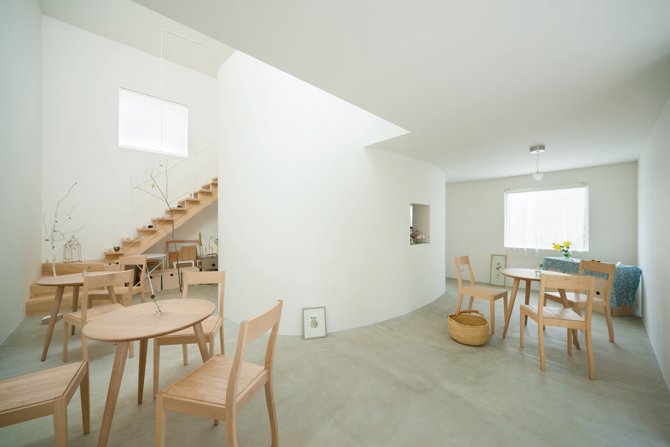
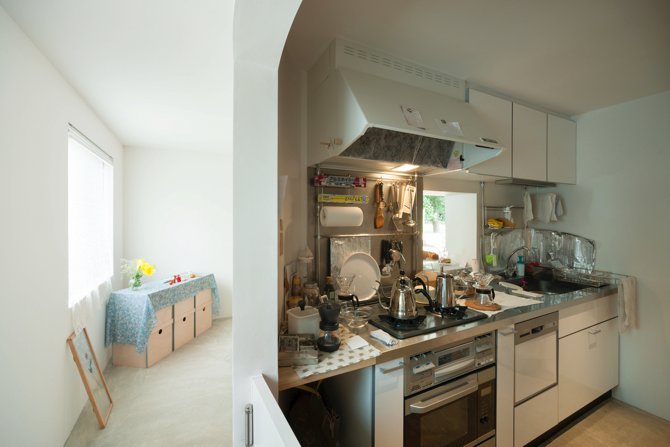
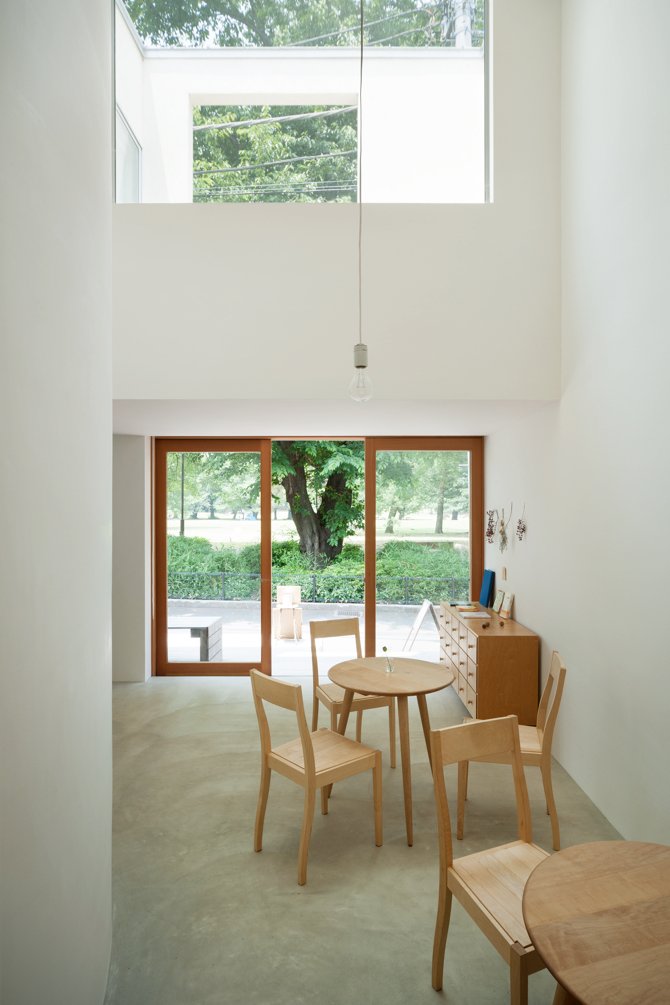
    Few are able to do “small houses” quite like the Japanese. Below is the Flat House in Tokyo by Yoshinori Sakano Architects. Completed in 2011, it was designed for a young couple in their twenties who wanted to build a home that was like a “small art museum.” Looking at these photos, I bet many of you will be surprised to know that the site area is only 100.10m2. The building footprint is only 49.00m2. And the total floor area is 79.36m2. This is the kind and scale of housing that is now permissible on many of Toronto’s laneways. And here, in Tokyo, you can see that it is serving as a family home. (The working kitchen is quite a contrast with the rest of the house.)

    Photos: Takumi Ota

  • Indonesia announces new capital city on the island of Borneo

    On Monday, Indonesia’s president, Joko Widodo, announced a plan to build a new capital city on the island of Borneo. The plan is in response to Jakarta’s formidable environmental challenges. It suffers from some of the worst air quality in the world and is struggling with a severe subsidence problem, which, I understand, is partially (or largely) a result of climate change and the unregulated extraction of groundwater.

    About 40% of the city now sits below sea level and the worst affected areas are supposedly sinking at up to 20cm per year. This gives Jakarta the dubious distinction of being the fastest sinking big city. On top of this, it is also one of the biggest cities in the world in terms of population. The Jakarta megalopolis has over 30 million people, placing it 2nd after Tokyo according to this list.

    Here’s a short video from the BBC that will give you some visuals to go along with the above. These are the sorts of urban challenges that will make you forget all about separated bike lanes and 45 degree angular planes. And they are not entirely unique to Jakarta. If you can’t see the video below, click here.

  • Risk, uncertainty, and opportunity

    For two reasons, I really like Fred Wilson’s recent blog post on hypothetical value to real value. Firstly, it is structured in the way that I think good blog posts are structured. He starts with a personal story (about this son) and then uses that to take a position and impart some knowledge about the venture capital industry. It makes for a more engaging read. Secondly, I like how he describes the journey and spread between hypothetical value and real value:

    Venture capitalists and seed funds and angel investors make or lose money on the journey from hypothetical value to real value. And when the spread between the two narrows, the money we make is less. When the spread increases, the money we make is more. It is easier to drink your own Kool Aid in the world of hypothetical values. You handicap the odds of winning more aggressively. You trade ownership for capital at work. You accept the new normal. Real value doesn’t move so fast. Because it is right in front of you. You can see it. So it is not prone to flights of fancy. I try to keep this framework front and center in my brain as we meet with founders and work to find transactions that work for everyone. I find it to be a stabilizing force in an unstable market.

    All of this is related to the notion that you make real money when you’re right about something that most people think is wrong. Because that would be hypothetical value. If it were real value, then everyone would simply believe it. It would be “right in front of you.” And this is pretty much true of all competitive marketplaces, including the real estate industry. Risk and uncertainty create opportunity.

    Photo by James Sullivan on Unsplash

  • How homeowners cause gentrification

    Randy Shaw is the Editor of Beyond Chron, Director of San Francisco’s Tenderloin Housing Clinic, and author of, Generation Priced Out: Who Gets to Live in New Urban America.

    In his recent piece in Beyond Chron, he makes the argument that, from San Francisco to New York, homeowners who oppose new multi-unit housing are in fact the ones driving gentrification.

    He admits that there are some exceptions and cites San Francisco’s SOMA neighborhood as a place that became upscale because of new development. (I think it’s more nuanced than that.)

    But the key point is that there countless examples of neighborhoods changing their socioeconomic position without the presence of new development. (There’s investment, but at a smaller or individual scale.)

    Here’s an excerpt from Shaw’s article:

    Banning apartments from single family home neighborhoods limits new residents to those who can afford to purchase a home. Banning new multi-unit construction also artificially reduces supply, driving up home prices for existing owners.

    That’s how most San Francisco neighborhoods, and those in other high-housing cost cities, gentrified. It happened with little or no multi-unit construction. Yet homeowners have adeptly shifted blame for the gentrification of urban neighborhoods from their own land use policies to builders—even when no building has occurred.

    But in the end, do these details even matter? What we have here are competing self-interests. Developers, obviously, want to build. And many people benefit when this does happen. But others don’t see it that way.

  • The performance of cities proper

    Richard Florida is currently running a four-part CityLab series on the economic performance of America’s cities. What makes this study somewhat unique is that it looks at cities proper, rather than at their larger metro areas. In some cases there may not be that much of a difference. But in other cases, the performance of the city proper could be very different from that of the broader area.

    Here are the fastest and slowest growing cities from 2012 to 2017:

    Here are the fastest and slowing growing job markets:

    And here is the growth in share of adults with a graduate degree:

    It’s interesting to see Seattle at the top of the population growth list. It is not a sprawling sunbelt city. It is an expensive tech hub. And it is also interesting to see Miami’s strong employment and education growth. Years ago, Paul Graham wrote an essay arguing that tech hubs have two prerequisites: capital and nerds. He went on to argue that Miami has lots of the former, but not much of the latter. Maybe that’s changing.

  • Parasitic architecture

    Parasitic architecture sounds like a bad thing because of the connotations, but you could make an argument that it is, in fact, the exact opposite. It is a way to better leverage existing structures and reclaim under-utilized urban spaces. Perhaps additive architecture would be a more appropriate name.

    Here’s one example. WARchitect recently completed this “skyscape apartment” on top of an existing 5 storey apartment building in Bangkok. It’s about 1,600 square feet. And the entire space is organized according to the structural grid of the apartment building below.

    Many/most structural systems have excess capacity because of a built in factor of safety. So for a small addition like this, I’m guessing that they probably just loaded up the existing column grid. It also looks like there were already stairs leading up to the roof of the building.

    Years ago I looked at doing an addition on top of an existing apartment building here in Toronto and it ended up being a lot more complex than I may be making it out to be in this post. Mind you, we were looking at adding on a few floors, which triggered all sorts of issues.

    But now that Toronto is allowing accessory dwelling units along its laneways, is it time that we also look at the rooftops of our existing buildings?

    Photo: Rungkit Charoenwat

  • Der Wickelfisch

    A colleague in the office recently introduced me to a Swiss invention called the Wickelfisch (or baby fish). Below is a video showing you how they work. They’re so neat. So Swiss. And I obviously just ordered one. They’re available via this US company for $12-20, depending on the size.

    The video is of people swimming in the Rhein. Because swimming downstream in rivers — and ending up in a different location — is so popular in Switzerland, the Whickelfisch was invented as a way to keep your clothes and belongings dry. It also acts as a flotation device.

    I’m not planning on floating down the Don River anytime soon, but a Wickelfisch looks like the perfect bag to bring to the beach. Especially if you don’t want to leave your stuff unattended to while you go for a swim.

    Of course, the other neat thing about this video is that it shows you how awesome it is to have clean and swimmable water running through the middle of a city. Most people I know are afraid to swim in Lake Ontario out of fear they might grow a 6th toe.

    That’s too bad.

  • Two minutes to the subway

    I was in a meeting the other day and we started talking about a wayfinding sign that indicated it was a 10 minute walk to the nearest subway station. We wondered who had made this sign and ultimately decided that the number should be 10. Either they had no idea where the subway was or they were being ultra conservative in their estimate. The subway was — at most — 5 minutes away.

    We then joked that if a developer had made the sign it would say 2 minutes, which I thought was telling. Some people like to describe real estate development as an exercise in risk mitigation. And that is certainly something that needs to be managed. But it’s also an exercise in resiliency, as you get every possible obstacle thrown in front of you. It’s as if the goal is not to build anything.

    So while it’s important to manage the possible risks, I believe you have to be a bit of a glass-half-full kind of person in order to continue the march forward. Otherwise you’d probably give up. My first boss out of grad school used to describe it as reaching into the mouth of a tiger when everyone else figured it was over. I saw her do that time and time again and it made her great at what she did.

  • Slate announces minority investment from Goldman Sachs

    On Monday, Slate Asset Management announced a minority investment from Goldman Sachs Asset Management’s Petershill Program. This is great news, so here’s a copy of the full press release that went out.


    Toronto, August 19, 2019 – Slate Asset Management L.P. (Slate), a leading alternative asset management platform with a focus on real estate and real assets, today announced a passive, non-voting minority equity investment from Goldman Sachs Asset Management’s Petershill program, creating a strategic relationship with one of the world’s leading investment managers and positioning Slate for future success. The transaction will have no impact on the control or decision making of Slate. The day-to-day operations and management of Slate will remain unchanged.

    The investment provides capital that Slate will use to enhance its platform and increase its GP investments in current and future businesses and investment vehicles, further strengthening the firm’s alignment with its clients and investing partners.

    The investment accelerates Slate’s goal to build the leading independent alternative investment platform in real estate and real assets. As part of the transaction, Slate Founders Blair and Brady Welch have made a long-term commitment to the business.

    To date Slate has completed over $11 billion of transactions across Canada, the U.S. and Europe, through multiple vehicles spanning co-investments with global institutional partners, private equity funds and publicly-traded Real Estate Investment Trusts.

    “This investment in our platform is an endorsement of our people, our strategy and our future,” said Brady Welch, co-founder of Slate. “For our investors and our team, this is excellent news; our strategy and model remain the same, and we can now benefit from our new relationship with Goldman.”

    Blair Welch, co-founder of Slate, added that: “Since we started Slate nearly 15 years ago, we have showed that we can build tremendous value by providing our investors with a unique perspective, focusing on the fundamentals of the assets we acquire and delivering hands-on management that is innovative and creative. With our new relationship with Goldman Sachs, Brady and I are enthusiastic about what all of us at Slate can accomplish together over the next decade and beyond.”

    “Slate Asset Management is an incredibly innovative, dynamic real-estate focused alternative asset management platform,” said Robert Hamilton Kelly, Managing Director, Goldman Sachs Asset Management Petershill program. “We are big believers in the strategy, the team and the model. We are excited to partner with Slate as they work to capture the opportunities before them.”

    About Slate Asset Management

    Slate Asset Management L.P. is a leading real-estate focused alternative investment platform with over $6 billion in assets under management. Slate is a value-oriented manager and a significant sponsor of all of its private and publicly-traded investment vehicles, which are tailored to the unique goals and objectives of its investors. The firm’s careful and selective investment approach creates long-term value with an emphasis on capital preservation and outsized returns. Slate is supported by exceptional people, flexible capital and a demonstrated ability to originate and execute on a wide range of compelling investment opportunities. Visit slateam.com to learn more.

    About Goldman Sachs Asset Management’s (GSAM) Petershill Program

    The Petershill program is managed by GSAM’s Alternative Investments & Manager Selection (AIMS) Group, which provides investors with investment and advisory solutions across leading private equity funds, hedge fund managers, real estate managers, public equity strategies and fixed income strategies. With investments in over 20 asset management firms, the Petershill program provides strategic capital to mid-sized asset management firms and has raised over $5 billion of commitments since inception. GSAM is one of the world’s leading investment managers with more than $1 trillion in assets under supervision globally as of June 30, 2019.

    For more information:

    Slate Asset Management
    Katie Fasken
    416-583-1785

    Goldman Sachs
    Patrick Scanlan
    212-902-5400