Daily insights for city builders, delivered every morning at 6 AM ET. I’m Brandon Donnelly — a Toronto-based real estate developer and founder of Globizen. I’ve been writing here since 2013.

  • Measuring street-network disconnectedness around the world

    Here is a recent research paper by Christopher Barrington-Leigh and Adam Millard-Ball that looks at the connectivity of local street networks across the world. They refer to this as “street-network sprawl” and they measure it using a Street-Network Disconnectedness index (SNDi).

    This is important for many reasons. Compact street networks with shorter blocks and fewer dead ends are far more conducive to different forms of mobility, including transit. Street networks are also incredibly sticky. Once laid, they rarely change. And if they do, it’s over very long periods of time.

    The study period in the paper is 1975 to 2013. What they found is that in 90% of the 134 most populous countries in the world, the street network has become less connected since 1975. What this means is that we have been making it harder to service our communities with transit.

    That said, there has been a reversal in “high income” countries, most notably in North America. If you take a look at the above graphs, you can see a fairly dramatic drop off, signalling a reduction in the construction of low-connectivity streets. Southeast Asia, on the other hand, is trending in the opposite direction. Note Bangkok in the upper righthand corner.

    For a copy of the full research paper, click here.

    Images: Global trends toward urban street-network sprawl

  • Why are people buying Apple Watches?

    I have been using an Apple Watch for a couple of months now. A lot of people ask me why I feel it is necessary to have a screen on my wrist, and I certainly get why some would see it as a massive distraction. You have to be selective with your notifications. Generally speaking, I find it very useful, though not necessarily invaluable.

    But every now and then I come across a new use case and think to myself, “well this is pretty cool.” I recently discovered that you can use it for boarding passes, which means one less thing in your hands at the airport. And this week I’ve been using it while snowboarding, which is helpful if you’re trying to manage a WhatsApp group chat and you don’t want to take your phone out on the lifts.

    The numbers also suggest I’m not alone in finding utility. Here are Apple’s sales numbers from Neil Cybart of Above Avalon:

    Apple has sold more than 90 million Apple Watches to date with 29 million sold in calendar year 2019. With an average selling price of more than $400, the Apple Watch is bringing in $12 billion of revenue per year, and that total is growing by 30% per year. After taking into account upgrade trends, the number of people wearing an Apple Watch has crossed 65 million. Based on my forward projections, the Apple Watch installed base will surpass 100 million people in 2021.

    In Neil’s view, the Apple Watch is indeed one of those paradigm shifts in computing. It is taking over tasks that our phones used to do and it is allowing for entirely new use cases. Neil cites three important features. We are now able to (1) seamlessly track/monitor aspects of our health, (2) intelligently receive small bits of information, and (3) augment our surroundings (“contextual awareness.”)

    For more on why the Apple Watch is / could be fundamentally changing mobile tech, click here.

  • Who is spending on developing autonomous vehicles

    The Information estimates that around $16 billion has been spent over the last few years on developing autonomous vehicles. This is across some 30 companies. But about half of this spending has come from just three companies: Waymo (Alphabet), Cruise (GM), and Uber.

    Waymo has been working on AVs for about a decade and the industry seems to believe that they are the furthest ahead. Still, the technology is not yet there and their AVs — which are operating in Phoenix — require lots of human supervision.

    The sentiment right now is that self-driving cars are going to take much longer than initially anticipated and many more billions in R&D spending. Last year, Waymo was looking for financing from outside investors. Morgan Stanley said the business was worth about $105 billion.

    Graph: The Information

  • This is not an art show

    Later this month a new exhibition will open at the Guggenheim Museum called Countryside, The Future. Produced by architect Rem Koolhaas and Samir Bantal (Director of AMO), the focus of the exhibition is on non-urban areas — or, the 98% of the earth’s surface not occupied by cities. The 21st century is being called an urban century. But the argument here is that “the countryside is now the site where the most radical, modern components of our civilisation are taking place.” If you’re going to be in New York, this one should be worth checking out. It’s on my list. Here is a teaser video that was just released by the Guggenheim:

  • How superstar cities can continue to scale

    Aaron Renn’s latest article in the Manhattan Institute is about how America’s top cities can “grow to new heights.” Usually when we talk about urban problems, it is because of failures. But in this case, it is about problems of success (though I suppose you could argue these are still failures).

    Cities such as New York and San Francisco have, in his view, stopped thinking like growth cities and that is leading to high home prices and overburdened infrastructure. But we all know that these problems are not unique to only “superstar cities.”

    Not surprisingly, Aaron argues that we need to stop implementing land use policies that only exacerbate our housing supply problems. Things like rent control and inclusionary zoning. And in some cases, it may be time for states to start intervening in local planning decisions.

    For the full article, click here.

  • 11th annual

    We landed in Calgary last night, stopped for a bowl of pho noodle soup, and then did the three hour drive into the BC interior. This year’s “annual” is in Fernie, British Columbia. It’s my first time here and the snow is everything I was promised. And since I have been meaning to post more photos on this blog, here are a few that I took today on my iPhone (with only minor edits made in VSCO). More to come, here.

  • What’s in a name?

    Picking a name for someone or something can be a daunting task. I have never had to name a newborn baby (though I’ve witnessed lots of people go through that process). But I am often involved in the naming of new buildings. Sometimes that process involves sitting in a room with a list of possible names in front of you, and having to decide which one is optimal. I don’t love this approach. Nowadays, I find it’s better to have the name naturally emerge early on in the development process, well before there’s an actual brand and identity for the project. You want it to accurately embody the vision for the project, the site’s history and context, and you want to know that it has some durability over time. Or at least, that’s the goal.

    On a related note, the New Yorker recently published an interesting piece on why your name matters. In the middle of the 20th century, research suggested that our chosen names were hugely impactful to life outcomes, and that more typical names were better than unusual ones. The theory was something known as the implicit-egotism effect, which basically states that we like things, including names, that most resemble ourselves. We want familiar. Which to me, immediately suggests that this effect must depend on cultural context. What is considered “typical” obviously changes depending on where you are in the world.

    Our thinking has advanced since then. More recently we have found that it’s not the name itself that creates the better life outcomes. Because if you control for a child’s background and upbringing, any sort of name effect seems to disappear. However, names do in fact signal who we are. They imply certain things. Many of us have heard about the studies that use resumes with different names to test how people respond. Names just aren’t inherently deterministic. You probably aren’t more likely to become a doctor simply because of your name.

    Although, I’m not sure that takes much of the pressure off of picking the right one.

  • Making federal buildings beautiful again

    Here is an interesting topic for debate.

    This week the NY Times reported that a non-profit group called the National Civic Art Society has drafted an executive order that would make classical architecture the default style for all federal buildings in the United States. The draft order is naturally titled: “Making Federal Buildings Beautiful Again.”

    Here is an excerpt from the New York Times:

    “For too long architectural elites and bureaucrats have derided the idea of beauty, blatantly ignored public opinions on style, and have quietly spent taxpayer money constructing ugly, expensive, and inefficient buildings,” Marion Smith, the group’s chairman, wrote in a text message. “This executive order gives voice to the 99 percent — the ordinary American people who do not like what our government has been building.”

    As you can imagine, this proposed order isn’t sitting well with many architects (the real kind who, presumably, hold licenses). Thom Mayne of Morphosis put it well with this quote:

    “We are a society that is linked to openness of thought, to looking forward with optimism and confidence at a world that is always in the process of becoming. Architecture’s obligation is to maintain this forward thinking stance.”

    I think there are many people who would tell you that they prefer classical architecture to modern architecture. And that’s totally fine. I don’t know how many is many, but I am fairly certain it is not 99% of all Americans. (It would be interesting to know the approximate taste split.)

    My strong view is that I don’t see the need to mandate a particular architectural style. Let architecture respond to the world around us. Let urban context guide. Like Mayne, I am also drawn to the future, as opposed to the past — though I certainly appreciate history.

    What is your view?

    As a side note, classical architecture was used pretty much exclusively for federal buildings up until the 1930s. Architecture school taught me that it was initially chosen because it was seen to embody the ideals of the American democracy.

    Photo by Caleb Perez on Unsplash

  • Tokyo Jewel

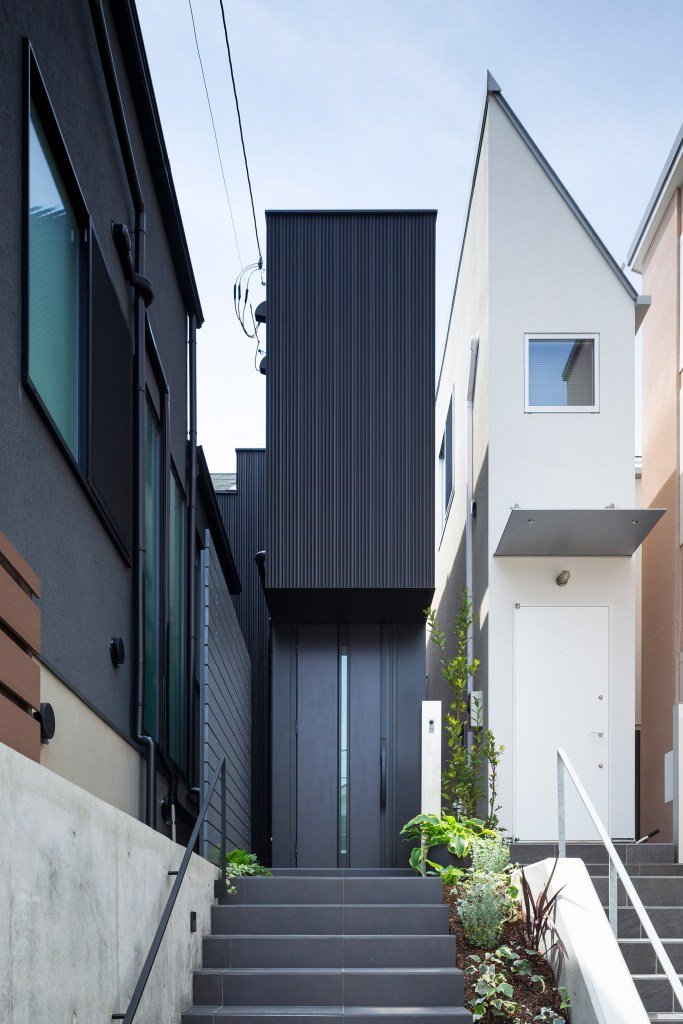
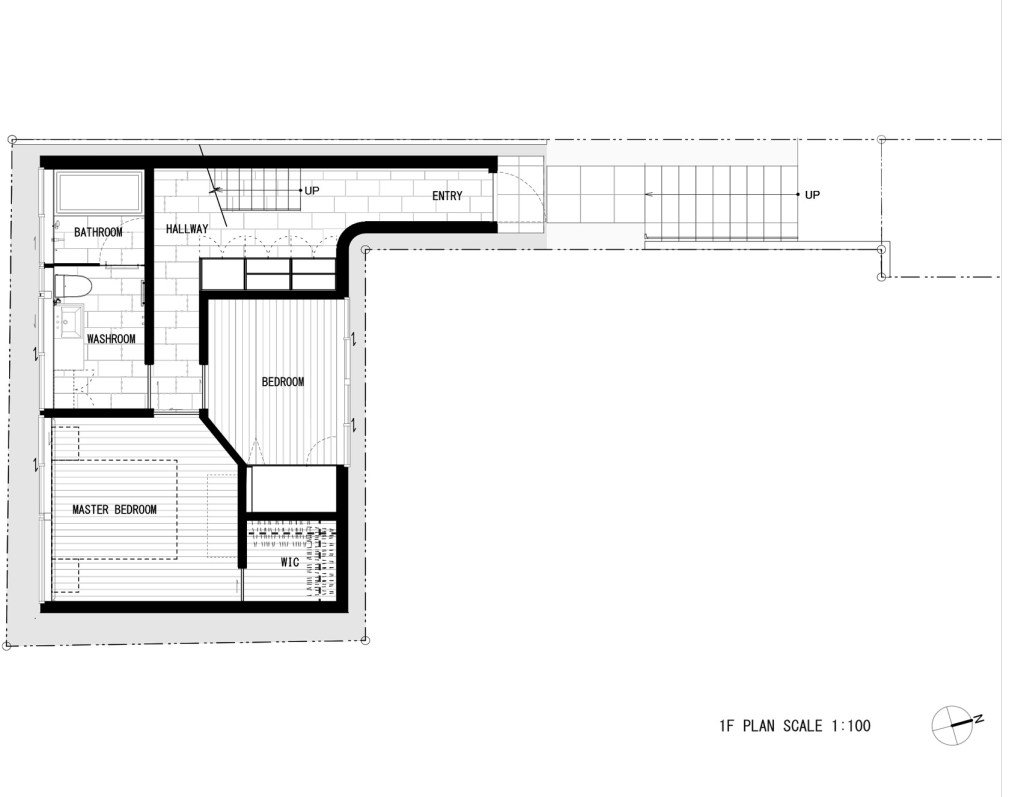
    I have a fascination with “small” Japanese homes. Many, or perhaps most of them, would be illegal to build in a place like Toronto. This one here in Tokyo, called Jewel, is only 1.4m wide on its narrowest elevation. See above photo. Designed by Apollo Architects & Associates, the ~80m2 home was built on a “flagpole” site. Narrow approach. More site area in the back. Here is a plan of the ground floor (via Dezeen) to give you a better sense of what I’m talking about:

    According to Dezeen, the client is a fan of minimal design and, in particular, the work of John Pawson. His work was a source of inspiration for the project. But if you read the article closely, you may notice that he is referred to as the “British architectural designer Pawson.” I learned last week, following this post, that John Pawson is not a licensed architect. Hence the carefully chosen language. I guess there’s hope for those of us who are not architects.

    Photo: Masao Nishikawa

  • The future of clothing

    Today’s post is going to be a bit of a departure from our regularly scheduled programming. But it’s so cool that I had to share it. It’s a company called Vollebak, and they use science and technology to make highly technical clothing (or, as they call it, the future of clothing). It was founded by two brothers.

    Every month they launch a new clothing concept. (Sign up here if you want to get on their list.) But each new piece they develop could take anywhere from one to five years to actually produce. Usually we’re talking about new production methods and materials that have never before been used for clothing.

    Examples include an indestructible puffer jacket designed to help us withstand up to -40 degrees; a solar charged jacket; a “black squid jacket” that reflects visible light to go from black to bionic; and a plant/algae t-shirt that is grown and can later be composted.

    But the piece I’m really eyeing is this blue morpho ski/snowboard jacket. It uses two billion microscopic glass spheres to try and replicate the wings of a blue morpho butterfly. During the day the jacket is matt blue. But as soon as you shine light onto it, it looks like the above photo.

    This would be useful if you were, say, caught in an avalanche and a helicopter searchlight was trying to find you. Hopefully that’s a use case that none of us have to experience. But it could also be invaluable if you were out walking or cycling at night and you wanted to make sure that cars could see you.

    (Please note how I somehow managed to make this post mildly relevant to cities.)

    Image: Vollebak