Daily insights for city builders, delivered every morning at 6 AM ET. I’m Brandon Donnelly — a Toronto-based real estate developer and founder of Globizen. I’ve been writing here since 2013.

Category: Urbanism

  • The passage of a few people through a rather brief moment in time

    My friend Eric Roseman, who lives in Los Angeles, just sent me this, knowing that I would almost certainly like the idea and want to write about it on the blog. This, is called The Passage of a Few People Through a Rather Brief Moment in Time.

    It’s over now. But from 2009 to earlier this year (2019), it was a collection of people who would meet every Wednesday night at 9pm at California Donuts #21 in Koreatown in order to cycle the city, see new things, and “see old things anew.”

    Given that each Wednesday night ride was about 20-35 miles, the group has covered a lot of ground over the last decade. Here is a cumulative map of their routes. You can also see an animated version, here.

    I like the idea of traditions and doing things repeatedly, because I think that grit is an important characteristic and I believe in compounding. It’s part of the reason why I write a daily blog and why I do an annual snowboarding trip.

    But I also think that biking is one of the best ways to experience a city. So, yeah, Eric, you were right. I do like this.

  • PANEL: New ADU Types and Toronto’s Missing Middle

    It has been a while since I wrote about laneway housing, so here’s a panel that I’m going to be speaking on this Thursday alongside Gregg Lintern, Mary-Margaret McMahon (former Toronto City Councillor), and Craig Race. It is being organized by Lanescape.

    As most of you know, I’ve been a vocal supporter of laneway housing in Toronto. So I am, of course, thrilled that it has now become a reality. But I must confess that I am less enthusiastic about the broader “missing middle” solution that everyone in the city is enamored with right now.

    The problem is that our cost structures make it exceedingly difficult to develop this scale of housing. I have friends who are trying and they can’t make the math work. Maybe this isn’t the case in all cities, but it’s certainly a challenge here.

    If you’d like a free ticket to this Thursday’s panel, use the promo code: SLATE.

  • The sensing power of taxis

    The latest project out of MIT’s Senseable City Lab examines the “sensing power of taxis” in various cities around the world. Looking at traffic data, they determined how many circulating taxis you would need to equip with sensors if you wanted to capture comprehensive street data across a particular city. This might be useful if you wanted to measure things like air quality, weather, traffic patterns, road quality, and so on.

    What they found is that the sensing power of taxis starts out unexpectedly high. It would only take 10 taxis to cover 1/3 of Manhattan’s streets in a single day. However, because taxis tend to have convergent routes, they also discovered rapid diminishing returns. It would take 30 taxis (or 0.3% of all taxi trips) to cover half of Manhattan in a day, and over 1,000 taxis to cover 85% of it. A similar phenomenon was observed in the other cities that they studied: Singapore, Chicago, San Francisco, Vienna, and Shanghai.

    However, if you look at the percentage of trips needed to scan half of the streets in a city, Manhattan has the lowest rate at 0.3%. Vienna is the highest at 9%. But I’m not sure if this is a function of the utilization rate of their taxis or if it has something to do with urban form. Singapore has a similarly low rate (0.44%), but its street grid looks nothing like that of New York’s.

    Here’s a short video explaining the project:

  • 25 most liveable cities in 2019

    The July/August issue of Monocle is hot off the press and, as has become tradition, it includes their annual Liveable Cities Index. Now, some of this could be construed as objective, but a lot of it is of course subjective. A liveable cities index is also very different from a global cities index, which is why you won’t find New York or London, or Toronto for that matter, on this list. Click here for a video of the 25 most liveable cities in 2019.

    Spoiler: Zürich takes the top spot.

    Photo by 🇨🇭 Claudio Schwarz | @purzlbaum on Unsplash

  • Tokyo’s kitchen cars (or food trucks)

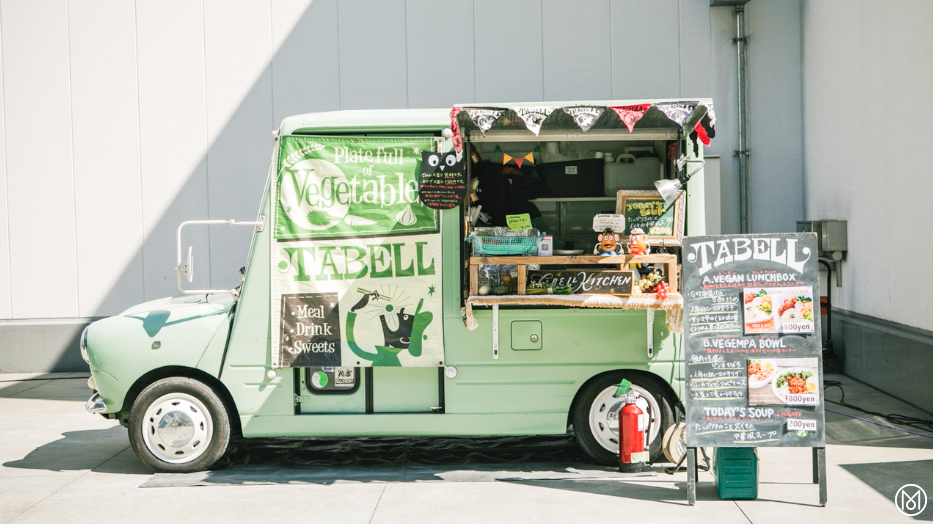
    Click here for a short video (by Monocle) about Tokyo’s nascent “kitchen car”, or food truck, scene. (The soundtrack is fun.) Historically, street food stands, or “yatai,” have had a questionable reputation in Japan. They proliferated across the country following World War II when times were tough and food was being rationed. But as Tokyo prepared to host the 1964 Olympics, local governments began to clamp down on yatai. They were seen as unhygienic and a place for drunks to hang out. There may have also been a sense of shame around the country’s post-war struggles. Whatever the case may be, these new food trucks have — aided by technology — changed the way people eat on the street.