Daily insights for city builders, delivered every morning at 6 AM ET. I’m Brandon Donnelly — a Toronto-based real estate developer and founder of Globizen. I’ve been writing here since 2013.

Category: Uncategorized

  • Restaurants are a central pillar of superstar cities

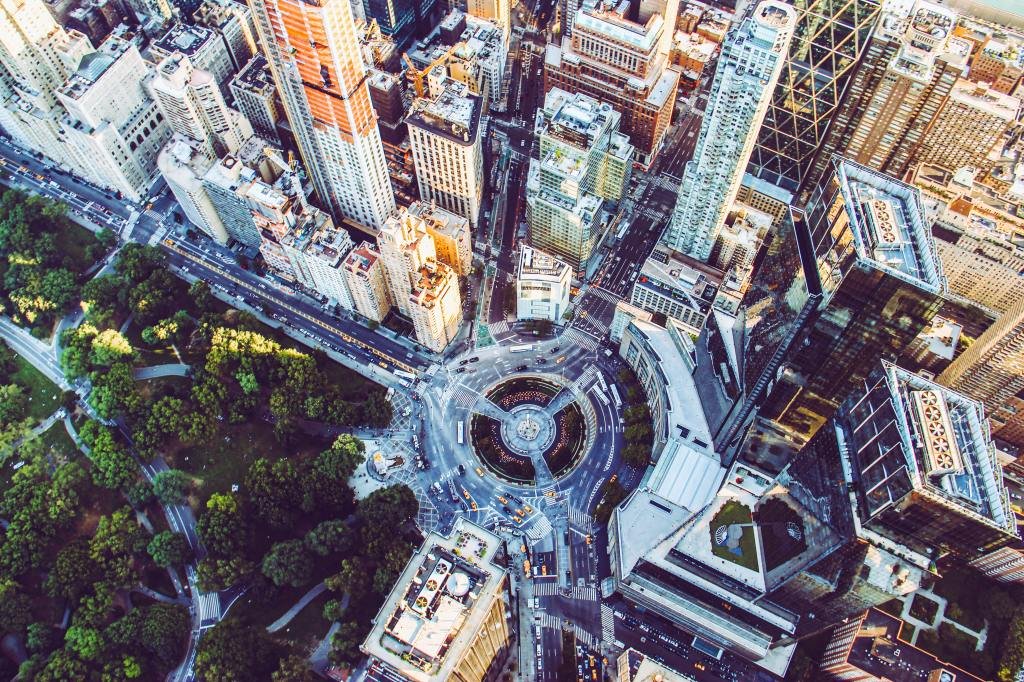
    How important are urban restaurants? This recent article by Eduardo Porter makes the argument that they are a “central pillar of superstar cities.” They are the social spaces that draw young and smart people to cities (see above) and that fuel our creative economy.

    According to Eduardo, in the 1970s, urban consumers in US cities typically devoted about 28% of their overall food budget to dining out. As of 2019, restaurants, bars, food trucks, and other dining establishments consumed about 47% of this budget for people living in cities with a population greater than 2.5 million.

    By comparison, people who resided outside of an urban area in 2019, spent only about 38% of their food budget on eating out. Still, these are substantial numbers. A big part of the food and drink that we consume is, at least during normal times, happening outside of where we live.

    Right now is certainly not the finest hour for cities. Urban amenities (like restaurants) and social networks are part of what make living in a city so enjoyable. And these two things have been greatly (and rightly) reduced. But I don’t for a second doubt the overall resiliency of our cities.

    This isn’t their first crisis and, unfortunately, it won’t be their last.

    Image: New York Times

  • Were the Victorians better city builders?

    A team of researchers at UCL recently surveyed 2,500 households across the UK to see how the design of their homes and neighborhoods has impacted their experience during lockdown (May to June 2020).

    Perhaps most notably, the report, called Home Comforts, found that people living in housing built in the last 10 years were more likely to feel uncomfortable during lockdown (1 in 5), compared to those living in homes built before 1919 (1 in 7).

    On top of this, people living in Victorian era housing were more likely to say that their neighborhoods were meeting their everyday needs, which seems to translate into convenient access to basic amenities (5 to 10 minute walk).

    So what does this tell us?

    That people want more ornament and clearly defined Zoom-friendly rooms? That the Victorians were better at city and community building? Or maybe that Londoners living in low-rise pre-1919 housing are generally well-established and have the ability to afford more conveniences? It’s likely a bunch of different things.

    There’s no denying that the way we build our homes and our neighborhoods has, for better or for worse, changed over the last 100 years. But let’s not forget that it’s easy to romanticize the past and the things we used to do. I’m sure it wasn’t puppy dogs and ice cream for all of the Victorians.

  • Project Profile: Hinterhouse by Ménard Dworkind Architecture & Design

    I recently discovered a company called Hinter (a colleague, who clearly knows me very well, sent it to me). It’s exactly the kind of the company that I would love to start, if only there were 30 hours in a day. They’re a non-traditional hotel in that they work with “iconic architects” to build unique spaces that are distributed and hidden in nature. (They also have a policy of planting 10 new trees for every booking.)

    Today’s post is a profile of their Hinterhouse (hh1) by Montréal-based Ménard Dworkind Architecture & Design. The space is located in La Conception, Québec, which is about 15 minutes from Mont-Tremblant. It’s 980 square feet (which is all you really need) and has 2 bedrooms. There’s also a private sauna and outdoor shower in a separate outbuilding. As soon as I saw it, I felt inspired and immediately opened up Realtor.ca to look for available land. Maybe it will do the same for you.

    All photography by David Dworkind.

  • The internet is no longer American

    This is the topic of Benedict Evan’s latest blog post, which is all about the internet, regulation, and the rise of China, as well as other countries. The internet is now deeply ingrained in everyday life. As of 2017, about 40% of Americans had met their partners online. We do everything online. But 80-90% of the world’s internet users are now outside of the US. There are more smartphone users in China than in the US and western Europe combined. And venture capital dollars have started to diversify away from just the US (see above chart). All of this — but mostly Tiktok — has Americans questioning how best to handle and how best to regulate.

    Here’s an excerpt from Benedict’s post:

    Both of these are captured in Tiktok. This is the first time that Americans have really had to deal with their teenagers using a form of mass media that isn’t created in their country by people who mostly share their values. It’s from somewhere else. That’s compounded by the fact that the ‘somewhere else’ is China, with all of the political and geopolitical issues that come with that, but I’d suggest that the core, structural issue is that it’s foreign. This is, of course, a problem that the rest of the world has been wrestling with since 1994, but it comes as something of a shock in Washington DC. There’s an old joke that war is how God teaches Americans geography – now it’s regulation.

    For the full post, click here.

    Image/facts: Benedict Evans

  • Tech and New York City

    Tech:NYC has just launched a new podcast called Talk:NYC. The first episode is with venture capitalist and blogger Fred Wilson. (Though, it should be noted that Fred and his wife, Joanne, are also involved in the real estate development space.) In this episode, Julie Samuels and Fred Wilson talk about why he came to New York, how to manage through a downturn, where working spaces are going, and why the magic of New York is still there — among a bunch of other things. Click here if you can’t see the embedded podcast below.

    https://soundcloud.com/user-212806065/talknycep01fredwilson
  • Uber to adopt 100% EV rides by 2030

    Last week, Uber made this green announcement.

    In it, they committed to becoming a “zero-emission platform” by 2040, with 100% of rides taking place in zero-emission vehicles, on public transit, or with micromobility. In the US, Canada, and Europe, they have gone even further and committed to 100% of rides taking place in an electric vehicle by 2030. And at the corporate level, they are similarly targeting net-zero emissions by 2030.

    To achieve all of this, the company will be focusing on helping drivers transition to EVs by 2025, investing in their multimodal network, and trying to encourage less reliance on personal car ownership, among other things. They’ll also be incentivizing both drivers (+$1.50 per Green ride) and consumers (3x Uber Rewards points per Green ride, instead of 2x). And I think these will be key.

    According to Uber, global carbon emissions fell by some 17% in the month of April as a result of lockdowns. But by June that decline had diminished to only 5%. What is obvious is that this was a short-term blip. “Normal” will return at some point. But once on-demand mobility is able to fully transition to electric vehicles, we’ll certainly be looking at a different kind of normal.

    For the full news release, click here.

    Full disclosure: I am long Uber.

  • A child of catastrophe

    It used to be the case that cities had a habit of catching fire and burning down. Toronto had the Great Fires of 1849 and 1904. Chicago had the Great Fire of 1871. And the same can be said about many other cities. In fact, you probably weren’t considered a real city until you had some sort of “Great Fire.” But as Derek Thompson points out in this recent Atlantic article about urban comebacks, disasters have a way of forcing positive change:

    The 21st-century city is the child of catastrophe. The comforts and infrastructure we take for granted were born of age-old afflictions: fire, flood, pestilence. Our tall buildings, our subways, our subterranean conduits, our systems for bringing water in and taking it away, our building codes and public-health regulations—all were forged in the aftermath of urban disasters by civic leaders and citizen visionaries.

    As Charles Dickens famously described, British cities in the early years of the Industrial Revolution were grim and pestilential. London, Birmingham, Manchester, Leeds—they didn’t suffer from individual epidemics so much as from overlapping, never-ending waves of disease: influenza, typhoid, typhus, tuberculosis.

    It’s somewhat unfortunate, but oftentimes we need something to break before any action is taken. There’s a bias toward the status quo. Otherwise, it becomes a question of, “what did we do last time? Well that worked just fine. Let’s do it again.” But hopefully all of this makes you at least a little optimistic about the future. Because history has taught us that when faced with adversity, we don’t typically turn our back on our cities. Rather we turn around and make them better.

    Photo by Tomek Baginski on Unsplash

  • Dixie Outlet Mall launches drive-in movie theater

    Dixie Outlet Mall in Mississauga has just launched a drive-in movie theater that will run for three Saturdays starting on September 12, 2020. Tickets are available for $5 and you have to purchase in advance. It’s first come, first park. And there only 100 parking spots available.

    Here are the event links:

    Sept. 12, 2020

    Sept. 19, 2020

    Sept. 26, 2020

    All of the proceeds from ticket sales will be donated to the New Haven Learning Centre, which is a group that works to positively change the lives of people with autism, and other related disorders. For more information about the Dixie Drive-In, click here.

    And for those of you who are curious, the answer is yes, a minor variance application was required in order to allow this “pop-up.”

  • A few thoughts about housing supply

    Here are a few things to consider.

    One, the home you live in was likely built by a person or company that was trying to make a profit.

    Two, when your home was being developed and built, it probably upset a bunch of people. Both because something new was coming and because construction can be annoying.

    Three, your home was built using materials and construction techniques that were readily available at the time. Some of those materials and techniques may no longer be practical.

    Four, when your home was complete, somebody probably thought, “boy, they don’t build them like they used to.”

    Five, the need for new housing doesn’t stop just because you now have a home.

  • New York City isn’t dead

    I was speaking to some friends in New York City over the weekend and they said to me, “you know what Brandon, we don’t really go out at night anymore. It doesn’t feel safe. There are homeless people everywhere and they’ve started to get very aggressive, particularly against Asians.”

    They live in a good neighborhood in Manhattan.

    I was somewhat surprised to hear this, but at the same time, I don’t think for one minute think that New York City is dead. But some do, including James Altucher. James moved to Florida because of the pandemic and recently penned an article in the NY Post called, “New York City is dead forever.”

    That didn’t sit well with Jerry Seinfeld and so this morning he published a rebuttal op-ed piece in the New York Times. It has been making the rounds online today with people responding from both sides of the fence. Richard Florida responded with this tweet thread.

    If you’re a regular reader of this blog, you’ll know where I sit on this topic. I love technology, but sitting at home all day going from Zoom meeting to Zoom meeting is not the kind of life I aspire to live. I agree with Jerry. There’s no energy. In fact, it sucks the energy right out of me.

    With that, I’ll leave you with some more words from Jerry Seinfeld:

    There’s some other stupid thing in the article about “bandwidth” and how New York is over because everybody will “remote everything.” Guess what: Everyone hates to do this. Everyone. Hates.

    You know why? There’s no energy.

    Energy, attitude and personality cannot be “remoted” through even the best fiber optic lines. That’s the whole reason many of us moved to New York in the first place.

    You ever wonder why Silicon Valley even exists? I have always wondered, why do these people all live and work in that location? They have all this insane technology; why don’t they all just spread out wherever they want to be and connect with their devices? Because it doesn’t work, that’s why.

    Real, live, inspiring human energy exists when we coagulate together in crazy places like New York City. Feeling sorry for yourself because you can’t go to the theater for a while is not the essential element of character that made New York the brilliant diamond of activity it will one day be again.

    Photo by Florian Wehde on Unsplash