Daily insights for city builders, delivered every morning at 6 AM ET. I’m Brandon Donnelly — a Toronto-based real estate developer and founder of Globizen. I’ve been writing here since 2013.

Category: Park City / Utah

  • Schematic design phase complete for Parkview Mountain House

    Some of you may be aware that Globizen is working on a new project in Park City, Utah right now called the Parkview Mountain House.

    It was first announced on the Globizen Journal back in the summer and then a later announcement was made appointing New York-based Mattaforma as the project architect. It’s kind of a great story because Mattaforma is a relatively new firm that was formed by two architects who used to be at Studio Gang. So we have a long history of working together.

    The vision for the project is a creative retreat in the mountains. A place to unplug, be active, and hopefully a place to foster creative expression, whatever that may be for you. It was inspired by the trip that I have been making to the mountains each year where we try and do exactly this. It’s one of my favorite times of the year and one that I look forward to the minute the last one is over.

    The team has just finished the schematic design phase for the house (see above axonometric). And we are now working through some of the structural and geotechnical issues that come with building in the mountains on very steep terrain.

    To give you all one example, we had initially contemplated large multi-storey retaining walls to hold back the earth and embed the house into the side of the mountain. But that is now being changed to a stepped foundation that minimizes the amount of excavation and reduces each retaining wall to no more than a single storey. This move will also result in more wood and less concrete. It has been a fun learning process.

    The creative retreat concept has also been evolving and we recently decided to make digital NFT art an integral part of the experience. We have a few collections that we have been stocking up on, but if any of you have any recommendations we are, of course, all ears.

    Once the floor plans have been finalized, they’ll be posted up on the Globizen Journal. So make sure to e-mail subscribe and follow along on Instagram at @parkviewhousepc.

  • A modernist utopia at Summit Powder Mountain

    About 60 miles north of Salt Lake City is the largest ski resort in America, called Summit Powder Mountain. It’s some 10,000 acres. But beyond just being big, there is also a fascinating story and philosophy behind the mountain.

    It was started by four partners — Elliott Bisnow (of Bisnow events), Brett Leve, Jeff Rosenthal and Jeremy Schwartz — who partnered up with Learn Capital in 2013 to buy the mountain from a distressed seller for $40 million.

    The four guys were already running a successful invitation-only event series for entrepreneurs and creative types called the Summit Series, and big part of their vision for the mountain was to recreate this same ethos.

    The idea was to create a community focused on relationship-building, entrepreneurship, innovation, environmental sustainability, and good design. Put differently: a kind of utopia for rich people.

    So far, about 80% of the home buyers at Summit Powder Mountain are members of the Summit Series.

    All of this has translated into some pretty cool mountain architecture (see above). In fact, people who buy vacant lots within the community are effectively banned from building the kind of faux chalet stuff that permeates a lot of (or most?) mountain towns.

    Here is a taste of some of the homes that have already been built.

    Image: Paul Bundy for the Wall Street Journal

  • Extell Development to build $2 billion ski resort near Park City

    New York-based Extell Development is, according to this recent WSJ article, in the midst of trying to build a $2 billion full-service ski and snowboard resort near Park City, Utah. It would be the first new resort in the United States in about four decades. These things are, clearly, difficult to get approved, and the fundamentals are, arguably, not all that great. In the early 1990s, the US had about 546 ski and snowboard resorts across the country. As of the 2018-2019 season that number had dropped to 476, according to the WSJ. People are skiing less than they used it, it would seem.

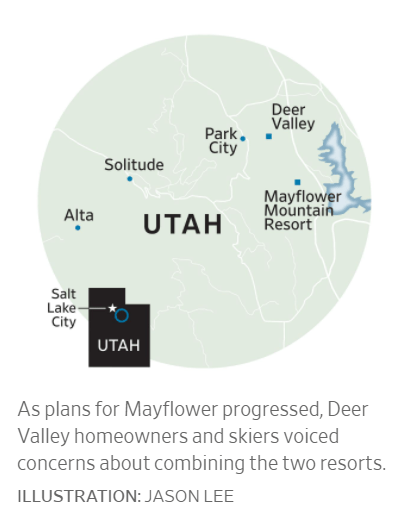
    To be a bit more precise on its location, the proposed resort, which is currently called Mayflower Mountain Resort, is to be located next to Deer Valley Resort. And there’s even a plan floating around to possibly merge the two resorts. That’s apparently what the county planners want. I’m not all that familiar with Deer Valley because they don’t allow my kind there (snowboarders). But it’s an exclusive resort with a country-club kind of feel (or so I’m told). So it shouldn’t come as a surprise that the proposed merger doesn’t seem to be getting a lot of traction with the patrons of Deer Valley.

    But here’s the interesting thing about the Mayflower site. It’s generally controlled (to what extent, I don’t exactly know) by an entity called The Military Installation Development Authority. And this entity has the power to do things like issue bonds and grant certain land-use approvals. This means that there may be an angle to streamline the approvals process (i.e. make this project actually feasible) and to leverage things like tax increment financing (TIF) in order to fund the project.

    Supposedly a new mountain resort has been on the books for this site for some 30 years. Could now finally be the time? If they allow my kind, you can count me in.

    Image: WSJ

  • Snowboarding, vlogs, Cape Town, and marketing

    This morning, instead of my usual routine of writing alongside a cup of coffee, I decided to finally edit all of the skiing and snowboarding footage that I took last month in Park City, Utah. Click here for the final cut.

    Compared to the video we did for Jackson Hole, I don’t like the selfie perspective as much. It doesn’t show enough of the person. This time we used the Go Pro 3-way arm, but in Jackson we used a plastic tube that I think was used for a beer funnel before that. Next year we’ll go back to that.

    Video is a lot of fun and I would love to figure out a way to incorporate more of it into this blog. But that’s a far bigger time commitment and I am not prepared to allocate resources to that. I write every day. That’s my thing.

    I am, however, not ignorant to what’s happening in the world of video blogging. And I think there are lots of opportunities for businesses who have the resources to allocate towards projects like this.

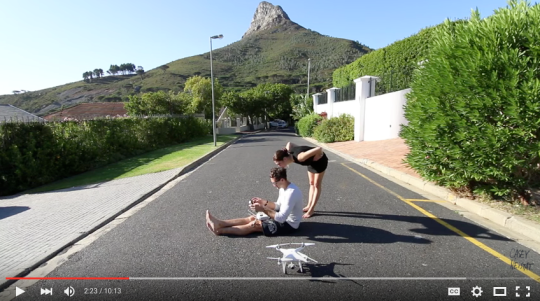
    Take for instance this vlog by New York video guy Casey Neistat. It’s probably the best piece of marketing that the Phantom 4 drone could have asked for. It’s authentic. I watched it and now I want one. Take my money. 

    (Note to city geeks: It’s worth watching just for the drone aerials of Cape Town, South Africa.)

    To my knowledge, I don’t think people are doing anything like this in the real estate business. But eventually it will happen. Because people are becoming increasingly immune to your typical marketing pieces.

  • Ziggurats and gondolas

    Yesterday was an exciting day for Toronto city building announcements. 

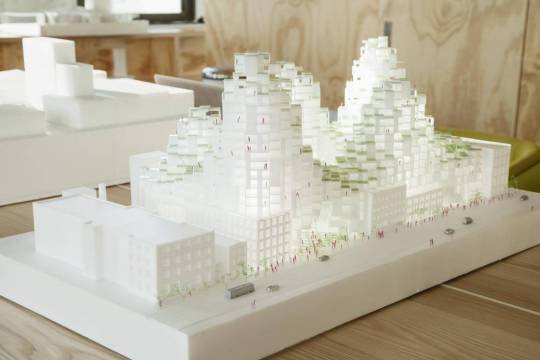
    Firstly, Alex Bozikovic of the Globe and Mail published an exclusive preview of architect Bjarke Ingel’s plan for King Street West. Here’s a photo of the architectural model (it’s by Landon Speers):

    My favorite quote from the article is this one from Bjarke:

    “It would be sad if the most diverse city in the world had the most homogenous real estate.”

    It’s true.

    For those of you who emailed me about the details of his talk next week (there were a lot of you!), I believe I emailed you all back. But in case I missed some of you, you can click here for the event details. I should have included it in my original post about BIG, but I thought the event was already oversubscribed.

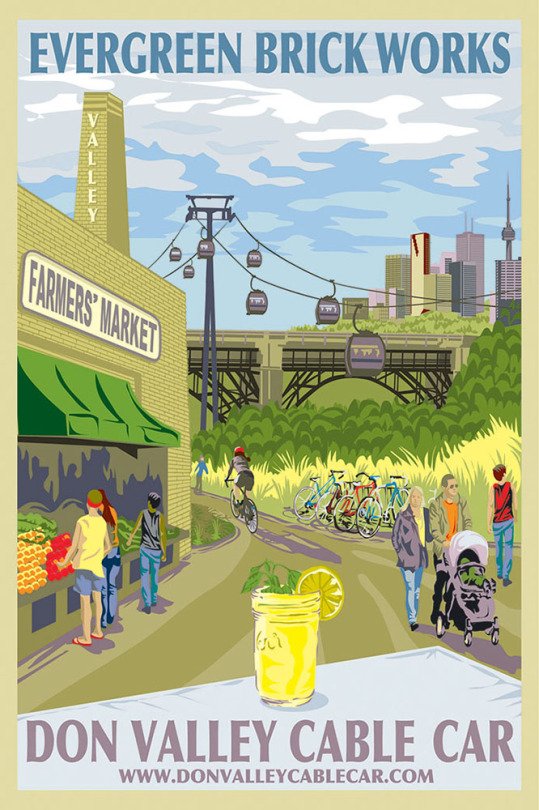
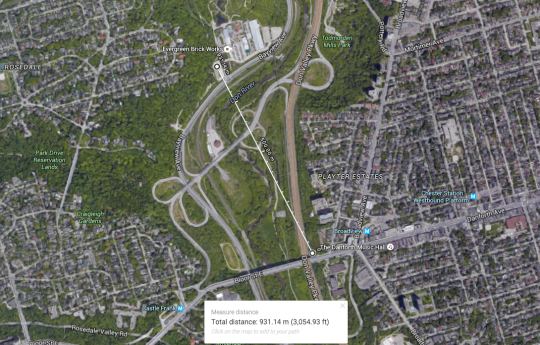
    Secondly, a private company called Bullwheel International Cable Car Corp. has just proposed to build a $20 to $25 million gondola running from Danforth Avenue (near Broadview subway station) to the Evergreen Brickworks. The total length would be almost 1 km and it, allegedly, wouldn’t require any public money. Here is their website.

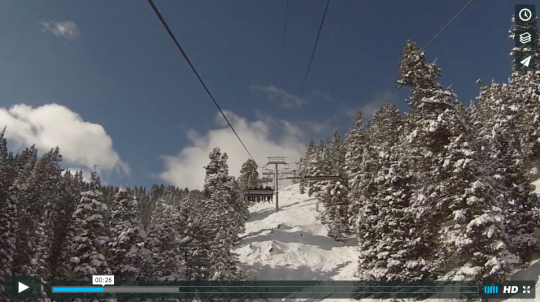
    The timing of this proposal feels a bit serendipitous to me. When I was in Park City, Utah a few weeks ago, snowboarding right into the town and then taking their “town lifts” back up to traverse the mountain, I remember thinking to myself: what a wonderful form of transportation this is.

    Of course, Park City has giant mountains and Toronto, unfortunately, does not. But we do have spectacular ravines and a spectacular institution known as the Evergreen Brickworks.

    But one of the challenges with our ravines is that they can be a bit hidden – particularly for visitors to the city. Part of this is because we are trying to figure out the right balance between natural preservation and active use. But that’s one of the things that makes this proposal so intriguing. It’s a way to celebrate our ravines and natural landscape, without physically encroaching it.

    Here’s a map of the proposed gondola path:

    What do you think about these announcements?

  • The value of lifestyle in attracting human capital

    When I was in Revelstoke, BC last year I met a number of people who had made the move out there from Toronto. When I asked if they missed living in a big city, pretty much everyone gave me the same answer: “No, I love it here.”

    This past week when I was in Park City, Utah, I similarly met a number of people who had made the move from New York and other large cities. And when I asked them the same question, I heard statements like: “I used to live in New York, but then I got a life and moved out here." 

    In these two examples, the obvious draw is the mountains. But it’s not like everyone just moved and became a ski bum. In fact, Inc Magazine recently published an article talking about Park City’s robust startup scene. People are figuring out how to combine hard work with the lifestyle they want.

    What I find interesting about this is that it runs counter to the trend of young people preferring big cities. Here’s a quote from NPR:

    “But affordable real estate and waterfront views don’t have millennials biting. They continue "a multigenerational pattern of young adults preferring more expensive urban areas over lower-cost rural ones because the lifestyles and opportunities in such places make the extra burden of cost worth it,” says Robert Lang, professor of urban growth and population dynamics at the University of Nevada, Las Vegas.”

    However, some small towns clearly have a unique lifestyle advantage: mountains. And that seems to be a strong enough draw that some people are simply figuring out how to create the economic opportunities for themselves.

    For me, this is yet another reminder that if you’re trying to attract the best human capital to your city or town, you need to think about lifestyle. And since young adults aged 18-34 are far more likely to move around than any other generation, you should also be thinking specifically about what this generation wants.

    Here’s a chart from CityLab that shows how precipitously migration falls off (in the U.S.) once people finish school and get settled in a job:

    image

    Obviously, not every town or small city is blessed with mountains. But there are many lifestyle advantages that can be created. It’s for this reason that I keep talking about nightlife and Toronto’s laughable 2AM last call. Those are lifestyle things and we can do better.

  • A truly modern ski and snowboard resort

    Today my friends and I spent the day at Snowbird.

    In terms of the skiing and snowboarding, it’s way up there for me alongside Jackson Hole.

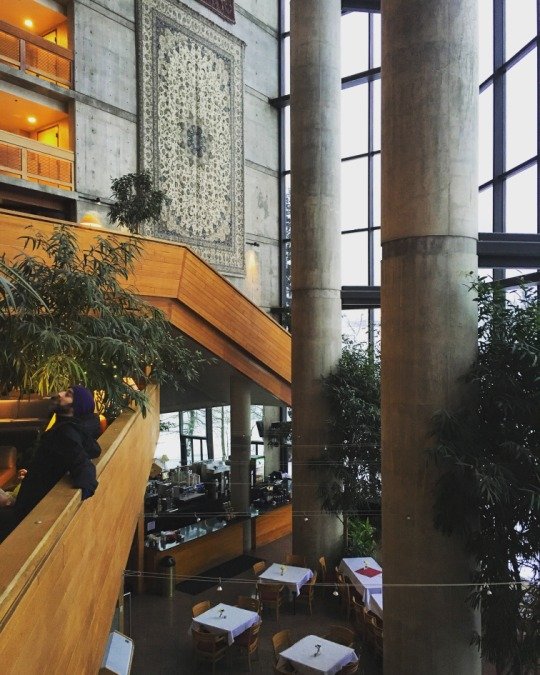
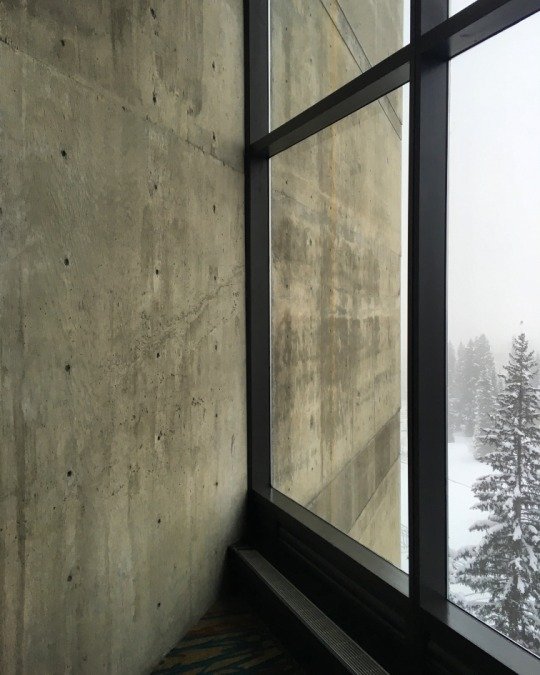
    But beyond the mountain, two things really stood out for me. Firstly, I really liked the overall brand and identity of the resort. Everything from the napkins in the cafeteria to the ski run signs were decidedly modern. Secondly, I loved the Brutalist architecture. And both of these elements combined to create what felt to me like a truly modern ski resort.

    Here are two photos that I took today:

    imageimage

    Developed in the mid-1960s by a man named Ted Johnson, the vision had always been to create a new kind of resort. In fact, Ted was insistent that they eschew the typical faux-alpine architecture that had come to characterize ski towns. 

    Here’s a brief summary of the parties involved and Ted’s design direction, via Salt Lake Modern:

    In 1965, the Snowbird Design Group was founded to create the first master plan. The original group was composed of Robert Bliss, Dean of the School of Architecture at the University of Utah, Jim Christopher, principal at Brixen & Christopher Architects, Dan Kiley, renowned landscape architect and site planning consultant based in Vermont, and architect Jack Smith. Johnson was adamant that the new resort not look “alpine lodgey” and based on the steep terrain and available land, the only choice for design would be to make it compact and dense. An aesthetic very unlike Alta, located just above Snowbird.

    For me, it’s the contrast between the rugged exposed concrete and the warm wood that I love. I left today thinking to myself that Snowbird is the most architecturally interesting ski resort I’ve ever visited.

    But as luck would have it and immediately after we left the resort, I discovered a community group called, “Save our Canyons.” And they don’t appear to be as smitten as I am with the Brutalist architecture. Here’s an excerpt from one of their articles talking about a new construction project at Snowbird:

    “Alas, more Snowbird droppings are fouling our Wasatch nest. Snowbird, already renowned for the hideous concrete bunkers at its base, has plopped another wad of architectural guano on top of Hidden Peak.”

    Of course, it is well known that Brutalist architecture isn’t often a crowd favorite. But when done well, it can be quite beautiful. Hopefully there are others who see what my friends and I saw today.

  • 10 city building predictions for 2016

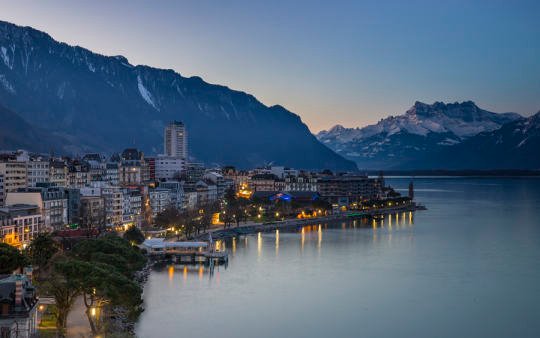
    Dawn by Adrian Popan on 500px.com

    https://500px.com/embed.js

    Few things are better than waking up in the mountains and seeing a notification on your phone that 9″ of fresh snow have fallen overnight, bringing the 48 hour snowfall total to 16″.

    This is what people in mountain towns live for. They ski in the morning and then head to work in the afternoon. I heard a number of people on the mountain today saying that they, “want to be in the office after lunch.” It’s a lifestyle thing.

    On that note, today I’d like to focus on 10 city building predictions for 2016. I’ve been assembling this list over the past few weeks and now that I have had my fill of Utah powder for the day, I’m dedicating the rest of the afternoon to writing.

    These are never easy to put together. But here are my thoughts:

    1. We will see increased migration to secondary cities – outside of the alpha global cities – which offer a higher quality of life, more affordable housing, and the ability to live a particular lifestyle. This includes cities like Austin (creative startup hub) and Denver (outdoor recreation).
    2. As more and more cities wake up to the importance of lifestyle in attracting top talent, I think we will see a lot of cities follow the lead of Amsterdam and create “night mayors” or some other equivalent. These cities will begin to see nightlife as a competitive urban advantage.
    3. Global cities will start experimenting with different land use and property tax reform strategies to try and deal with rising income inequality and eroding housing affordability.
    4. We will see a barbell of residential unit sizes. We’ll see more well-designed small units as a way to try and promote housing affordability and we’ll see larger urban infill units for families and baby boomers who want to live/remain in walkable urban communities.
    5. In line with above, I think we will see a further rethinking of urban spaces. Flexible spaces, unique program mixes, and a continued blurring of public/private spaces. One example of this is the trend towards small private spaces surrounded by generous public/communal spaces.
    6. The Toronto and Vancouver real estate markets will continue to chug along because of low interest rates, a weak Canadian dollar, and increased foreign investment. That said, I think we will see more restraint when it comes to over-the-top luxury product.
    7. We will finally see a disruptive technology product that starts to get people in the real estate industry thinking that change is on the way. This will not be a product that ports an offline experience online; it will a new way of thinking about the industry.
    8. This will be the year that cities stop fighting Uber (and other similar marketplaces). Cities (and lobbyists) will finally accept that this is a new reality and then work to figure out the best way to create policy around it. Edmonton, Alberta has already become the first Canadian city to regulate Uber.
    9. Road pricing will get the attention it deserves in North America. Things will start out slow, but we will finally get ourselves on a path which recognizes that we can’t build our way out of traffic congestion in most major cities.
    10. I will publish a book on becoming a real estate developer.

    Many city building trends and shifts seem to happen in a global way. But I think it’s worth noting that a lot of these predictions were likely written with my North American lens on, and in some cases my Toronto lens on.

    It’s not easy sitting down and thinking about what will happen in the future. But it’s a worthwhile exercise. It forces you to take a stance and then, when the future does come, you can see how well you did. I saw Fred Wilson do this on his blog and I thought it was a great idea.

    Now I would love to hear what you think about my predictions and what yours are for this year. Please let us know in the comment section below.

  • Off to the mountains

    image

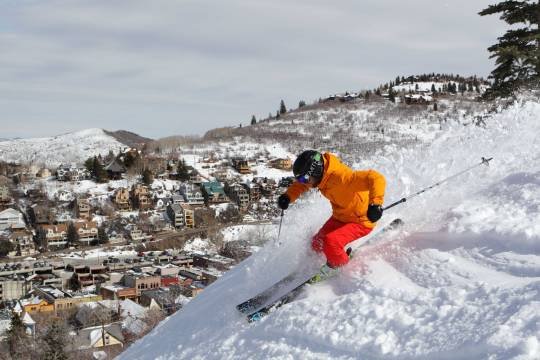
    I am leaving this morning for my annual retreat to the mountains. This year we are going to Park City, Utah, which we decided to do about a year ago.

    The reason we chose this particular place is because Vail Resorts spent $50 million over the offseason to merge Park City Mountain Resort with the neighboring Canyons Resort. 

    There’s now a mountain-to-mountain gondola and 7,300 acres of skiable area across the two resorts, which makes it the largest ski resort in the United States. And that’s why, this month, the New York Times named it one of the 52 places you need to visit in 2016

    But it’s not all puppy dogs and ice cream. What kickstarted this transformation was that the previous operator of Park City, Powdr Corporation, actually forgot to renew its sweetheart land lease.

    So if you’re at all interested in skiing, snowboarding, real estate, and/or lawsuits, you might be interested in what happened here. Curbed did a summary of the battle last year. It was big news in the ski world.

    Image via the New York Times