Daily insights for city builders, delivered every morning at 6 AM ET. I’m Brandon Donnelly — a Toronto-based real estate developer and founder of Globizen. I’ve been writing here since 2013.

Category: South of France

  • À la prochaine, Nice

    Our week in Nice has ended. We took an early morning flight out today, connected in DC, and arrived back in Toronto in the evening.

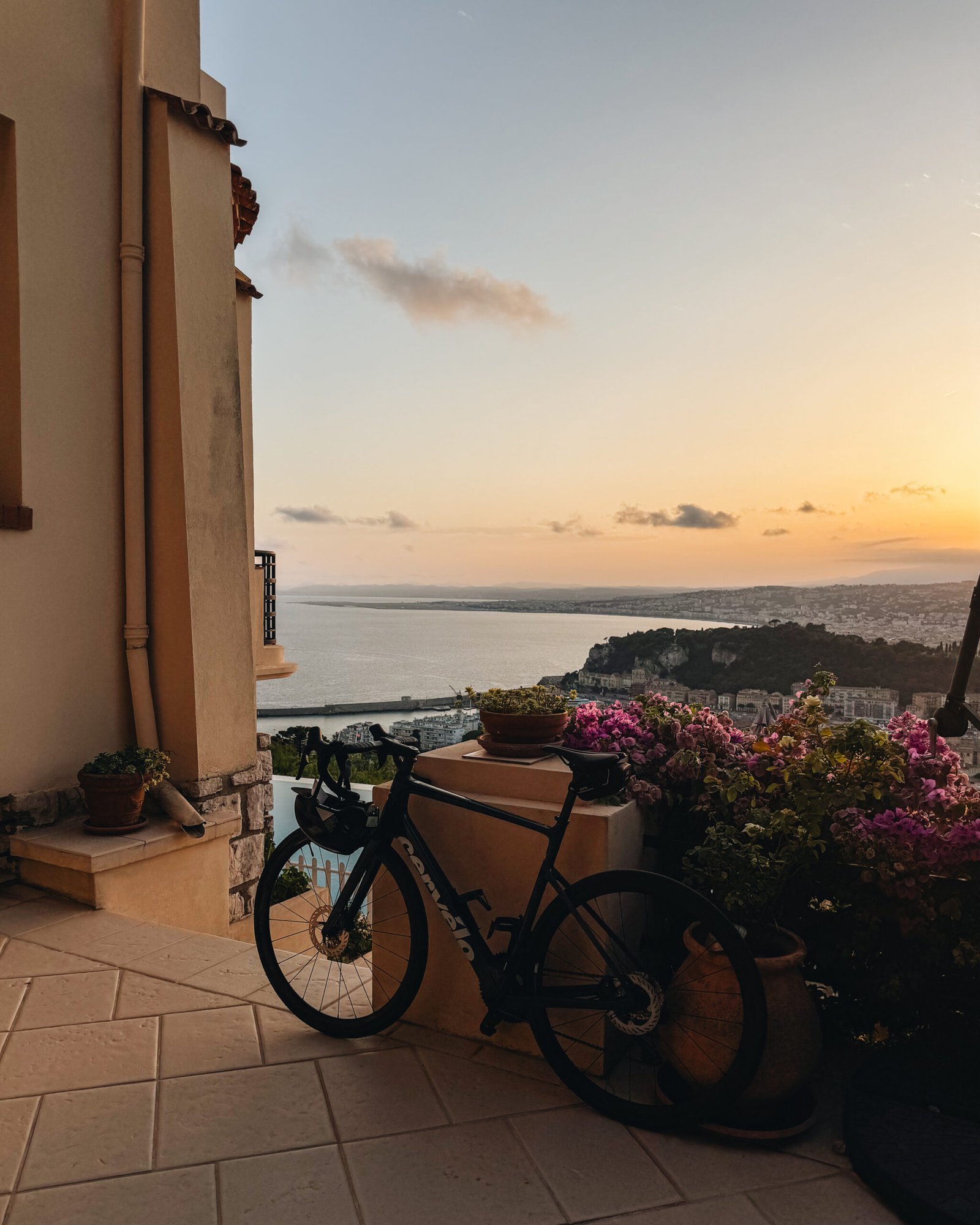
    I love Nice. It’s urban, but it also has great beaches and rocky swimming coves. It shares some of the exact qualities I love about Rio de Janeiro, albeit on a smaller scale.

    It also has a robust road biking culture. And I aspire to one day be able to keep up with the pros on those mountain climbs. Until then, look for me in the bike lanes of Toronto.

    Regularly scheduled programming resumes tomorrow on the blog.

  • La Promenade des Anglais needs a Canadian flag

    I have a suggestion.

    La promenade des Anglais is Nice’s most globally recognizable street. It’s a 7-kilometre waterfront promenade that curves along the Baie des Anges. It’s a UNESCO World Heritage Site and it’s home to many of the city’s events, such as the Ironman competition that took place this week.

    (Congratulations once again to my brother from another mother Austin for showing us how it’s done today!)

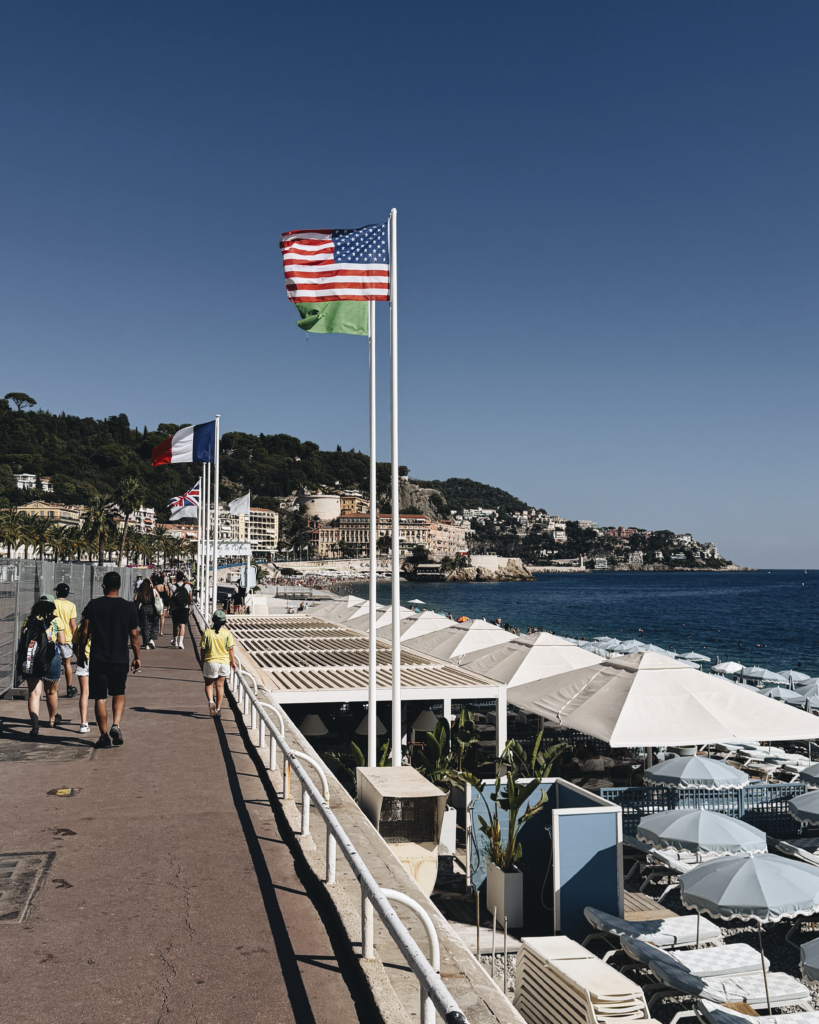
    In addition to a beautiful promenade, beach, and shimmering blue waters, you’ll also find lots of flags. Naturally, there’s the French flag. There’s the Union Jack. The promenade was originally funded and built by the British aristocracy who used to winter in Nice.

    You’ll find the flag of Monaco given its proximity (~20 km). The Italian flag also features. Nice belonged to the Kingdom of Sardinia until 1860, and the border is ~30 km away.

    You’ll find the American flag, which presumably reflects the city’s long military and cultural connection with the US. More recently, you might also find Ukrainian flags, reflecting French solidarity with and support for the country.

    But one flag that I have yet to find is the Canadian flag. That is, other than the one this yahoo was waving around during the Ironman competition. I think that needs to change. Canada is widely considered to be the second most important country, after France, within La Francophonie.

    Plus, with Canada looking to aggressively deepen its economic ties with the EU and with Air Canada announcing direct flights from Toronto to Nice starting next summer, I think Nice should expect greater Canadian influence going forward.

    I have put out a formal request to President Macron, Prime Minister Carney, and the Ville de Nice. I’ll let you know how they respond.

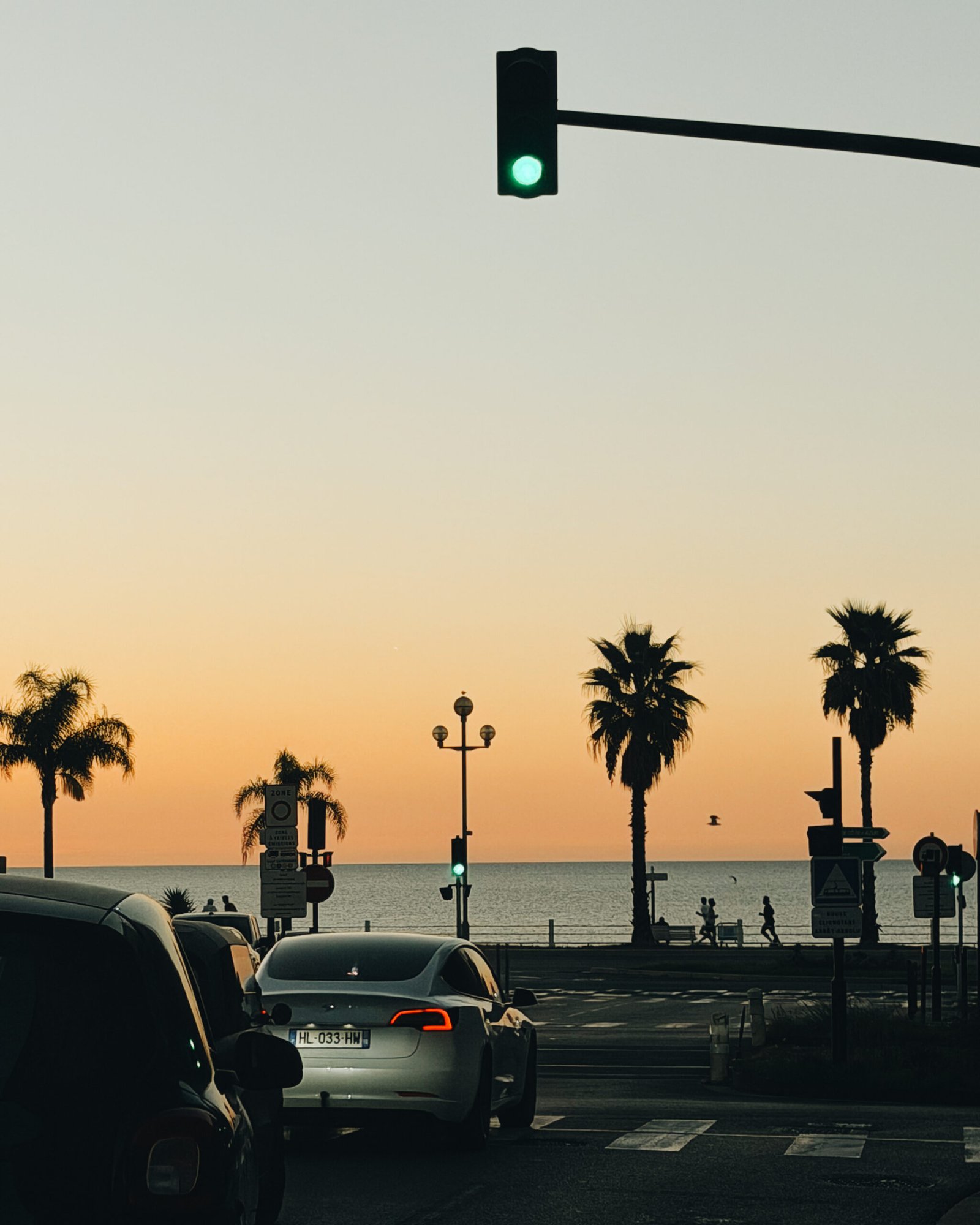
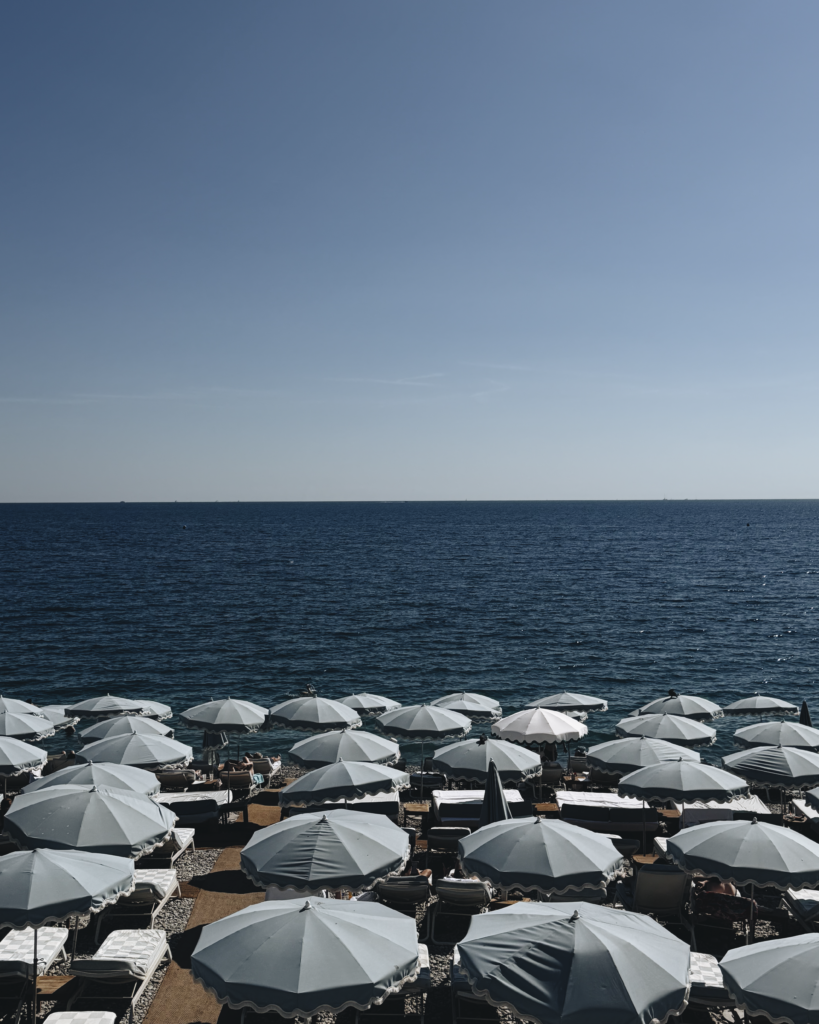
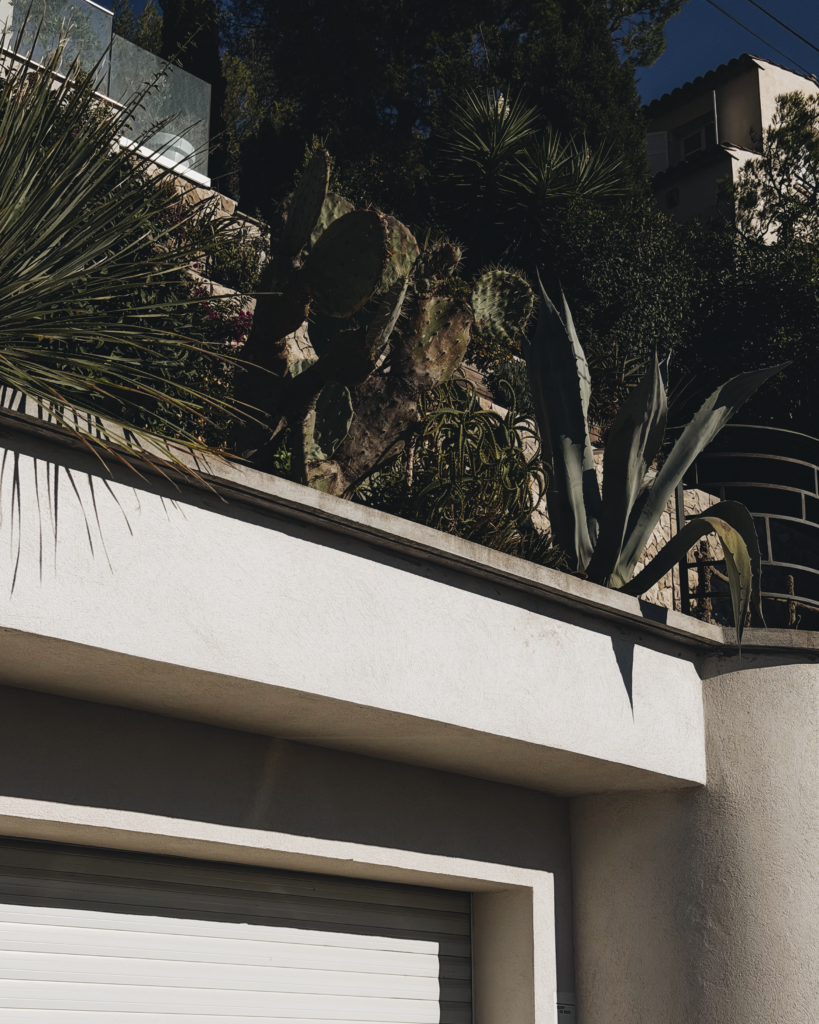
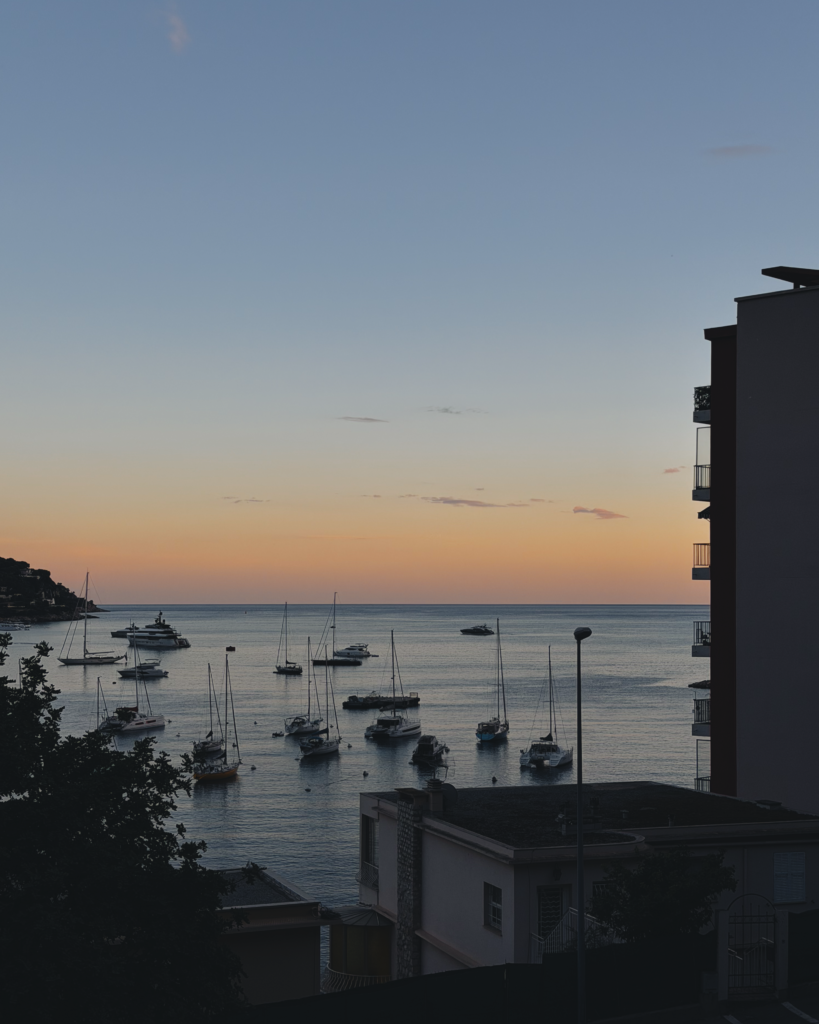
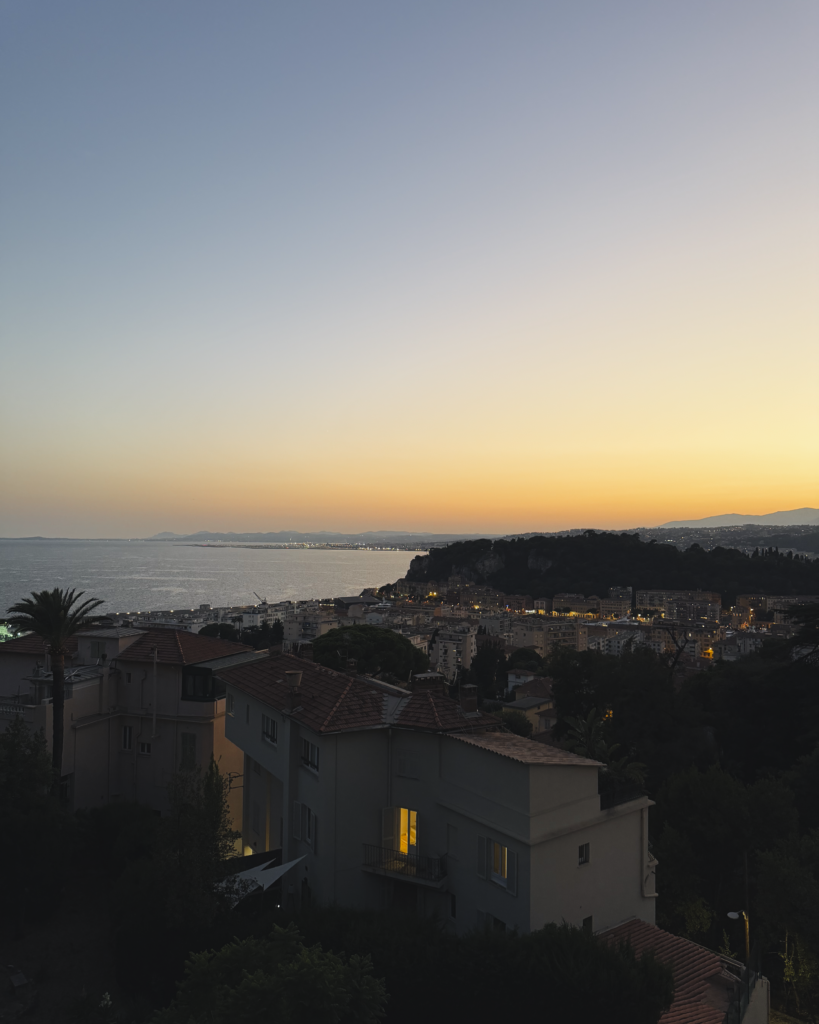
  • Nice, September 2026

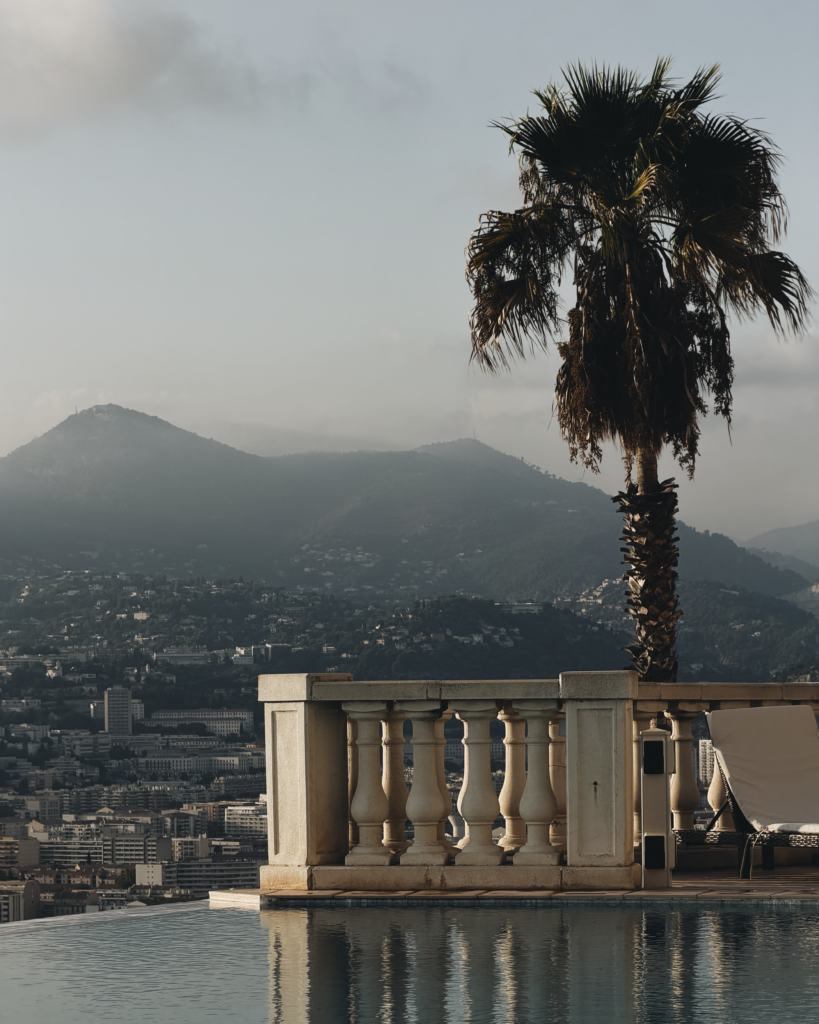
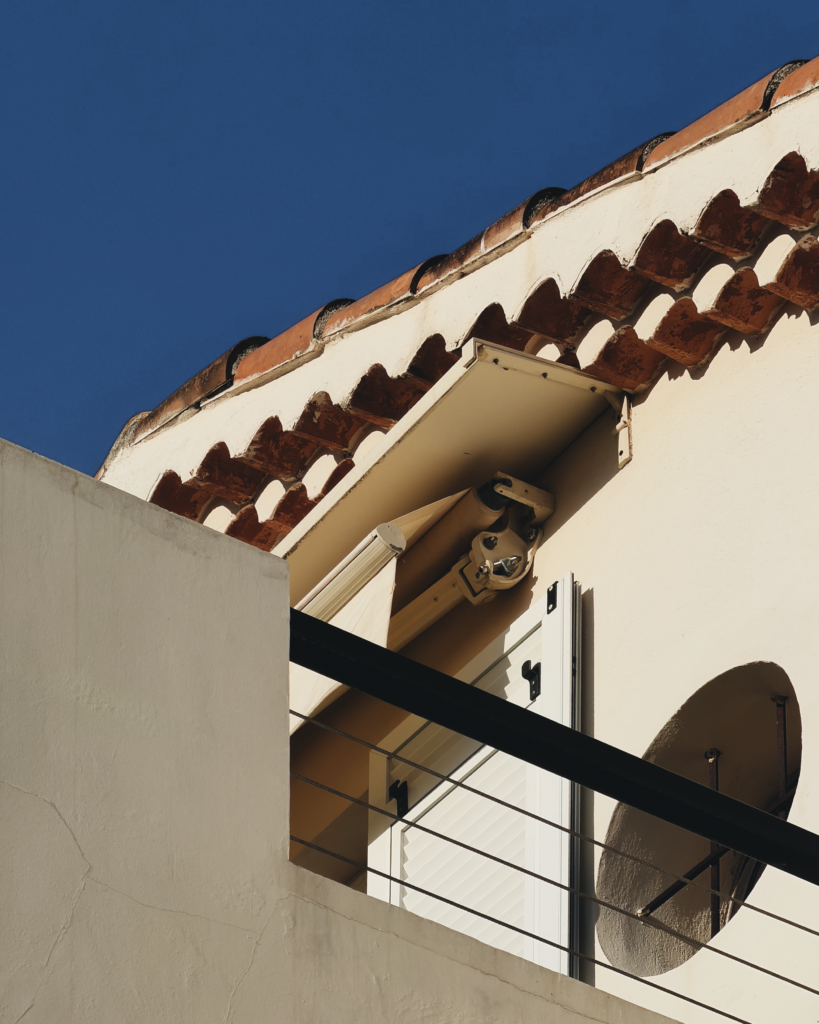
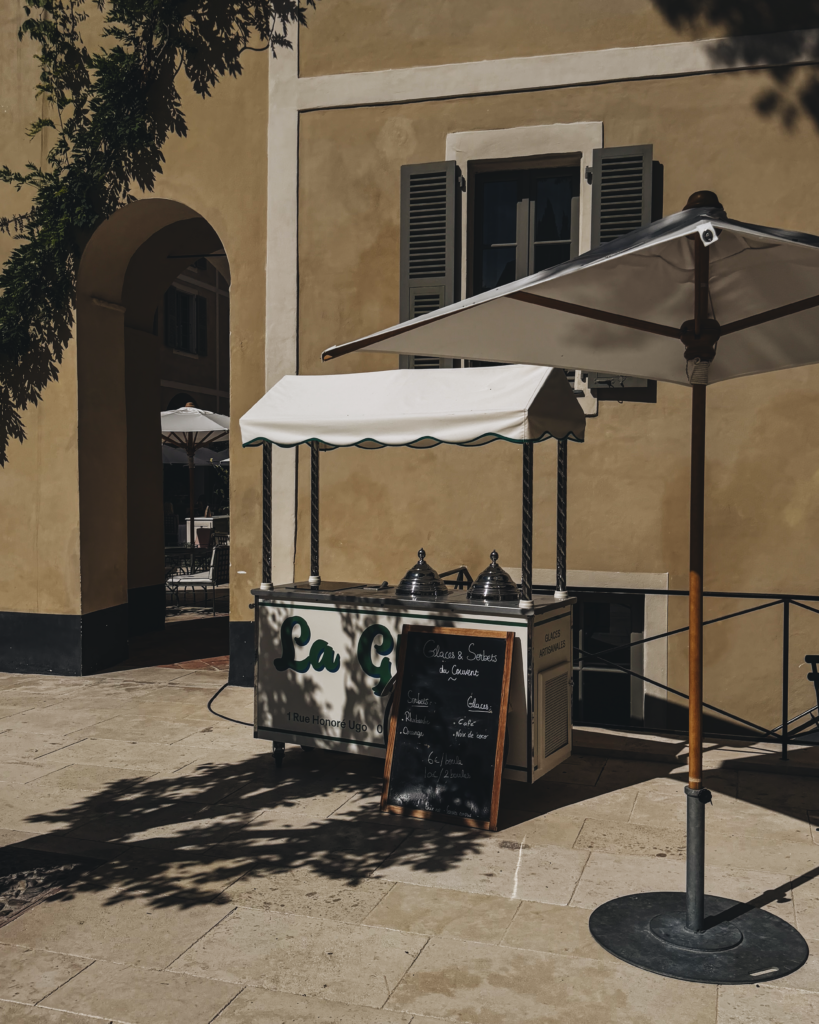
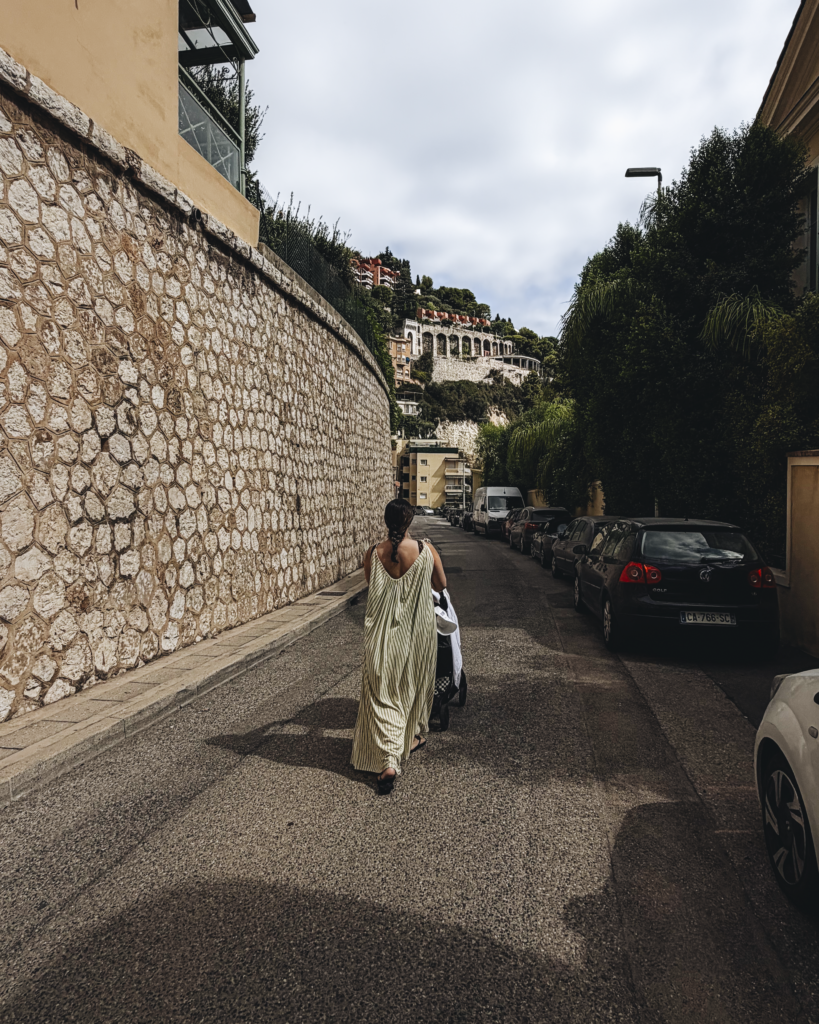
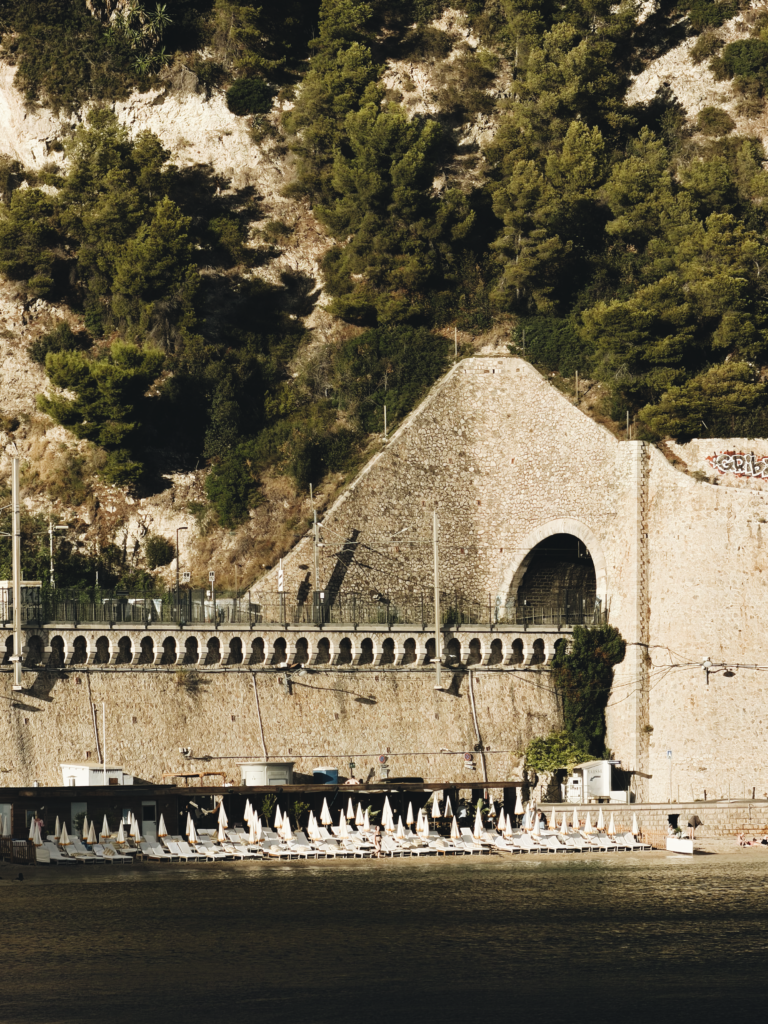
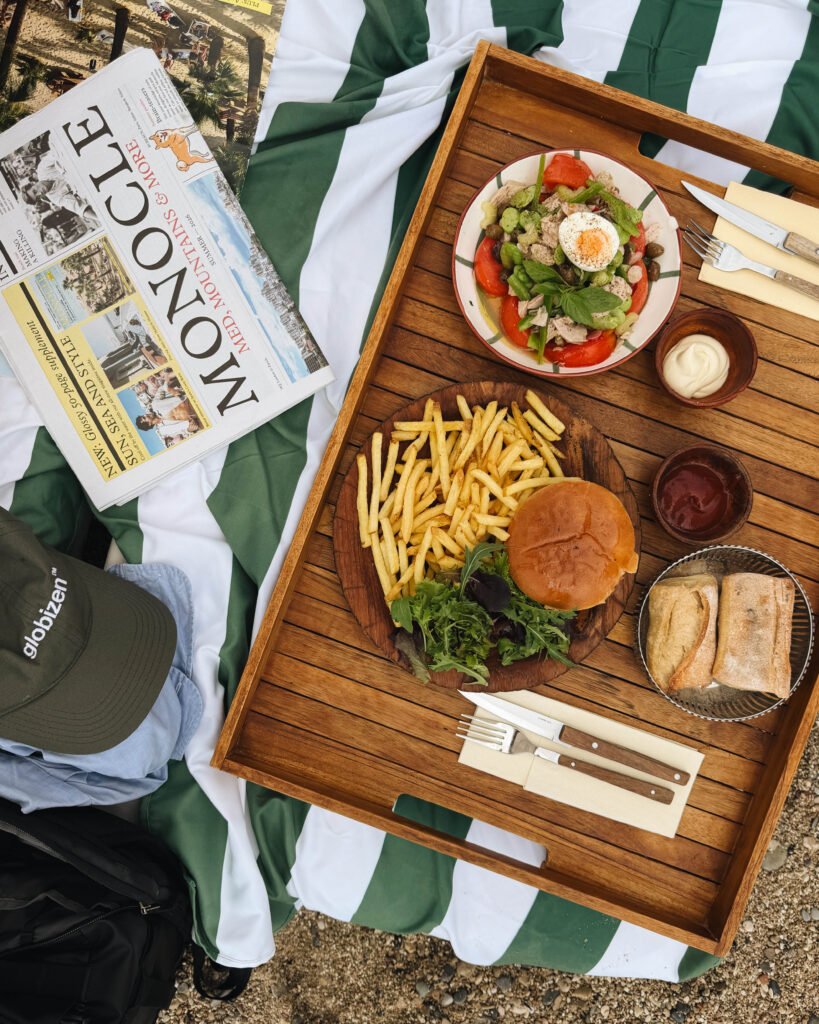
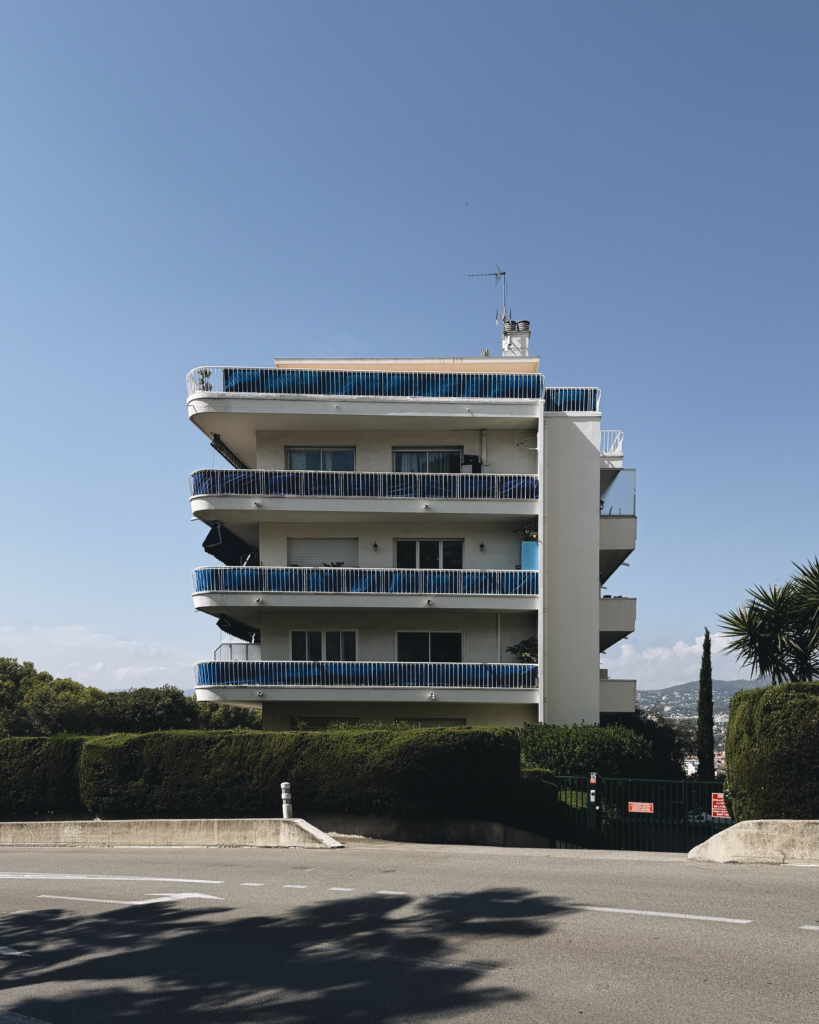
    I have my Fujifilm camera with me on this trip, but it’s been a bit much to carry it around throughout the day with Vivienne and all of her various belongings. So these photos are all shot on iPhone. Sometimes I remember to shoot in RAW (for better post-production), but most of the time these are just quick snaps with the default settings. In my opinion, the photos don’t have the same colour depth and overall richness as the ones I get from my Fujifilm.

  • The Venice syndrome — or is it?

    We were walking through Old Nice today and we stumbled on a fresh pasta shop called Clé aux Pâtes (highly recommend). I went in to grab supplies for dinner and then started chatting with the friendly lady behind the counter. She explained to me that all of the pasta is made on-site every morning and that the shop has been there since 1932.

    I then made a comment that their customer base must have changed considerably over the decades. Underlying this statement was an assumption that it is now mostly tourists. But she corrected me and said that lots of locals also shop there. I then turned to look at the line behind me and, for what it’s worth, there was French being spoken.

    But I left thinking about the composition of the neighbourhood. Old Nice is made up of several statistical areas. The oldest and densest is called Vieux Nice-Sainte-Réparate. It’s just under 50,000 square metres, which is about the size of the Distillery District in Toronto. As of 2022, it had a total full-time population of 1,187 people. This works out to a respectable figure of 23,912 people per km2.

    However, the area’s population has been in decline since at least 2007, when it had 1,798 people. The obvious culprit is more hotels, short-term rentals, and secondary homes. I had Gemini review the area’s census data, and it estimates that only somewhere between 35-45% of the area’s housing serves as primary residences.

    This data would suggest that Old Nice is another example of what has been called the “Venice syndrome.” Tourism is now the trade, leading to a decline in population. But it’s interesting to think about the extent to which the area may also serve as an open-air mall for locals. That’s a more resilient place to be. Of course, all I have to go on is a pasta anecdote.

  • Le col de Vence — testing the Ironman cycling course in Nice

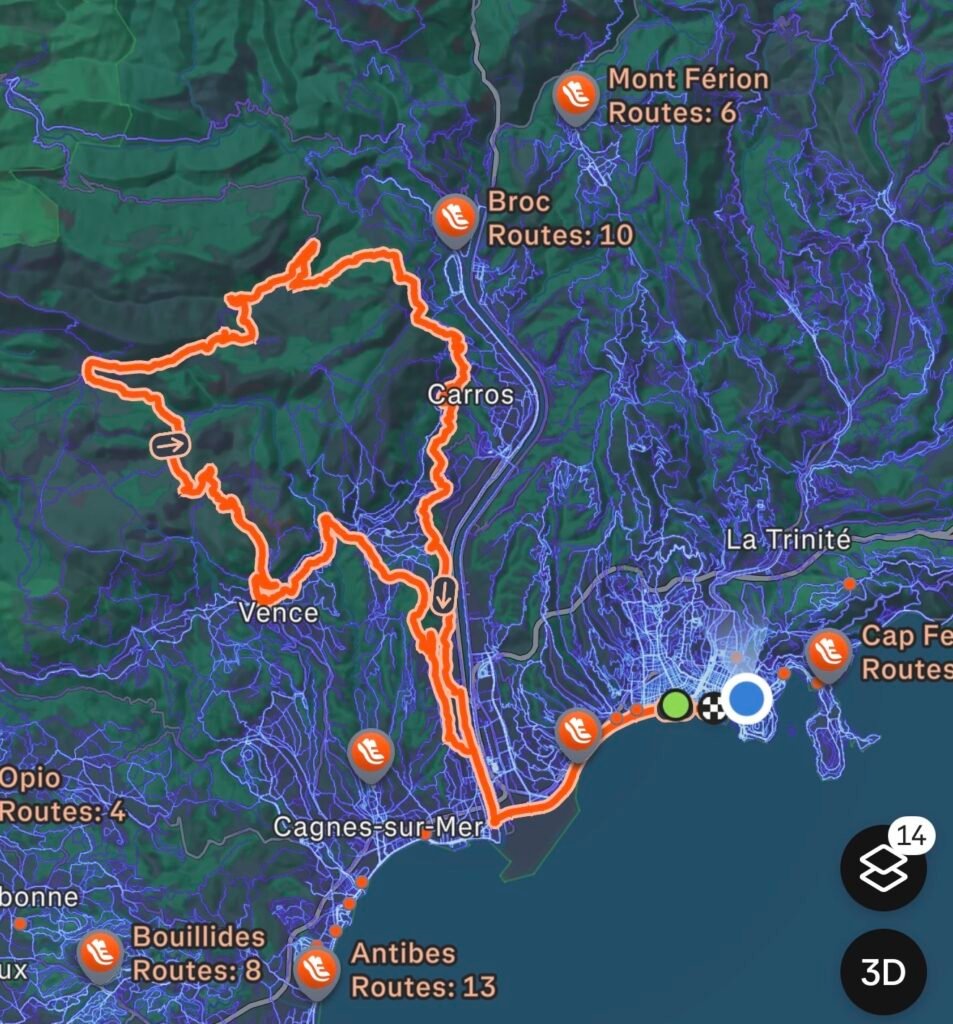
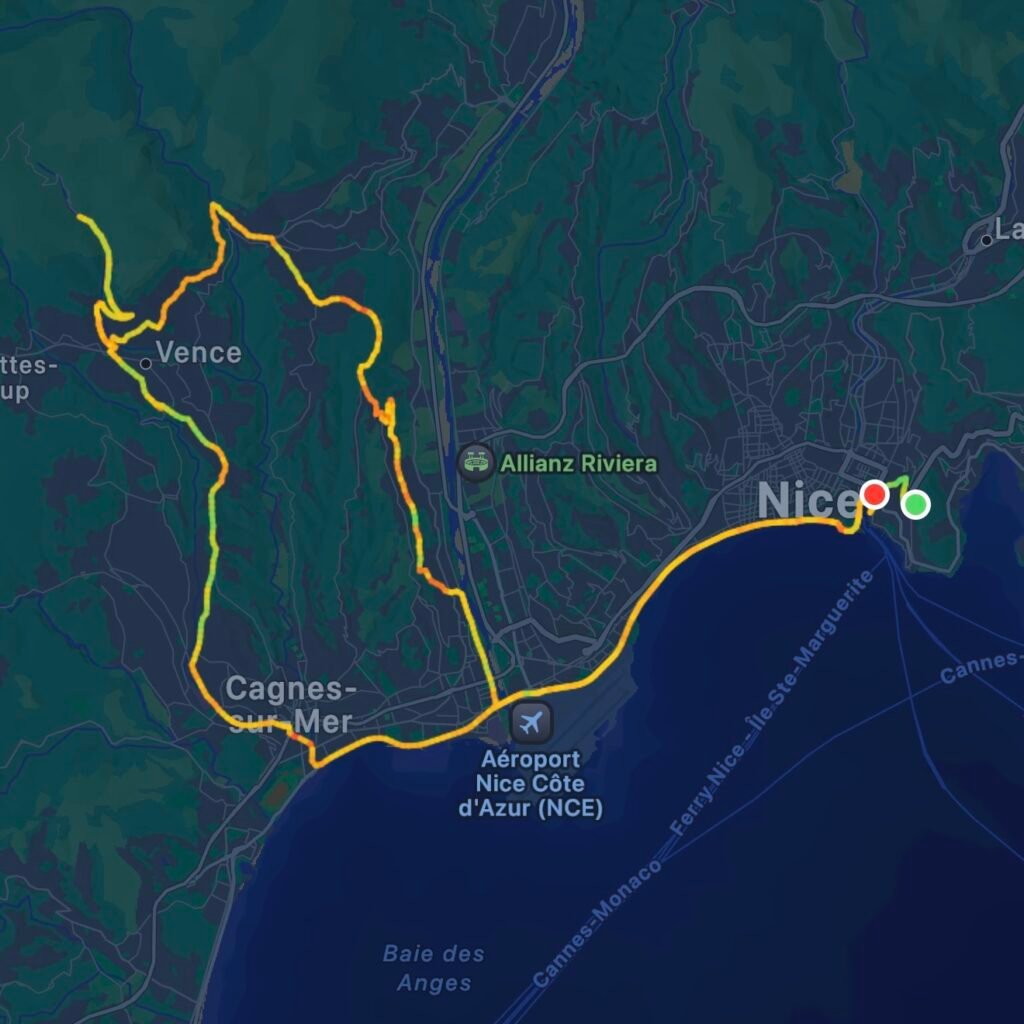
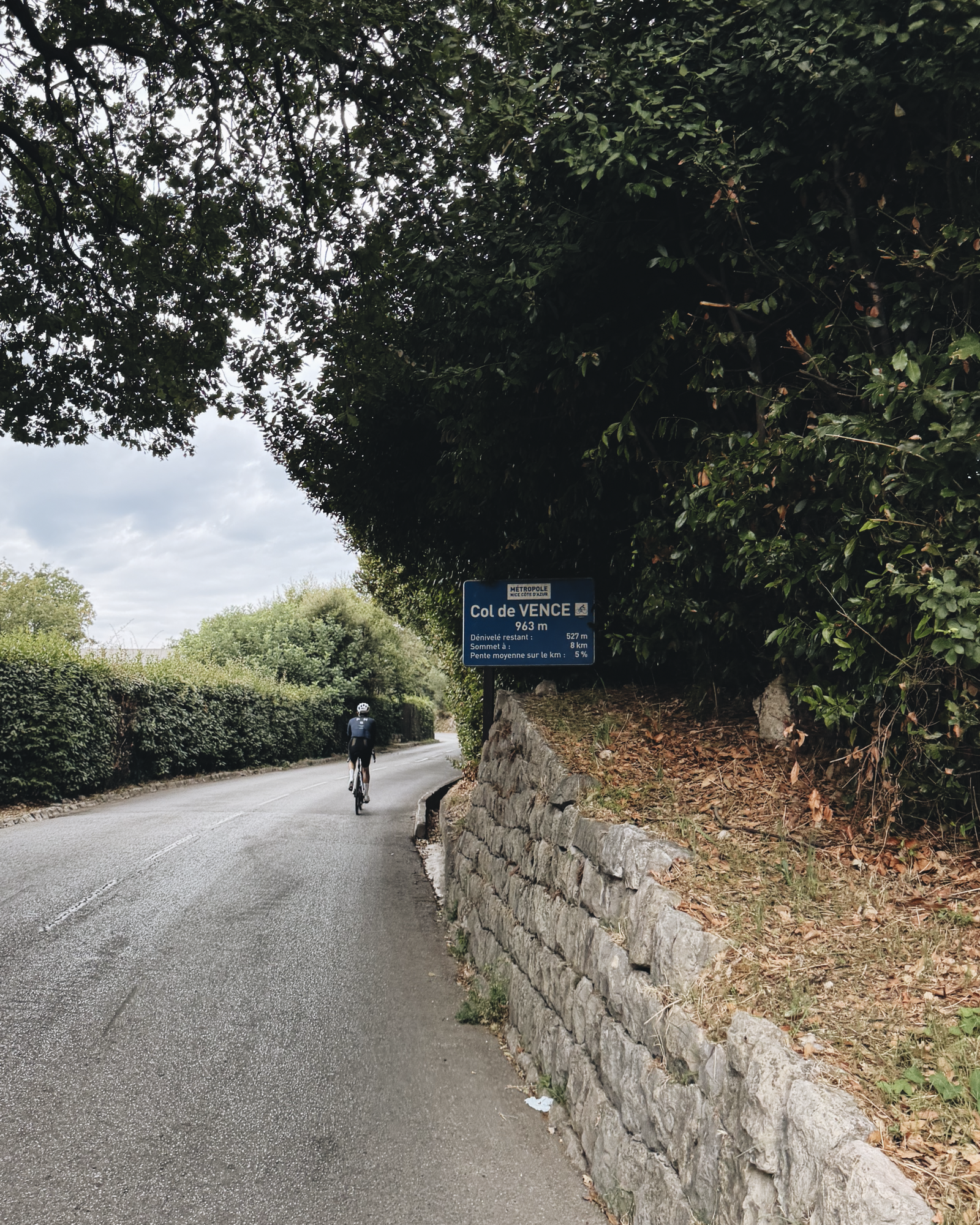
    So, it turns out that if you want to do the 92-kilometre Ironman World Championship bike course in Nice, it’s a good idea to practice a little beforehand. At the very least, you probably want to get on your bike more than a handful of times. I tried it today and came up short.

    The circuit includes le col de Vence at its summit, which is a 9.7-kilometre stretch with a 963-metre peak elevation and an average pitch of 6.6%. I was within 6 kilometres of the top, but my quads completely seized up and I turned back towards Vence, then continued south back to the water.

    I really wanted to get there and reward myself with a sugary crêpe, but my legs were saying otherwise. I’ll be back, col de Vence.

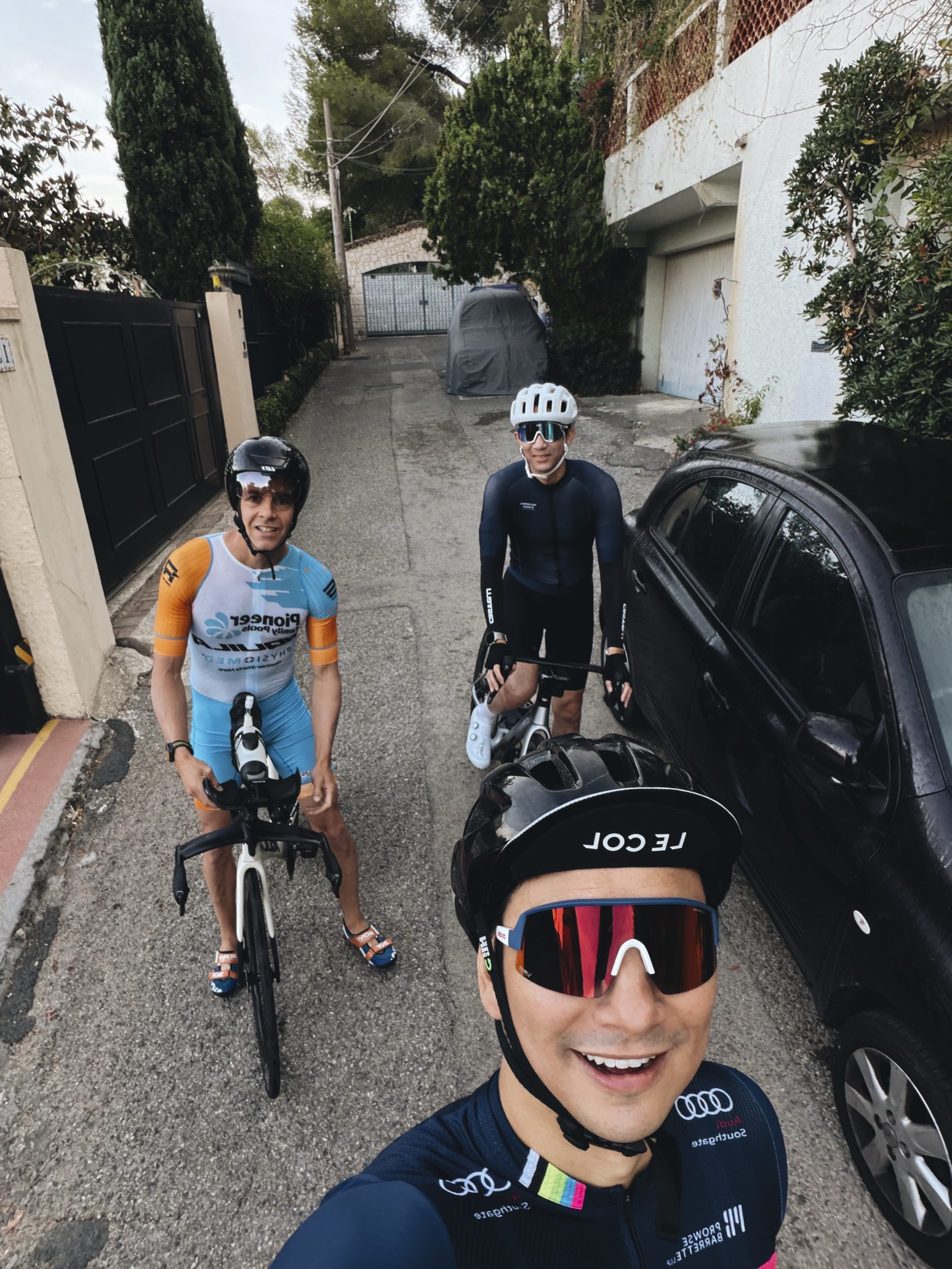
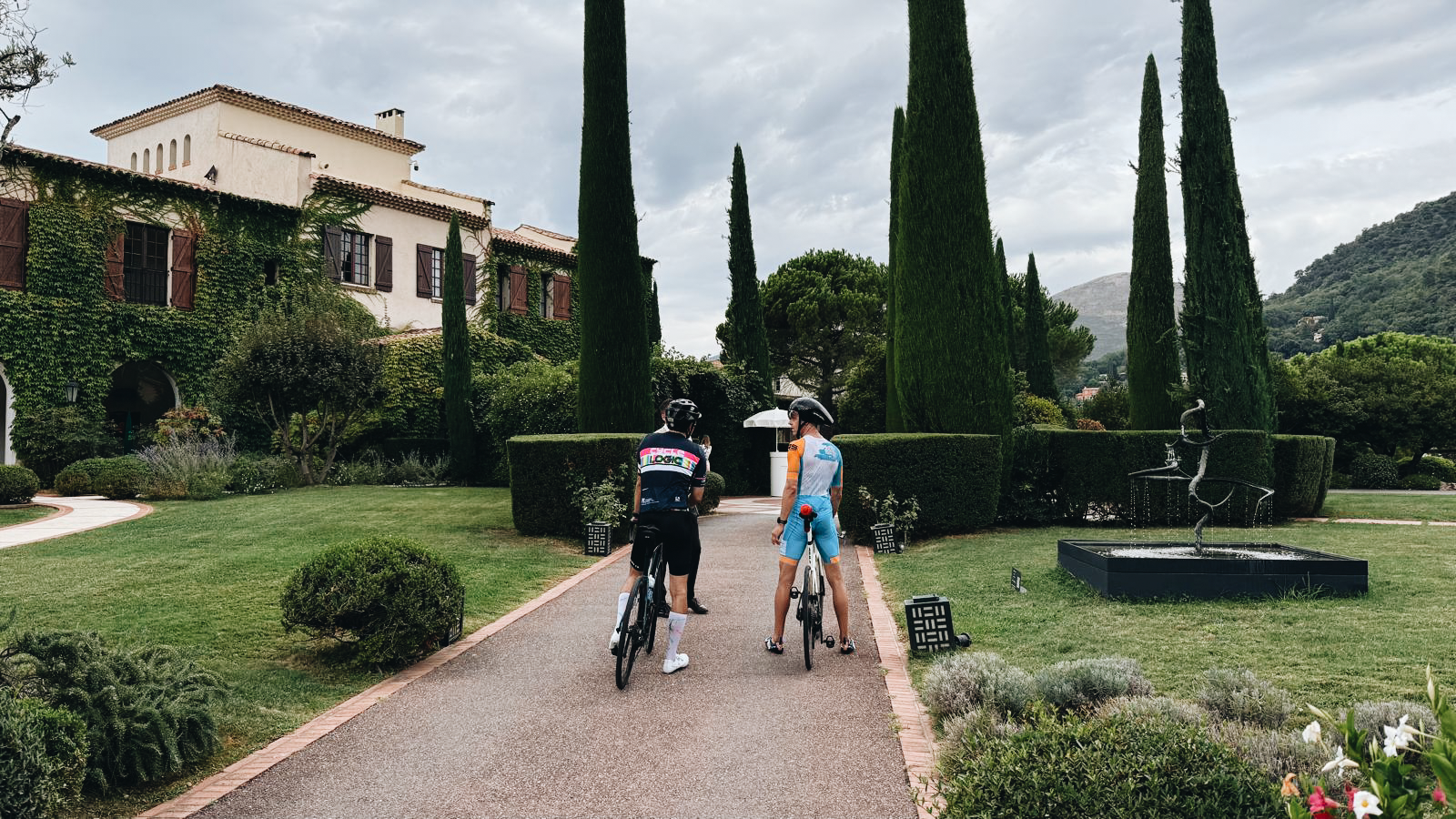
    Shoutout to Guinness World Record holder Austin Kjorven, who will be representing Canada at the Ironman this weekend and has no problem climbing le col de Vence. He was also super patient as I attempted the climb. Follow him here.

    The course:

    What I did:

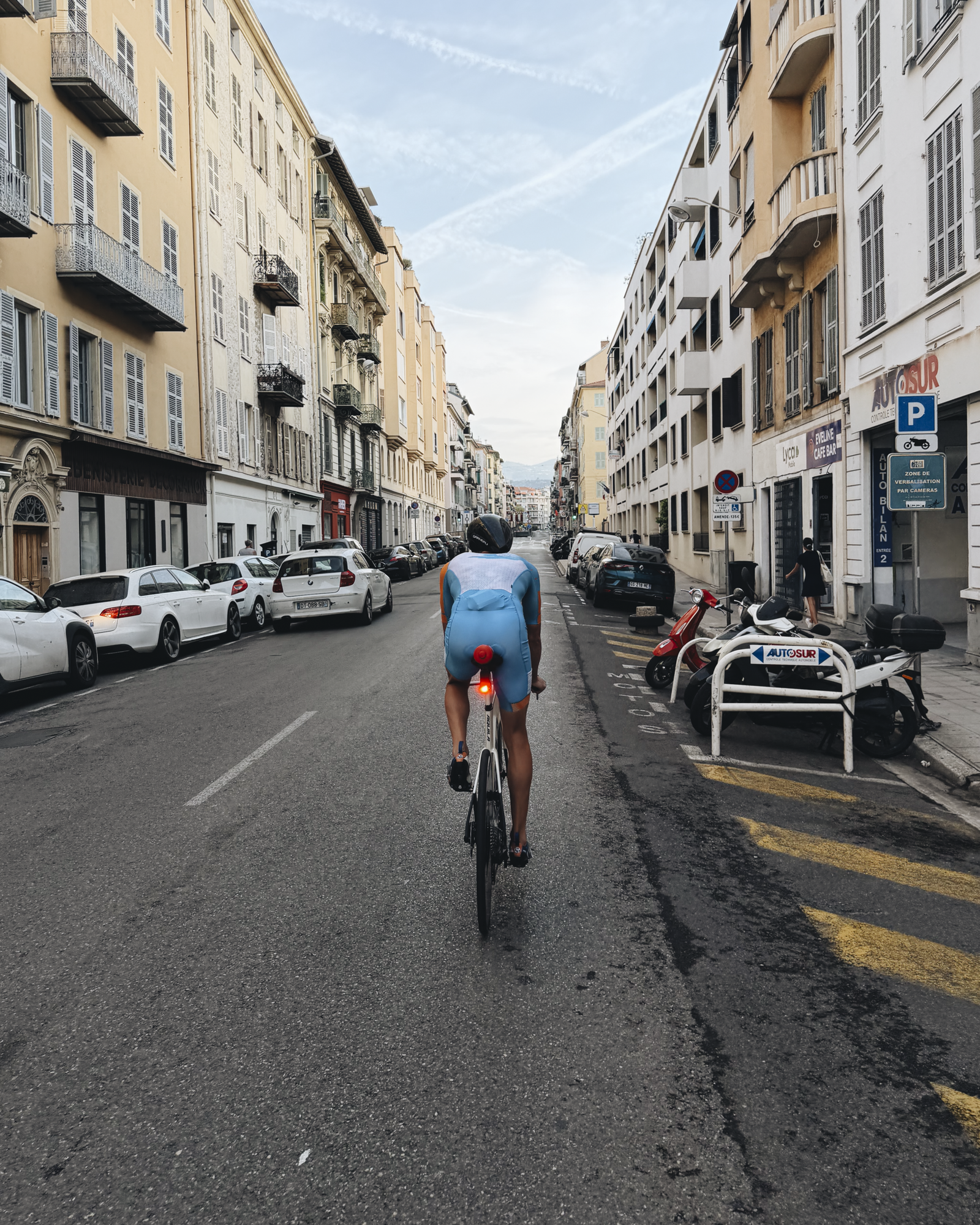
    The ride:

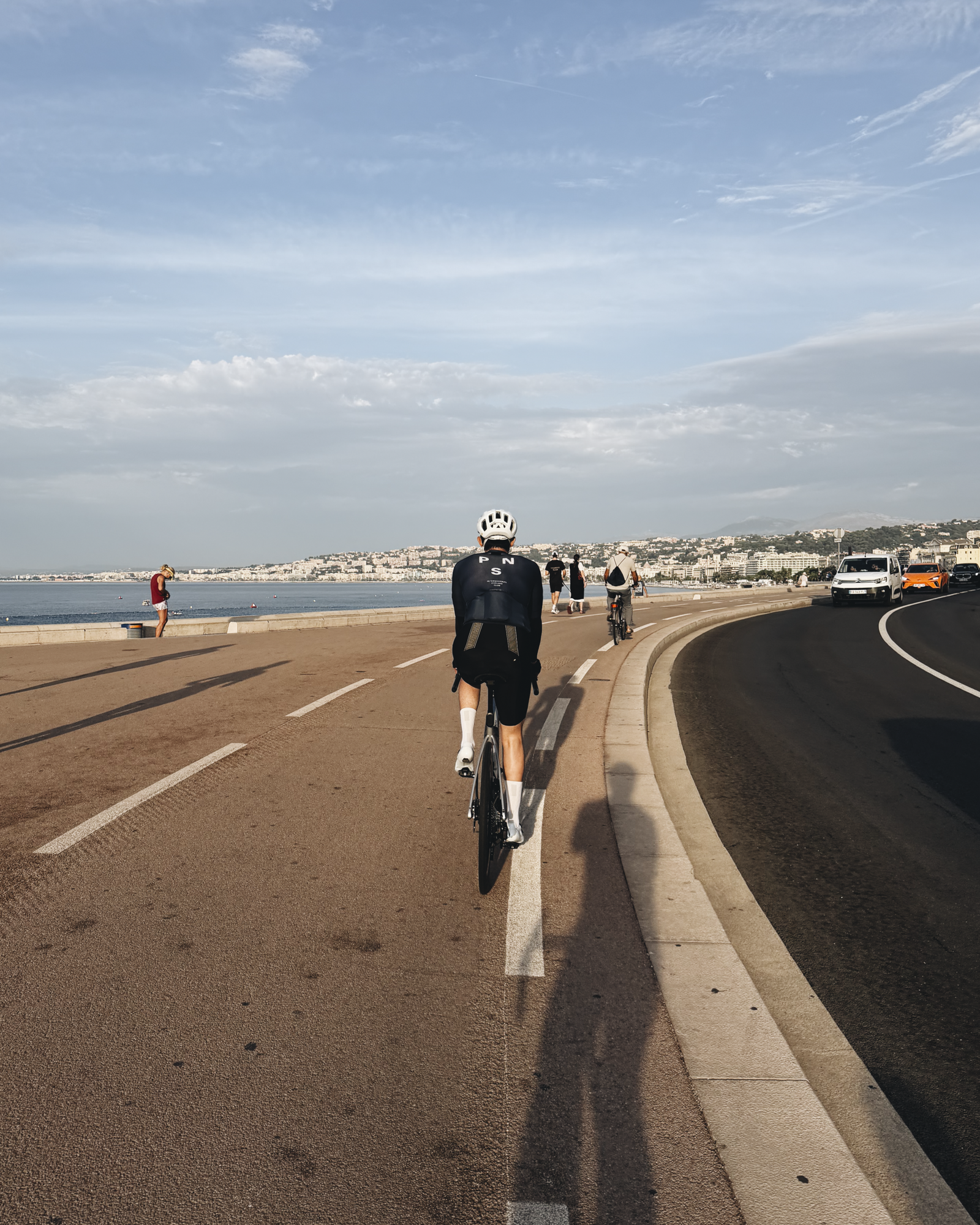
    Some of the local cycling infrastructure:

  • Gone ridin’

  • The entire city is your backyard

    I rarely watch any TV, but when I do, I enjoy browsing YouTube. One of my favourite channels, one that I have mentioned before on this blog, is Never Too Small. It’s a look at small urban spaces from around the world, with the architect or designer walking you through their intent and the various design details. Whenever I watch an episode, I usually get excited about the possibility of buying some piece-of-shit apartment in Paris and turning it into something cool. One day.

    Now NTS has a new series coming out, and it’s premiering this week on July 30. It’s called My City, My Backyard, and it’s a look at cities, specifically through the eyes of creatives. I already know that I’m going to like it, and I love the title. When you live in a city, the entire city is your backyard and amenity. The first city in this new series also happens to be one of my favourite cities: Marseille.

    Marseille is having a moment right now, and that’s not just my confirmation bias speaking. In 2024, the city saw 19.5 million overnight stays, which were a 20% increase compared to the year prior (they hosted 10 medal events during the Paris 2024 Olympics). But even if you strip out its Olympic boost, tourism is rising. Spring 2025 recorded a 7% year-over-year increase, which included a 19% increase in international visitors. Summer 2025 visitors were also 10% higher than in 2023.

    What’s driving this, beyond its vibrant culture, great restaurants, and breathtaking landscapes, is that Marseille has just the right amount of edge. It’s not always a hyper-polished Instagram moment; it’s an effortlessly cool place where finding an uncomfortable rock next to turquoise waters will give you everything you need.

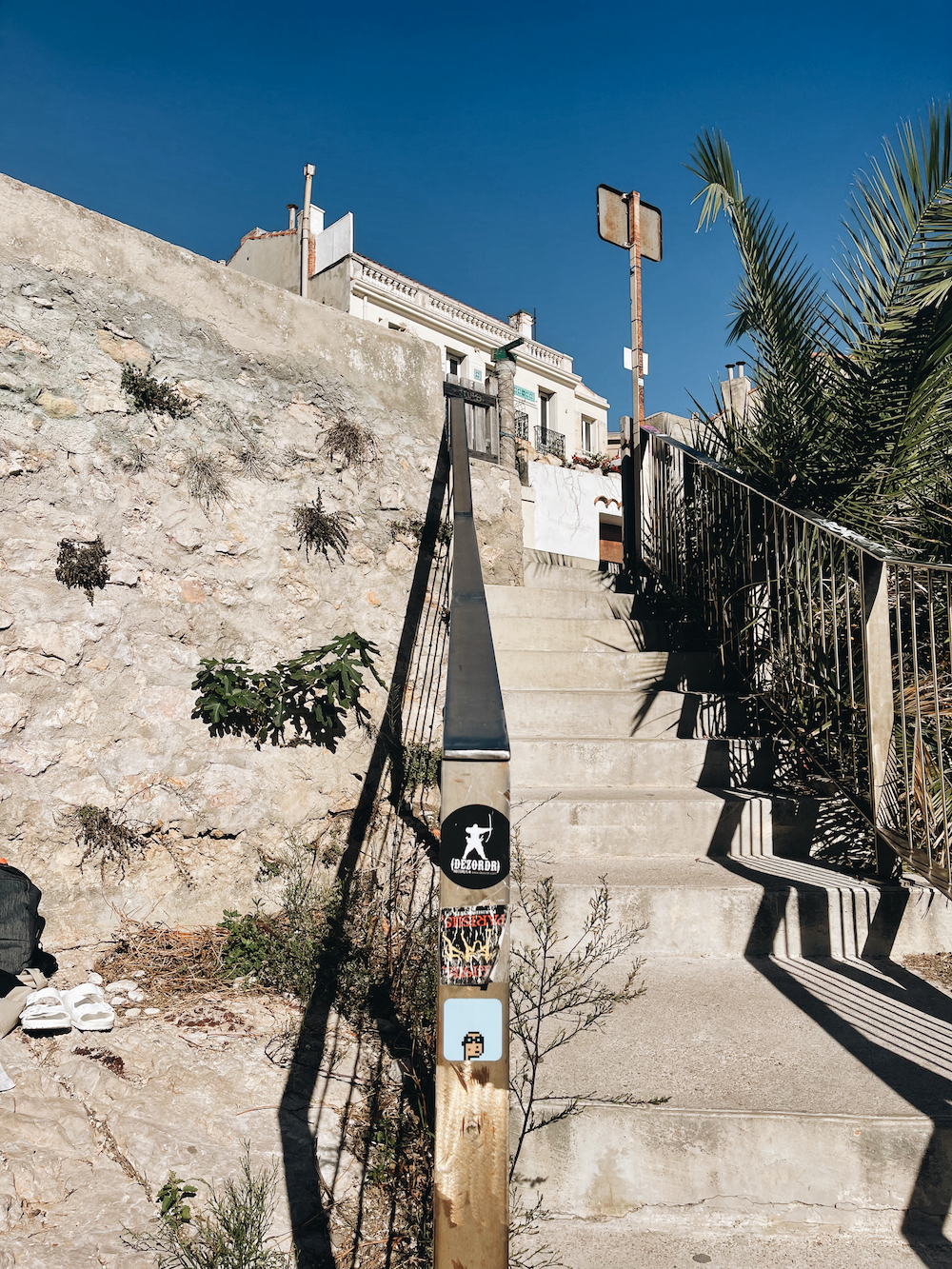
    In other words, it is a place that feels authentic. And in a world of global sameness and AI-generated simulacra, I think many of us are now seeking that authenticity — something that feels real and a little raw. Marseille has that in spades. Oh, and if any of you happen to visit la plage de Maldormé, let me know if my unauthorized sticker is still there.

    Here is NTS’s channel in case you want to check out Marseille this week.


    Cover photo by Jeet Sandhu

  • Nice Méridia

    September 5, 2025 · View original


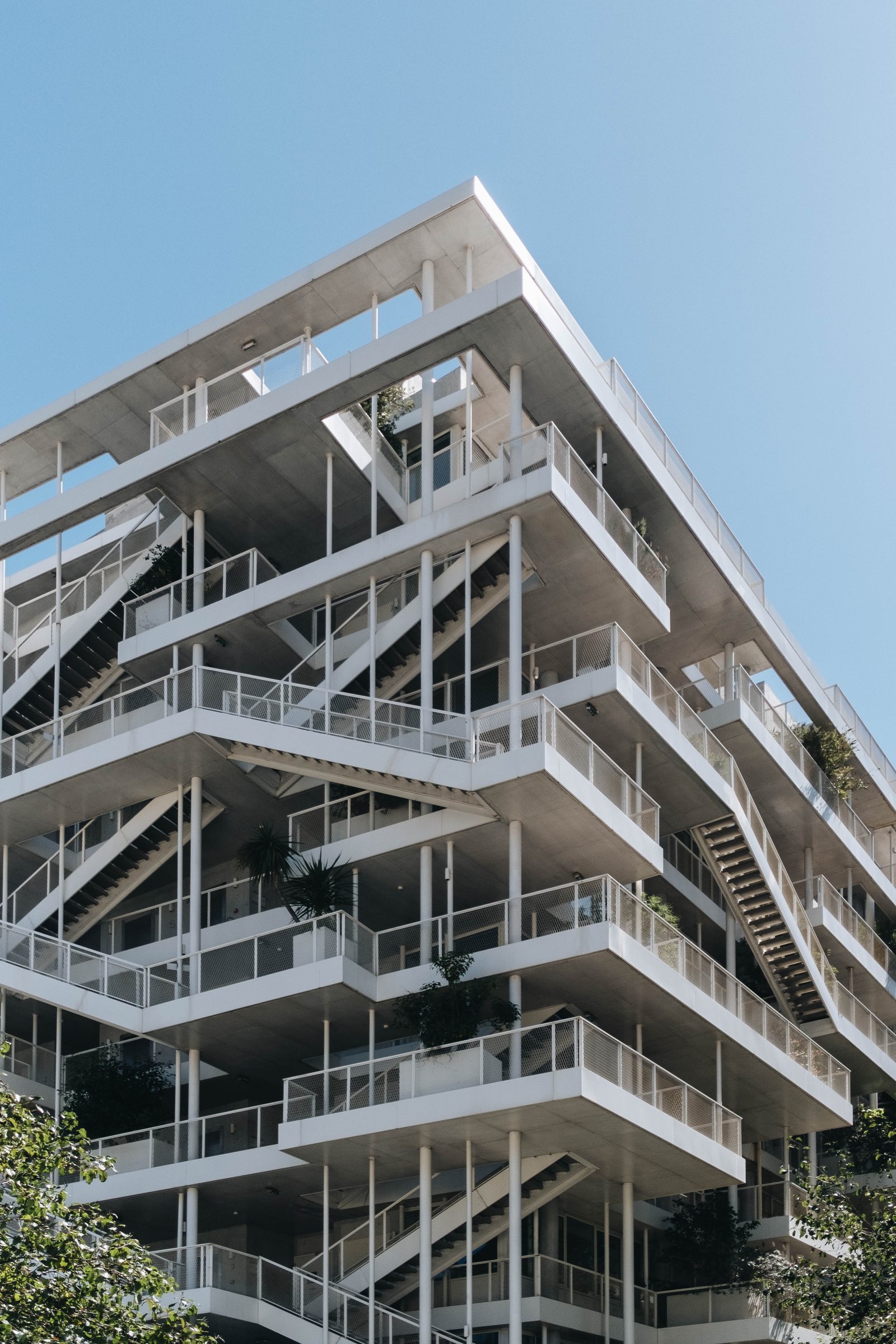
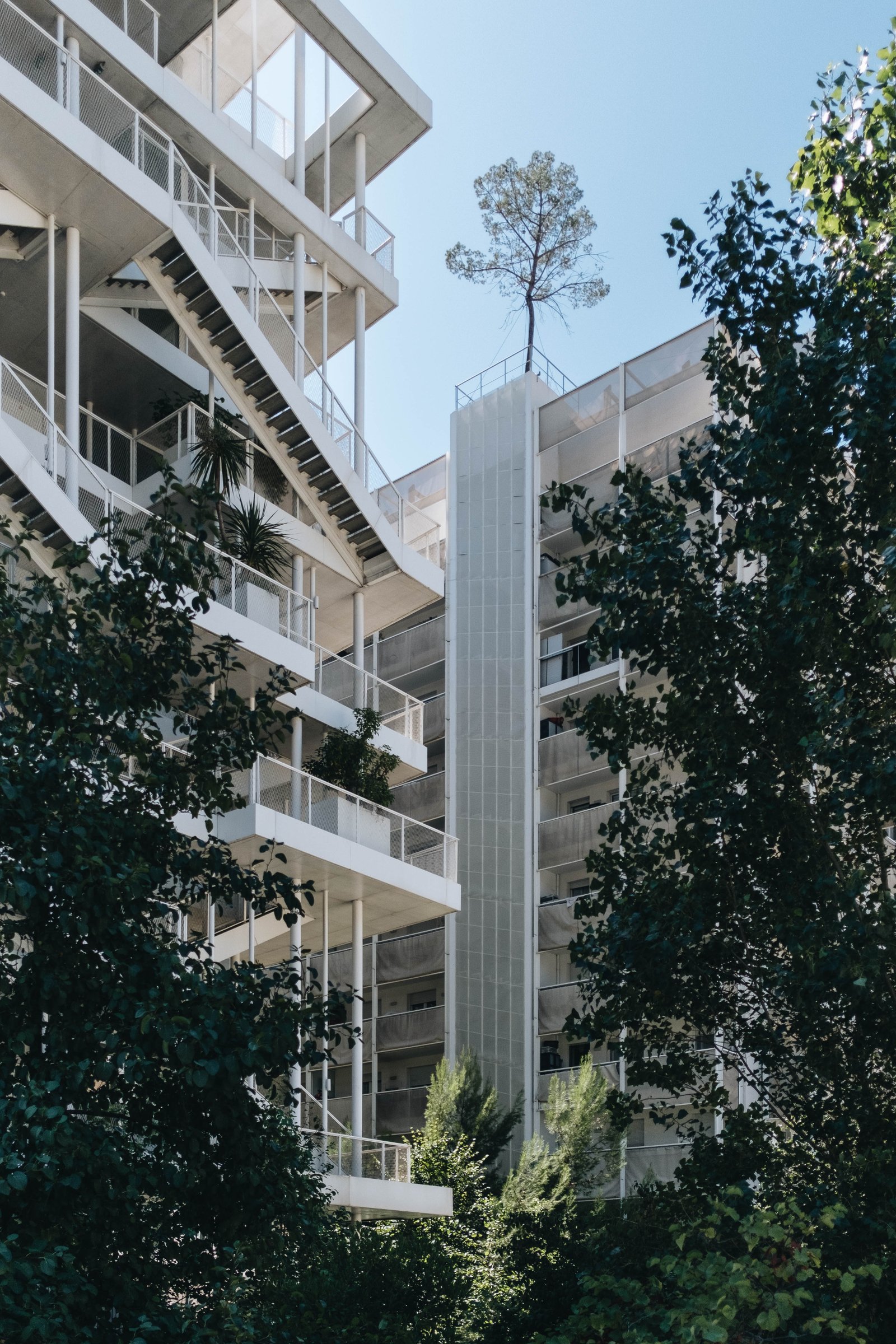
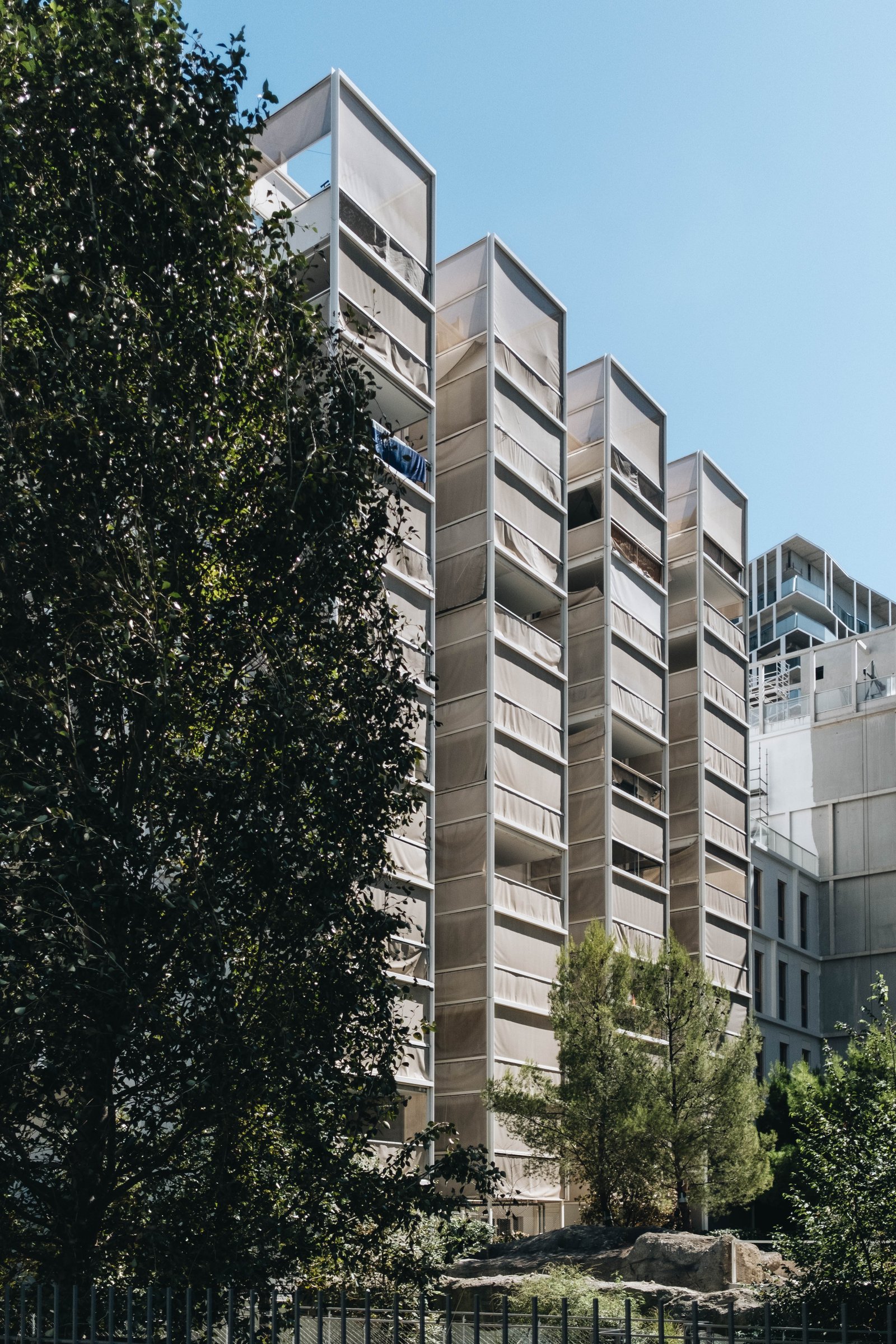
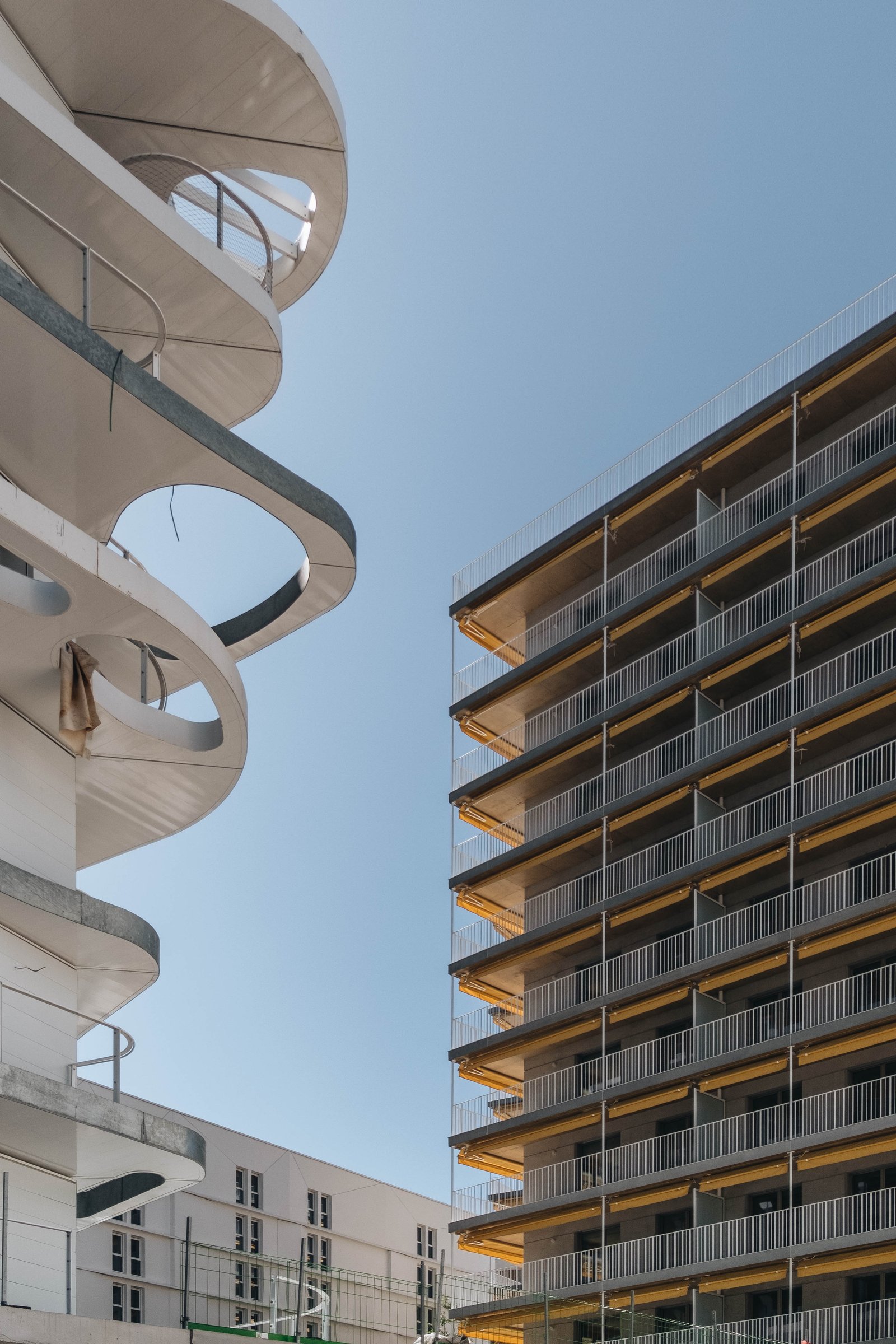
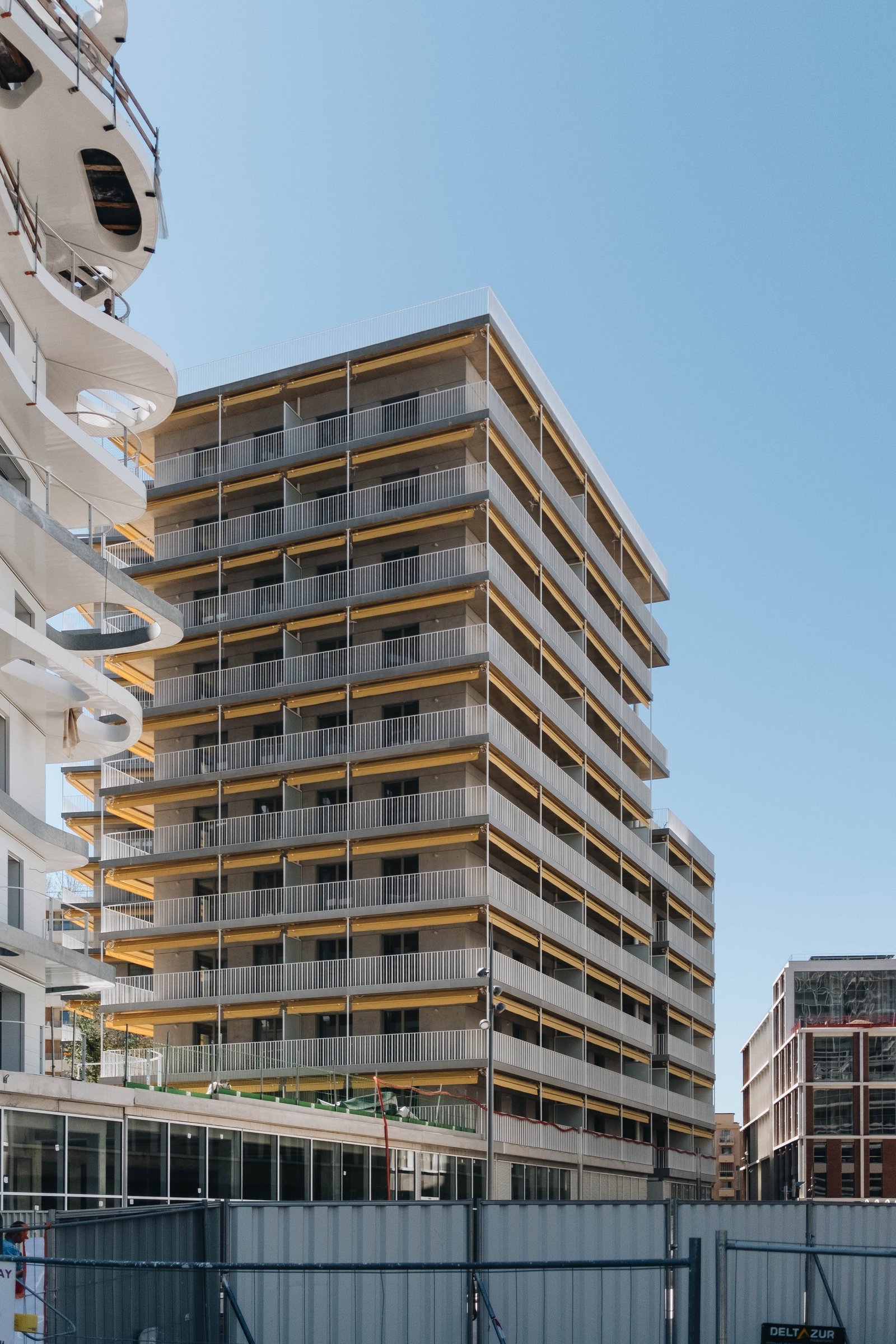
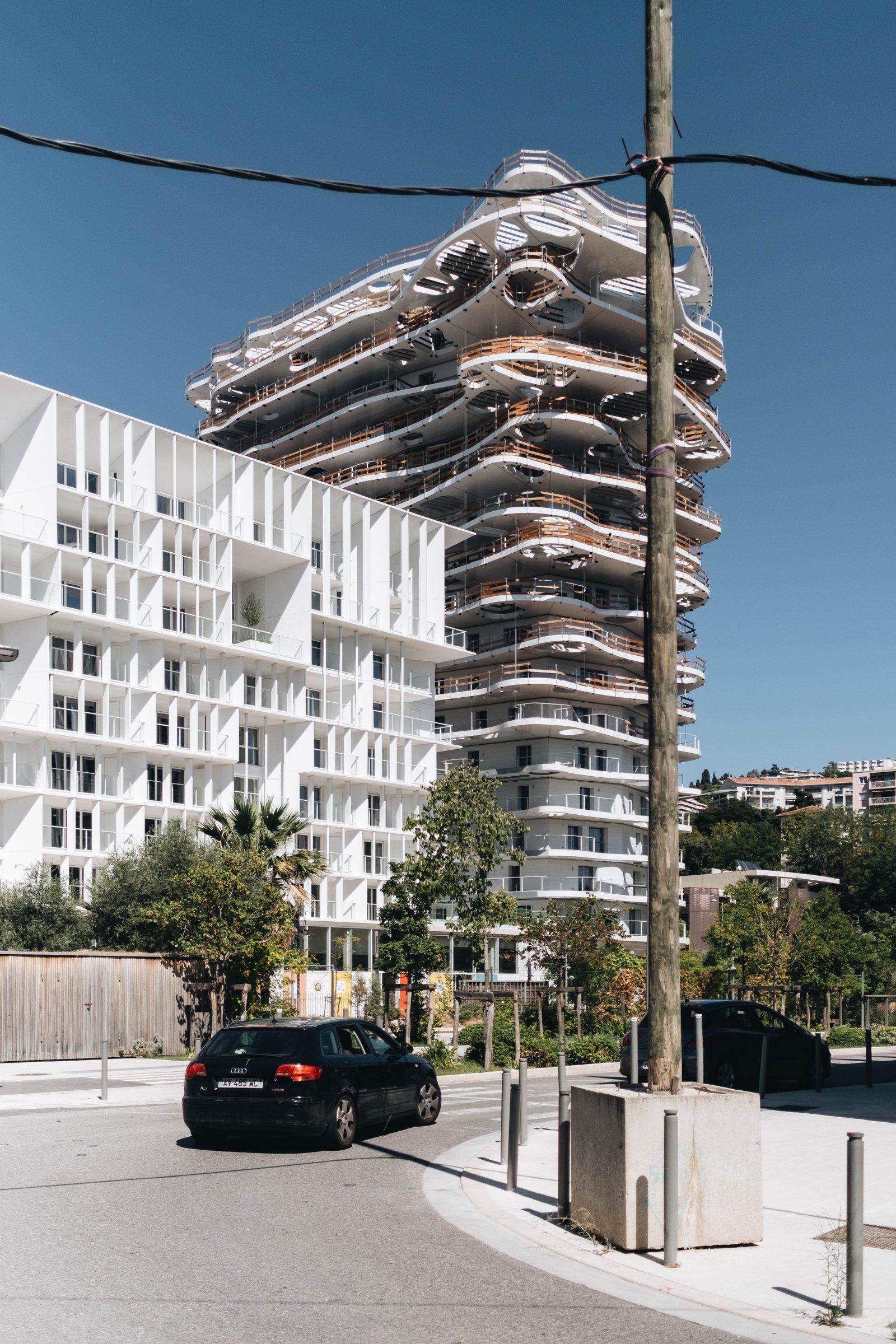
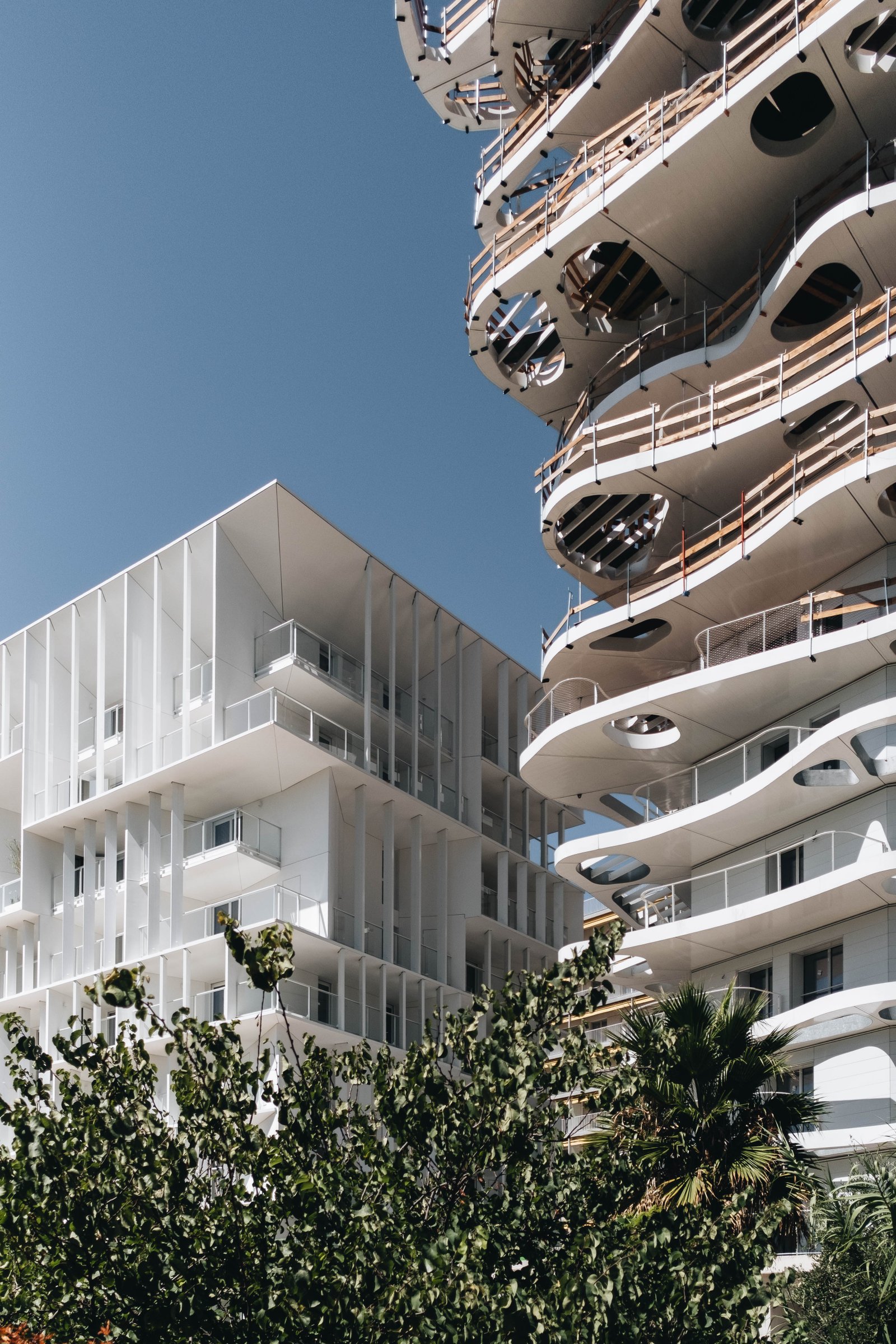
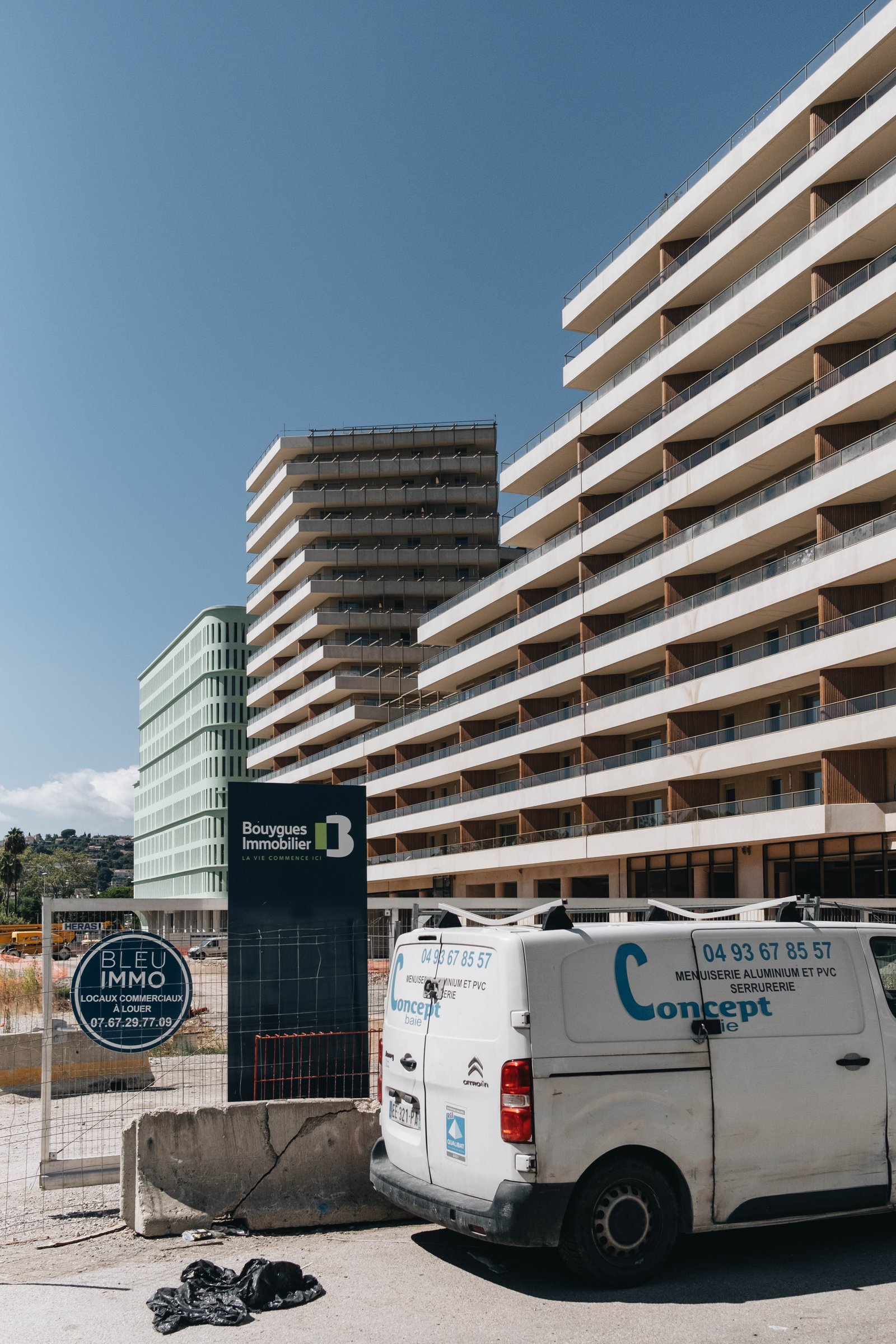
    Today’s post is a follow-up to yesterday’s post about a new community currently under construction in Nice’s Var valley. The following photos were captured on a Fujifilm X-T3 and edited in Lightroom.

  • Exploring new Nice

    September 4, 2025 · View original


    It’s easy to romanticize the oldest parts of Europe’s built environment. But we all know they were built during a different time. A more fair comparison would be to look at how new neighbourhoods are being planned and constructed today.

    So let’s exit Vieux-Nice and venture to an entirely new community currently under construction to the north of the airport called Nice Méridia. When complete, the mixed-use community expects to welcome 5,000 residents, 5,000 students, and 5,000 jobs.

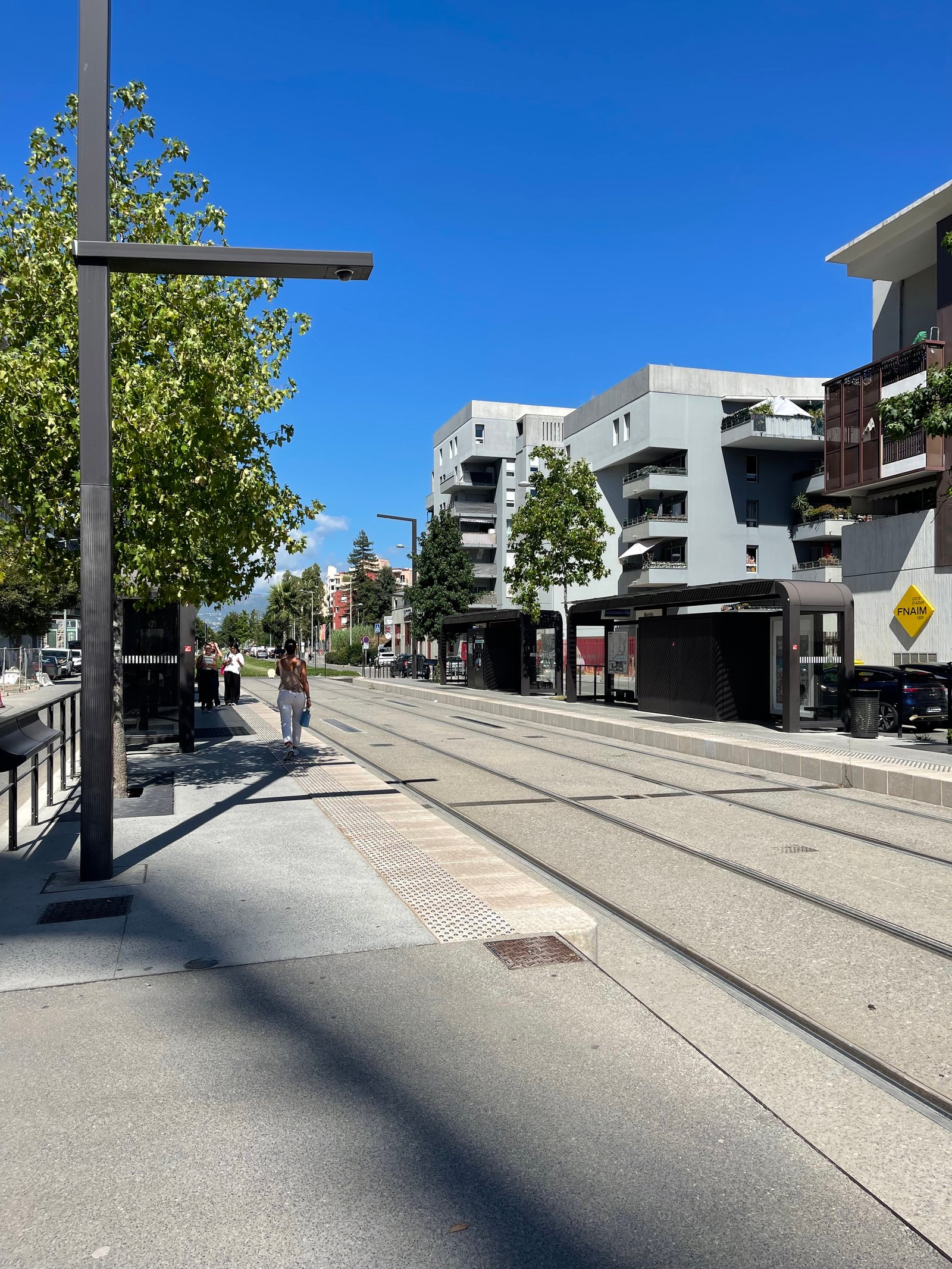
    I don’t know much about the surrounding area, but I do find it noteworthy that the transit infrastructure is already in place. Here’s the tram line that runs on the eastern edge of the community, on its own dedicated lanes. Transit is the clear priority here.
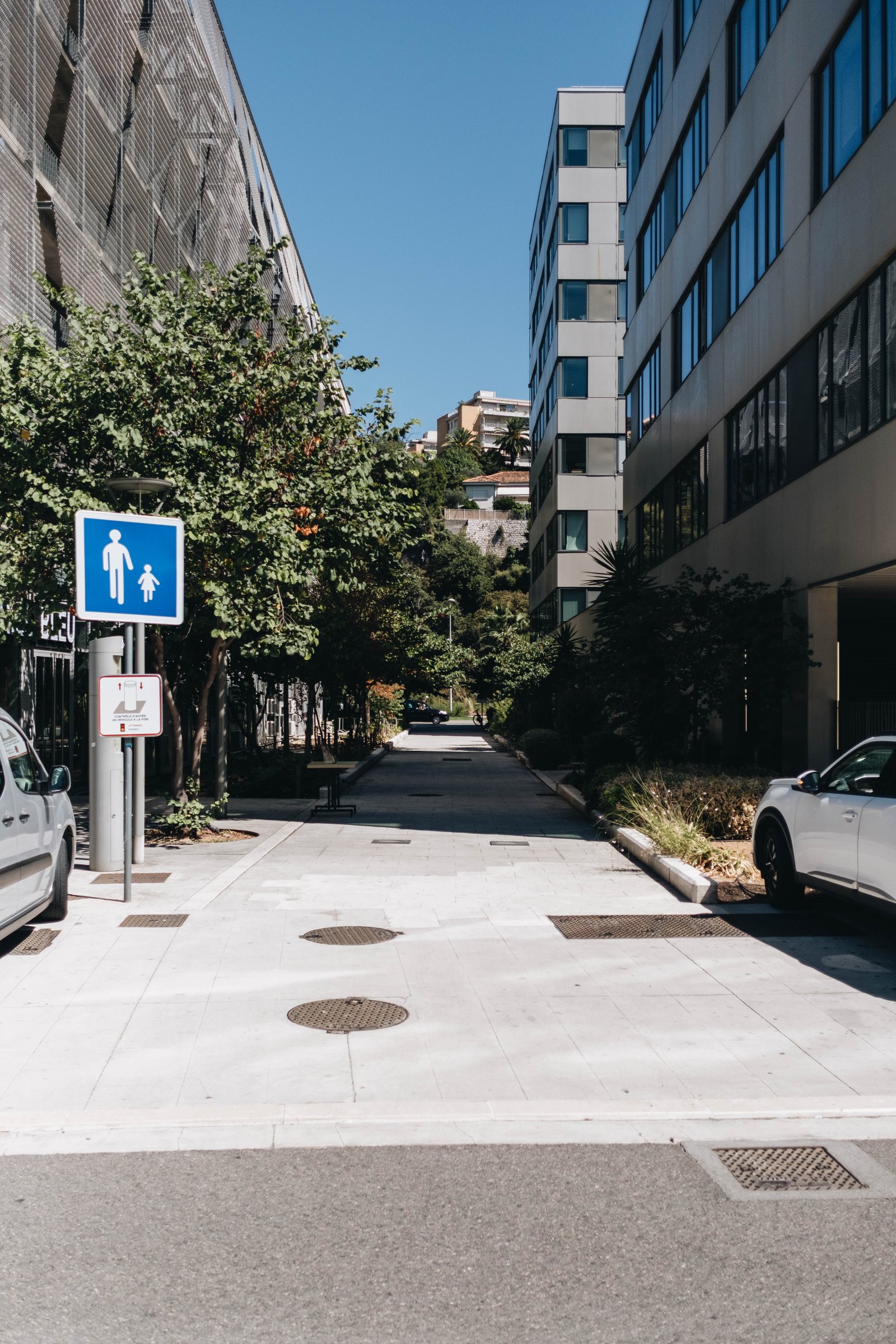
    The community itself is a mix of different street designs. Here, for example, is a narrow street where traffic is controlled by mechanical bollards. North America really needs to get with the bollard program.
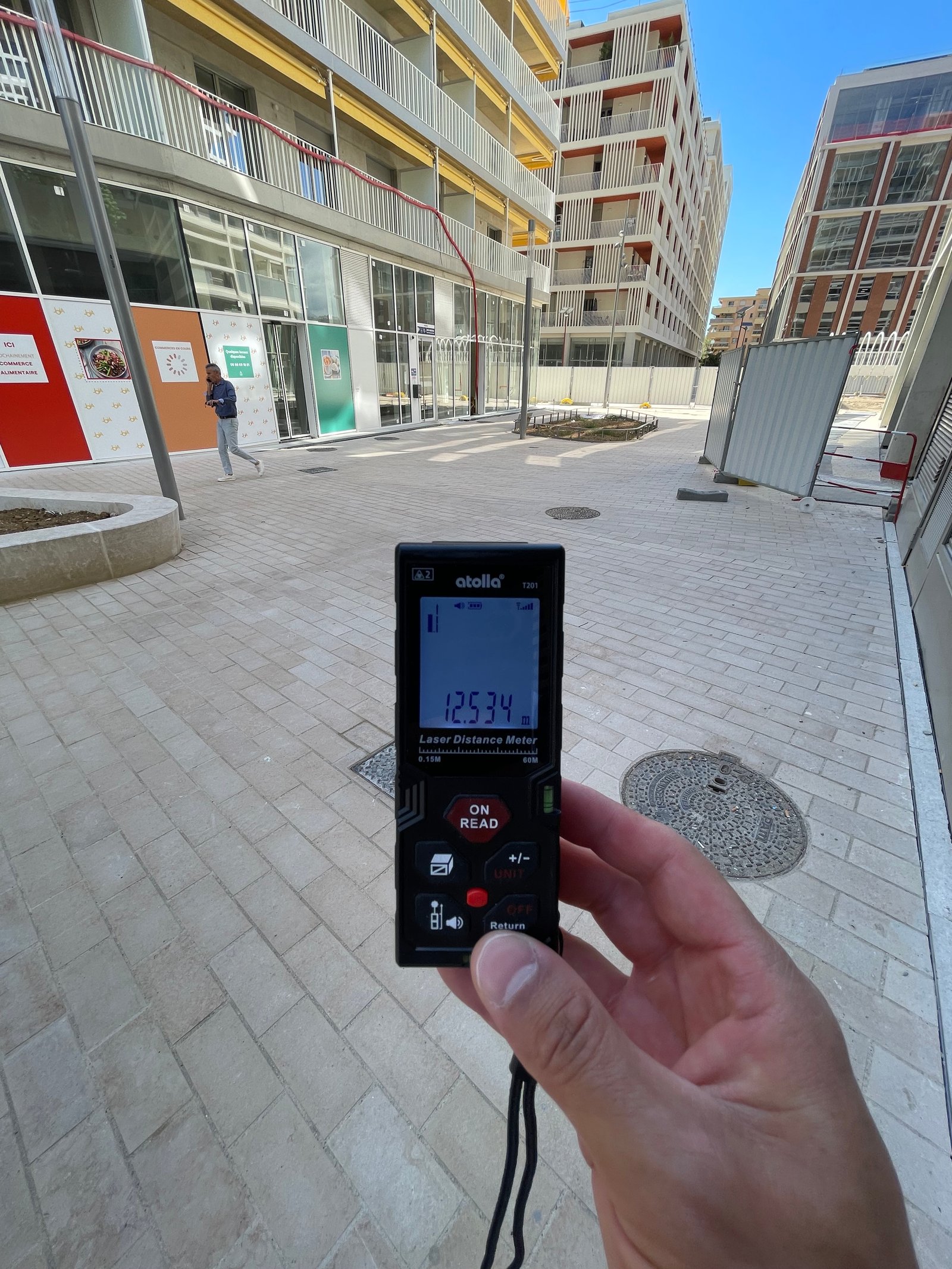
    Here’s a pedestrian-only street that, at its narrowest, is roughly 12.5 meters. So a fairly generous mid-block space.
    Here’s what seems to be a fairly typical through street, which clocks in at around 19 meters from building face to building face.
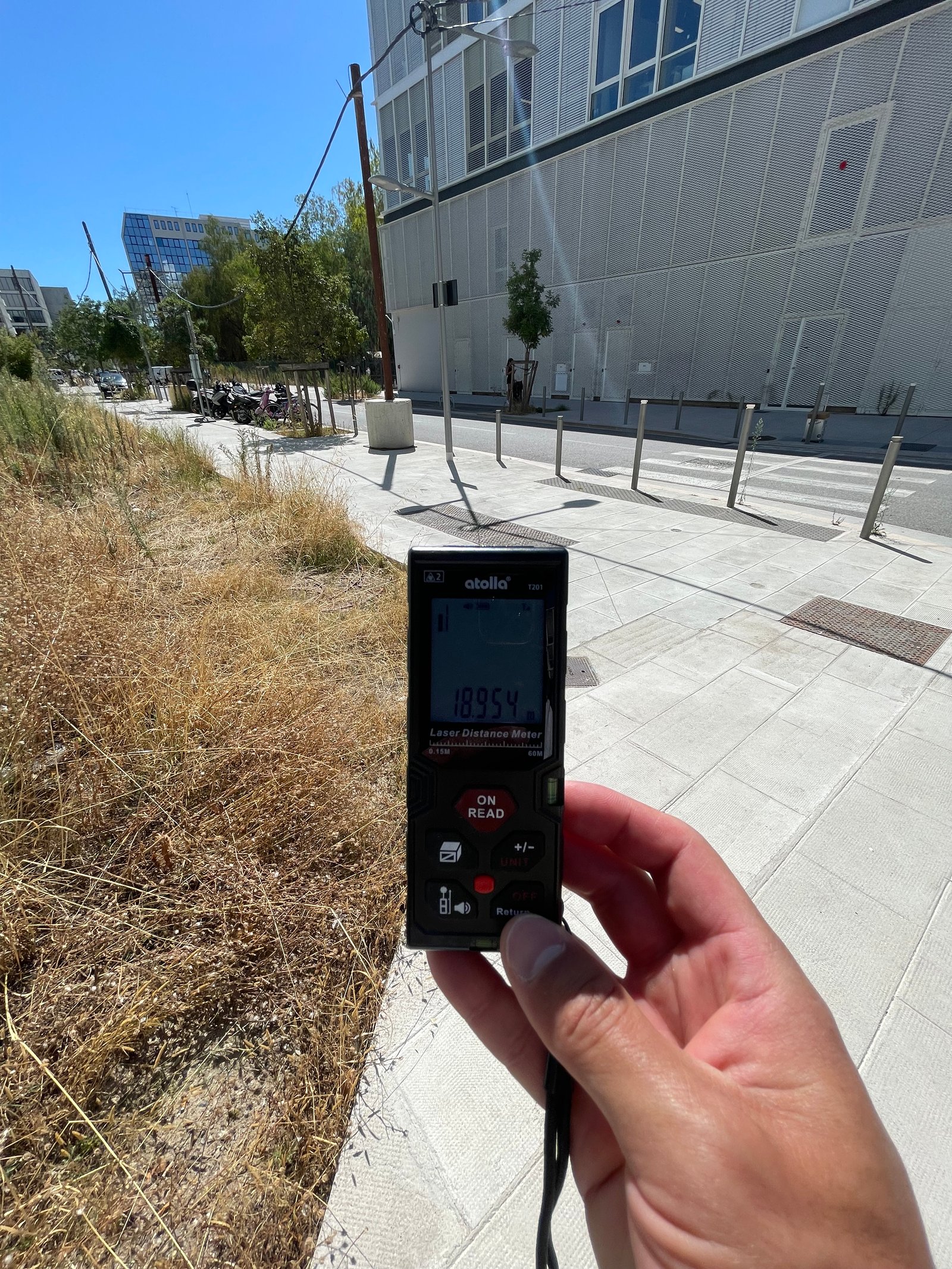
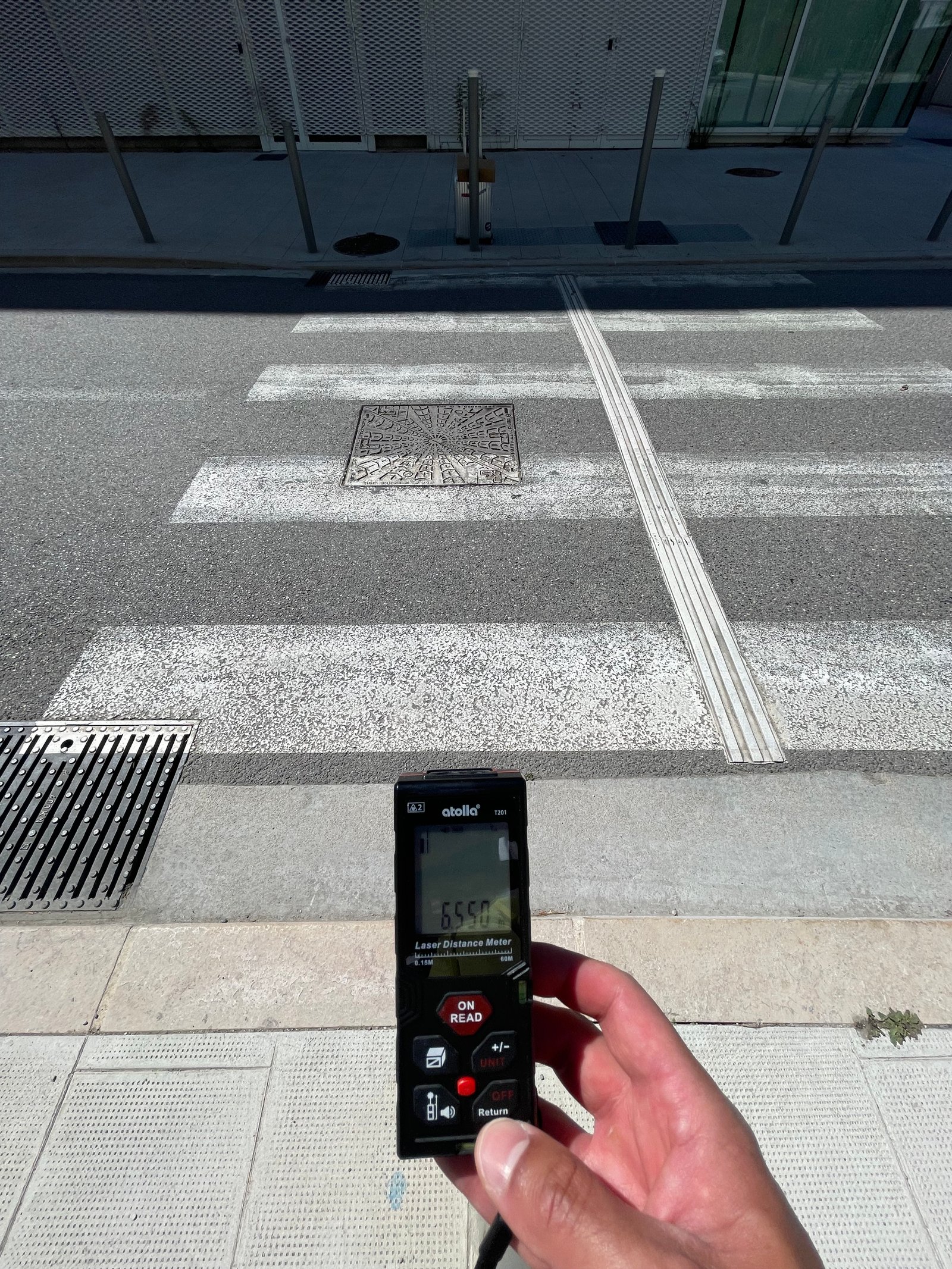
    20 meters is not an atypical right-of-way width. It’s the dimension of most of the streets in the core of Toronto. But here, most of the space is allocated to sidewalks and green space. The space allocated to cars is roughly 6.5 meters. (I’d like to emphasize that this is a rough dimension as I was using my suitcase to pick up the endpoint of the laser.)
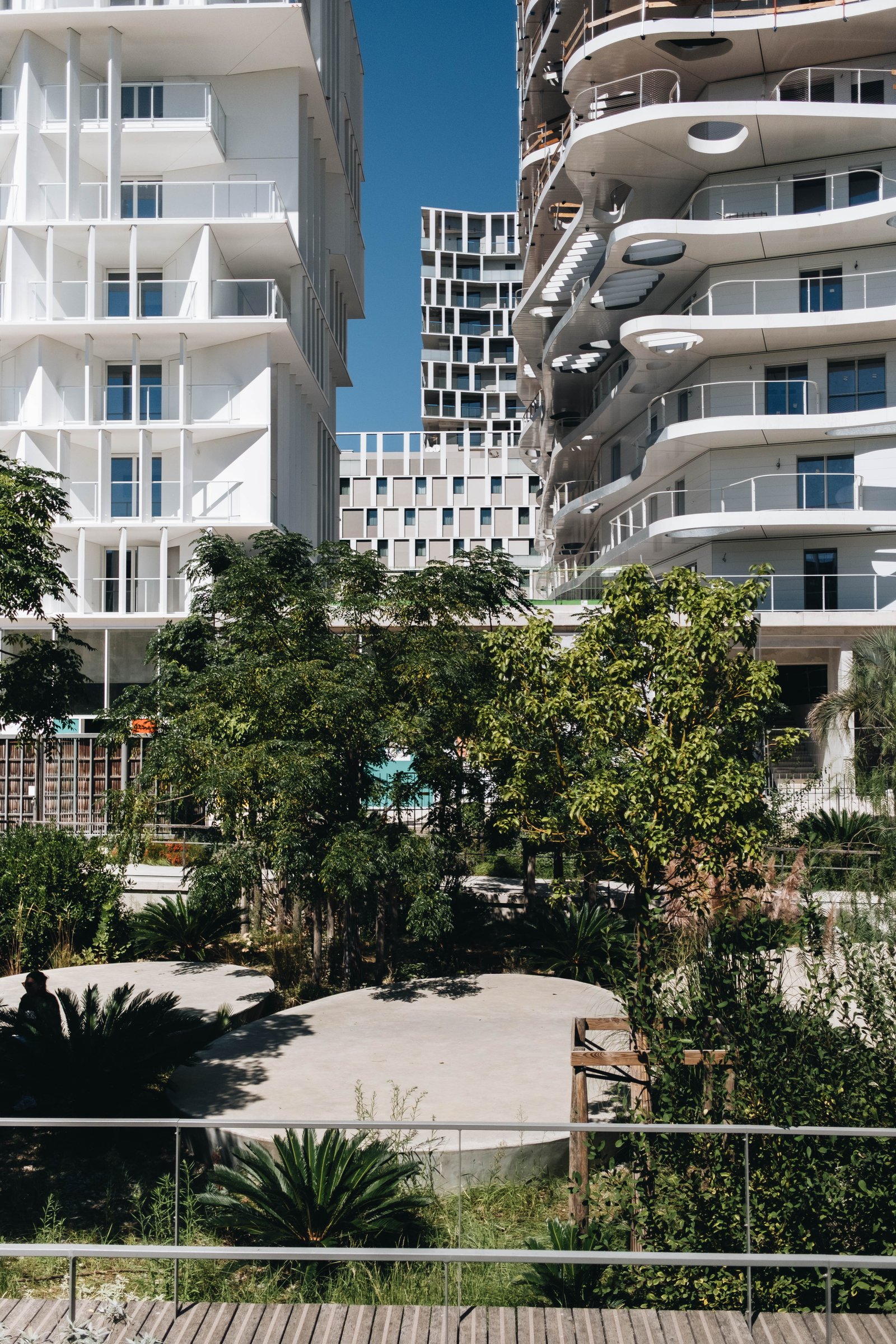
    Finally, there’s this incredible green space bisecting the entire community. I don’t have any dimensions for it, but I can tell you it’s a spectacular amenity. With the all-white buildings in the background, it feels a bit like Miami.
    Tomorrow I’ll share photos of the architecture. Stay tuned.

  • La jalousie window shutter

    September 3, 2025 · View original


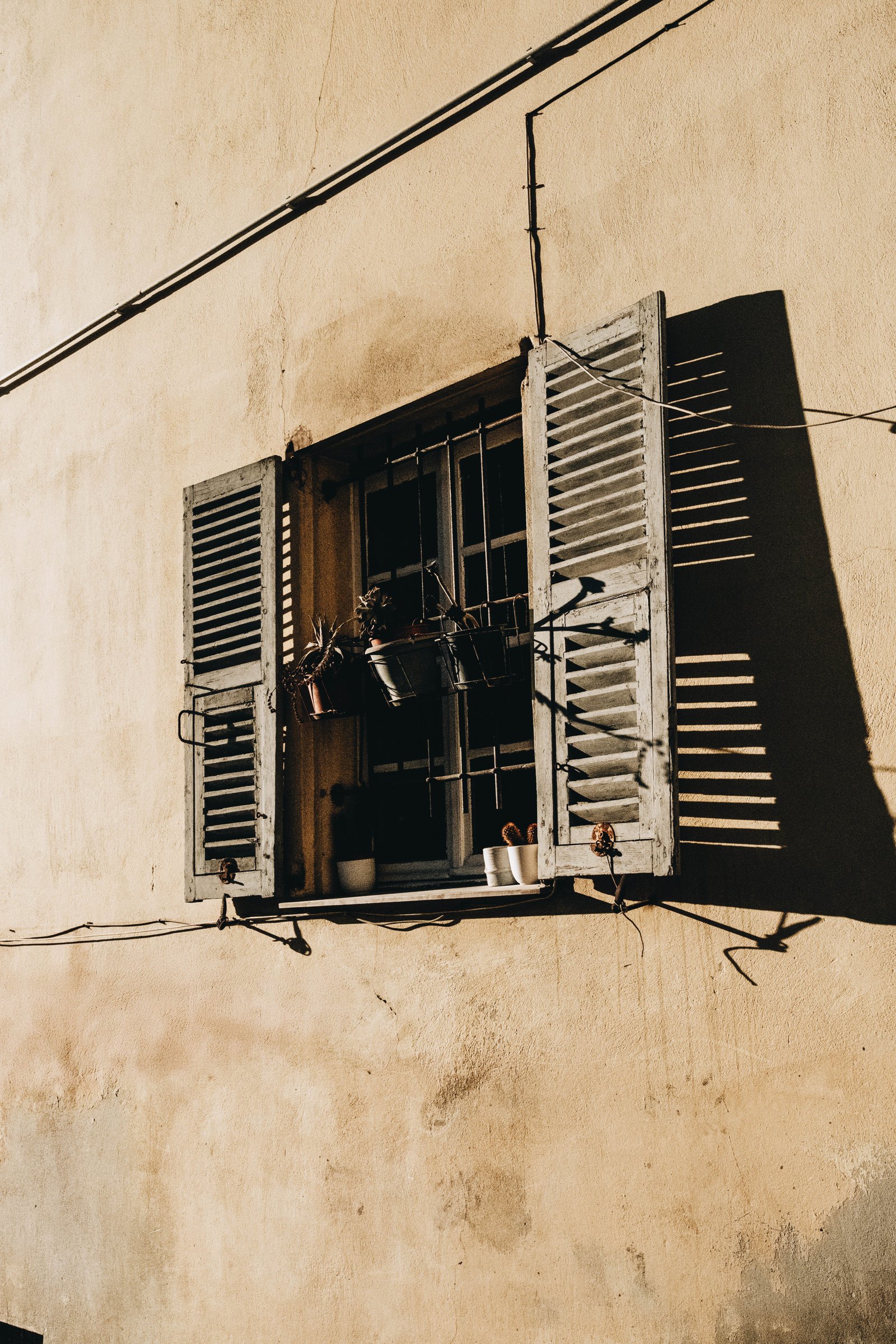
    The humble window shutter is — in many parts of the world — the unsung hero of climate control. What makes them so effective is that they sit outside of the building envelope and, therefore, block sun and thermal heat gain before they get inside. This is an important detail because, once inside, you now have to work that much harder to bring interior temperatures down.

    France’s contribution to the world of window shutters is one called la jalousie, which was deliberately named after the French word for jealousy. The key design feature is that they allow you to be a voyeur. The louvers, which are traditionally adjustable, allow you to see out, but for the most part block people from seeing in. Hence the name. Supposedly they first took hold in Marseille and then spread to the rest of France. That makes sense.

    It’s easy to not care about shutters in a world of modern air conditioning, but this is what generations upon generations have been using to regulate the temperatures of their homes. It’s dead simple, and it works.