Daily insights for city builders, delivered every morning at 6 AM ET. I’m Brandon Donnelly — a Toronto-based real estate developer and founder of Globizen. I’ve been writing here since 2013.

Category: Places

  • The value of lifestyle in attracting human capital

    When I was in Revelstoke, BC last year I met a number of people who had made the move out there from Toronto. When I asked if they missed living in a big city, pretty much everyone gave me the same answer: “No, I love it here.”

    This past week when I was in Park City, Utah, I similarly met a number of people who had made the move from New York and other large cities. And when I asked them the same question, I heard statements like: “I used to live in New York, but then I got a life and moved out here." 

    In these two examples, the obvious draw is the mountains. But it’s not like everyone just moved and became a ski bum. In fact, Inc Magazine recently published an article talking about Park City’s robust startup scene. People are figuring out how to combine hard work with the lifestyle they want.

    What I find interesting about this is that it runs counter to the trend of young people preferring big cities. Here’s a quote from NPR:

    “But affordable real estate and waterfront views don’t have millennials biting. They continue "a multigenerational pattern of young adults preferring more expensive urban areas over lower-cost rural ones because the lifestyles and opportunities in such places make the extra burden of cost worth it,” says Robert Lang, professor of urban growth and population dynamics at the University of Nevada, Las Vegas.”

    However, some small towns clearly have a unique lifestyle advantage: mountains. And that seems to be a strong enough draw that some people are simply figuring out how to create the economic opportunities for themselves.

    For me, this is yet another reminder that if you’re trying to attract the best human capital to your city or town, you need to think about lifestyle. And since young adults aged 18-34 are far more likely to move around than any other generation, you should also be thinking specifically about what this generation wants.

    Here’s a chart from CityLab that shows how precipitously migration falls off (in the U.S.) once people finish school and get settled in a job:

    image

    Obviously, not every town or small city is blessed with mountains. But there are many lifestyle advantages that can be created. It’s for this reason that I keep talking about nightlife and Toronto’s laughable 2AM last call. Those are lifestyle things and we can do better.
  • A mapping of single family home prices in Vancouver

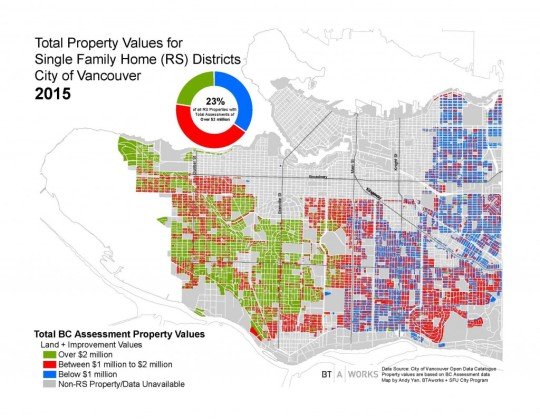
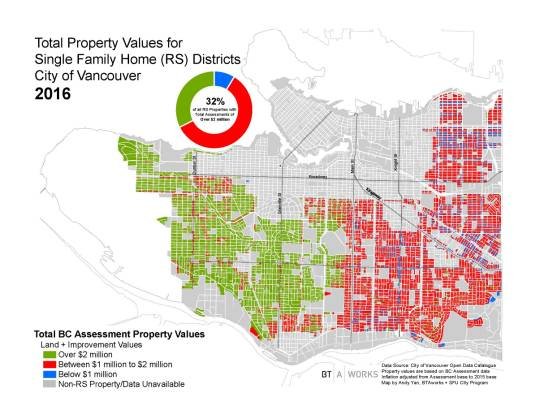
    Bing Thom Architects recently published a blog post looking at the property values of single family homes in Vancouver. The data was taken from the City of Vancouver Open Data Catalogue and is based on British Columbia Assessment data.

    The precise timing of the data is likely a bit off, but here’s how the city looked in 2015:

    23% of single family homes in the city had an assessed value over $2 million.

    A year later, this number increased 32% of all single family homes:

    It’s interesting to see how divided the city is along Main Street. But the big takeaway – thanks to BTA – is that $2 million seems to be the new $1 million.

  • A truly modern ski and snowboard resort

    Today my friends and I spent the day at Snowbird.

    In terms of the skiing and snowboarding, it’s way up there for me alongside Jackson Hole.

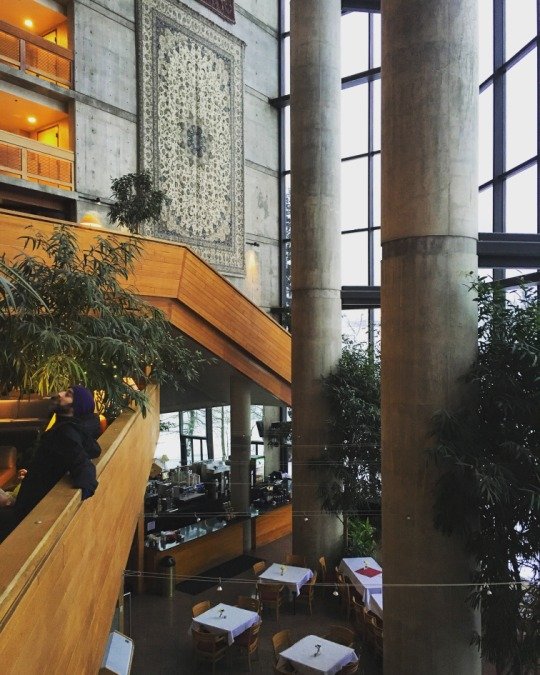
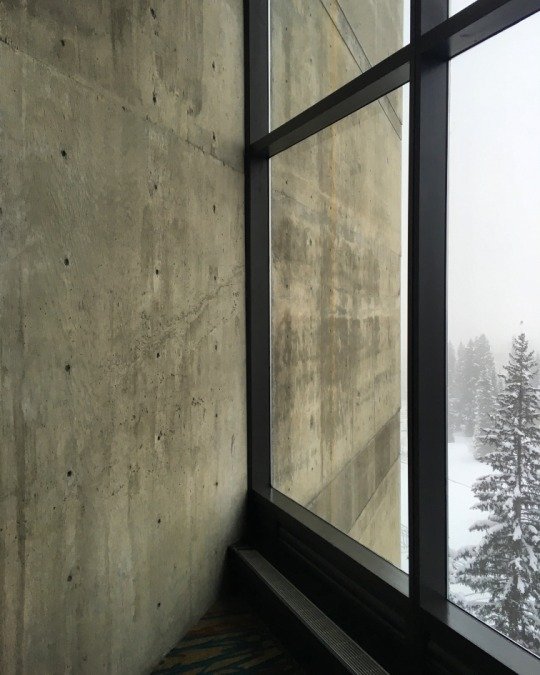
    But beyond the mountain, two things really stood out for me. Firstly, I really liked the overall brand and identity of the resort. Everything from the napkins in the cafeteria to the ski run signs were decidedly modern. Secondly, I loved the Brutalist architecture. And both of these elements combined to create what felt to me like a truly modern ski resort.

    Here are two photos that I took today:

    imageimage

    Developed in the mid-1960s by a man named Ted Johnson, the vision had always been to create a new kind of resort. In fact, Ted was insistent that they eschew the typical faux-alpine architecture that had come to characterize ski towns. 

    Here’s a brief summary of the parties involved and Ted’s design direction, via Salt Lake Modern:

    In 1965, the Snowbird Design Group was founded to create the first master plan. The original group was composed of Robert Bliss, Dean of the School of Architecture at the University of Utah, Jim Christopher, principal at Brixen & Christopher Architects, Dan Kiley, renowned landscape architect and site planning consultant based in Vermont, and architect Jack Smith. Johnson was adamant that the new resort not look “alpine lodgey” and based on the steep terrain and available land, the only choice for design would be to make it compact and dense. An aesthetic very unlike Alta, located just above Snowbird.

    For me, it’s the contrast between the rugged exposed concrete and the warm wood that I love. I left today thinking to myself that Snowbird is the most architecturally interesting ski resort I’ve ever visited.

    But as luck would have it and immediately after we left the resort, I discovered a community group called, “Save our Canyons.” And they don’t appear to be as smitten as I am with the Brutalist architecture. Here’s an excerpt from one of their articles talking about a new construction project at Snowbird:

    “Alas, more Snowbird droppings are fouling our Wasatch nest. Snowbird, already renowned for the hideous concrete bunkers at its base, has plopped another wad of architectural guano on top of Hidden Peak.”

    Of course, it is well known that Brutalist architecture isn’t often a crowd favorite. But when done well, it can be quite beautiful. Hopefully there are others who see what my friends and I saw today.

  • 10 city building predictions for 2016

    Dawn by Adrian Popan on 500px.com

    https://500px.com/embed.js

    Few things are better than waking up in the mountains and seeing a notification on your phone that 9″ of fresh snow have fallen overnight, bringing the 48 hour snowfall total to 16″.

    This is what people in mountain towns live for. They ski in the morning and then head to work in the afternoon. I heard a number of people on the mountain today saying that they, “want to be in the office after lunch.” It’s a lifestyle thing.

    On that note, today I’d like to focus on 10 city building predictions for 2016. I’ve been assembling this list over the past few weeks and now that I have had my fill of Utah powder for the day, I’m dedicating the rest of the afternoon to writing.

    These are never easy to put together. But here are my thoughts:

    1. We will see increased migration to secondary cities – outside of the alpha global cities – which offer a higher quality of life, more affordable housing, and the ability to live a particular lifestyle. This includes cities like Austin (creative startup hub) and Denver (outdoor recreation).
    2. As more and more cities wake up to the importance of lifestyle in attracting top talent, I think we will see a lot of cities follow the lead of Amsterdam and create “night mayors” or some other equivalent. These cities will begin to see nightlife as a competitive urban advantage.
    3. Global cities will start experimenting with different land use and property tax reform strategies to try and deal with rising income inequality and eroding housing affordability.
    4. We will see a barbell of residential unit sizes. We’ll see more well-designed small units as a way to try and promote housing affordability and we’ll see larger urban infill units for families and baby boomers who want to live/remain in walkable urban communities.
    5. In line with above, I think we will see a further rethinking of urban spaces. Flexible spaces, unique program mixes, and a continued blurring of public/private spaces. One example of this is the trend towards small private spaces surrounded by generous public/communal spaces.
    6. The Toronto and Vancouver real estate markets will continue to chug along because of low interest rates, a weak Canadian dollar, and increased foreign investment. That said, I think we will see more restraint when it comes to over-the-top luxury product.
    7. We will finally see a disruptive technology product that starts to get people in the real estate industry thinking that change is on the way. This will not be a product that ports an offline experience online; it will a new way of thinking about the industry.
    8. This will be the year that cities stop fighting Uber (and other similar marketplaces). Cities (and lobbyists) will finally accept that this is a new reality and then work to figure out the best way to create policy around it. Edmonton, Alberta has already become the first Canadian city to regulate Uber.
    9. Road pricing will get the attention it deserves in North America. Things will start out slow, but we will finally get ourselves on a path which recognizes that we can’t build our way out of traffic congestion in most major cities.
    10. I will publish a book on becoming a real estate developer.

    Many city building trends and shifts seem to happen in a global way. But I think it’s worth noting that a lot of these predictions were likely written with my North American lens on, and in some cases my Toronto lens on.

    It’s not easy sitting down and thinking about what will happen in the future. But it’s a worthwhile exercise. It forces you to take a stance and then, when the future does come, you can see how well you did. I saw Fred Wilson do this on his blog and I thought it was a great idea.

    Now I would love to hear what you think about my predictions and what yours are for this year. Please let us know in the comment section below.

  • Off to the mountains

    image

    I am leaving this morning for my annual retreat to the mountains. This year we are going to Park City, Utah, which we decided to do about a year ago.

    The reason we chose this particular place is because Vail Resorts spent $50 million over the offseason to merge Park City Mountain Resort with the neighboring Canyons Resort. 

    There’s now a mountain-to-mountain gondola and 7,300 acres of skiable area across the two resorts, which makes it the largest ski resort in the United States. And that’s why, this month, the New York Times named it one of the 52 places you need to visit in 2016. 

    But it’s not all puppy dogs and ice cream. What kickstarted this transformation was that the previous operator of Park City, Powdr Corporation, actually forgot to renew its sweetheart land lease.

    So if you’re at all interested in skiing, snowboarding, real estate, and/or lawsuits, you might be interested in what happened here. Curbed did a summary of the battle last year. It was big news in the ski world.

    Image via the New York Times

  • 50% of New York City’s population is estimated to be single. Here’s what that means for housing.

    Here in Toronto there’s a push for more family-sized apartments. That’s what the planners want to hear.

    Because the city has been trying to encourage developers to build more of them for years, but the challenge has always been that they didn’t sell or that they took a long time to sell. The market wasn’t ready.

    But as I discussed earlier this week, that is starting to change. I think Toronto is reaching a tipping point where low-rise housing has simply become too expensive and people are starting to look to alternatives, mostly at the mid-rise scale.

    It’s interesting though that something of the opposite appears to be happening in New York. I don’t know enough about the New York new construction market to really comment on overall unit mixes and sizes, but there definitely seems to be a push to create more affordable micro-units.

    Curbed published this last October:

    “…a report currently under public review, called Zoning for Quality and Affordability, recommends relaxing density caps and eliminating the 400-square-foot minimum for studio apartments, thereby creating more housing for single people. Almost 50 percent of the city’s population is estimated to be single, but only seven percent of the housing stock is studios.”

    And just recently, New York completed its first all-micro-unit apartment building called Carmel Place. Rents start at $2,650 per month for a 265 square foot apartment. 

    As a point of reference, that works out to be $10 per square foot per month and more than 3x the highest rents you could reasonably achieve in the more desirable areas of Toronto, today.

    The model suite is 302 square feet and looks like this:

    All of the above photos are via Curbed.

  • Vancouver approves first laneway apartments in the West End

    It’s no secret that Vancouver is way out in front of Toronto and many other cities when it comes to laneway housing. 

    Good luck trying to get a laneway house approved in Toronto. They’re only allowed under rare circumstances where there is already an existing house in the lane and/or you’re willing to fight it all the way to the province.

    But in Vancouver, it’s a different story. And they’ve even taken it a step further according to this recent Globe and Mail article by Frances Bula. The city recently approved small scale laneway apartments in the West End:

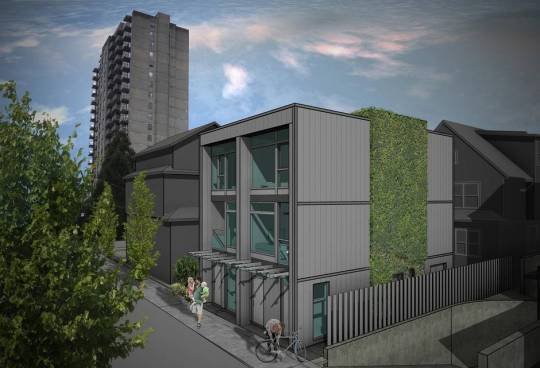
    “The city, which created the possibility for laneway apartments when it approved a new West End plan last year, has approved the first four buildings with 47 units in total. Three are in this particular alley between Nelson and Comox on either side of Cardero, around the corner from Cardero Bottega and Firehall No. 6. Others are in the pipeline. Many more are expected.

    They’re the first of a new kind of infill that planners hope will produce 1,000 new small homes in this popular downtown neighbourhood.”

    Here’s a rendering from the article to give you an idea of what these laneway apartments might look like:

    Readers of this blog have argued that Toronto doesn’t need laneway housing. There’s enough room for intensification elsewhere. 

    But what is clear to me is that Toronto is continuing to build less and less ground-related housing. There’s little to no room for that. And what is left of our low-rise stock is becoming increasingly unaffordable.

    So if we believe that social diversity is important for building a great city – which I do – then I think it behooves us to figure out how to not only increase the supply of new housing, but also increase its diversity. This is something Andrés Duany argued for in yesterday’s video post.

    The biggest hurdle is community opposition. But below is how one of the neighbours in Vancouver responded to the proposed laneway apartments. He gets it.

    “Dean Malone, who lives across the street from one of Mr. Sangha’s three projects, took the trouble to go to city hall to support it because the laneway apartments provide a way of creating new housing that isn’t a tower and isn’t a luxury development.”

    What this also does is allow the private sector to do more before the public sector needs to step in with affordable housing subsidies. I believe that laneway housing will help, but not solve, the affordable housing problem happening in most of our cities. 

    But every little bit helps. And this is one solution that many cities are simply ignoring.

  • Timeline of tall buildings completed in New York since 1908

    The Council on Tall Buildings and Urban Habitat recently published an interesting report called, New York: The Ultimate Skyscraper Laboratory.

    The money shot is this image here:

    It is a timeline of all tall buildings (over 100 meters) completed in New York since 1908 when the Singer Building was completed. At the time, but only for a year, that was the tallest building in the world.

    The gray bars represent the total number of buildings completed each year. And the colored dots represent specific completed buildings and their asset class (office, residential, mixed-use, hotel, and so on). It’s interesting to see the dips. During World War II, high-rise construction basically stopped.

    Check out the full report if you’d like to see a bigger version of the graph.

  • The impact of Chinese buyers on Vancouver’s single family home market

    I have a new favorite blog that I think you might all enjoy as well. It’s called BT | A | Works and it is the “architectural and urban research and development division” of Bing Thom Architects in Vancouver. 

    I think it’s it’s important to have people in a firm who are researching and experimenting with ideas beyond the day-to-day tasks of a job. So I was excited to discover their work this morning.

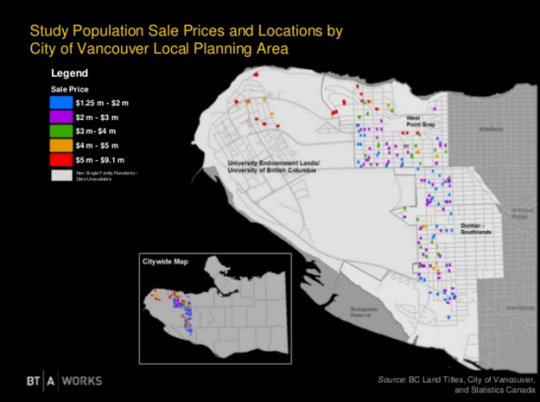
    Their most recent post is a look at ownership patterns of single family homes sold in 3 west end neighborhoods in Vancouver from September 2014 to February 2015 (a 6 month period). These are some of the most expensive areas in the city and, collectively, they found 172 properties sold with an aggregate value of around $520 million.

    Given the presence of foreign buyers in Vancouver’s real estate market, one of the things they then did was identify “non-anglicized Chinese names” on the title records. This means names like “Li Xian”, but not names like “Andrew Shui-Him Yan”, because the anglicized first name suggests that they are probably not a new immigrant or probably not living abroad.

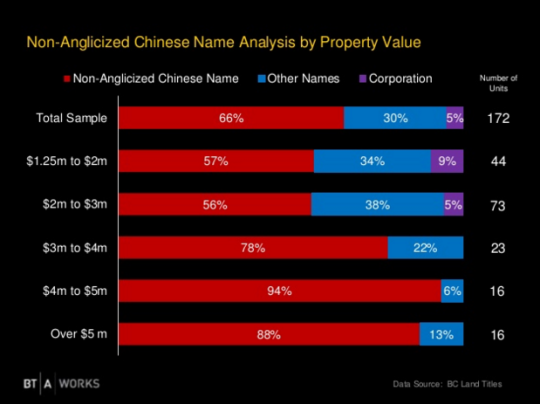
    Here’s what they found:

    In total, 66% of the properties in the sample (172 properties) were associated with a non-anglicized Chinese name. And for properties over $5 million, the percentage jumps to 88%. The other interesting thing worth noting is that 23% of the registered owners declared their occupation as “homemaker/housewife.”

    I thought this would serve as an interesting follow-up to the post I wrote about a month ago called, Is Hongcouver better off than Vancouver? If you’d like to see the full BT | A | Works presentation, click here.

  • Fred Wilson on where the New York tech ecosystem is heading

    Venture capitalist Fred Wilson is the poster boy for the New York tech industry. And this morning he posted an interesting video on his blog of a recent talk he did at Google NYC.

    At the 4:50 mark he begins talking about the evolution of the tech sector in New York and how it became what is probably the second most active startup hub in the United States.

    Given yesterday’s post on talent and the recent CityAge conference I participated in, I thought this video would make a great follow-up. There’s talk of lifestyle, diversity, gender equality, and talent within cities.

    Fred is heavily involved in growing and improving computer science education in New York, which is a perfect example of how cities can better leverage the people and talent they already have – as opposed to just focusing on bringing in new talent. Coding is a valuable skill to possess.

    I also found it interesting that Fred ended up in New York precisely because his wife wanted to live in New York. And that had a lot to do with all of the things you can do in the city, outside of work.

    If you can’t see the video below, click here.

    [youtube https://www.youtube.com/watch?v=_fZCrasNIfQ?rel=0&w=560&h=315]