Daily insights for city builders, delivered every morning at 6 AM ET. I’m Brandon Donnelly — a Toronto-based real estate developer and founder of Globizen. I’ve been writing here since 2013.

Category: Finance

  • A spread over the risk-free rate

    There is no such thing as an investment with absolutely zero risk. But you can get pretty close to zero-risk with things like US Treasuries and other government bonds, which is why when people think of the “risk-free rate of return” they usually think of instruments like these.

    Not completely risk free, but pretty damn close.

    Over the last cycle, and specifically between 2009-2021, the risk-free rate was at historic lows. What that meant is that if you wanted to generate any sort of meaningful return, you had to both look to other types of assets, such as real estate, and you had to take on more risk.

    How this usually works in practice is pretty simple. Find asset. Figure out how much said asset yields (or could yield). And then decide if the spread you’ll be earning above the risk-free rate is worth the amount of incremental risk you think you’ll be taking on.

    One challenge in bull markets is that it can get very competitive for assets, which can lead to investors accepting lower spreads. But regardless, the underlying idea remains the same. If you’re going to take on more risk than no risk, you should be compensated for it.

    Today, the problem is a different one. 2022 led to a “sea change” in the market. The risk-free rate is much higher, and that means that previously attractive assets yields are now no longer attractive. Things need to be reset.

    It doesn’t feel like this has happened yet, but it has to eventually. That is, assuming rates don’t go back to 0-1%, which I don’t believe they will.

  • Cheap and wonderful

    One generally accepted investing adage is that you “make money on the buy”. Meaning, what you pay for an asset will largely determine your fate. Price matters a lot. Some/many would even argue that it’s the single most important thing when it comes to investing.

    Said differently, if you had to choose between paying above market for a high-quality real estate asset or paying below market for a low-quality real estate asset, you would choose the latter, because you have a higher probability of doing well.

    In some ways, I agree with this. If you’re buying an asset below what it’s actually worth, then in theory you could turn around and sell it tomorrow for the market price. So you are quite literally “making money on the buy.”

    On the other hand, if you’ve paid above market for even a high-quality asset, you’ve now just lost money (at least in the immediate term). Because if you also turned around and sold it tomorrow, you’d lose money.

    But is this always the right way to think about investing? One of Warren Buffett’s many famous lines is that he’d rather buy a wonderful company at a fair price, than a fair company at a wonderful price.

    And this would suggest that “cheap” isn’t the only metric to consider. Especially if you think like Buffett does and you want to hold assets forever and benefit from the compound growth that comes along with wonderful assets.

    So as obvious as it may seem, a better way to think about “making money on the buy” might be that you need to consider both price and the quality of the asset. Cheap could be a feature, or it could not be. But cheap and wonderful are generally always a good thing.

  • The Citadel effect

    Last year, the formerly Chicago-based hedge fund Citadel announced that it would be moving its global headquarters to Miami. (Though to be clear, the company still has an office in Chicago.) Today, the Miami housing market is feeling the effects:

    “They’ve been buying here aggressively,” said Michael Martinez, a real estate agent with Sotheby’s in Miami, who recently brokered the sale of a $5mn home in Coconut Grove, a quiet salubrious suburb, to a Citadel employee. Most of the luxury homes he has sold in recent months have been to hedge fund buyers, half of them from Griffin’s firm, he estimates. “The Citadel migration is definitely occurring.”

    But it’s not just Citadel.

    According to another agent quoted in the article, there are many other “hedge fund buyers” active in the market, and many/most of them are buying all cash. In desirable suburbs like Coral Gables and Coconut Grove, homes between $3-7mm now account for about 40% of all listings.

    I remember visiting family in Miami in and around the GFC of 2007-2008. It was at this time that I really fell in love with the place. You could see how it was using art and culture to carve its identify. It was (and still is) this really exciting and sexy place.

    But it was also reeling from the GFC. I remember seeing listings for large and newish 2-bedroom waterfront condos for ~US$150k in some areas. If I had any money, this likely would have been a smart move given how Miami has grown since then.

    So I think this story is less about the Citadel effect and more about Miami’s continued rise as a global city and global financial center. Notwithstanding the whole climate risk thing, this city region has some pretty powerful tailwinds.

    Photo by Ryan Parker on Unsplash

  • Summit County, Utah to vote on acquisition of 8,576-acre ranch

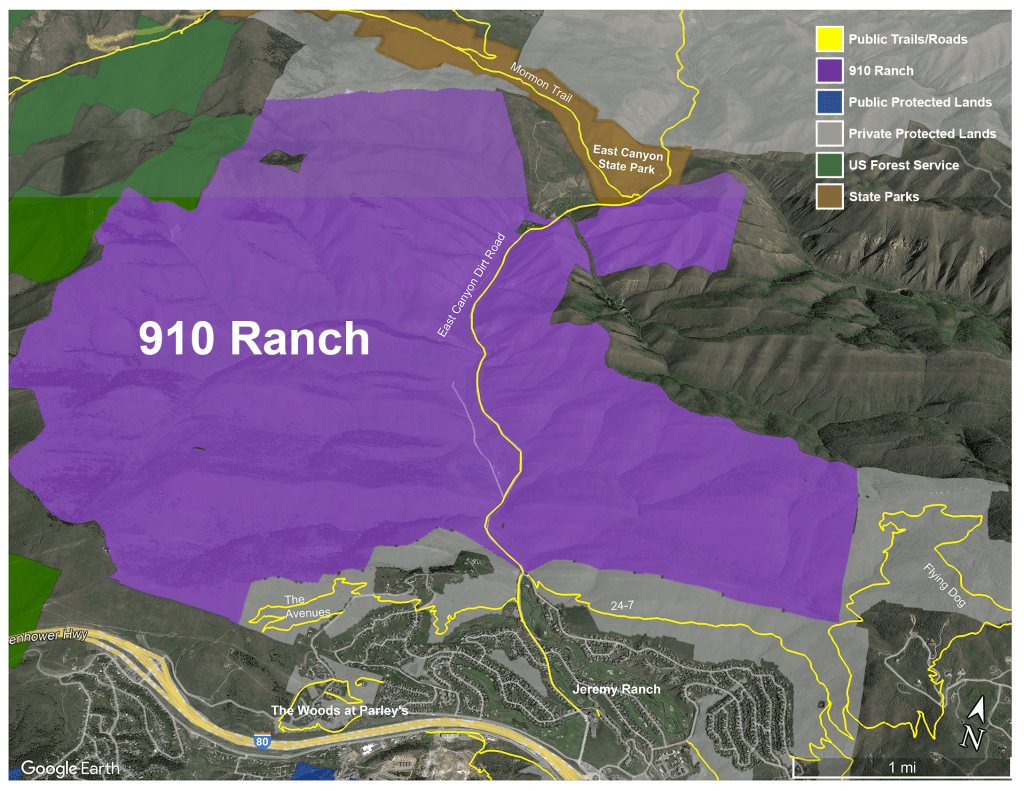
    Summit County Council is holding a special meeting this week to vote on the acquisition of an 8,576-acre property next to Jeremy Ranch and around the corner from Parkview Mountain House.

    The County Manager has recommended approval of the deal and these are the terms:

    – $55 million total purchase price (about $6,413 per acre)

    – Structured through a $15 million three-year option to purchase, with a right to extend for another year for an additional $5 million (option fees to be applied toward the purchase price)

    – During the option period, the County will have control of the property and pay $5,000 per month in rent

    Another way to look at this deal is that Summit County needs to initially come up with $15 million of equity. This is because they are getting seller financing for the remaining $40 million. (Implied loan-to-value of about 73%.)

    After 3 years, they will have to put in another $5 million, which lowers the implied LTV to about 64%. But in both cases, and assuming the $5k per month is all the County needs to pay, there’s effectively no interest on this 4-year “financing”. ($60k per year on $40-45 million.)

    The purchase price is also only ~$6k per acre, which should tell you that this is not development land. Its value is what you see here:

    And this is exactly what Summit County intends to do with the land: conserve it. As one of the last contiguous mountain ranches in the area that is privately owned, this sure seems like a win for the community. It’s a pretty good deal, too.

    Images: Summit County, Utah

  • The neutral rate and housing supply

    Below are two interesting excerpts from this recent Globe and Mail interview with Tiff Macklem (the current governor of the Bank of Canada of the former dean of the Rotman School).

    The first has to do with where he believes the “neutral rate” will be in the foreseeable future. He believes it will be higher than where it has been in the past:

    We have different models we use to estimate the neutral rate [the central bank’s estimate of where its policy rate would settle if the bank were neither trying to stimulate nor restraining the economy]. … Those models, based on the data we have, still suggest a neutral rate in the range of 2 to 3 per cent.

    When we look forward, and we look at a number of the forces, it seems more likely that the neutral rate is going to be higher than that … [rather] than lower than that. We don’t have that data yet. But there are a number of factors.

    More people are retiring. The labour market looks like it could be sort of structurally tighter going forward. Globalization has at least stalled, if not reversed. That could create more cost pressures. We’re going to need a lot of new investment in cleaner technologies if we’re going to meet our emissions-reduction targets. When I say ‘we,’ it’s the world – so that’s going to affect global real interest rates.

    So when you look forward, it seems more likely that the neutral rate is higher, not lower. And the message is that households, businesses, governments, the financial system, they need to be prepared for that possibility.

    The second is about his view on Canadian housing:

    The fundamental issue in the housing market, and this has been an issue in Canada for 10 years, at least, is structurally the demand for housing is growing faster than the supply. And so yes, interest rates go up, the housing market will slow. But it’s only going to slow so much because there is a sort of structural shortage of supply relative to demand.

    I think what you’re seeing is that with supply growing less than demand, the housing market has started to tick back up, housing prices have started to tick back up. That’s something we need to take into account in monetary policy. But we’re not targeting the housing market. We have one target: CPI inflation.

    These two forces are opposing ones. Higher rates create downward pressure on home prices. But, as we all know, a structural housing supply problem does the opposite. Where these two forces balance out is anybody’s guess. But as Tiff mentions above, his concern is not home prices; it is inflation.

    I am not an economist, but my view is that the broader real estate market is still going through its reset. There will be more pain and less housing supply overall in the short-term. Risk and leverage are still being unwound and that takes time. It also sucks.

    Because of this, I think if you ask most people today, they will likely tell you to wait: “We haven’t yet hit the bottom of the market.” This is likely true. But I have zero ability to time the bottom of a market. And at the same time, the future does feel a lot more knowable compared to a year ago.

    My philosophy is more akin to what I blogged about earlier in the week: If it’s cheap, if the thesis is sound, and if you have the ability to think long-term, then these downturns are when you want to buy. And that is how I’m starting to feel about things right now. This includes everything from real estate to NFTs.

    Disclaimer: This is not investment advice.

  • Spring break tourists are bad; cultural tourists are good

    This is the message that the mayor of Miami Beach, Dan Gelber, delivered this week as it moved to sell $97.6 million of new municipal debt. The proceeds are intended to help the city fund more cultural projects and move away from its “old economic model” of selling Bellinis on Ocean Drive. But it is also a case of Miami Beach flexing its rising property values.

    According to Bloomberg:

    • Residential property values across Miami Beach grew by about 125% over the past decade
    • Between 2019 and 2022, the number of “million-dollar zip codes” more than doubled (presumably these are just zip codes with median home prices above $1 million)
    • And from 2012 to 2022, the number of high-net-worth individuals in the city increased by about 75% (I wonder how many moved to the city versus just got richer while already living there)

    All of this has been good for property tax revenues:

    And now the city is leveraging them to invest in culture.

    Chart: Bloomberg

  • If it’s cheap, buy it

    Reading Howard Marks’ investment memos is up there with reading Paul Graham’s essays. You just need to do it. Howard’s latest is about “taking the temperature” of the market and I think you’ll find the lessons invaluable for everything from equities to residential real estate.

    Here’s an excerpt that I liked:

    We don’t say, “It’s cheap today, but it’ll be cheaper in six months, so we’ll wait.” If it’s cheap, we buy. If it gets cheaper and we conclude the thesis is still intact, we buy more. We’re much more afraid of missing a bargain-priced opportunity than we are of starting to buy a good thing too early. No one really knows whether something will get cheaper in the days and weeks ahead – that’s a matter of predicting investor psychology, which is somewhere between challenging and impossible. We feel we’re much more likely to correctly gauge the value of individual assets.

    These are investing words to live by. Avoid your own emotionality and value the asset. If it’s not cheap, don’t buy it. If it’s cheap, buy it. Then take a long-term view. It all sounds simple enough, but it’s clearly not so easy. And that’s why we have extreme highs and extreme lows in the market.

    Eighteen months ago, everyone wanted to buy residential real estate. Today, prices are lower, but fewer people want to buy residential real estate. Part of this is obviously because of interest rates. But part of it is also just because of emotion.

  • When interest rates are low, who cares the most?

    When interest rates are low, people generally want to buy more highly-levered assets, such as real estate. This, of course, makes perfect sense, because lower rates mean more buying power. But how badly someone wants to buy more real estate should, at least in theory, depend on their particular situation.

    If you’re buying a pre-construction home, the current rate should matter less than what it might be in the future when it comes time to close (usually you can only lock in a rate for so long). That said, lower rates can help people feel richer because it buoys the value of their other assets/investments. So in this regard, low rates do help the pre-construction market.

    On the other hand, if you’re buying a home to immediately close on, then current rates matter a great deal. This is the rate that you are going to be paying. However, in Canada, the typical term for a fixed-rate mortgage is 5 years. Meaning that after 5 years the rate resets to whatever market is at that time. So eventually, the mortgage does become an adjustable-rate one.

    In the US, this isn’t the case. The most popular mortgage is a 30-year fixed-rate loan, meaning the rate stays the same for the entire 30-year period. What this means is that Americans should — again, in theory — want to buy more real estate — the most — when rates are low. That’s the time to back up the truck and lock in a sweet rate for the next three decades.

  • Dubai is now the top “super-prime” residential market

    People continue to buy expensive homes:

    Global super-prime ($10m+) residential sales bounced back in Q1 2023, with 417 sales across the 12 markets tracked in Knight Frank’s new Global Super-Prime Intelligence report. That’s up 11% on the 376 recorded in Q4 2022 and the highest volume since Q2 last year.

    The biggest market in Q1 this year was Dubai (88 sales), followed by Hong Kong (67), New York (58), Los Angeles (46), Singapore (37) and London (36). While volumes rose in Q1, the total value of sales fell 4% to $7.2 billion. The most expensive average super-prime sales took place in Geneva ($23.8m) and London ($20.4m)

    What is perhaps most interesting, though, is how central Dubai has become in the flows of global capital. In 2019, Dubai accounted for 2% of all super-prime sales in the 12 markets that Knight Frank tracks.

    Today, looking back at the most recent 12-month period, Dubai now accounts for 17% of all super-prime sales, placing it ahead of London, New York, and Los Angeles.

    Part of this jump likely has something to do with the “housing disaster” that Dubai was going through back in 2019. But even still, it is impressive to see just how quickly the city has managed to build and position itself as an alpha global city.

    I much prefer walkable cities, but clearly there are enough other people who don’t care about that sort of thing.

  • Sam Zell dies at 81

    Sam Zell, the billionaire real estate investor, died this week at the age of 81. That seems young to me. Or maybe I’m just being overly optimistic about life expectancy. This is around the US average.

    Whatever the case, if you work in real estate, you likely know/knew of Sam. In my case, he spent a lot of time at Penn after he permanently endowed the real estate center (under both his name and his late business partner’s name).

    I used to go and listen to him speak at least twice a year, and I would hang off his every word as a young student of real estate. “So wait, how does this all work?”

    It was also at this time that he sold Equity Office to Blackstone for $39 billion (back in 2007, it was the largest private equity deal in history). Sam’s explanation for doing this deal was that Blackstone offered him more than what he thought the portfolio was worth, so he sold it. He took no credit for good market timing.

    If you’ve ever heard Sam speak, you know that he’s incredibly direct. Generally, he also didn’t seem to give a fuck, and was happy being the only person in a Hawaiian shirt among a sea of blue and black suits.

    In fact, he’s largely the reason that, as students, we used to all joke that the richer the speaker, the more funny and honest they would be. “Come on, let’s go to this one. She’s rich.” I guess this is just what happens when you no longer have anything to prove.

    But none of this is to say that he didn’t care. He cared a great deal about the school and about helping young students. And for that, I say: thank you Sam. Thank you for being generous with your time.