Daily insights for city builders, delivered every morning at 6 AM ET. I’m Brandon Donnelly — a Toronto-based real estate developer and founder of Globizen. I’ve been writing here since 2013.

Category: Development

  • The cost of slowing down housing

    Urbanist Alain Bertaud — who is author of Order without Design — was recently in Vancouver for a talk about planning and housing matters.

    One of the things that he argued, according to The Hub, was that Vancouver “cannot complain about high housing prices and, at the same time, drastically limit the amount of land available [for development].”

    This should be an obvious thing. But then again, many people seem to believe that housing follows its own unique set of rules when it comes to supply and demand. So let’s look at some basic math to illustrate what it means to, not even stop or limit development, but just slow it down a little.

    Consider a development site that yields 300,000 sf of gross floor area. If I were to pick a number out of the air and apply a land price of $175 per buildable square foot, this is a site worth $52.5 million.

    In today’s environment, a land or acquisition loan for a site like this might come with a 50% LTV and an interest rate of 10%. What this means is that in a simple interest-only scenario, the annual debt service on this loan would be around $2.6 million ($52.5 million x 50% x 10%).

    Now let’s think of this on a per suite basis. Assuming an efficiency of 80%, 300,000 sf of GFA might equal 240,000 sf of saleable/livable area. Divide that by an average suite size of 625 sf, and you end up with 384 new homes on this piece of land.

    If you now divide the debt service by this many homes, you get to an annual land loan debt service cost of approximately $6.7k per home. This means that if it takes two years to start construction (and take out the land loan), that’s about $13.5k of land interest costs per home.

    Of course, if the approvals process takes even longer, this cost goes up. Let’s say that it gets decided that a “community working group” should be formed in order to further consult the community on the impacts of this proposed development.

    If this adds another year to the timeline, you now have an over $20k bill per home just to cover the land loan interest. And this does not just get magically “absorbed”, it needs to be added to the cost of the new home.

    This also does not include the cost of the actual construction loan, or any of the other hundreds of costs associated with building new housing.

    Obviously this is one of the costs of doing business. It is what developers sign up for when they look to build new housing. But I think it’s important to remember that limiting development, or even just slowing it, has real financial implications: it makes housing more expensive than it needs to be.

  • What’s land worth?

    Generally speaking, the value of a piece of land depends on what you can do with it. If the highest-and-best use is agriculture, then it might be worth $X. But if the highest-and-best use is a supertall skyscraper, then it’s going to be worth a lot more than $X.

    This is why the land component is typically thought of as the residual claimant in a development pro forma. Start with what you can build, forecast your revenues and expenses, and then see what is left over and can be attributed to the land. This is, at least in theory, how the mechanics should work.

    An interesting thought exercise, though, is to consider how different developers might value the exact same piece of land.

    One obvious scenario is that a developer could just get their forecasts wrong. For instance, maybe they understate their costs, which then leads them to believe that they can pay more for the land. In this case, an error makes them the highest bidder.

    In a rising market, there will also be developers who believe that they can almost certainly collect higher revenues in the future. In this case, the most bullish developer often becomes the highest bidder for land. And as long as the market continues to rise, they might not be wrong.

    But things change in a slower or flat market.

    Now the market isn’t there to save you if you happen to overpay for land. It’s a less forgiving environment. But it’s also a market where you really benefit from conservative underwriting and solid execution. Now it’s these groups who are the high bidders.

    And I know that some/many developers prefer it this way.

  • Are we really back to talking about “use-it-or-lose-it” zoning?

    It is very disappointing to hear that Paul Calandra — Ontario’s new Minister of Municipal Affairs and Housing — is talking about “use-it-or-lose-it” zoning policies and that mayors are coming out in support of it. This is a terrible idea.

    On the surface, it may seem like this would force/incentivize developers to build more housing sooner. But what it fails to recognize is this: just because a developer wants to build, it doesn’t mean that they are able to build.

    This current market environment is a perfect example. It is likely that the Greater Toronto Area will see dozens of new condominium launches this fall. These are developers who will be spending millions of at-risk dollars to bring their projects to the market in the hopes of pre-selling homes and then obtaining construction financing.

    However, it is highly probable that not all of these projects will actually start construction in the short-term. And if/when that happens, it will not be because these developers are just squatting on entitled land; it will be because they can’t get financing. In other words, the market isn’t there.

    This will not be a good day for anybody. So I fail to see how it makes sense to penalize developers who happen to find themselves in this unfortunate situation. It’s as if our only solution to the current housing crisis is to make it more expensive to build new housing.

    For another post that I wrote on this topic, click here.

  • Silicon Valley wants to build a new city about 60 miles northeast of San Francisco

    We talk a lot about housing supply on this blog. And most of the time it is about creating more and better infill housing, In other words, housing that leverages existing infrastructure and uses previously developed land as efficiently possible.

    But I suppose there are other options. You could, for instance, form an anonymous holding company, raise hundreds of a millions of dollars from leading venture capitalists in the Bay Area, spend $800 million on cheap agricultural land, and then just build an entirely new city about 60 miles northeast of San Francisco.

    And apparently that is happening:

    In 2017, Michael Moritz, the billionaire venture capitalist, sent a note to a potential investor about what he described as an unusual opportunity: a chance to invest in the creation of a new California city. The site was in a corner of the San Francisco Bay Area where land was cheap. Mr. Moritz and others had dreams of transforming tens of thousands of acres into a bustling metropolis that, according to the pitch, could generate thousands of jobs and be as walkable as Paris or the West Village in New York.

    Here’s the area; it’s generally between Fairfield and Rio Vista in Solano County:

    The real estate opportunity is an obvious one. The majority of the land in Solano County, roughly 62% of it, is zoned for agricultural uses. So it was and is relatively cheap to acquire. In isolation, I would imagine that it would be pretty difficult, if not impossible, to rezone any of it for other uses. But if you buy enough of it and if you have the resources, then maybe you figure it out.

    And if you do, it’ll all be worth significantly more, which is why this group has been reportedly paying many multiples of market value over the last 5 years. Because here’s the thing, paying $6,000 per acre instead of $1,500 per acre is almost certainly not going to move the needle considering the broader strategy. More important is that you get enough contiguous land to execute on the vision of a new city.

    This will be an interesting one to watch. And from what I have read, it sounds like they’re just now coming out of stealth acquisition mode and preparing to engage the broader community.

  • Summit County, Utah to vote on acquisition of 8,576-acre ranch

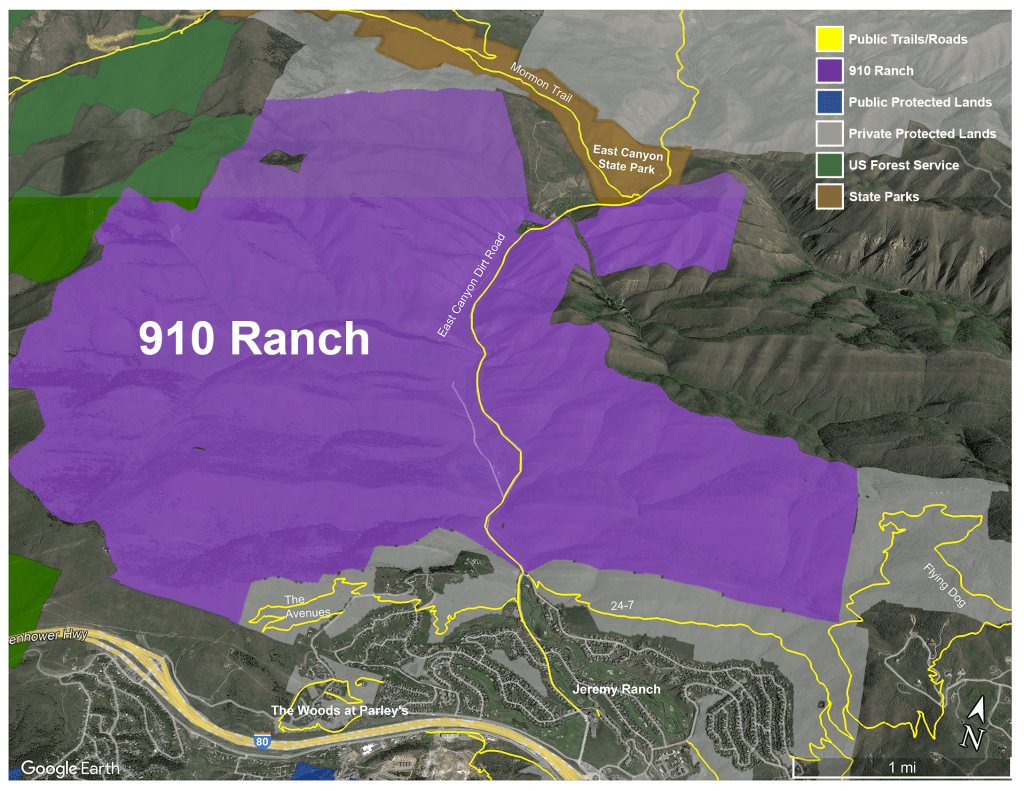
    Summit County Council is holding a special meeting this week to vote on the acquisition of an 8,576-acre property next to Jeremy Ranch and around the corner from Parkview Mountain House.

    The County Manager has recommended approval of the deal and these are the terms:

    – $55 million total purchase price (about $6,413 per acre)

    – Structured through a $15 million three-year option to purchase, with a right to extend for another year for an additional $5 million (option fees to be applied toward the purchase price)

    – During the option period, the County will have control of the property and pay $5,000 per month in rent

    Another way to look at this deal is that Summit County needs to initially come up with $15 million of equity. This is because they are getting seller financing for the remaining $40 million. (Implied loan-to-value of about 73%.)

    After 3 years, they will have to put in another $5 million, which lowers the implied LTV to about 64%. But in both cases, and assuming the $5k per month is all the County needs to pay, there’s effectively no interest on this 4-year “financing”. ($60k per year on $40-45 million.)

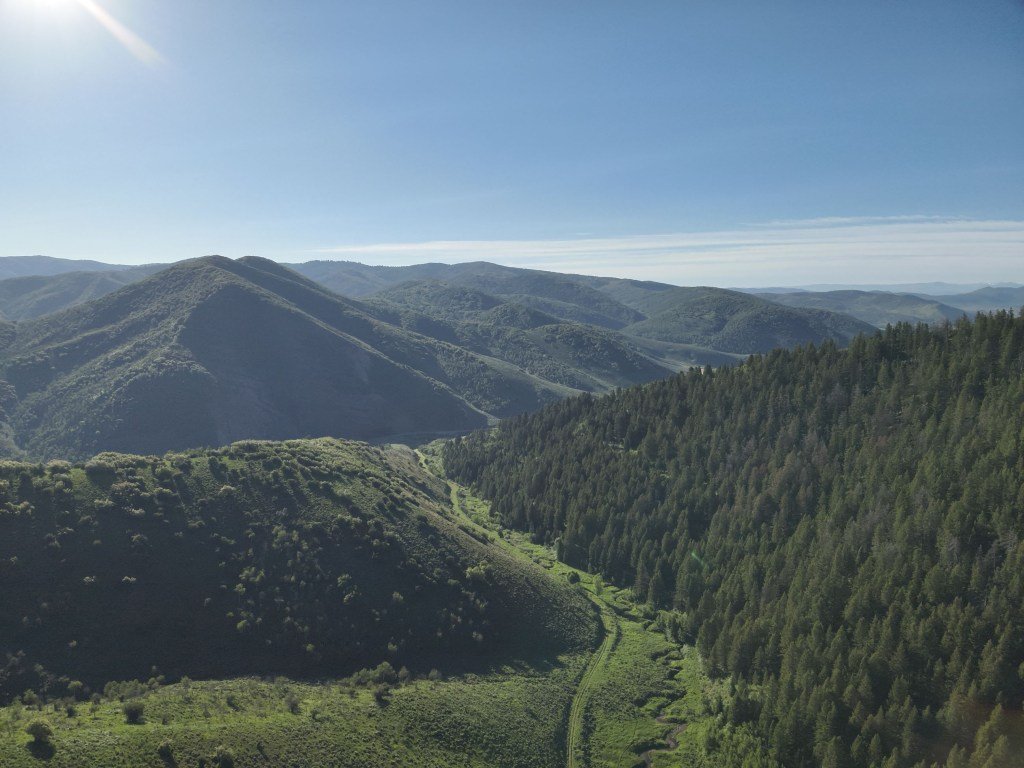
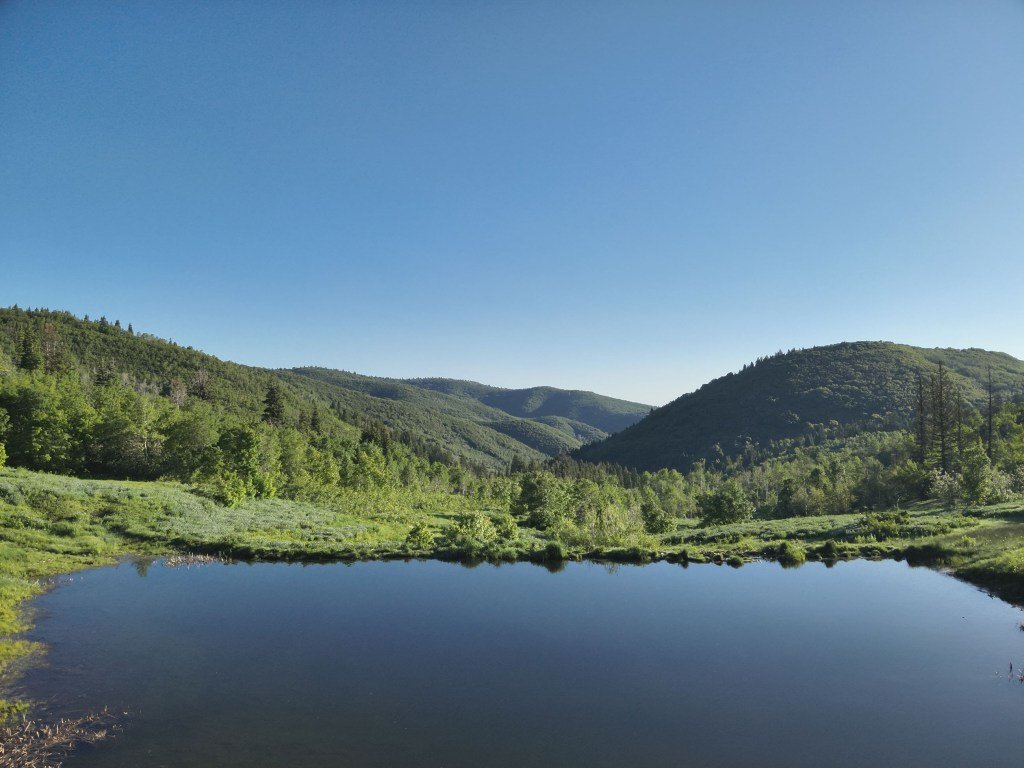
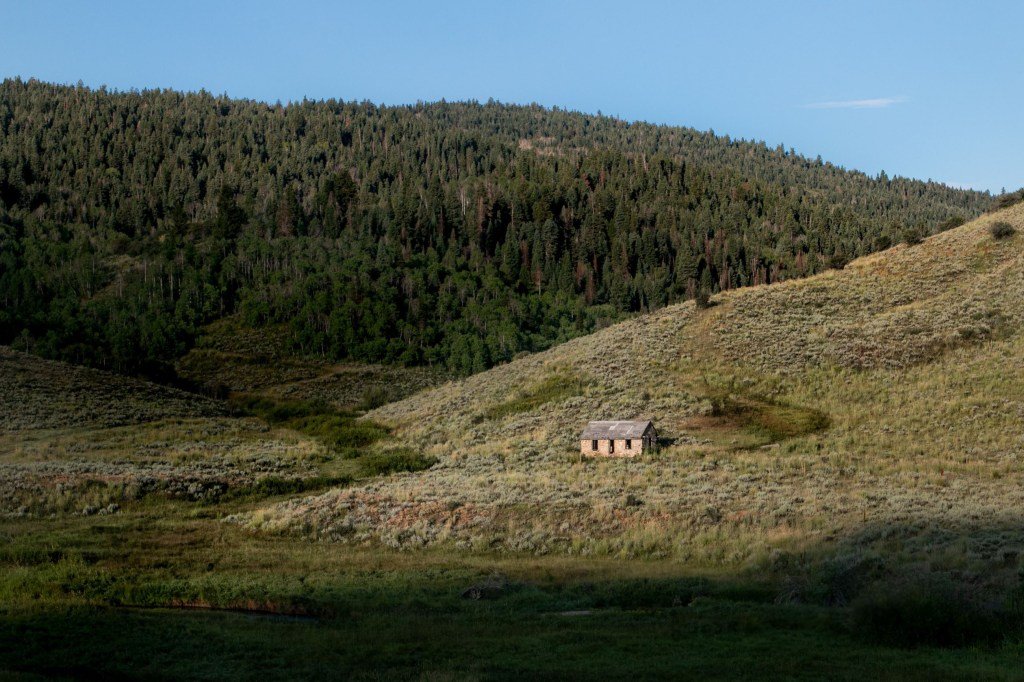
    The purchase price is also only ~$6k per acre, which should tell you that this is not development land. Its value is what you see here:

    And this is exactly what Summit County intends to do with the land: conserve it. As one of the last contiguous mountain ranches in the area that is privately owned, this sure seems like a win for the community. It’s a pretty good deal, too.

    Images: Summit County, Utah

  • Real estate is a project-based business

    A friend of mine just sent me this blog post from the venture capital firm, Shadow Ventures. They specialize in the built environment (i.e. real estate and construction) and the post is called, “What McKinsey gets wrong about the built environment.” Here’s one of the points that they make:

    We are project based. While we are much larger, the most similar business is the movie industry. Project based, different source of funding/budget every time, the team changes (but we have our faves).

    This is very true. Oftentimes what happens in real estate is that you start with an opportunity. Something like, “buy this building, fix it up, and then sell it for more.” If the opportunity sounds compelling, a common approach is to then “get control of the asset and figure out how to capitalize it.”

    What this means is a conditional deal so that you can (1) do your due diligence and (2) figure out how to pay for it. This gets back to the three-legged stool that we’ve spoken about before. To do real estate stuff you basically need 3 things: a piece of real estate, relevant experience, and, of course, some money.

    This speaks to the entrepreneurial nature of real estate. But it also speaks to why it is maybe unfair to evaluate the architecture, engineering, and construction (AEC) industry as you might the automotive industry. The auto industry doesn’t capitalize and make each car slightly differently.

    This is one of the many things that makes real estate unique. And it’s why we have seen an enduring effort to figure out the “productization” of housing. It’s about being less project based.

  • Urban families

    We are getting ready for first occupancies at Junction House and it is exciting to see how many young families — with children — are looking forward to moving into the building’s larger 2-storey suites. (These are the suites that gave the project its name — Junction House.)

    From the outset, this was always a part of our development thesis. You can’t, or at least it’s very difficult, to pre-sell an entire building of larger suites in Toronto. But we figured that in a submarket like the Junction, which is very popular with young families, that there had to be some buyers who would want a house-like residence.

    Meaning, two floors of living spaces, upstairs bedrooms (better acoustic separation), larger living spaces, and a terrace for BBQing and gardening, among other things.

    We are now seeing this play out with the wonderful people coming in for their pre-delivery inspections, and it’s a really nice thing to see. Not only as a developer, but as a dedicated urbanite and lover of Toronto. I am not suggesting that it’s for everyone. But clearly there is a segment of the market that wants this.

    For a list of available homes at Junction House, including floor plans and pricing, click here.

  • Junction House by Air Norm

    If you work in the development industry in Toronto, then you know, or know of, Norm Li. He runs one of the top visual content studios in the city and the country. But he (and the company) also do a bunch of other things like DJ at industry events and fly around in a helicopter taking incredible photos of the city from above. He invited me to join him in 2018 and I captured photos like these.

    This past week he sent me a text with the below photos of Junction House and a message saying, “new lock screen.” I, of course, immediately blasted them around to the team and then asked if I could post them online. I love how these turned out. And every time I see our placemaking sign, I am happy that we fought for what we all believed would end up looking pretty cool.

    Thanks for the photos, Norm.

  • Developing, operating, and owning lagoons

    Here is a company that I just discovered called, The Lagoon Development Company. What they do is develop, operate, and own large-scale lagoons for both swimming and water sports.

    From what I can glean from their website, they make money by selling access tickets to these lagoons and/or by partnering with other developers on master-planned communities.

    In this latter scenario, I would imagine this means fee revenue upfront, with the ongoing operations then getting funded, at least partially, by the communities where they are housed.

    From the videos they have online, these lagoons look very impressive. I think they’re some of the largest ever developed. But at the end of the day, these are artificial lagoons, and so I’m expecting there to be mixed opinions.

    Would you want to see something like this developed in your city? And if it did exist, would you pay to go? I would.

  • Rail + property — let’s try it again, okay?

    The Eglinton Crosstown line is going to open, here in Toronto, sometime next year — I think. And I’m sure that it is going to be a massively beneficial addition to Toronto’s transit network. But at the same time, we should be talking about this:

    Urban transit stations shouldn’t look like this. It’s a missed opportunity, both in terms of the foregone housing (and other uses) that could be on top of these stations and the additional value that could have been captured from these air rights. Transit is a crucial lever for land values and development overall, and so it’s no wonder that many of the best transit authorities around the world think in terms of “rail + property”.

    So what happened here?

    I don’t know exactly. But I do know that nearly a decade ago I called up Metrolinx and said, “Hey, so I’m a developer who can build things. I see that you’re building a number of exciting transit stations along Eglinton. Want me to build on top of them for you?” Now obviously Metrolinx wasn’t going to be able to sole-source to Brandon, but regardless, I thought it should happen and I just hoped to be in the mix.

    In 2015, things did start to happen. Avison Young, on behalf of Metrolinx, issued a request for proposal to developers for 4 sites/stations along the line. There were two at Keele Street, one at Weston Road, and one at Bathurst Street. And at the time, it was thought that these sites could generate somewhere between $14-22 million (speaking of reasonable).

    I think it was also being viewed as a bit of a pilot. If things went well with these 4 initial sites, then this same approach was going to be rolled out across all suitable sites on the line. I’m not sure what happened with the RFP or the broader intent — maybe some of you know — but it clearly didn’t pan out as planned.

    That’s too bad. But I suppose done is better than perfect. Plus, now we’re building the Ontario Line and so we have another opportunity to get it right. And right means lots of density on top of stations — both directly on top and all around it.