Daily insights for city builders, delivered every morning at 6 AM ET. I’m Brandon Donnelly — a Toronto-based real estate developer and founder of Globizen. I’ve been writing here since 2013.
If you’re a cyclist in Toronto, you probably know that Shaw Street is a damn good street for biking. The city first redesigned the one-way street in 2013, adding a bike lane in each direction (one of which is a contra-flow bike lane). Then in 2020, they made it so that the one-way direction for cars alternated every few blocks. This stopped drivers from using it as a high-speed shortcut. The result was an immediate increase in cycling.
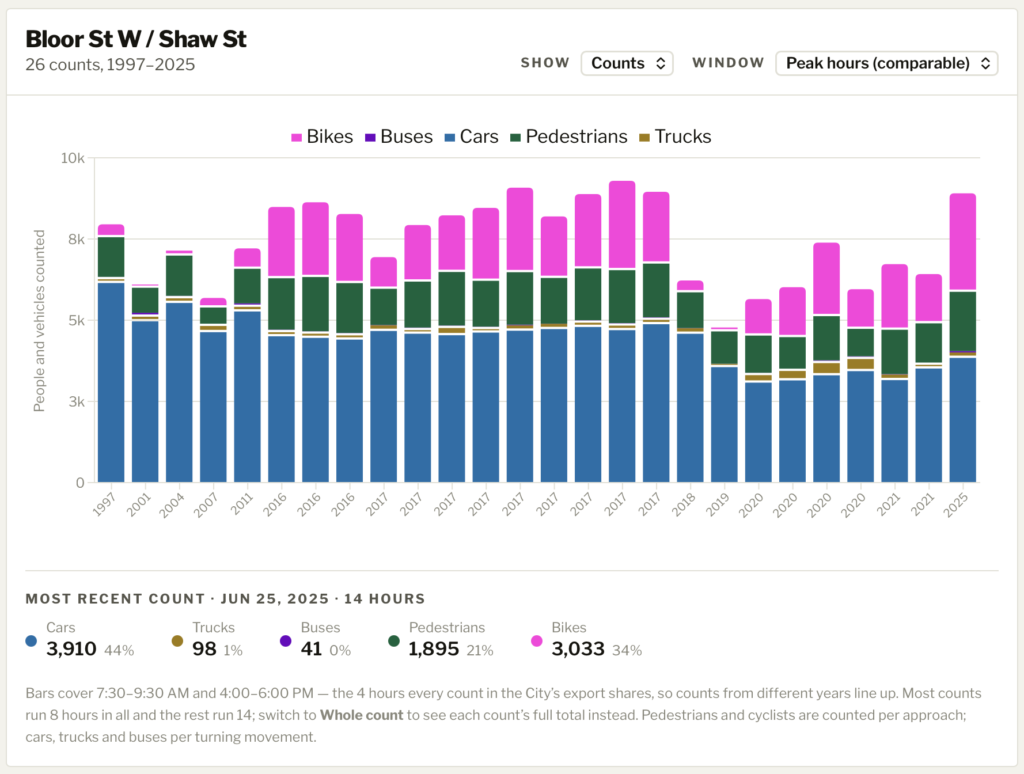
Here’s some data from Observing the City for the intersection of Bloor and Shaw:
As of June 2025, the modal split at this intersection during peak hours was 34% bikes, 21% pedestrians, 1% trucks, and 44% cars. At times, there has been a 310% increase in cycling trips since the redesign. It goes to show you that the right street design (or the wrong one) will induce demand. If you look at the intersection counts for the entire city, you’ll see just how profoundly built form impacts behaviour. Cycling is broadly an Old Toronto thing.
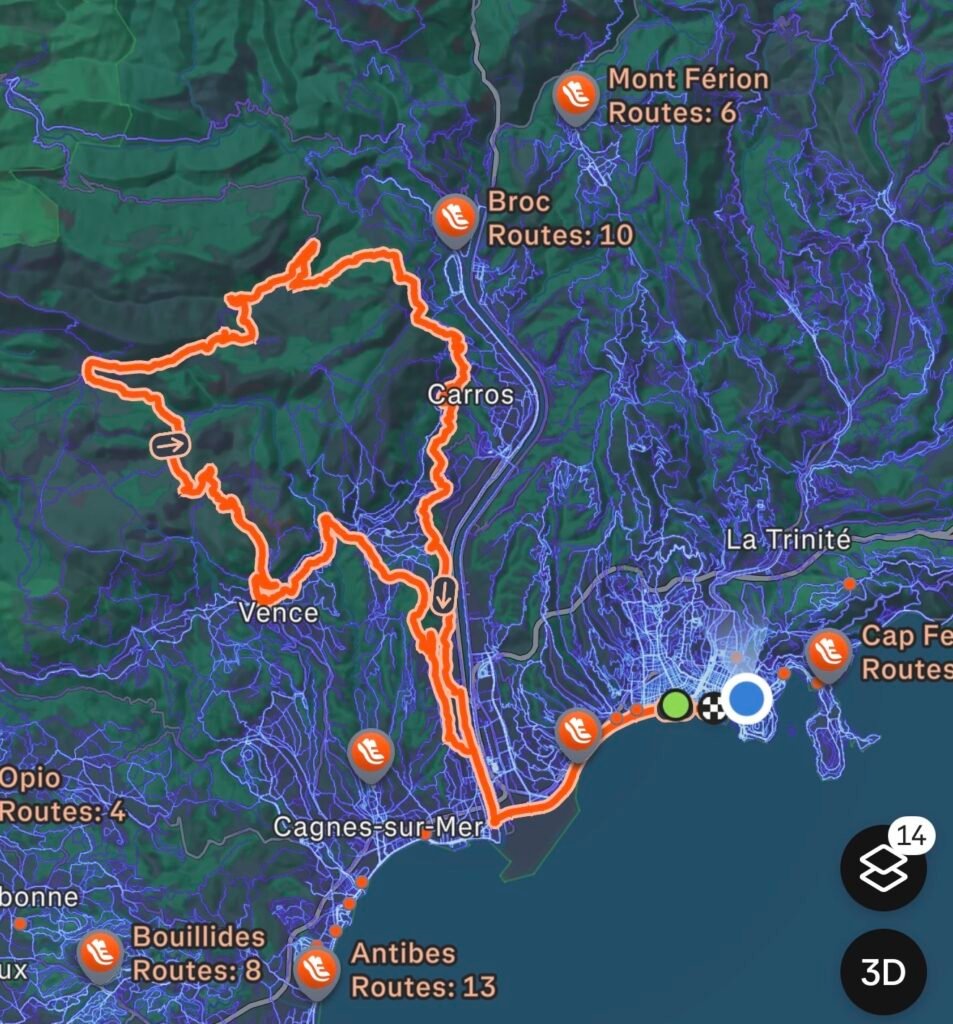
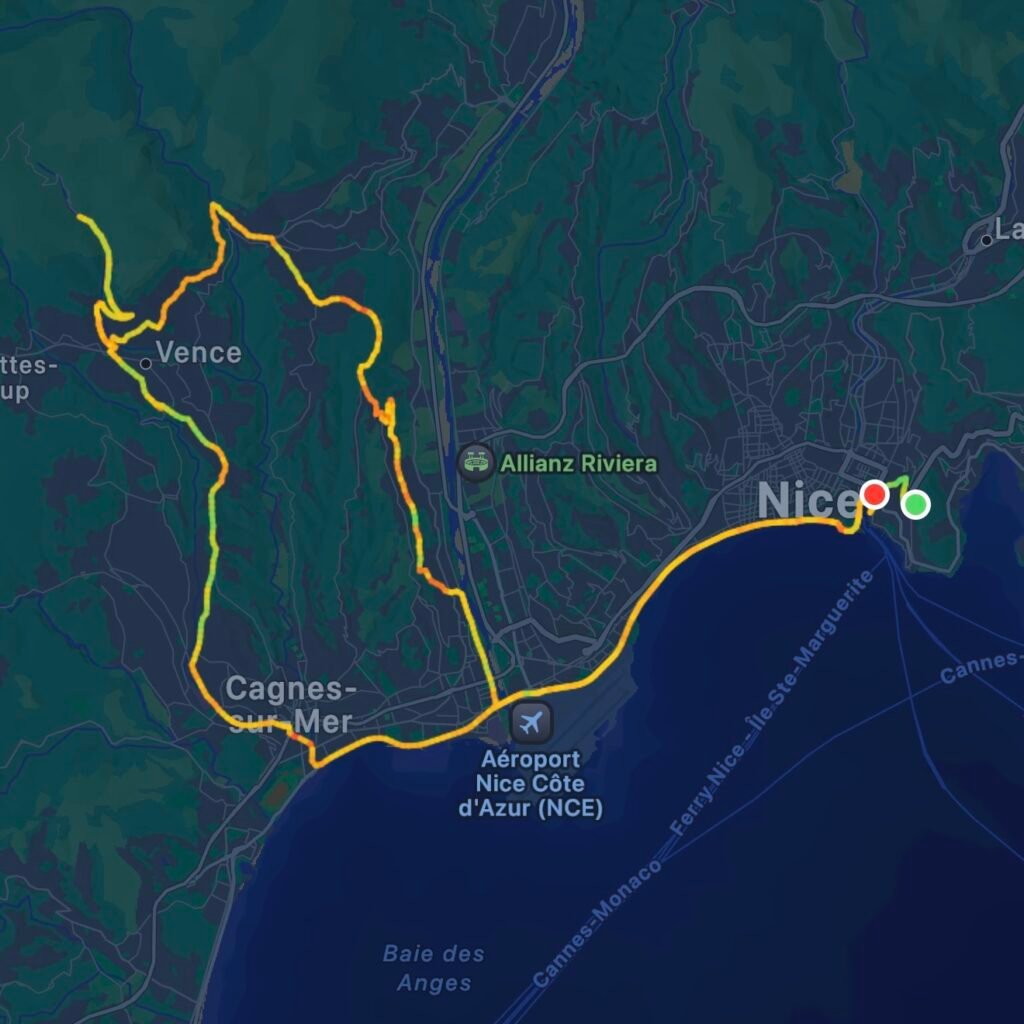
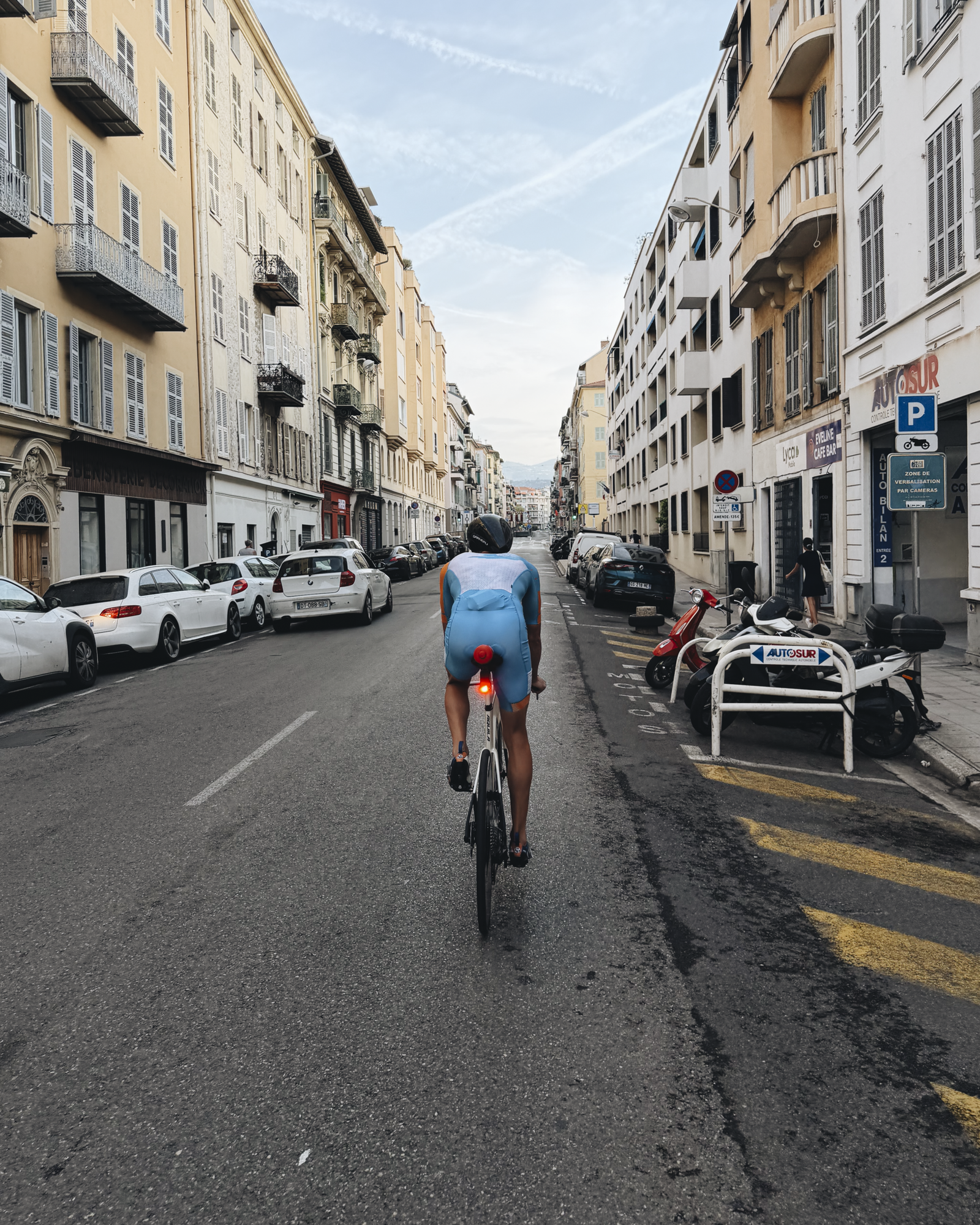
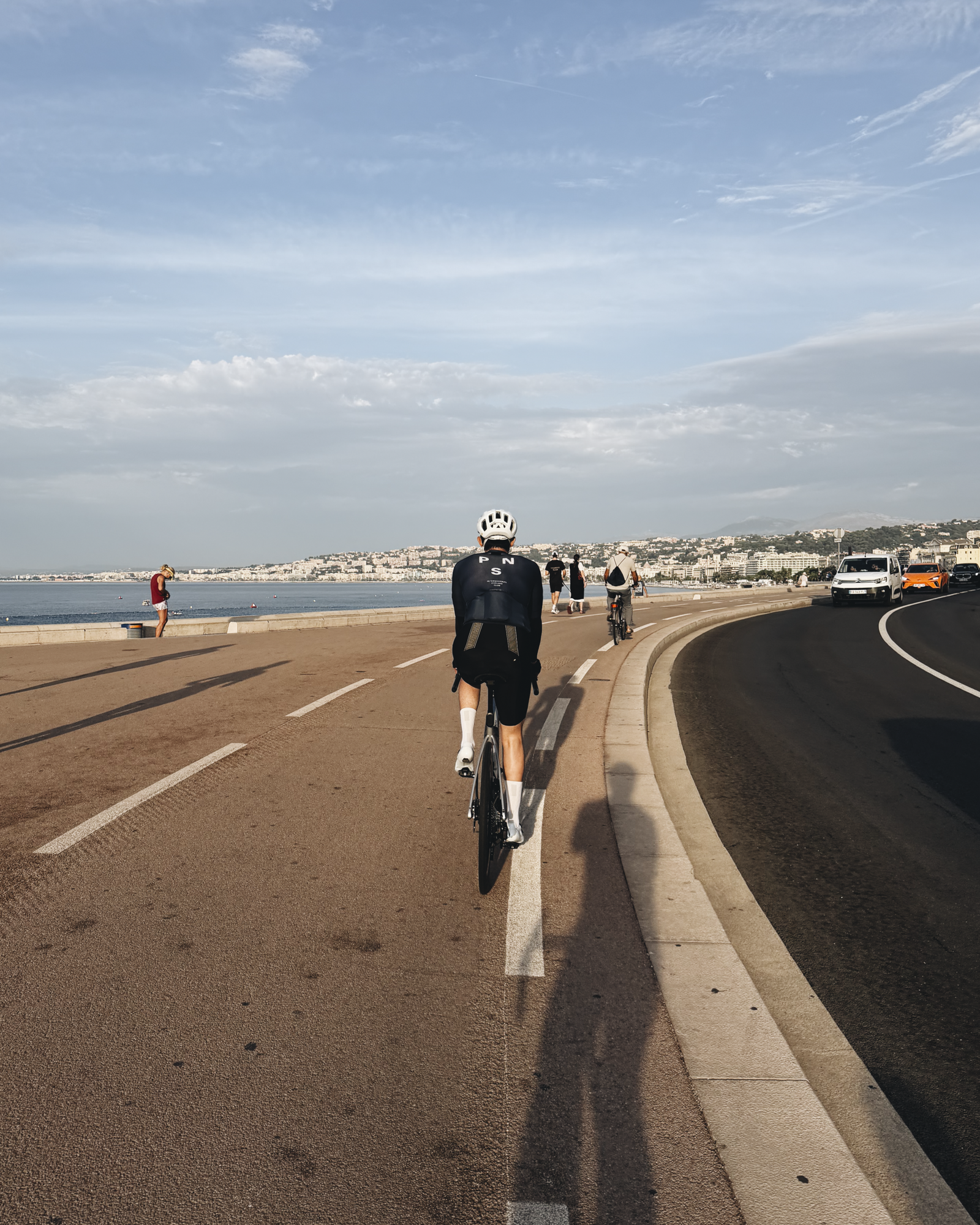
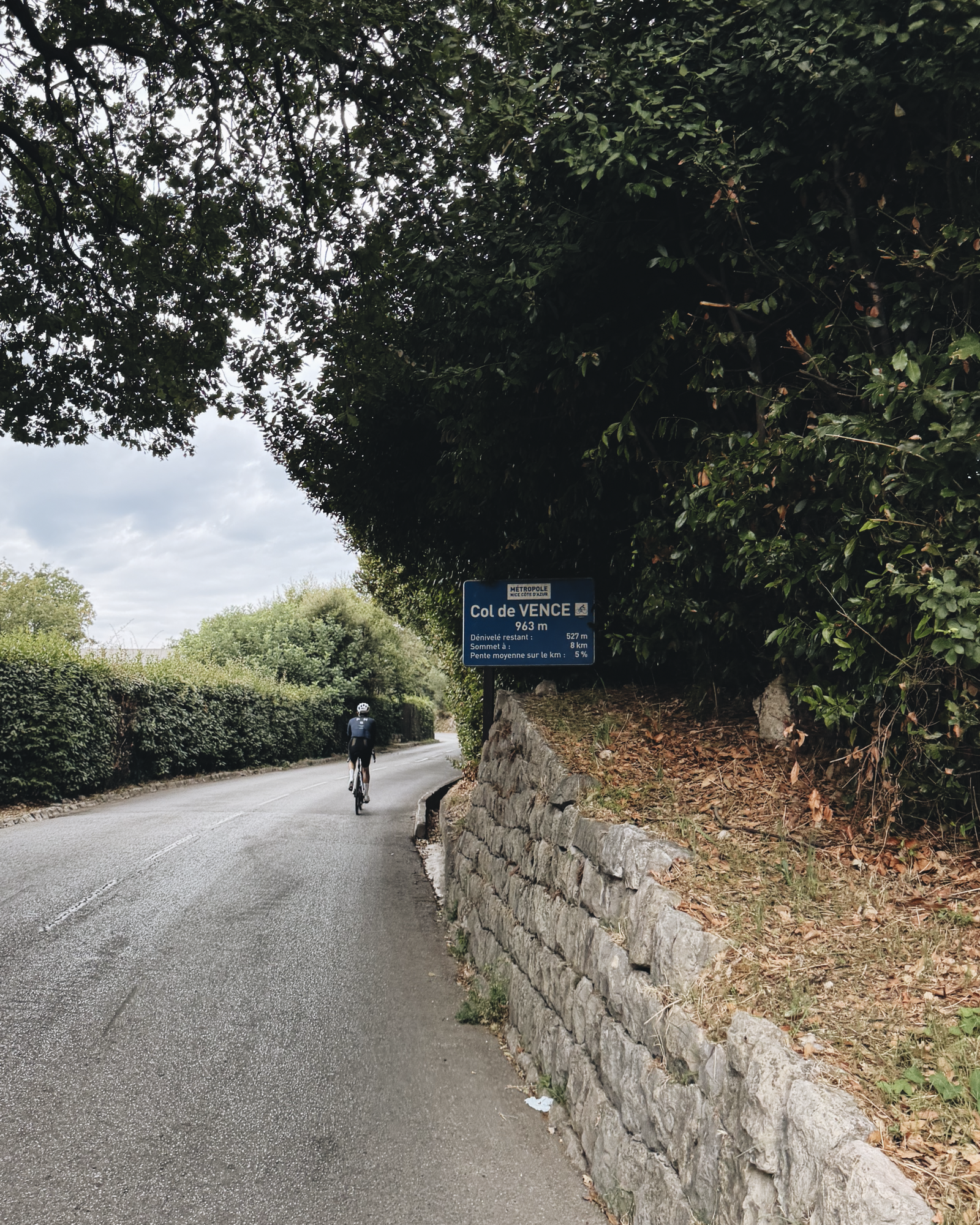
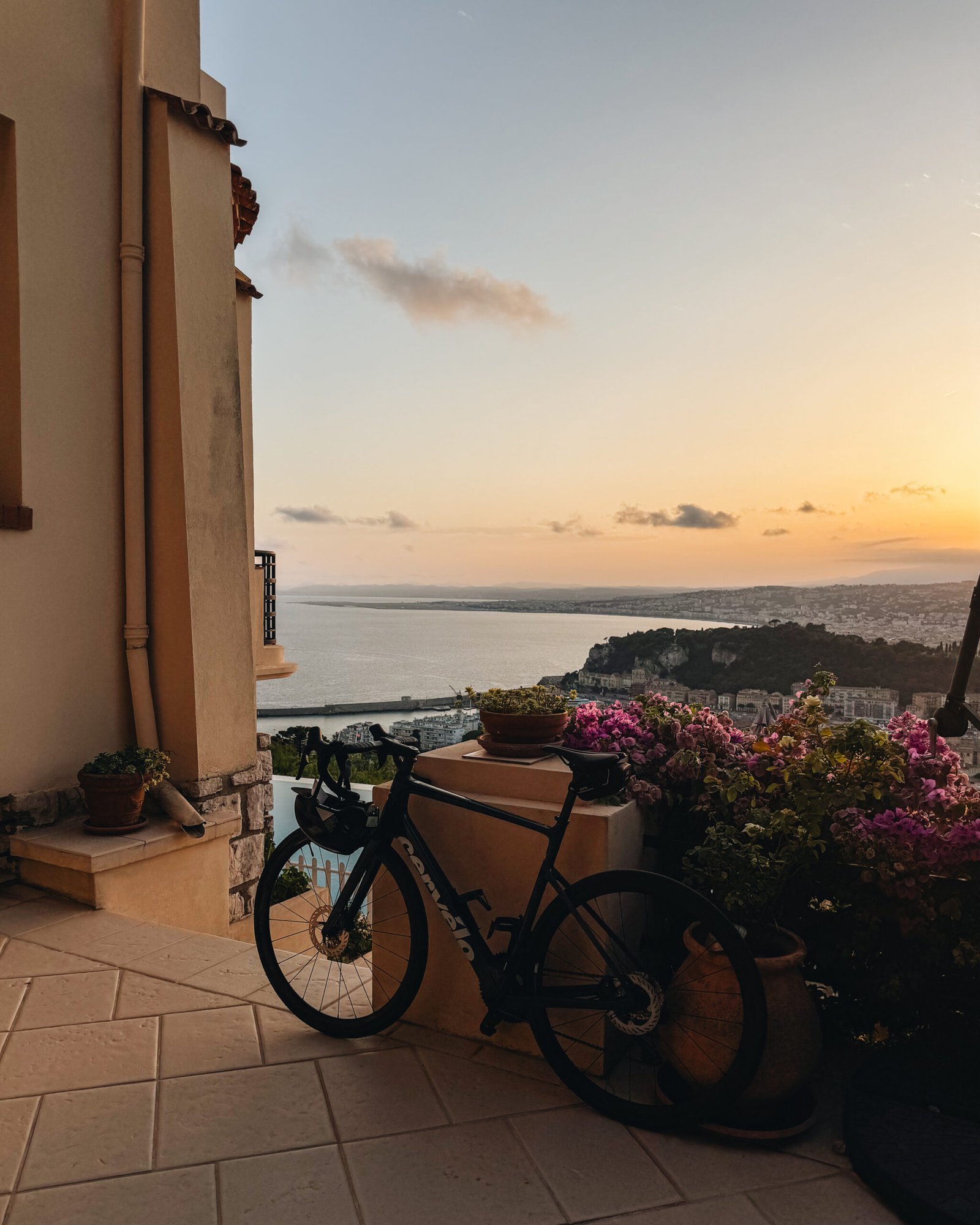
So, it turns out that if you want to do the 92-kilometre Ironman World Championship bike course in Nice, it’s a good idea to practice a little beforehand. At the very least, you probably want to get on your bike more than a handful of times. I tried it today and came up short.
The circuit includes le col de Vence at its summit, which is a 9.7-kilometre stretch with a 963-metre peak elevation and an average pitch of 6.6%. I was within 6 kilometres of the top, but my quads completely seized up and I turned back towards Vence, then continued south back to the water.
I really wanted to get there and reward myself with a sugary crêpe, but my legs were saying otherwise. I’ll be back, col de Vence.
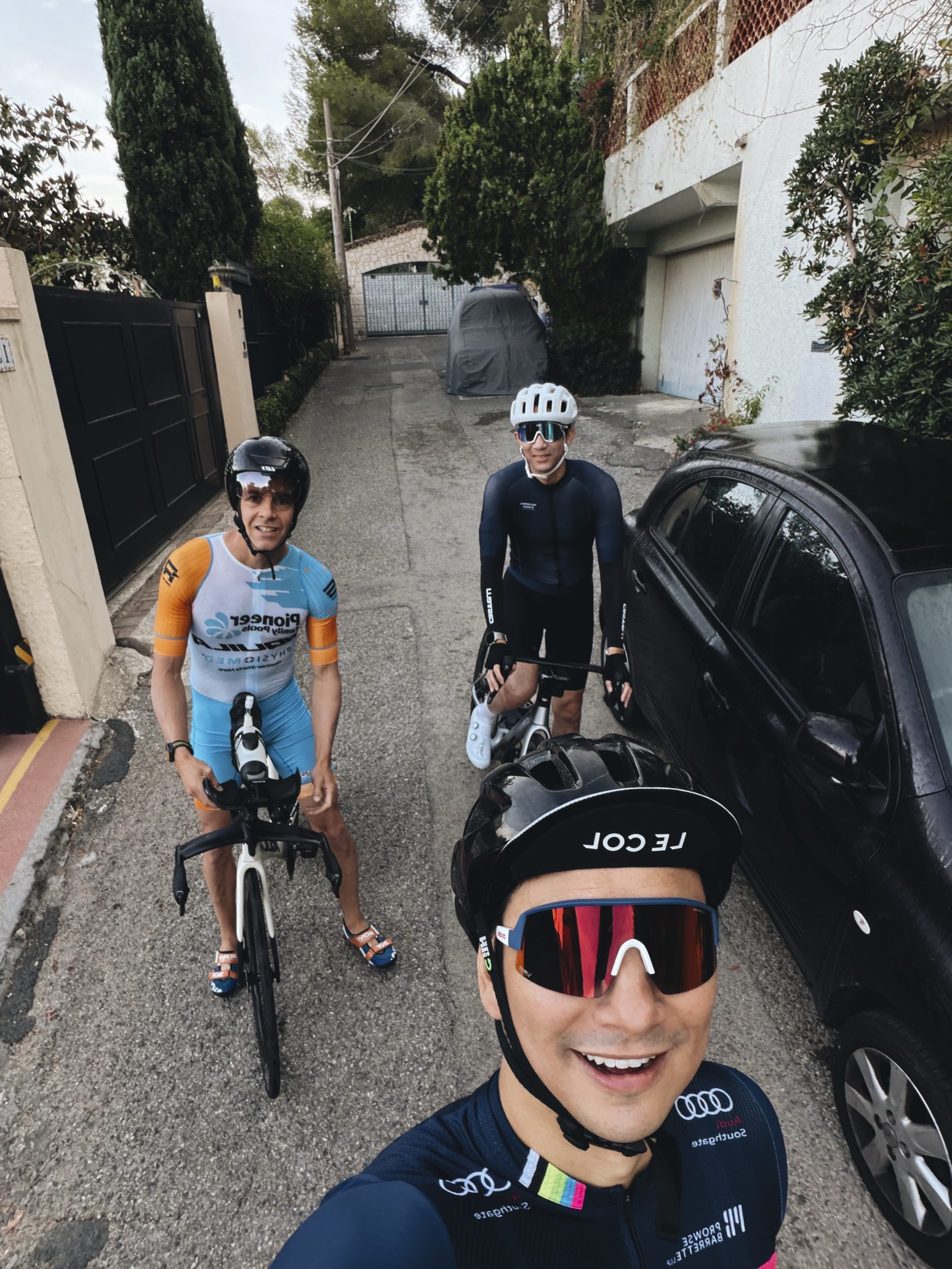
Shoutout to Guinness World Record holder Austin Kjorven, who will be representing Canada at the Ironman this weekend and has no problem climbing le col de Vence. He was also super patient as I attempted the climb. Follow him here.
I haven’t been riding much this summer (I can’t wait until Vivienne can join us on our bikes!), but I did go for a bike fit over the weekend — something I’ve been meaning to do since I basically got my “new” bike.
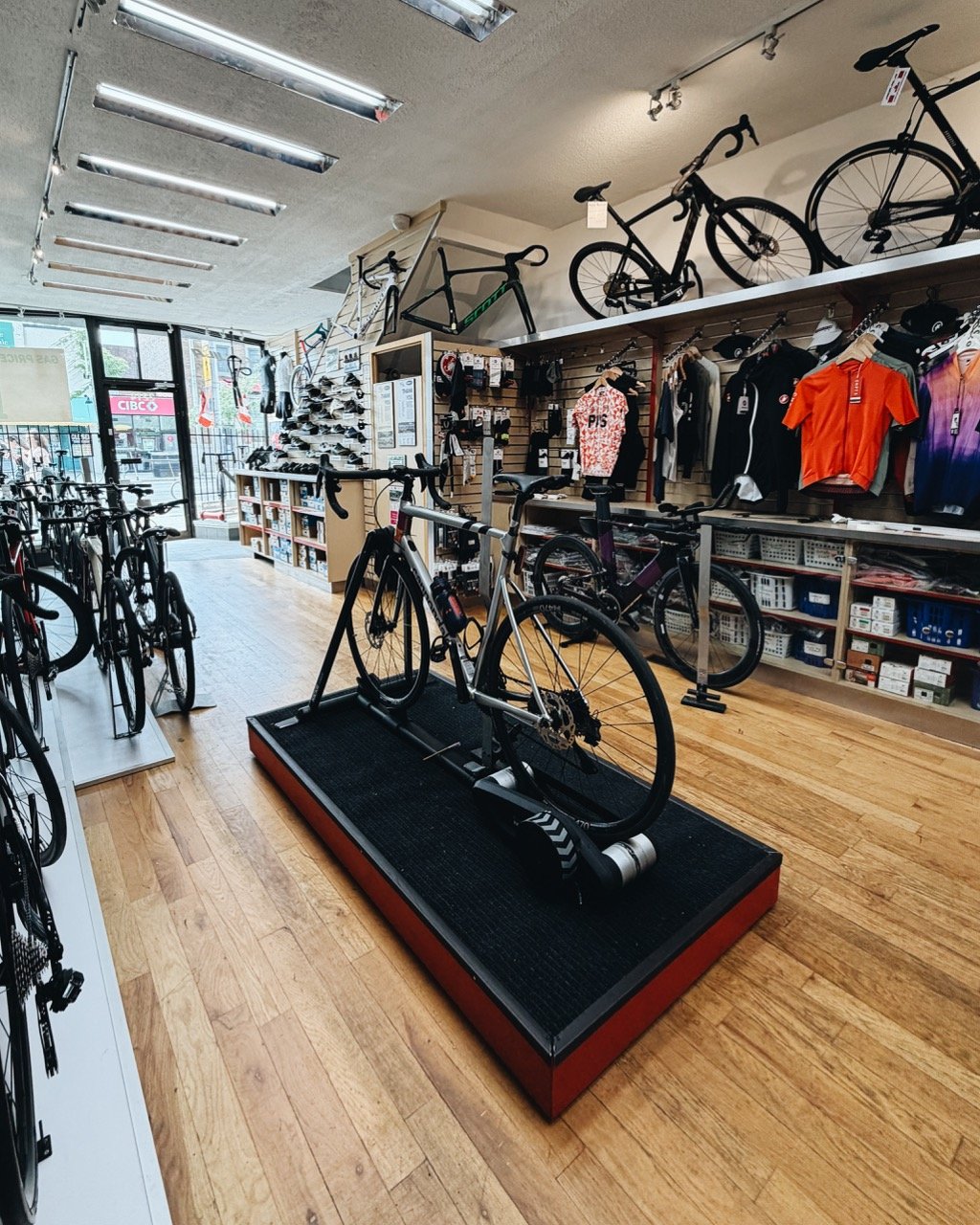
In case any of you are curious/in the market, I went to Racer Sportif at Bloor & Runnymede. Ask for Dennis and tell him you want to see the photo of him on his first-ever bicycle. The west side of Toronto has such a great road biking culture.
So, it turns out my setup was off. My seat was too low, my seat was too far back, my handlebars were too high, and my stem was about 2 cm too long. These micro-adjustments were all it took for my ride to feel significantly better on the way home.
Of course, these micro adjustments become even more important on long rides because small things do compound over time. I like thinking of things in this way, and it reminds me of one of Sahil Bloom’s core philosophies: “Anything above zero compounds.”
The smallest positive changes and actions can have an outsized effect when you play the long game.
The same is true for city building. It’s easy to focus on big plans and tall towers, but let’s not forget the micro adjustments that are being made every day. A new bike lane here, and a new coffee shop there, all have an impact and add up to something more.
In my opinion, we need far better urban data if we’re actually going to make evidence-based decisions. Thankfully, there are lots of great companies that are focused on this space. One of them is Eco-Counter, which makes devices to count pedestrians and cyclists, among other things. This is an important job, because as Peter Drucker used to say, “you can’t manage what you don’t measure.”
Let’s look at their bike counters. According to their global map, they have 464 of them installed around the world. Montreal has 58 of them, which we’ve spoken about before, and is an impressive install base. And Toronto looks to have only one, which is located on Bloor Street on the north side of High Park.
The busiest route/counter in Montreal is at St-Denis Street and Rue des Carriéres. So far this year — up to November 17, 2024 — this counter has seen an average of just under 5,000 trips per day and a year-to-date total of 1,600,468 trips. Both of these metrics are notably up compared to 2023 when I last looked at the data.
The busiest route in Eco-Counter’s entire network is on Boulevard de Sébastopol in Paris (an important main roadway, not a side street). It has seen an average of 13,667 trips per day and a year-to-date total of 4,386,996 trips. Not surprisingly, the Paris counter exhibits less seasonality. People still cycle in the winter in Montreal, but it’s less than in the warmer months.
Finally, our lone Toronto counter adjacent to High Park has seen an average of 1,186 trips per day and a year-to-date total of 380,813 trips. Not quite Paris or Montreal (the latter of which has a colder climate), but I would argue that this really isn’t an indicative location for Toronto given how underdeveloped the area is. Plus, you need to see each route as part of a network.
If you look at Montreal’s top 5 bike counters, all of them have a year-to-date total that exceeds 1 million trips. This is important information if you’re trying to make mobility decisions and these are significant figures. Imagine if these millions of people got off their bikes and instead decided to take transit or drive a car. That would change things.
On Saturday, I went on a bike ride all around Toronto. We cut across midtown (checking in on One Delisle), stopped at the Chester Hill Lookout (which if you grew up in the east end is where you probably went as a teenager to make out), shot down the Don Valley, and then turned west along the waterfront. The weather was perfect.
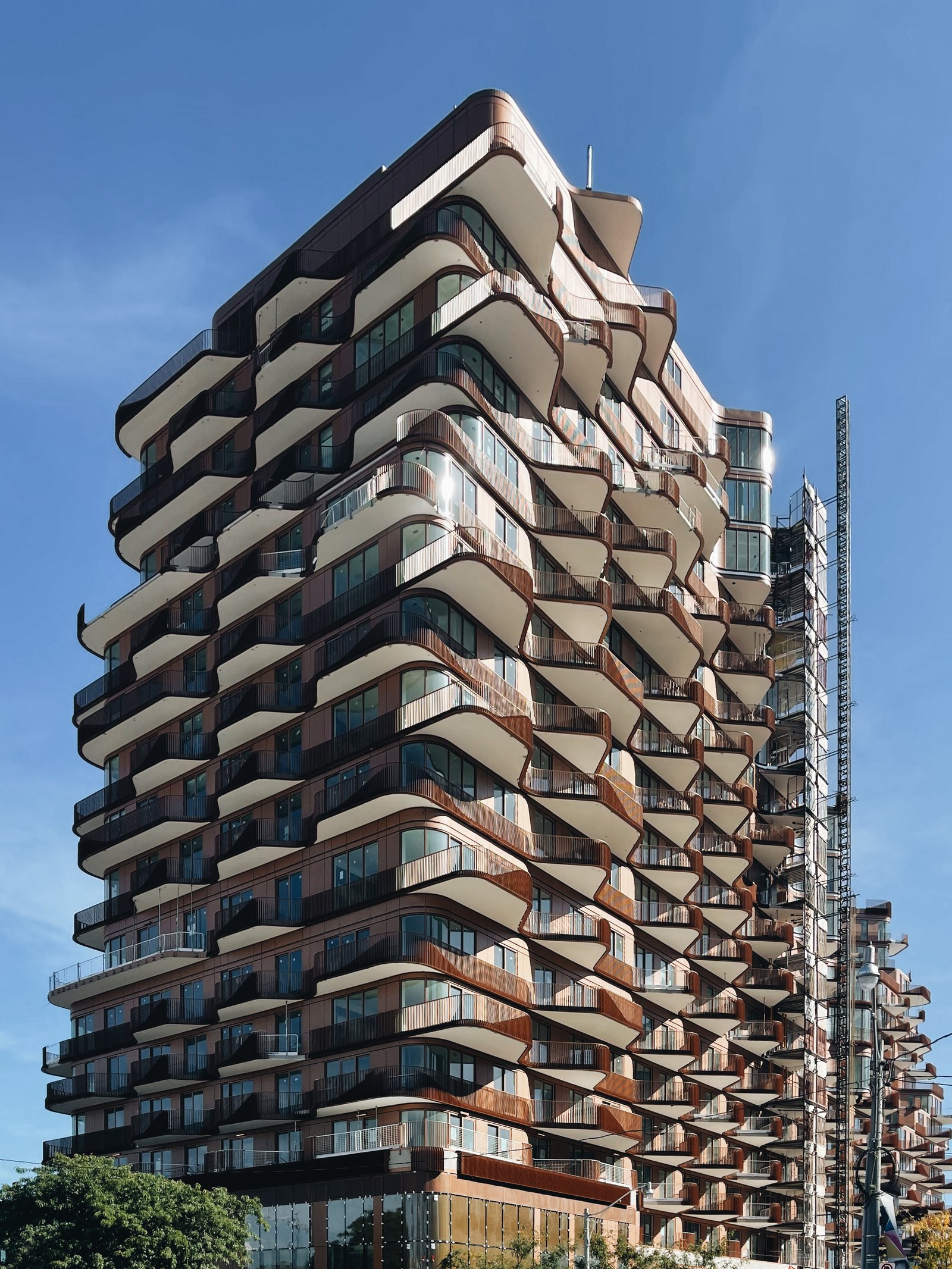
As we were going along the waterfront, we passed the new Aqualuna building that is under construction on Queens Quay East, near Parliament Street. Being the architecture nerd that I am, I immediately noticed that as you pass by — at the speed of a bike — the balconies create this really nice cinematic effect.
So I stopped to take these photos (I probably should have taken a video now that I think of it):
I then tweeted a tweet calling it one of the most beautiful buildings going up in Toronto today. Judging from the responses, most people seem to be in agreement, but a few people questioned the practicality of balconies like this. Namely how private and usable they will be. I don’t disagree, but I still think it’s fine looking building.
It is well known that Salt Lake City has some of the biggest blocks and widest streets in the United States. This is typically a challenge if you’re trying to create a walkable urban environment; however, it can also be an opportunity, because it means you have a lot of public space that you can do other things with.
It is for these reasons that SLC is working on something called the Green Loop:
And the idea is to turn a ring of downtown streets into a new linear park that looks something like this:
More specifically, the Green Loop wants to do the following five things (copied verbatim):
Develop a robust downtown urban forest
Serve as an active transportation corridor for walking and biking
Improve water quality through stormwater management
Create inviting social spaces that provide a variety of amenities and attractions
Create public front yards and gardens within the downtown that support the needs of all users
In my mind, albeit as a non-Salt Laker, this has the potential to be truly transformational for the city and as impactful as the High Line was for New York. So if you are a local, I would encourage you to complete this short project survey. It’s open until Nov 30.