Daily insights for city builders, delivered every morning at 6 AM ET. I’m Brandon Donnelly — a Toronto-based real estate developer and founder of Globizen. I’ve been writing here since 2013.

Author: Brandon Donnelly

  • Drone delivery in remote communities

    Toronto-based Drone Delivery Canada has just signed a $2.5 million agreement with the Moose Cree First Nation. This will bring the company’s drone delivery platform to the Moosonee and Moose Factory communities in northern Ontario (about 19 km south of James Bay).

    Here is an excerpt from a recent Techvibes article:

    “This agreement is representative of the large ‘Remote Communities’ market that we see penetrating over the next three to five years,” said Tony Di Benedetto, CEO of DDC. “The Remote Communities market is only one segment of the overall total addressable market in Canada. In addition to Canada, DDC is working with other customers around the globe to licence our FLYTE software and drone delivery technology.”

    DDC’s Sparrow drone is able to handle 5 kg (~11 pound) payloads and will be used to transport letters, parcels, medical supplies, and other general necessities. 

    This is a big deal for Moose Factory because the island can only be accessed by boat in the summer, ice road in the winter, and by helicopter during the rest of the year. And this is not a unique situation for remote communities.

    Suboptimal infrastructure and connectivity is a common problem and generally results in a higher cost of living, among other things. So this strikes me as something that should have meaningful impact on the quality of life in these communities.

  • My Focals by North fitting

    Over the weekend I went by the new North store on Ossington for the fitting of my new Focals by North glasses. According to Retail Insider, this is the first retail space in Canada that is entirely dedicated to wearable tech (shout-out to Hullmark and CBRE). Full disclosure: I am not being paid by North, but I was asked if I would accept a pair of Focals and provide my thoughts. So I will be doing that over the coming months on the blog.

    Previously known as Thalmic Labs, North is a Waterloo-based company that first attracted attention with the launch of a gesture-control armband known as Myo. What that product did was make digital interactions completely hands-free. It had strong use cases across medicine, music, and business. However, this past October the company announced that it would be moving on from Myo. Enter Focals by North. 

    Focals are custom-built eyewear with an integrated display that only the wearer can see. It is similar to, for example, BMW’s heads up display, and the idea is that it is a way for you to quickly get the information you want, without pulling out your phone and disengaging from the world. The ambition is human-centric technology that integrates seamlessly.

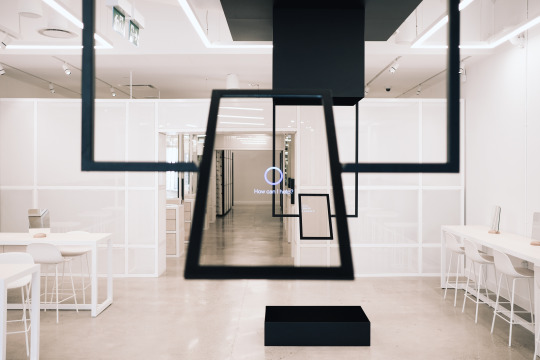
    Here is an example of what that display looks like (it is much better and cooler in person):
    image

    To control the display you use both your voice (the glasses have a microphone) and a 4-directional joystick called a Loop, which sits on your index finger like a ring and that you thumb. You can receive and send texts (voice to text), you can get turn-by-turn directions, you can view your appointments and the weather, and you can ask Alexa things.

    The first step in the ordering process is a fitting. And that’s what I did over the weekend. The glasses are all custom made and so they start by doing a full 3D scan of your head in a room that feels like the future. Once that’s done, you pick what frame you want, the color, and your sun clips (an essential accessory for day drinking in Trinity Bellwoods). Total cost: CAD 1,299.

    While exceptionally cool, it is premature for me to really comment on the tech at this point. I’m expecting my Focals in 8-10 weeks. But is it interesting to opine on the current state of eyewear tech.

    Most people believe that the problem with Google Glass was the fact that you had to be a Silicon Valley nerd in order to want to wear them out in public. They looked and continue to look ridiculous, which is why Snap went fashion first with their Spectacles. I have always found this product really intriguing. I want to use it. But I’ve stopped using Snapchat entirely and I don’t really have a strong use case for them.

    Snap’s Spectacles are about capture and content creation, whereas Focals are about discreetly feeding you information that you would otherwise have to pull out your phone (or watch) to view. There’s no camera on Focals. That’s not what they are about. But they are obviously fashion first.

    The question for me is whether the experience will truly be seamless and integrated, or if I’ll still be disengaged – gazing off into my glasses (space) while I ask Alexa to UberEats me a chicken shawarma wrap. I’ll let you know in about 8-10 weeks. If you’re looking for more on Focals by North, check out their website and this CNBC piece. Go Canadian tech.


  • Good vibrations

    image

    There are 614,387 bridges in the United States and 55,707 of them are thought to be structurally deficient according to the US Department of Transportation (2016). About 188 million people cross “a deficient bridge” every day in the US (also a 2016 figure).

    Inspections are often infrequent and only visual, and so MIT Senseable City Lab is currently on a mission to come up with a more scientific approach. They believe that there’s a solution in crowd-sourced data and that it’s possible to create a community-driven maintenance program.

    What they discovered through a recent study, called Good Vibrations, is that mobile phone sensors can actually pick up the natural vibrations and oscillations of a bridge. And, that a mobile sensor located within a traveling car is actually 120x more precise than fixed sensors located on the bridge.

    Part of the problem is that fixed sensors have poor spatial coverage. They are located in specific locations. Whereas mobile sensors give you data across the entire span of the bridge as someone crosses it. And if you know how a bridge normally vibrates, you can quickly tell when something is off. 

    Here’s a quick video overview of the study. And here’s what you should do if you want to get involved.

    Photo by Joseph Barrientos on Unsplash

  • Three nights only

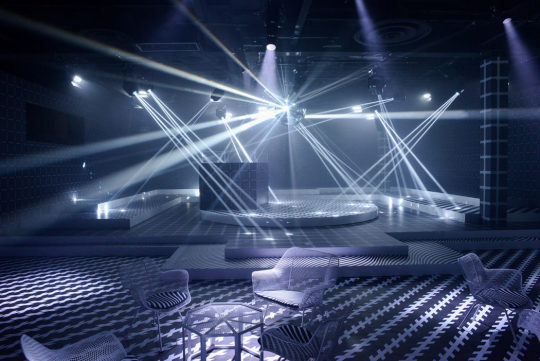
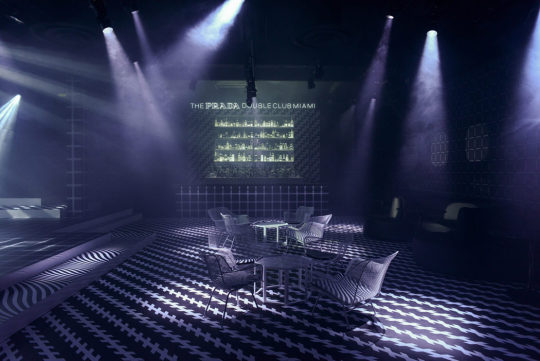
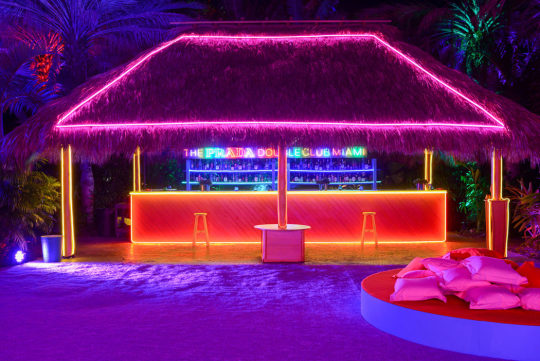
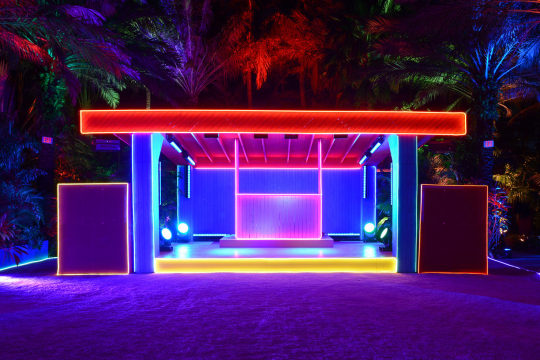
    For this year’s Art Basel Miami Beach, artist Carsten Höller collaborated with Fondazione Prada to create a 3-night-only pop-up club called, The Prada Double Club Miami.

    By time you read this post, the pop-up is likely to be over. But it is an interesting space nonetheless.

    The installation made use of an old 1920s film studio and was comprised of two distinct spaces – hence the double club reference. 

    The interior bar and dance floor were entirely monochromatic.

    Höller wanted all color to instead come from participants within the space. 

    The exterior bar, on the other hand, was “hyper-polychromatic.”

    Perhaps some of you might find inspiration here for your next condo sales office. That would be fun.

    Photography: Casey Kelbaugh, courtesy of Fondazione Prada and via The Spaces

  • Urbanizing the suburbs

    Commuter rail has typically functioned as a way to bring people from the suburbs into downtown for employment, and sometimes recreation. That has typically translated into good inbound service in the mornings, good outbound service in the evenings, and mediocre service the rest of the time. It has also historically meant lots of subsidized surface parking. Free parking was (and still is) often thought of as the key to putting bums in seats and increasing ridership.

    Here in the Toronto region, this service is provided by GO Transit, which, since 2009, has been owned by Metrolinx. But as one of the fastest growing regions in North America, this kind of service and thinking has become increasingly antiquated. That’s why Metrolinx and the Government of Ontario are working to profoundly change the economic geography of this region by both electrifying the lines and implementing 15 min, all-day two-way service. 

    This may seem like an incremental improvement, but it is not. It is a significant change that will transform the service from commuter rail to regional express rail. Of course, this now means that it is time to rethink the land use policies and built form that surround these key transit nodes. One of the places where this is happening today is at the Clarkson GO Station. The City of Mississauga is in the midst of a planning study that will ultimately guide future development around the station. 

    I think this one of the most important shifts taking place right now in this region and elsewhere. It is the maturation of our suburbs and it is going to result in more walkable and vibrant urban places across our cities. So if you have a few minutes, I would encourage you to complete this survey that the City of Mississauga recently put out. The results will help to guide their Clarkson Transit Station Area Study. 

    I also think think it is worth completing the survey even if you aren’t local to the area. How to urbanize the suburbs is a universal problem.

  • International Blockchain Real Estate Association

    I was at a Proptech dinner earlier this week (graciously hosted by Venturon) and I was introduced to the International Blockchain Real Estate Association (also known as IBREA). I feel like I should have known about this group. They have over 5,000 members and host an annual summit focused on blockchain + real estate.

    They have several videos from this year’s summit up on their website – everything from blockchain for titles to the tokenization of real estate assets. There are also a number of industry working groups that have been set up, which bring companies together around specific problems and ambitions (such as, creating a universal property identifier).

    To get you started, here is Blockchain Real Estate 101. If you can’t see the video below, click here.

    [youtube https://www.youtube.com/watch?v=1WcLOcWyfHk&w=560&h=315]

  • Photoblog: Sunrise at Ten York

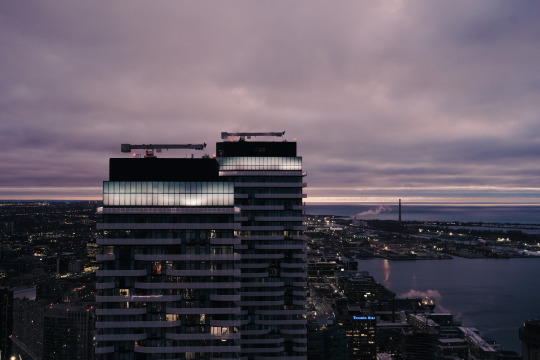
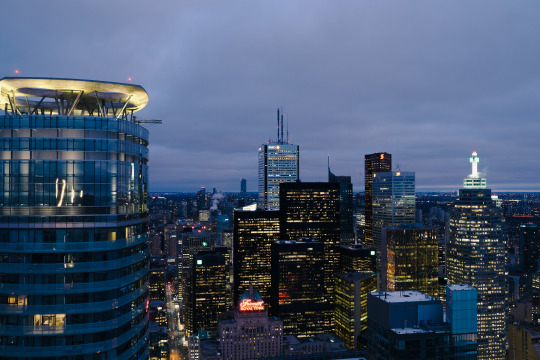
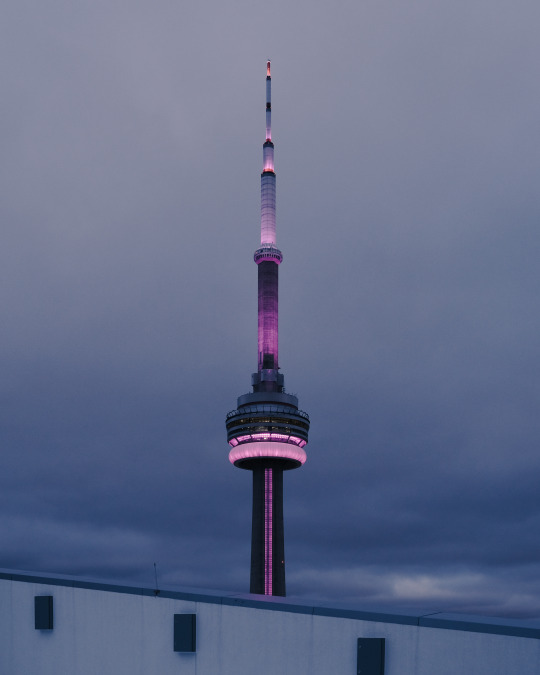
    This morning I watched the sun rise from the the roof of Ten York Condominiums, some 735 feet up. This is what that looked like (the sky initially had a purple hue to it):

    It was cold as all hell, but sometimes you have to work for your photos.

    Some of you may also remember that I wrote about this building a few months ago. Tridel, the developer, is calling the project its first “smart condominium.”

    Regular scheduled programming will resume tomorrow.

  • Emma + Justin

    image

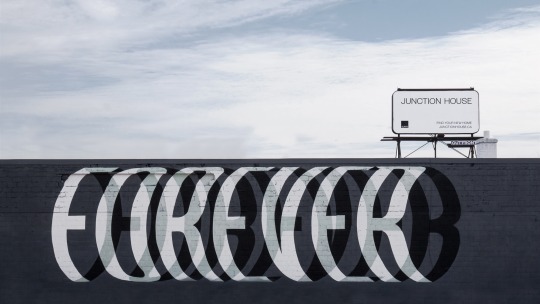
    Okay, I promise that after this post I will stop talking about the Forever mural that Ben Johnston recently completed at Junction House – at least for a little while. 

    I admittedly don’t know Emma and Justin, but I would like to congratulate them on their recent engagement at Junction House.

    Emma thought they were going to take anniversary photos, but instead Justin proposed in front of Forever. If you can’t see the embedded photo below, click here.

    //www.instagram.com/embed.js

    Forever certainly feels like the right message to me. Congratulations Emma and Justin.

    P.S. Junction House was in the National Post over the weekend. Link.

  • Multi-storey retail

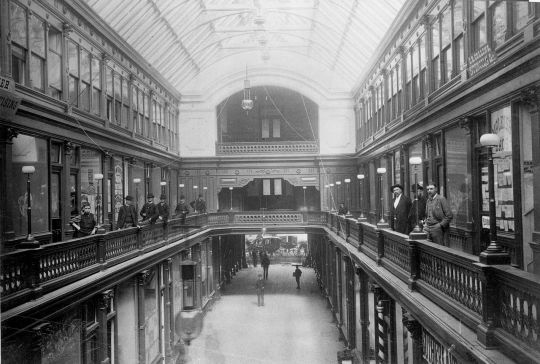
    I was at the St. Lawrence Market over the weekend and I saw a poster up for the original Yonge Street Arcade building, which was located at Yonge Street and Temperance Street here in Toronto. Initially constructed in 1884, the building was ultimately demolished in 1952 and replaced with today’s building by 1960.

    Here is a photo of the original arcade dated 1885:

    image

    The Yonge Street Arcade has been fairly well documented online (check out here and here). But what interested me when I saw the poster was the building’s retail characteristics.

    Modeled after the glass-roofed malls being constructed in Europe at the time – the Galleria Vittorio Emanuele II opened in Milan in 1867 – the Yonge Street Arcade is said to be Canada’s first enclosed shopping mall.

    The galleria was 267 feet in depth and 3 storeys high (pictured above). The ground floor contained 32 retail units, each 12 feet wide by 29 feet deep. 24 of the units were in the galleria and the other 8 faced outward toward each street frontage.

    On the 2nd floor were 20 more units. Some sources say they were intended to be offices, while others say they were retail units. The above photo makes me think they were retail. The 3rd floor then had offices and maybe some artist studios.

    Either way, the mix of uses is interesting (and maybe a first for Toronto). And if you know anything about retail, you’ll know how difficult it can be to successfully pull it off across multiple levels. The Yonge Street Arcade shows that we’ve been (possibly) trying it for well over a hundred years in this city.

  • Morning ravine walk

    Yesterday morning I went on a ravine walk from Summerhill up to St. Clair Avenue East. Toronto’s ravine system is easily the most unique feature of our city’s geography. Architect Larry Wayne Richards once described the topography of Toronto as San Francisco inverted. They have hills and we have valleys.

    Toronto’s ravines serve, among other things, as a recreational treasure, a magnet for nice homes, and as an important component of this city’s water infrastructure. But as you walk through many of our ravines, you can’t help but think that we could and should value them a lot more.

    I appreciate that there needs to be a balance between environmental conservation and recreational use, but that doesn’t seem to be the primary issue. It is neglect. And it is probably because they are out of sight and out of mind for many people. Toronto’s ravines are an undervalued asset.