
Daily insights for city builders, delivered every morning at 6 AM ET. I’m Brandon Donnelly — a Toronto-based real estate developer and founder of Globizen. I’ve been writing here since 2013.

Month: November 2026

  • The immediate returns of a car-free Oxford Street

    It’s only been about two weeks since London pedestrianized Oxford Street. While it’s certainly possible that more people are visiting the street purely because of its novelty, the initial reports are positive.

    In the first six days after it was pedestrianized, the broader West End area saw a 13% increase in transactions on Barclays debit and credit cards.

    What’s more, separate figures published by payments company Adyen show that in-store transactions across 40 different businesses on Oxford Street increased by 19% both week-over-week and year-over-year.

    While the datasets remain limited, all of this is promising and, in my view, expected. Oxford Street is coming off a difficult decade, during which vacancies rose to 13.7% in 2022 and average retail rents declined from £1,100 per square foot in 2016 to £600 during the pandemic.

    London is aiming, as it should, to compete with Fifth Avenue and the Champs-Élysées with this £150 million investment. This is an effective way to do that.


    Photo by Bryan Brittos on Unsplash

  • The end of CMHC’s multi-family monopoly

    The Department of Finance Canada just announced new mortgage loan insurance parameters aimed at expanding “missing middle” housing supply. The rules take effect for applications submitted on or after February 1, 2027, and they provide financing options for projects with 3 to 4 units and 5 to 50 units. Here’s the official announcement.

    What’s new and noteworthy is that the insurance rules are being amended to permit private mortgage insurers to back multi-family loans and to introduce greater flexibility for smaller three- and four-unit projects. In other words, the CMHC monopoly is ending for multi-family rental housing with 50 or fewer homes.

    At a high level, this is good. It will increase competition, because before, CMHC was the sole insurer, and it could often lead to problems of being stuck in the queue. I mean: We currently have a project that is shovel-ready with permits in hand, except we’re waiting on CMHC.

    The way I read these new rules is that they also create a new financing baseline. If you want to build new market-rate rental housing within the 5-to-50-unit bracket, you can expect an LTV of 90%, a maximum amortization of 50 years, a minimum DSCR of 1.1 (for 10-year terms), and a net worth requirement equal to at least 25% of the loan amount.

    If you want better terms than this and the project can support greater affordability, environmental, and/or accessibility features, well, then there’s still CMHC’s MLI Select points-based program.

    Streamlining and simplifying everything around missing middle housing is the key to unlocking more of it. Permitting, financing, design (things like single-stair), servicing (hi, Toronto Hydro), and environmental requirements (I’m thinking specifically of Records of Site Condition) all need to be fast and straightforward.

    Let’s hope this announcement improves the financing category.

  • Parkview Mountain House is now open for winter 2026/2027 bookings

    I’m in Park City right now working à distance, hanging with the family, and puttering around Parkview Mountain House in the evenings preparing for this winter season. I’m now excited to announce that PMH is officially open for winter 2026/2027 bookings! Here’s our website and here’s the direct link to our Airbnb listing.

    Now the important question: Will it be an epic winter with lots of snowpack?

    The honest answer is I don’t know, but the El Niño weather pattern in the Pacific is, as I understand it, a promising precondition. In fact, Ski Utah even launched a “Vote Super El Niño” campaign ahead of this year’s US elections. Maybe that was more just for fun.

    Regardless, there is actually a science behind Utah’s title of “The Greatest Snow on Earth.” I even bought a book on it, got deep into snow, and blogged about it here. Based on this cursory knowledge, I’m optimistic that this year is going to be a good one.

    Whenever I tell people about PMH, I’m often asked: Why Utah? And the obvious answer is the snow. But it’s also one of the most accessible ski towns. There are nearly a dozen resorts within an hour’s drive of SLC airport, and PMH itself is 27 minutes from the terminal.

    On this trip, we checked out Sundance Resort for the first time. Previously the Timp Haven resort, actor Robert Redford bought it in 1968 and renamed it the Sundance Mountain Resort, after his film Butch Cassidy and the Sundance Kid.

    I can’t speak to the mountain itself, but Bianca and I were both super impressed by the resort and the vibe. It has an elevated feel, and it’s clearly very popular throughout the year. We tried to have dinner there, but the restaurant was fully booked. So instead we bought a Sundance sweater for Vivienne. Now I can’t wait to snowboard there. (It’s a 50-minute drive from PMH.)

    If you like skiing and snowboarding or baby Sundance sweaters and want to visit Utah, you can check out Parkview Mountain House here.


    House photo by PMH creative resident Ryan Schwartz

  • When does the market wake up to underbuilding?

    In 2025, I wrote a post titled “Why 2029 will be the bottom for Toronto housing supply.” This was a fairly easy prediction to make, even four years out, because of how long it takes to build new housing.

    If the pre-sales and housing starts aren’t there (the leading indicators), then we know what supply will look like in the coming years. This remains true even if the market were to quickly rebound tomorrow; new supply simply can’t turn on that fast.

    But as clear as this future may be for those looking at the data, I don’t think the general market is looking toward 2029 and saying, “Damn, I better rent or buy now because in a few years housing is going to be scarcer.” And that’s because we’re still building and absorbing inventory from the end of the last cycle. That’s our current reality.

    If we assume 2029 will mark the supply bottom, the more important question for city builders is, “When will the market recognize this?”

    I have tended to be overly optimistic in my prognostications on this topic. At the beginning of this year, I said that things would feel much better in the second half of 2026 and into 2027. I’m not sure that’s true. Excess inventory is still being absorbed.

    At this point, I think we need at least another year for the market to really recognize that we’re underbuilding, which, by the way, is typically what happens at market bottoms. The hard part is nailing the timing.

  • SimCity 2000 comes to Toronto

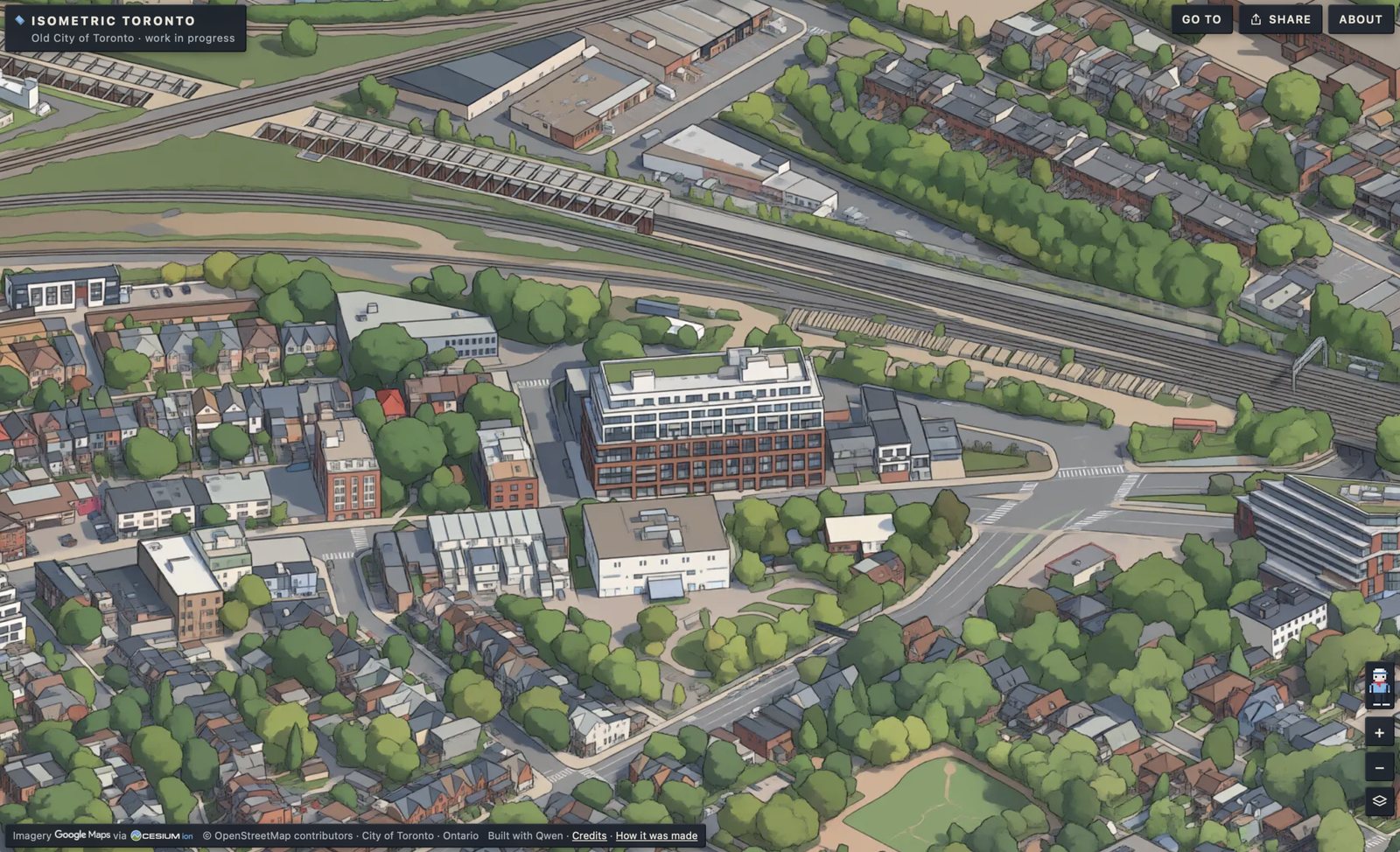
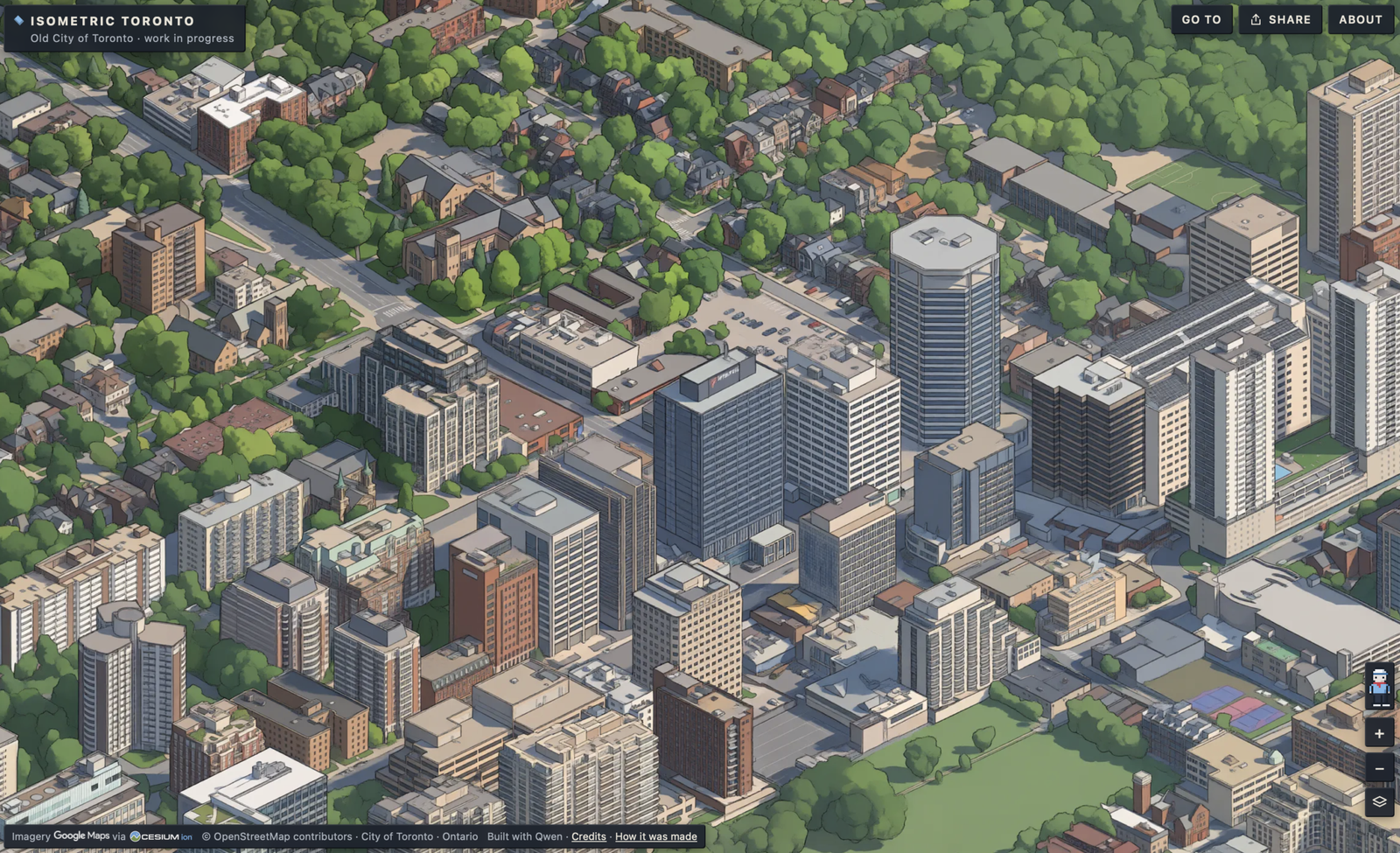
    I just discovered this great isometric map of Toronto by John Fewell.

    He started with Google Maps using one fixed isometric view (30° down, aligned with the diagonal of the street grid), and then used Gemini to redraw each frame as an illustration. The overall map is intended to be a nod to SimCity 2000. (I loved that game in the 90s.)

    If you zoom in, you can even see cars driving around.

    At the time of writing this post, he had spent roughly $57 on Gemini and $21 on GPU rentals to produce it. Here’s more on his creative process. Imagine how much time and effort this would have taken before AI.

    Here’s a downtown screenshot:

    Here’s Junction House:

    And here’s me waiting for One Delisle to be rendered:

  • Park City to Moab

    Shot on Fujifilm X-T3 (23mm)

  • Asymmetric utility and digital minimalism

    Vitalik, the guy who co-founded Ethereum, is a devout minimalist. He has lived as a nomad for many years and has written quite extensively about how he travels the world with only a 40-litre backpack. I now need one of these just for diapers and emergency clothes in case of throw-ups. This is what one might call physical minimalism.

    In a recent post, he extended his approach to digital minimalism, talking specifically about how he is (1) eschewing social media algorithms, (2) cutting constant cell connectivity, and (3) doing away with web applications (this one got a little too nerdy for me). Obviously this specific approach isn’t going to work for everyone. Vitalik lives a unique life.

    But as someone who writes a daily blog, maintains multiple social media accounts for various projects, and generally considers themselves to be a technology enthusiast, this is something that I’m increasingly thinking about. Its time has come, especially with AI opening up a new attention rabbit hole.

    I see social media as a necessary evil. It has cognitive costs to us all, but it’s also the way you reach people today if you happen to run a business that aspires to have revenue. The way I have started approaching “digital minimalism” is by trying to be as high-agency as possible.

    In other words, I recognize that these are tools I can operate as needed, but I want to avoid being a passive, low-agency consumer of everything. I want some control. For example, I don’t use WhatsApp (except for necessary group travel chats) or check most DMs. There are too many apps. If you want to get a hold of me, send me an email.

    I also use Buffer to schedule most social media posts these days, meaning less time in the actual apps. Asymmetric utility is the goal. Of course, it’s not like my screen time is going down; there’s a lot more I could and should be doing. Uninterrupted time to think, focus, and create feels like such a luxury in today’s world.