Daily insights for city builders, delivered every morning at 6 AM ET. I’m Brandon Donnelly — a Toronto-based real estate developer and founder of Globizen. I’ve been writing here since 2013.

Month: August 2019

  • Pritzker Prize-winning architect Kazuyo Sejima designs Japanese commuter train

    In commemoration of the company’s 100th anniversary, Japanese rail operator, Seibu, recently unveiled a new commuter train designed by Pritzker Prize-winning architect Kazuyo Sejima. Sejima is a founding partner in the Tokyo-based firm SANAA, which has started branching out beyond buildings. She recently designed a neat and multi-functional bag for Prada.

    One of the key features of the “Laview” commuter train is its unusually large 1.35m x 1.58m windows. They’re designed to maximize views, as this particular route travels from the city and into the mountains. It’s a simple design move, but it’s one I have never seen before. The overall result is quite beautiful and it goes to show you just how much the Japanese value train travel.

    Images: Dezeen

  • Art vs. transit

    This September 25, 2019, the Bronx Museum of the Arts will be opening up a new exhibition called, Henry Chalfant: Art vs. Transit, 1977-1987. Henry is a renowned photographer who is most known for his work on graffiti, breakdance, and overall street culture. This exhibition is about all of this, but there’s a particular focus on the subway car art that was once ubiquitous in New York City.

    There’s also a Kickstarter campaign if you’d like to support this exhibition. What struck me as I watched the campaign video, was that the “urban street culture” of this era doesn’t seem to exist in quite the same way today (or maybe I’m missing it). In the video, Henry talks about things like the birth of hip hop, which he documented outside, on the street.

    We shouldn’t forget that New York was also a scary place at this time. Removing the subway art that Henry fastidiously documented was one of the ways in which the city is thought to have broken its patterns of crime. But at the same time, there’s something really special about new ideas forming out in the public realm.

    It’s also a uniquely urban phenomenon.

  • Boom babies (of China)

    A few years ago I wrote a post talking about “depression babies.” In it, I cited a research paper that looked at the impact of macroeconomic shocks on people’s willingness to take on financial risk in the future. The term “depression babies” stems from the Great Depression and how it is believed to have impacted risk taking, savings rates, and probably many other things.

    I was reminded of this when I read this recent article in the WSJ talking about how the Chinese have started spending — and taking on the debt — like Americans, particularly among Chinese under 30. It is the inverse of the depression baby phenomenon. In this case, it is arguably years of economic expansion leading to greater comfort around financial risk.

    Here are a couple of figures from the article:

    JPMorgan estimates China’s ratio of household debt to gross domestic product will climb to 61% by 2020. That’s up from 26% in 2010 and higher than current levels in Italy and Greece.

    The level in the U.S. is about 76%, after falling from 98% in 2006, according to the International Monetary Fund.

    By another measure—the ratio of household debt to disposable income—China appears to have already surpassed the U.S. Its ratio reached 117.2% in 2018, up from 42.7% in 2008, according to calculations by Lei Ning, a researcher at the Institute for Advanced Research at Shanghai University of Finance and Economics. The U.S. peaked at 135% in 2007 and dropped to 101% in 2018.

    Not surprisingly, the article goes on to talk about how this dramatic increase in household debt might be something to worry about. Maybe. I’m not an economist. But I do think this is designed to boost the Chinese growth machine and I do think it makes them less reliant on other countries — such as, maybe, the United States.

  • Statistics Canada publishes its wastewater-based estimates of drug use

    In March 2018, Statistics Canada launched the largest “wastewater-based epidemiology pilot test” ever conducted in North America. Over a 12 month period, it collected wastewater samples across the country in order to test for traces of cannabis and other drugs. The pilot captured 8.4 million people in Vancouver, Edmonton, Toronto, Montréal, and Halifax. And it was allegedly timed to coincide with the legalization of cannabis in Canada on October 17, 2018.

    This week Statistics Canada published its findings. While the study does cover over 8 million people, it was not intended to be representative of the entire Canadian population. Some sites, such as Vancouver, had nearly complete coverage of the metro area population. While others, such as the Halifax site, only covered about half of the metropolitan area. In any event, the findings are interesting.

    Above is one example: methamphetamine load per capita for the five study cities. The y-axis is grams per million people per week. And the time period is, again, March 2018 to February 2019. Average levels for Edmonton and Vancouver were found to be about 3.7x higher than those in Montréal and Toronto. There was also no apparent seasonal/monthly variation, which is something else they looked at.

    Here I learned that a large portion of this drug passes through the body unchanged. And so the concentrations they discovered in wastewater is likely a fairly direct indicator of consumption within the population. Stats Canada is still reviewing its findings and evaluating this approach to collecting large scale urban data. But I am certain we’ll be seeing more of these kinds of urban studies.

    Chart: Statistics Canada

  • Small art museum (in Tokyo)

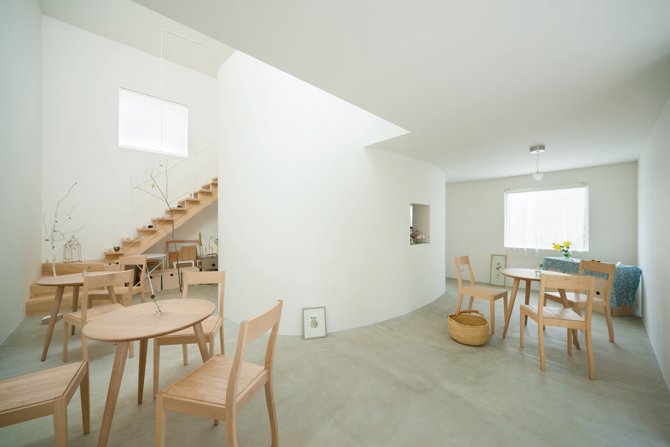
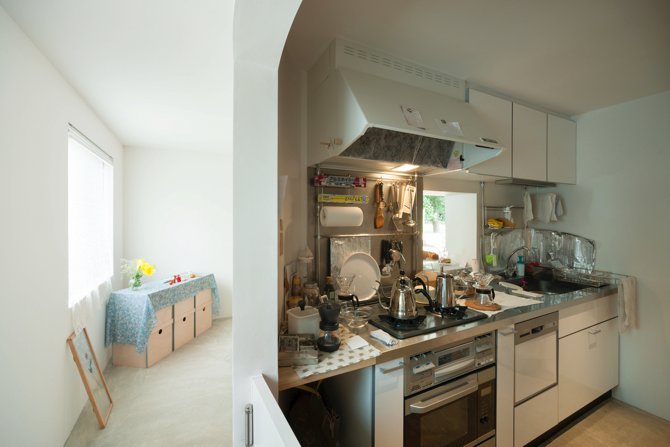
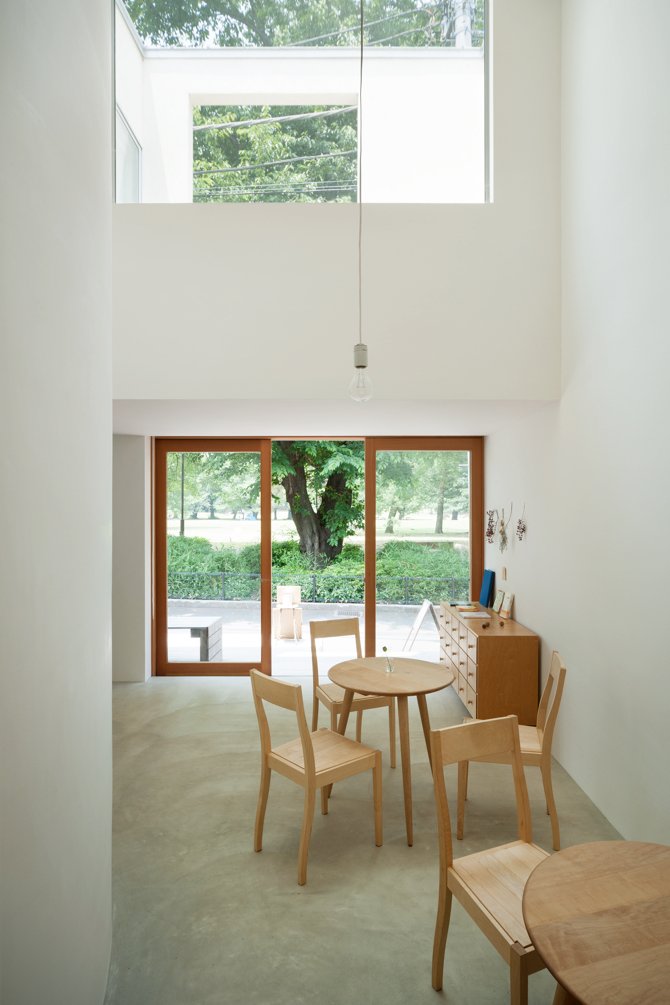
    Few are able to do “small houses” quite like the Japanese. Below is the Flat House in Tokyo by Yoshinori Sakano Architects. Completed in 2011, it was designed for a young couple in their twenties who wanted to build a home that was like a “small art museum.” Looking at these photos, I bet many of you will be surprised to know that the site area is only 100.10m2. The building footprint is only 49.00m2. And the total floor area is 79.36m2. This is the kind and scale of housing that is now permissible on many of Toronto’s laneways. And here, in Tokyo, you can see that it is serving as a family home. (The working kitchen is quite a contrast with the rest of the house.)

    Photos: Takumi Ota

  • Indonesia announces new capital city on the island of Borneo

    On Monday, Indonesia’s president, Joko Widodo, announced a plan to build a new capital city on the island of Borneo. The plan is in response to Jakarta’s formidable environmental challenges. It suffers from some of the worst air quality in the world and is struggling with a severe subsidence problem, which, I understand, is partially (or largely) a result of climate change and the unregulated extraction of groundwater.

    About 40% of the city now sits below sea level and the worst affected areas are supposedly sinking at up to 20cm per year. This gives Jakarta the dubious distinction of being the fastest sinking big city. On top of this, it is also one of the biggest cities in the world in terms of population. The Jakarta megalopolis has over 30 million people, placing it 2nd after Tokyo according to this list.

    Here’s a short video from the BBC that will give you some visuals to go along with the above. These are the sorts of urban challenges that will make you forget all about separated bike lanes and 45 degree angular planes. And they are not entirely unique to Jakarta. If you can’t see the video below, click here.

  • Risk, uncertainty, and opportunity

    For two reasons, I really like Fred Wilson’s recent blog post on hypothetical value to real value. Firstly, it is structured in the way that I think good blog posts are structured. He starts with a personal story (about this son) and then uses that to take a position and impart some knowledge about the venture capital industry. It makes for a more engaging read. Secondly, I like how he describes the journey and spread between hypothetical value and real value:

    Venture capitalists and seed funds and angel investors make or lose money on the journey from hypothetical value to real value. And when the spread between the two narrows, the money we make is less. When the spread increases, the money we make is more. It is easier to drink your own Kool Aid in the world of hypothetical values. You handicap the odds of winning more aggressively. You trade ownership for capital at work. You accept the new normal. Real value doesn’t move so fast. Because it is right in front of you. You can see it. So it is not prone to flights of fancy. I try to keep this framework front and center in my brain as we meet with founders and work to find transactions that work for everyone. I find it to be a stabilizing force in an unstable market.

    All of this is related to the notion that you make real money when you’re right about something that most people think is wrong. Because that would be hypothetical value. If it were real value, then everyone would simply believe it. It would be “right in front of you.” And this is pretty much true of all competitive marketplaces, including the real estate industry. Risk and uncertainty create opportunity.

    Photo by James Sullivan on Unsplash

  • How homeowners cause gentrification

    Randy Shaw is the Editor of Beyond Chron, Director of San Francisco’s Tenderloin Housing Clinic, and author of, Generation Priced Out: Who Gets to Live in New Urban America.

    In his recent piece in Beyond Chron, he makes the argument that, from San Francisco to New York, homeowners who oppose new multi-unit housing are in fact the ones driving gentrification.

    He admits that there are some exceptions and cites San Francisco’s SOMA neighborhood as a place that became upscale because of new development. (I think it’s more nuanced than that.)

    But the key point is that there countless examples of neighborhoods changing their socioeconomic position without the presence of new development. (There’s investment, but at a smaller or individual scale.)

    Here’s an excerpt from Shaw’s article:

    Banning apartments from single family home neighborhoods limits new residents to those who can afford to purchase a home. Banning new multi-unit construction also artificially reduces supply, driving up home prices for existing owners.

    That’s how most San Francisco neighborhoods, and those in other high-housing cost cities, gentrified. It happened with little or no multi-unit construction. Yet homeowners have adeptly shifted blame for the gentrification of urban neighborhoods from their own land use policies to builders—even when no building has occurred.

    But in the end, do these details even matter? What we have here are competing self-interests. Developers, obviously, want to build. And many people benefit when this does happen. But others don’t see it that way.

  • The performance of cities proper

    Richard Florida is currently running a four-part CityLab series on the economic performance of America’s cities. What makes this study somewhat unique is that it looks at cities proper, rather than at their larger metro areas. In some cases there may not be that much of a difference. But in other cases, the performance of the city proper could be very different from that of the broader area.

    Here are the fastest and slowest growing cities from 2012 to 2017:

    Here are the fastest and slowing growing job markets:

    And here is the growth in share of adults with a graduate degree:

    It’s interesting to see Seattle at the top of the population growth list. It is not a sprawling sunbelt city. It is an expensive tech hub. And it is also interesting to see Miami’s strong employment and education growth. Years ago, Paul Graham wrote an essay arguing that tech hubs have two prerequisites: capital and nerds. He went on to argue that Miami has lots of the former, but not much of the latter. Maybe that’s changing.

  • Parasitic architecture

    Parasitic architecture sounds like a bad thing because of the connotations, but you could make an argument that it is, in fact, the exact opposite. It is a way to better leverage existing structures and reclaim under-utilized urban spaces. Perhaps additive architecture would be a more appropriate name.

    Here’s one example. WARchitect recently completed this “skyscape apartment” on top of an existing 5 storey apartment building in Bangkok. It’s about 1,600 square feet. And the entire space is organized according to the structural grid of the apartment building below.

    Many/most structural systems have excess capacity because of a built in factor of safety. So for a small addition like this, I’m guessing that they probably just loaded up the existing column grid. It also looks like there were already stairs leading up to the roof of the building.

    Years ago I looked at doing an addition on top of an existing apartment building here in Toronto and it ended up being a lot more complex than I may be making it out to be in this post. Mind you, we were looking at adding on a few floors, which triggered all sorts of issues.

    But now that Toronto is allowing accessory dwelling units along its laneways, is it time that we also look at the rooftops of our existing buildings?

    Photo: Rungkit Charoenwat