Daily insights for city builders, delivered every morning at 6 AM ET. I’m Brandon Donnelly — a Toronto-based real estate developer and founder of Globizen. I’ve been writing here since 2013.

Month: May 2018

  • The Siren opens in downtown Detroit

    Three years ago I wrote about the design and development firm, ASH NYC. What attracted me to them was how they were vertically integrating design, development, property management, and even hospitality management.

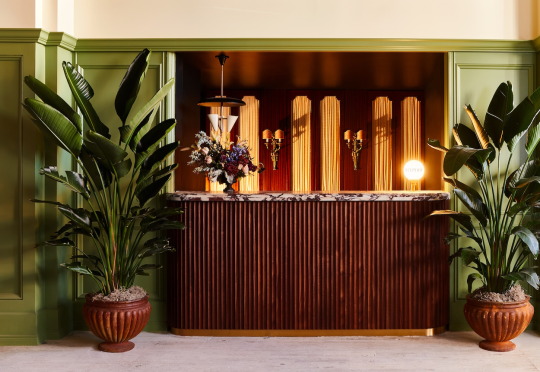
    Well they have continued to grow and this spring they opened up a new 106 room hotel in downtown Detroit called The Siren. It is located in the Wurlitzer Building, which the firm purchased back in 2015.

    With The Siren, ASH NYC also introduced their first-ever furniture line. It goes to show you just how focused they are on design and on the details. Surface Magazine did a good feature on the hotel, and the firm, here.

    The other thing, which I think is very cool, is how they paid tribute to the late and great Detroit street photographer, Bill Rauhauser. Check out the culture section of The Siren website to see what I mean.

    So if you’re planning to be in Detroit or are looking for an excuse to be in Detroit, maybe check out The Siren.

    Image: Christian Harder via Surface Magazine

  • Why confidence is so important in ______

    Those of you who are regular readers of this blog know that I like to incorporate tech into the topics I cover here and that I follow a lot of venture capitalists. 

    Well, I was reading Mark Suster’s recent post on why confidence is so important in (venture capital) fund raising and immediately thought that this audience may also find it interesting.

    Maybe you’re trying to raise money for a real estate development project. Maybe you’re trying to start a small business. Or maybe you’re just interested in human psychology.

    Here’s an excerpt from the post:

    But confidence is CRITICAL in fund raising. Investors are human and humans want what they can’t have and what they perceive other people want. It’s human nature — just read Cialdini and others on this topic. We don’t think we work that way, we do. If you don’t act in demand, people will subconsciously know you’re not in demand.

    It reminds me of one of my favorite lines from one of my favorite movies (which I have posted before on this blog):

    “Now the trick is that we gotta look like we don’t need this shit and they give us the shit for free.“ –Mike Peters

    There’s a lot of truth to that.

  • Fastest growing large cities in the US

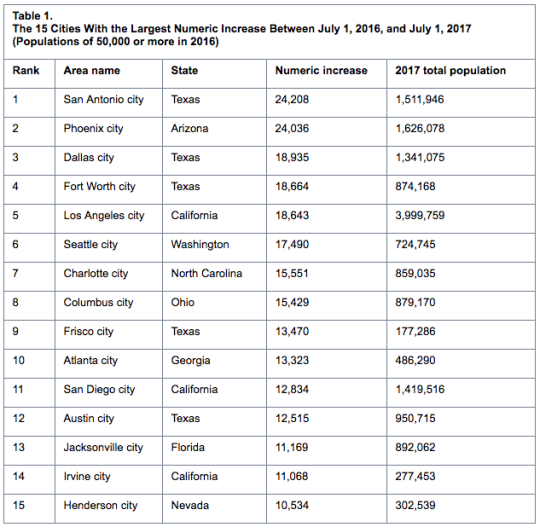
    Last week the US Census Bureau released its 2017 population estimates for the largest cities in the country. All of the figures are for the city itself and not the broader MSA or some other boundary.

    Here are the top 15 cities with the largest numeric increases between July 1, 2016 and July 1, 2017:

    However, if we switch over to percentage increases, Frisco, Texas – which is part of the Dallas-Fort Worth metro area – jumps up to number one with an increase of 8.2%. 

    In fact, the top 3 cities (on percentage basis) are in Texas and 10 of the top 15 cities are located in the South. That shouldn’t come as a surprise to many of you. Related post: Follow the sun and sprawl.

    However, if we only consider the 25 largest cities in the US, the fastest growing city on a percentage basis was Seattle at 2.47%. Number two was Fort Worth at 2.18%. And number three was Charlotte at 1.84%.

    New York City sits at 0.08%. And Detroit lost people. But it’s not a horrible figure (-0.35%). For more tables and data, click here.

  • Spaces between buildings

    Doug Saunders recently published a great piece in the Globe and Mail about the “the dead spaces between buildings” and the architectural revolution that is taking place from Mexico City to Toronto to solve this underappreciated problem.

    The example in Mexico City is that of the San Pablo Xalpa public housing complex where architect Rozana Montiel transformed the underutilized spaces between the apartment buildings into vibrant “common-unity” spaces. 

    This meant removing 95% of the fences and gates that had previously been erected as safeguard against the unsavory people and acts that were taking place in these open spaces.

    The underlying goal was to try and address the socioeconomic decline that had taken root in Mexico’s public housing complexes. And there was a sense that part of the problem was simply their physical design.

    Of course, this is partially about trying to correct the failures of post-war planning. But I think this conversation around the “spaces between buildings” shouldn’t just be a corrective one. It can be broader than that.

  • Tropical Tobermory

    image

    I am in Tobermory at the tip of the Bruce Peninsula right now. 

    Above is a photo of the shoreline along Little Dunks Bay that I took with my Fuji. The water looks positively tropical, but it’s probably about 4 degrees celsius. It was perfect for chilling our ciders after a 2 hour hike through the woods.

    Sadly, I forgot the charger for my MacBook Pro back in the city, and so this – some photography – is all you’re going to get from me until I am back at my desk on Sunday evening.

  • Value of Design Awards

    Interior Designers of Canada (IDC) is launching a new awards program this September called the Value of Design Awards (VODA). And for some reason they asked me to be one of their inaugural judges. I think the talented folks at figure3 had something to do with that. Link here.

    What’s interesting about VODA is that many or most ID awards focus on design that simply looks cool. The ambition of this awards program is to recognize and celebrate the positive impact that Canadian design thinking has on people and businesses. In other words: How does it actually perform?

    To submit your project to IDC’s Value of Design Awards, go here. The final entry deadline is June 8, 2018. So you don’t have much time left.

  • Introducing the new Corktown Plaza

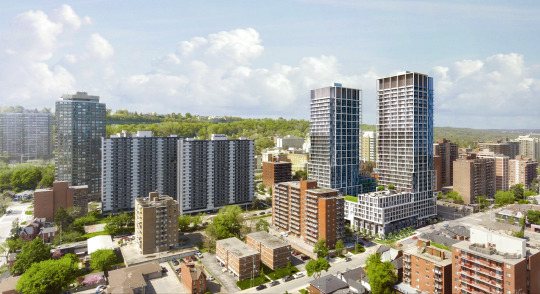
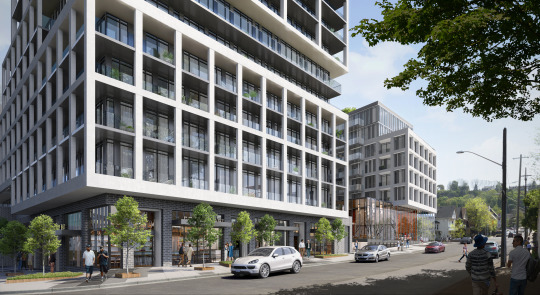
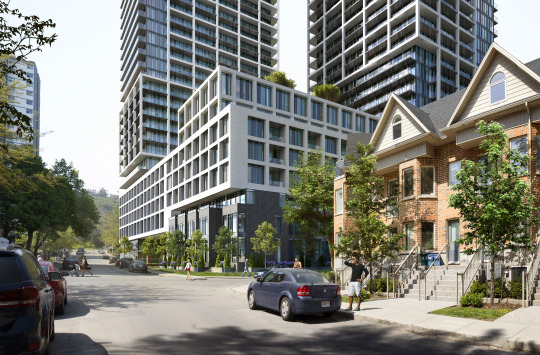
    This evening Slate hosted a pre-application community meeting in Corktown, Hamilton, where we presented our proposed design for the redevelopment of Corktown Plaza

    There was a short presentation by Slate, GSP Group, CORE Architects, and Janet Rosenberg and Studio, and then we shifted to an open house format where members of the community could speak directly with all members of the project team.

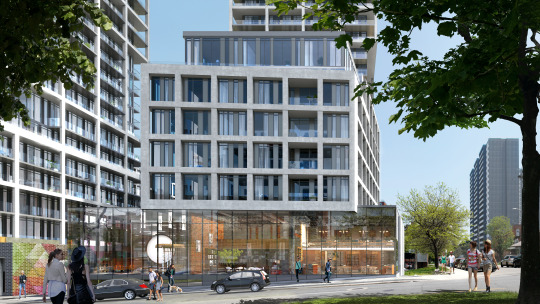
    Below are a few of the project renderings, all completed by our friends at ADHOC Studio

    imageimageimageimage

    The proposed design includes fine grain and large format retail spaces and a 9.5m pedestrian setback along John Street South (rendering #2 and #3); grade-related family-oriented townhouses on Young Street and Catharine Street South (rendering #4); and two 100% rental towers (31 and 34 storeys) to be built over two phases.

    The other notable feature is a mid-block pedestrian connection that will run from John to Catharine and become an important place for local public art. The plan is to work with the community and Councillor Jason Farr to run a separate engagement process for this component of the project. We want to work with local artists. If you have any suggestions, please send them over.

    Here, here, and here are what some people had to say about the proposal on Twitter. Thanks to everyone who attended this evening.

  • The birth of the open floor plan

    image

    Today most condos and apartments are designed with open concept (or open plan) floor plans. This generally means that the kitchen and main living areas are combined into one continuous and fluid space. 

    Part of this has to do with creating a sense of openness and part of this has to do with simply maximizing small spaces. When you consolidate spaces, you get to take advantage of occupancy overlaps.

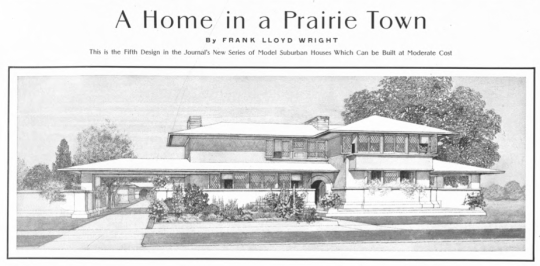
    But this isn’t a new concept. The roots of the open plan go all the way back to the turn of the 20th century with Frank Lloyd Wright’s emerging “Prairie School” of architecture.

    Ian Bogost’s recent piece in the Atlantic called, “The Curse of an Open Floor Plan”, does a good job of explaining this history. He credits Wright with popularizing the open plan.

    Here is an excerpt:

    In the February 1901 issue of Ladies Home Journal, on a single page between a portrayal on the “Life of an English Girl” and a feature asking, “Is the Newspaper Office the Place for a Girl?,” the then-obscure American architect Frank Lloyd Wright published plans for a home “in a prairie town.” It might seem like a strange host for architectural plans, but Ladies Home Journal frequently featured them, amid Rubifoam toothpaste ads, tips on what to do with cheese, serialized romance novels, and journalistic muckraking. It makes sense: Architecture is the foundation of home life, a matter largely relegated to women then—and still today, like it or not.

    Many of the characteristic features of Wright’s “Prairie” style, as others would come to call it, are already visible in the 1901 design: a low-pitched roof, wide eaves, horizontal orientation, and a strong connection to the surrounding landscape. Inside, another feature is present, in nascent form: an early open floor plan, combining multiple rooms together into a continuous space.

    Of course, at the time, the open plan was about much more than raw practicality and economic necessity. It wasn’t just about maximizing space and affordability. Here is another snippet:

    For Wright, Neutra, Harris, and others, open design represented the promise of a new social ideal, one where fluid spaces would allow egalitarian integration. That aspiration continues, in a way, but the ideal is less communal and more individual: Open plan is where everyone does their own thing, but all together.

    For Bogost’s full piece, which is worth a read, click here.

    Image: University of Michigan Library via The Atlantic

  • In defense of the gig economy

    Bill Gurley – who by the way is an investor in Uber – has an interesting piece up on his blog about the thing he loves most about Uber. It is the ability for the network to level load on its own. And here’s what he means by that:

    In spite of all the ink that journalists, analysts, and pundits have spilled on Uber over the years, no mainstream article has focused on what I consider to be the most elegant feature of this now ubiquitous, high growth global service — no driver-partner is ever told where or when to work. This is quite remarkable — an entire global network miraculously “level loads” on its own. Driver-partners unilaterally decide when they want to work and where they want to work. The flip side is also true — they have unlimited freedom to choose when they do NOT want to work. Despite the complete lack of a “driver-partner schedule” this system delivers pick-up times that are less than 5 minutes (in most US cities (with populations over 25K) and in 412 cities in 55 other countries. The Uber network, along with Mr. Smith’s invisible hand, is able to elegantly match supply and demand, without the “schedules” and “shifts” that are the norm in most every other industry.

    When surveyed, most people seem to prefer a job where they set their own schedule and get to be their own boss, compared to a steady 9 to 5 job with benefits and a fixed salary. Assuming that’s true, then this is a feature worth talking about.

  • Going dockless

    A couple of months ago I wrote about Bird, the electric scooter sharing company that is trying to solve the last-mile problem. They are expanding across the US and it is seemingly wildly popular.

    But its popularity is also leading some people to call them a public nuisance. Perhaps the biggest contributor to that is the fact that the system is dockless. That is, when you get to your destination you can park the Bird wherever you want.

    That’s obviously a great feature for users (who wants to look around for a docking station?), but it’s also causing a proliferation of “Bird litter” in the cities and neighborhoods where they are widely used. 

    I am sure this will eventually get resolved.

    The other thing about going dockless is that you now have a charging problem. Where and when do these scooters get charged and by whom? Bird solves this problem through decentralized contract workers called “Bird hunters.”

    You register to be one and then Bird pays you $5 to $20 for every scooter charged, depending on how difficult the Bird is to find. And as you can expect, these scooters are getting left all over the place.

    I thought this was a clever solution. And apparently it is popular with high school students looking to earn extra cash. Some are making several hundred dollars a day by spending their evenings picking up and dropping off Birds.