Daily insights for city builders, delivered every morning at 6 AM ET. I’m Brandon Donnelly — a Toronto-based real estate developer and founder of Globizen. I’ve been writing here since 2013.

Month: July 2016

  • Business model innovation

    Fred Wilson has a great post up on his blog today about open protocols. By open protocols he is referring to things like TCP/IP (transmission control protocol and internet protocol), HTTP (hypertext transfer protocol), and SMTP (simple mail transfer protocol). Whether you realize it or not, you rely on these protocols every single day if you go on the internet, browse the web, and write emails.

    If you’re interested in these sorts of nerdy things, I recommend you read his post. I’m not going to write about open protocols today – though I do find them fascinating. Instead, I would like to talk about the last paragraph of his post. 

    Here it is:

    “I believe that business model innovation is more disruptive that technological innovation. Incumbents can adapt to and adopt new technological changes (web to mobile) way easier than they can adapt to and adopt new business models (selling software to free ad-supported software). So this new protocol-based business model feels like one of these “changes of venue” as my partner Brad likes to call them. And that smells like a big investable macro trend to me.”

    This is interesting to me for 2 reasons.

    First, business model innovation is incredibly powerful. Once a company has built itself up around an existing model, it can be painfully difficult to change. Imagine you have a 200 person sales team that would become unnecessary should you pivot your business model. Are you going to fire them and make the switch?

    This is also one of the reasons why some tech companies can exist for so long before they make any money. Sometimes – but not always – it’s because the investors believe that if the company has users, attention or whatever it may be, that they will figure out a way to monetize them/it. And maybe, just maybe, it’ll be a business model that no one has ever thought of before.

    Second, look how he is publicly sharing his investment thesis. Why would he do that? Shouldn’t he just go off and do it and not tell anyone? Clearly, he too believes that there’s greater value in being open and transparent.

  • Transparent offer platform

    A new “transparent offer platform” called Haus has just launched in California to serve the residential real estate market. The way it works is that all offers are submitted online. And once an offer has been confirmed, it – along with all of its terms – gets revealed to every other potential buyer. See image below.

    image

    I’ve seen a number of different iterations of this same idea, which tells me that this is a well-identified problem in the real estate market. Here’s a snippet from a recent TechCrunch article announcing Haus:

    “We think the openness will create a more efficient market and that the number of offers and price will ultimately be dependent on demand,” said Haus GM Sarah Ham. “Bidding wars are a common, almost accepted, part of the real estate process today. But with our approach, buyers know where they stand. Buyers will know what they need to offer to make their offer competitive, but they also won’t negotiate against themselves.”

    I completely agree that this is a problem that needs to be solved. It will create a more efficient marketplace. However, in this market, I suspect that the current information asymmetries largely benefit sellers, to the detriment of buyers. So I wonder if the supply-side of the marketplace will be willing to participate at scale. What’s really in it for them?

    Side note: Haus is the latest project from Expa, which is a “startup studio” that works on its own ideas, as well as partners with other founders. I am very interested in this approach to creation because I think you have to try and make a lot of things if you want to do truly innovative things.

  • For the love of compactness

    I’m in Provincetown, Cape Cod right now. One of the things that is great about this town is the scale of it. It’s compact and many of the streets feel like laneways or alleys (I’m obsessed, I know). It’s all about pedestrians here. Even the main drag, Commercial Street, is effectively a pedestrian street – though it’s not technically closed to cars most of the time.

    There’s something liberating about being able to get where you need to go by walking or biking or skateboarding. And all of those things are done here. I enjoy the inherent efficiency that compactness brings. That’s why I was excited to learn this morning about the following proposal at 24 Mercer Street in Toronto (via Urban Toronto):

    image

    It’s a 12 unit, 17 storey building on a 195 square metre lot. The proposed FSI is 16.8. And it will have zero parking. I would be incredibly curious to know what the construction costs will be and how the overall project pencils out. But regardless, it’s exciting to see someone trying to make use of such a tight site. I would love to see more of this in Toronto and I am certain we will.

    What do you think about projects like this? Some of you may call this “poor planning,” but I see the efficient use of resources.

  • Low cost energy efficient homes perched atop of surface parking

    A regular of this blog recently suggested (in the comments) that I take a look at the London-based design firm ZED Factory. ZED stands for Zero Energy Development.

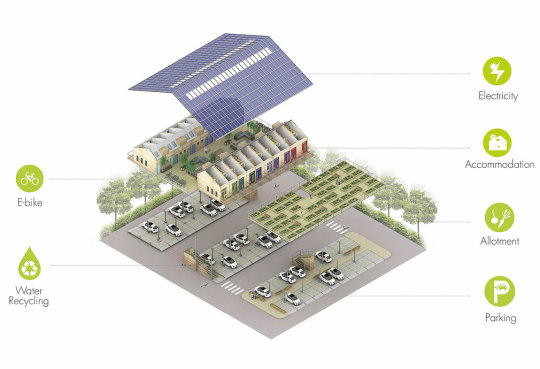
    The first project that caught my attention was ZED Pod. ZED Pod is a small, low cost energy efficient modular home that is designed to sit atop of surface parking lots. In other words, it’s a way to repurpose under-utilized surface parking without compromising existing parking ratios. All you really need are the air rights. And since the “land” is cheaper, the homes can be cheaper. They can also be easily relocated if the parking lot were to get developed in the future (though they are designed as permanent structures).

    image

    In some ways, there is something perverse about the way that driving and parking have such a profound impact on the urban landscape. Even when it’s buried underground and hidden from sight, the structural column grid needed to layout efficient parking will often carry up through the building impacting suite layouts. We’ll even restrict housing supply when parking requirements can’t be met. Should it be parking or people who come first?

    But cars aren’t going away. And ZED Pod is a clever way of dealing with an existing urban condition – however suboptimal it may be. I found the concept interesting and I thought you all might as well.

    Image: ZED Factory

  • Hello Boston

    image

    I arrived in Boston early this morning. It has been about a decade since I was last here.

    I took the subway in from the airport, which is typically what I like to do when I visit a city. It’s such a great way to get a feel for a place. And in the case of Boston, Logan Airport is only a few stops away from downtown.

    image

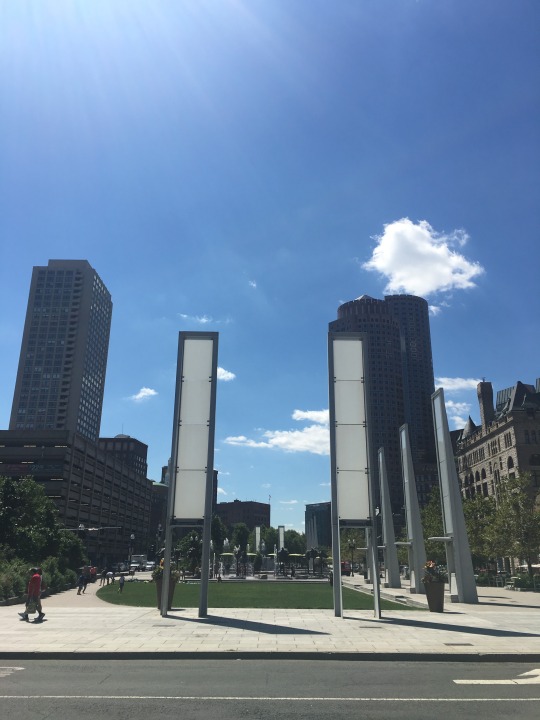
    As soon as I got in, I walked over to see the Rose Fitzgerald Kennedy Greenway (above image). It’s a linear park that was made possible by burying the city’s elevated waterfront expressway – the infamous “Big Dig.”

    image

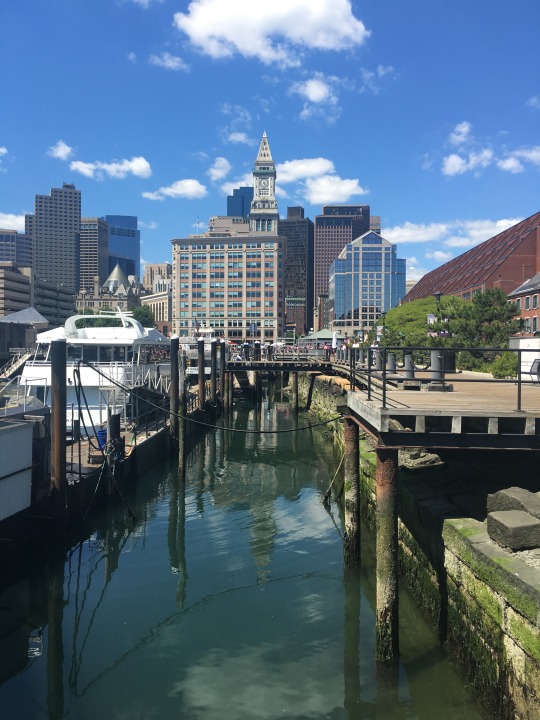
    I recognize that it was a lavishly expense infrastructure project that went many times over budget, but walking across the greenway to get to the water was rather pleasant. Will Toronto’s The Bentway achieve a similar result at a fraction of the cost?

    image

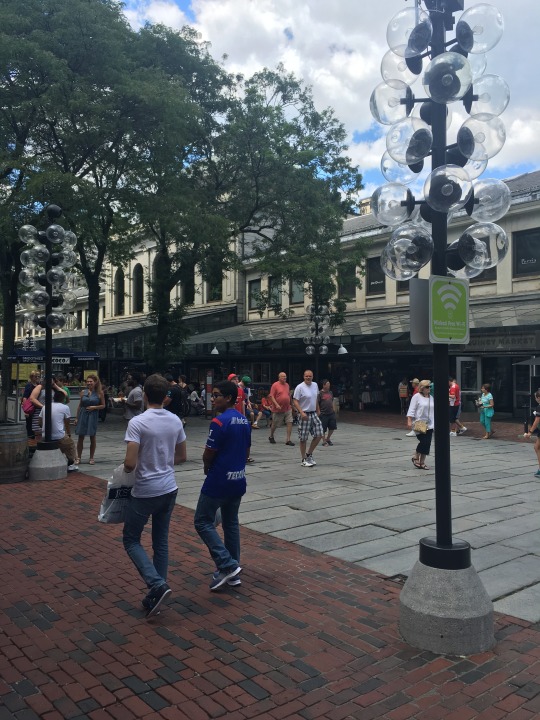
    With that out of the way, I went for a lobster roll. It had to happen. I then walked around Faneuil Hall and Quincy Market (above image). It felt a bit touristy, but what a remarkable pedestrian-only area

    image

    And now I’m on a boat heading over to Provincetown (Cape Cod) for a wedding. I’m writing this blog post over a spotty wifi connection, so out of fear that I may spontaneously lose it, I am going to end here. See you all tomorrow.

  • What system of measurement do you think in?

    A couple of years ago, an architect friend of mine from Chicago (who was in town for work) told me that when it comes to units of measurement the building industry in Toronto is schizophrenic. She basically said, sometimes you use the international system (metres) and sometimes you use customary units (feet).

    And this is absolutely the truth. We are constantly switching back and forth between the two. The drawings that go into the city are in metres and millimetres, but the drawings that get shown to prospective renters and buyers are in feet and inches. We’ll say that the Tall Building Design Guidelines stipulate that towers should be 25 metres apart, but then in the next sentence say that we’re going to need a 24 inch transfer slab. 

    This kind of measurement bilingualism is so common that I bet some of you have cheat sheets with common conversion factors posted up at your desk. It probably includes things like: 1 square metre = 10.76 square feet.

    Over the years though, I have found myself naturally drifting more and more towards metres and millimetres. So much so that when people throw out inches in a meeting, I’ll now sometimes ask them what it is in millimetres: “Wait, how thick does the slab need to be?” A lot of this has to do with the fact that all city planning documents are in metres. So it’s simply more efficient to stick with one system of measurement and avoid constantly converting back and forth.

    That said, there are still lots of people who prefer feet and inches (particularly in my industry) and many instances where I default to thinking in customary units. I’m 6 foot 3, not 1905 mm. But, I am ready to go all in with the international system. I think it would make life simpler and more efficient. After all, it is called the international system.

    What system of measurement do you think in?

  • Climate change gridlock

    I spent this morning reading an article called: How climate change is rapidly taking the planet apart. Here is an excerpt from the introduction: 

    “According to Naomi Oreskes, a great number of climate change scientists (she interviewed most of the top 200 climate change scientists in the US) suffer from some sort of mood imbalance or mild or serious depression. It is easy to understand why: we see the climate change taking the planet apart right in front of our eyes. We also clearly see, right in front of us, what urgently needs to done to stave off global disaster on an unprecedented scale. We need carbon taxes and the reconversion of industry and energy towards zero CO2 emissions systems. This route is without any doubt technically and economically feasible, but politically it seems to be permanently locked. If we do not unlock it, the future looks bleak, not to say hopeless, for humankind.”

    It’s clearly not a positive article. But it is an important read. We know we need to immediately and drastically reduce CO2 emissions (for all the reasons explained in the article), but we simply aren’t doing that.

    Part of the problem, I think, is that it’s easy to lull ourselves into complacency. We read about it and we notice the erratic weather patterns, but for the most part the status quo isn’t all that bad for most of us. Life just goes on.

    There’s evidence that revenue-neutral carbon pricing could actually increase productivity levels. It would force innovation. But it doesn’t yet appear to be 10x better than what we have today – which is often what you need to get people to accept change.

    So instead we hold largely ineffectual climate change conferences, which allow us to tell ourselves that we are, in fact, doing something. But I don’t think we’re being bold enough. And that’s too bad.

  • Monocle’s Top 25 Liveable Cities — 2016 Edition

    Monocle’s annual survey of the top 25 most liveable cities in the world was just released. It’s now in its 10th year. I found it in my inbox this morning and it was a good reminder that it was about time I renewed my subscription. I’ve been a regular reader of Monocle since 2007, but I let my membership lapse last year.

    Of course, any sort of list like this is going to be subjective. It all depends on the methodology you use. Still, their annual survey is an interesting way to see what each city is up to and where the tides are going. This year Monocle put extra weighting on each city’s nightlife. If you’re not a subscriber, here’s a short video you can watch. It will give you a rundown of all the cities. (I was happy to see Montréal creep onto the list. Incredible city.)

    This focus on the night is something that I’ve been writing about a lot both on this blog and elsewhere. It’s an idea that’s picking up momentum around the world as an economic development strategy. But for whatever reason, uptake seems to be slower here in North America.

    I like how architect Anna Dietzsch puts it in this video. She says that Rio may have the beaches, but Sao Paulo (where she’s based) has the night. That’s exactly how cities should be thinking about this opportunity. It used to be that cities thrived almost entirely because of location, waterways, transport, and other natural features (example: Buffalo). But increasingly, it’s becoming about things like nightlife.

    Vancouver may have the mountains, but Toronto has…

    Image: Monocle

  • Going swimming (and being transparent)

    I woke up this morning to this view:

    image

    I then went for a swim. The water tends to be on the cooler side in the Georgian Bay, but with the weather we’ve been having it’s pretty perfect right now.

    At this point I’m thinking about a beer and some reading. I have Capital in the Twenty-First Century by Thomas Piketty sitting in my car. It’s next in the queue.

    I am telling you all of this simply to be transparent. 

    Recently I had someone caution me that I should be careful about being too public and too open. I won’t get into specifics, but I was told that sometimes it’s better to just fly under the radar.

    I recognize that there have to be limits to transparency, but as a rule of thumb I subscribe to the opposite approach. When possible and when appropriate, I would rather be more, rather than less, transparent. 

    This blog is who I am. It’s indicative of how I think. And it discloses what I’m doing. So I don’t see a lot of downside. What you read is what you get. You’ll know if we should be friends and/or do business together.

    After I wrote about what I’m doing next I had a bunch of emails come in from various people telling me what they’re doing and, in some cases, suggesting that we work together. Some people had development sites that they thought I should take a look at. And some people immediately asked if I was hiring.

    I am grateful for each of those emails. But I also know that they’re an outcome of openness and transparency.

  • How will self-driving vehicles change our cities and our habits?

    Last night
    I had a dream that I was driving around in a snowstorm and, for whatever
    reason, my tires had almost no tread on them. So I was all over the road.
    Strange. I have no idea what this means, if anything at all.

    But it did
    remind me that I can absolutely imagine a time when the thought of driving your
    own car (outside of it being maybe a hobby) will seem positively archaic. I
    mean, think about how messy our current system is. Roads are a chaotic and
    oftentimes dangerous place.

    The more
    interesting question for me though is: how will self-driving vehicles change
    our cities, our habits, and so on? In Elon Musk’s recently published Master
    Plan (Part Deux)
    he outlines 4 main goals for Tesla:

    1. Create stunning solar roofs with
      seamlessly integrated battery storage
    2. Expand the electric vehicle product
      line to address all major segments
    3. Develop a self-driving capability
      that is 10X safer than manual via massive fleet learning
    4. Enable your car to make money for
      you when you aren’t using it

    Let’s think
    about what these could mean.

    One
    translates into decentralized energy generation and storage. Now all of a
    sudden the cars on our roads will be roaming around our cities collecting and
    storing energy, eventually returning home at the end of the day to power our homes.
    I can already imagine fleets of sun worshipping cars chasing the light as it
    moves across our cities.

    Two is recognition
    that self-driving vehicles are going to have a meaningful impact on traditional
    public transit. (Elon reveals that Tesla is working on high passenger-density
    urban transport.)

    Three
    addresses the chaotic current state and the massive potential of networked
    cars.

    Four is particularly
    interesting to me. I wonder to what extent this income will simply subsidize
    car ownership or if it could actually transform cars into an investment (rather
    than purely an expense). Will people end up buying self-driving vehicles in the
    same way that people buy real estate for yield?

    Furthermore,
    how does this notion of a shared vehicle pool now completely change the way we
    think about parking requirements. For instance, today we think about parking in
    terms of individual usage. This tenant requires/wants X amount of parking. All
    2-bedroom apartments require Y amount of parking.

    But if we’re
    now all sharing our vehicles, parking requirements would then be based on some
    broader and collective demand curve. Parking would become less individualistic
    and instead become more of a yard where self-driving vehicles come to store
    themselves when not in use.

    Once again,
    we reach a point where utilization rates go up for each vehicle and overall
    parking demand goes down. Good thing we’re getting rid of parking minimums.

    What else could
    you see happening?