Daily insights for city builders, delivered every morning at 6 AM ET. I’m Brandon Donnelly — a Toronto-based real estate developer and founder of Globizen. I’ve been writing here since 2013.

Month: May 2015

  • Survey: Homes for families

    I was looking through real estate listings this morning (which I do quite often out of sheer interest), and I started noticing a number of 3 bedroom condos (here in Toronto) that were priced under $1 million.

    Now, this is a lot of money now matter how you slice it. But given that the average price of a detached home in the city is now well over $1 million, I can’t help but wonder if condos will become more accepted as the family home.

    I’ve written about this topic a lot, because it’s something I’m interested in and I like living in a condo. But I’m seeing far more of my network looking for a low-rise house upon marriage/kids than for a bigger apartment/condo.

    So today I thought I would run a very quick survey. There are only 3-4 questions depending on how you answer and it basically revolves around housing type and whether or not you have or plan to have a family. I also ask what city you live in because I think this will have an impact on preferences.

    If you have 30 seconds, I would love to get your input and I’m sure the ATC community would be interested as well. The responses are anonymous, but I’ve made them public. Click here if you can’t see the survey below.

    [googleapps domain=”docs” dir=”a/brandondonnelly.com/forms/d/1wyMguhSlNv6pe6DS3duyJUqpzjImHI_KiYer1CKTVxo/viewform” query=”embedded=true” width=”640″ height=”600″ /]

  • W57 — A new hybrid building typology

    image

    We’ve been talking about a lot of heavy topics here on Architect This City lately. Everything from the contentious Gardiner Expressway East to minimum population densities to density creep. 

    So today I thought we could talk about something a bit more fun: architecture.

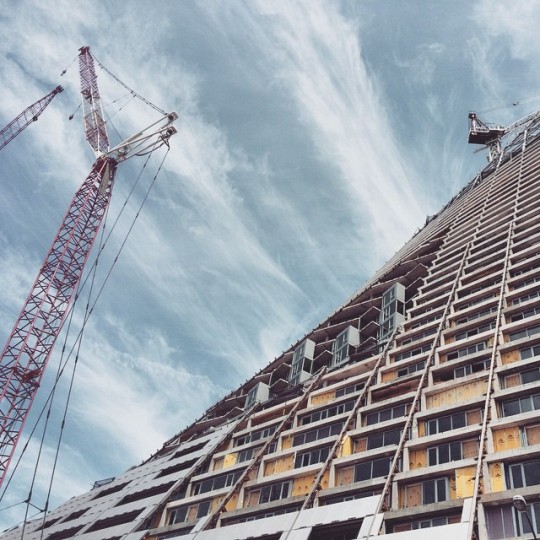
    When I was in New York last weekend, one of the buildings that was on my must-see list was the now under construction West 57th Street by Danish architect Bjarke Ingels. See photo above. (It also happens to be at the exact location where the West Side Highway transitions from elevated to surface boulevard.)

    This is supposedly the first North American project for Bjarke Ingels (he also has a project in Vancouver now). And if you’re a regular reader of this blog, you’ll know that I’m a fan of his work. His diagrams and storytelling ability were a big inspiration for me when I was in architecture school.

    The concept behind the project was to create a new hybrid building typology, one that is a cross between the typical European perimeter block building and the North American skyscraper. And the result is pretty wild.

    Here’s a video in case you aren’t familiar with the project. Click here if you can’t see it below.

    [youtube https://www.youtube.com/watch?v=_0JbTbOm_iQ?rel=0&w=560&h=315]

    I think it’s a really exciting project. What are your thoughts?

  • The case for planning transit around minimum population densities

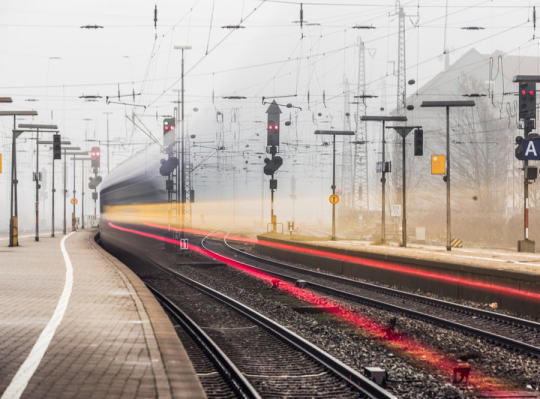
    Photograph Blitz by Tristan O'Tierney on 500px

    Blitz by Tristan O’Tierney on 500px

    Back in 2011, the The Pembina Institute published a report called, Building transit where we need it. And in it they quite clearly outlined the population densities that are needed to make various types of transit investment cost effective.

    For subway they specify a minimum population density of 115 people per hectare and for light rail (LRT) they specify a minimum population density of 70 people per hectare. 

    And the reason for this is because there’s a strong correlation between population density (i.e. land use) and transit ridership. The two go hand in hand and should not be decoupled. If population densities are too low (as they are, for example, along the Sheppard subway line here in Toronto), people don’t take transit. They drive.

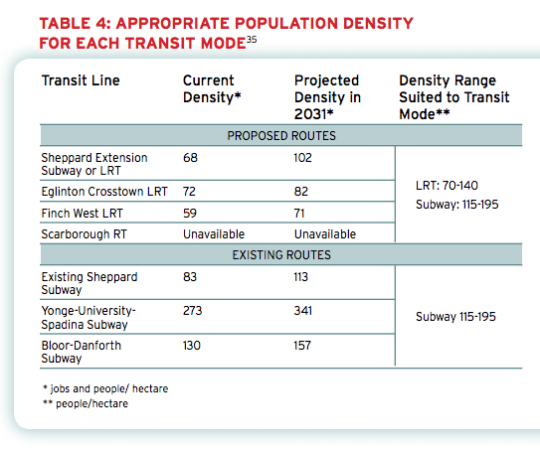
    Here’s a chart from the report showing the current and projected population densities for Toronto’s existing and proposed routes (keep in mind this is from 2011).

    image

    So what does this chart tell us?

    • Subways don’t make a lot of sense in many parts of the city. LRT will do just fine.
    • The Sheppard subway line is an under-utilized asset. Even by 2031 we’ll barely be reaching the requisite population densities.
    • The Bloor-Danforth corridor could use more intensification.
    • The Yonge-University-Spadina line is going to need to relief.

    Unfortunately, transit decisions are often made based on politics instead of data. And that results in subways in places that don’t make a lot of sense. That’s unfortunate because it means less riders, less revenue, and more subsidies.

    The other challenge with running subways through low density neighborhoods is that it then creates tension when the city and developers go to intensify those neighborhoods through transit-oriented development. (See #DensityCreep.)

    But if we’re going to be fiscally irresponsible about where we deploy our transit capital, the least we could do is upzone the surrounding areas and impose minimum population densities. 

    In fact, here’s what I think we should do: Land use should be bundled with the transit decision. 

    Instead of asking where the subway station should go, we should be asking where the subway station should go and all the density needed to bring the area up to a certain minimum population density. And if that second criteria for whatever reason can’t be met, then we don’t build the line. 

    I wonder if we framed the question in this way if it would change where subway lines get approved. What do you think?

  • Top 10 freeways without a future

    https://500px.com/embed.js

    Last year The Congress for the New Urbanism (CNU), which is based out of Chicago, published a report called, The 2014 Freeways Without Futures. It listed the top 10 freeways across North America that are in need of removal, replacement, and revitalization. You can download the full PDF report by clicking here.

    Here’s an introductory snippet from the report:

    The 2014 Freeways Without Futures Report lists the top opportunities in North America for replacing aging urban highways with boulevards or avenues that connect to the networks of streets. They are presented in no particular order of rank. As in previous reports, the criteria for the 2014 list is based on a number of factors: the age and design of structures, redevelopment potential, potential cost savings, ability to improve both overall mobility and local access, existence of pending infrastructure decisions, and community support.

    And here’s the list of freeways without a future:

    1.  I-10/Claiborne Overpass, New Orleans
    2.  I-81, Syracuse, New York
    3.  Gardiner Expressway, Toronto
    4.  Route 5/Skyway, Buffalo
    5.  Inner Loop, Rochester New York
    6.  I-70, St. Louis
    7.  I-280, San Francisco
    8.  I-375, Detroit
    9.  Terminal Island Freeway, Long Beach
    10.  Aetna Viaduct, Hartford

    Not surprisingly, the Gardiner Expressway is on the list. CNU is in agreement with the “remove” option currently being contemplated by Toronto City Council and will be doing their part to support the Gardiner East petition that Stephen and I created. Thank you for that 🙂

  • The cost of saying “no”

    https://500px.com/embed.js

    When you rezone a property to build something new, pretty much every city will ask you to provide reports and studies that assess the potential impacts of that something new. 

    They’ll ask you to look at the impact on traffic, the impact on storm water, the impact on shadows in the area, and the list goes. This, of course, is fair and reasonable. It makes sense to measure the impact of the proposed changes to see if it will work in the given context. 

    But those are not the only impacts to consider. I think that many of us underestimate the flip side, which is the impact of doing nothing, or in this case, building nothing. Here’s a recent quote from an excellent interview with urban economist Edward Glaeser:

    Personally, I believe there are always huge costs to saying “no” to people who want to create space for new families that want to live in the city; who want to make the city more affordable. There are always costs – I believe that very, very strongly – but, sure, there are also benefits to saying “no” at certain times.

    Glaeser is, of course, not saying that we should allow unfettered development. He is saying that there are costs (or impacts) to building and costs to not building. The challenge is that we assume, often incorrectly, that saying “no” simply means the status quo will prevail. And we do not consider the impacts.

    So what does that mean? Here’s an example.

    The Neptis Foundation, which is a nonpartisan and charitable urban research group, just published an interesting report called, Growing Pains: Understanding the new reality of population and dwelling patterns in the Toronto and Vancouver regions

    What the report did was compare growth and settlement patterns in both the Greater Toronto (and Hamilton) Area and Metro Vancouver between 2001 and 2011. And what they found was two different stories.

    Of the one million people that moved to the Toronto region between this period, roughly 80% of them settled in new greenfield housing subdivisions at the urban edge. And only 18% of people moved to areas that were well serviced by public transit.

    By contrast, only 31% of Metro Vancouver’s population growth went to greenfield areas and 69% went to urban intensification areas. Nearly half of these new residents ended up settling next to high frequency transit.

    From an environmental standpoint, Vancouver’s settlement pattern is obviously preferable. But it takes hard work to achieve that. The barriers to infill development are more formidable than the barriers to greenfield development. This is despite the fact that there are well documented social, economic, and environmental costs associated with urban sprawl.

    My point with this example is that growth and demand will find somewhere to settle. Some locations make more sense than others, but sometimes there’s no choice when we have decided to say “no.” So what we ought to be doing is measuring both the impact of building, as well as the impact of not building.

  • A few thoughts on Toronto’s rental resurgence

    Photograph Condos in Fog by Richard Gottardo on 500px

    Condos in Fog by Richard Gottardo on 500px

    Earlier today I attended a lunch and learn talking about the renewed interest in rental apartment development here in Toronto. Since this is a topic I’ve written about a few times here on Architect This City, I thought I would summarize some of my key takeaways from the panel discussion:

    • Market fundamentals are strong for purpose-built rental apartments. Vacancy is very low and demand will likely outstrip supply for many decades to come given the barriers to building (land availability, planning/approvals, and so on).
    • As of September 2014, CMHC reported 2,212 purpose-built rental units under construction in the Toronto region. And yet the annual demand for new rental housing is likely somewhere between 10,000 to 30,000 units (clearly some of this demand is being absorbed by condo rentals – the secondary rental market).
    • Millennials and retirees are seen as core markets for new rental apartments. Millennials want to live in urban centers and they like the flexibility that renting provides. Retirees want to know that they won’t be asked to move out because the owner wants to sell their condo unit.
    • It’s almost impossible to compete against condo developers when it comes to buying land (despite the next point). They (condo developers) will pay more. Therefore intensifying our “tower in a park” building stock is going to be a critical component of meeting rental demand in the region.
    • Part of what’s driving this interest in purpose-built rental (on the part of developers) is a softening condo market. So don’t be surprised when some developers flip back to condos when it makes financial sense to do so.

    It was interesting to hear this last point. It’s something that has been on my mind, but for whatever reason wasn’t really being talked about by the industry. That’s not to say that I think the condo market is in trouble though. It has just become more balanced. And ultimately that’s probably a good thing.

    Either way, I think that more rental and more housing options are a positive for the city and for consumers.

  • #DensityCreep

    The Toronto Star published an article today called: Midtowners battle the rise of the midrise. It’s about a group called The Density Creep Neighborhood Alliance, which was formed in order to fight a 4 storey stacked townhouse project that is currently going through the rezoning process.

    Here’s a snippet from the article:

    “I’m really concerned about my property value going down,” says Lisa Goodwin, 49, a stay-at-home mother of two who has lived in a four-bedroom dwelling on Keewatin Ave. for 19 years. “Right now all the houses are $1.1 to, say, $2.2 (million) but they’re looking at putting in places that are only $500,000.”

    Not surprisingly, social media took hold of this and #DensityCreep quickly started trending on Twitter. BuzzFeed ran a piece called, Toronto Real Estate Is So Preposterous People Are Protesting Condos That “Only” Cost $500K. And somebody even bought densitycreep.com (their site is .ca) and redirected it to NIMBY on Wikipedia.

    There’s so much I could say about this. But you all already know what I’m thinking. So I’ll end with this quote from the article:

    “The simple fact of the matter is that the creation of a more sustainable, equitable, and affordable city requires the development of midrise and other more dense housing options along major roads, subways, and streetcar lines in already built up areas,” says Christopher De Sousa, director of the School of Urban Planning and Regional Planning at Ryerson University.

    We have work to do.

  • Scootering around New York City

    image

    I am writing this post on a Porter flight from New York back to Toronto.

    For my last day in New York, my close friend and I rented scooters and rode all around Manhattan and Brooklyn. It was a great way to cover a lot of ground, but also a great way to still absorb the city. It’s harder to do the latter in a car and I never have any desire to drive in New York.

    Because the great thing about New York is that as a pedestrian you feel like you control the streets. When you’re waiting at a crosswalk, you’re never actually waiting. You walk off the sidewalk and onto the street so that you can assert yourself in front of the cars and wait for an opening. This serves to narrow the portion of road that the cars can actually drive on and reminds the drivers who is boss.

    At the same time, there are many instances throughout the city where New York has purposefully reallocated the space dedicated to pedestrians (and cyclists) and the space dedicated to cars. They’ve created new public spaces, widened the areas where people can walk, and seemingly blanketed the city with bike lanes. And that makes a lot of sense given that in many (most?) areas of the city, pedestrians greatly outnumber cars.

    So does that mean New York is at war with the car? (I’d be curious to know – in the comment section below – if those kinds of discussions take place in the city.)

    I suppose you could spin it that way. But New York also does things for cars. While riding around on the scooter today, I was so impressed by how well timed the streetlights were along the avenues. It made it incredibly easy to go downtown or uptown. In Toronto, I often feel like we time our lights to make driving as slow as possible.

    But make no mistake; New York is not a driving city. 

    New York is about walking, biking, taking transit, and hailing cabs. There is a reason they have the highest transit ridership in the US. The city is built for it. And unless driverless cars and ride sharing completely changes the equation, I will continue to believe that transit is the most efficient backbone for any big city.

  • Walking the West Side Highway

    image

    I am in New York this weekend. Every now and then I need to get my fix of this city. I just love it here.

    Given the debate that’s going on in Toronto right now about the elevated Gardiner Expressway, one of the things I wanted to do this weekend was walk the West Side Highway. The West Side Highway runs along the western edge of Manhattan from 72nd Street all the way down to the southern tip of the island. It used to be an elevated highway, but it runs mostly at grade now.

    I’ve been to and on it many times before, but I wanted revisit it with a different lens. Many people in Toronto seem to think that if we remove the Gardiner East and replace it with an enlarged Lake Shore Blvd that it would pose just as much of a physical barrier as an elevated structure.

    So I walked the West Side Highway and filmed this (Hyperlapse) video:

    //platform.twitter.com/widgets.js

    I think it’s a big improvement over an elevated structure. What do you think?

    There is, however, an elevated highway uptown. So tomorrow I plan to travel it on a scooter that I’ve rented to see how the urban fabric changes around it. I suspect it’ll be quite different.

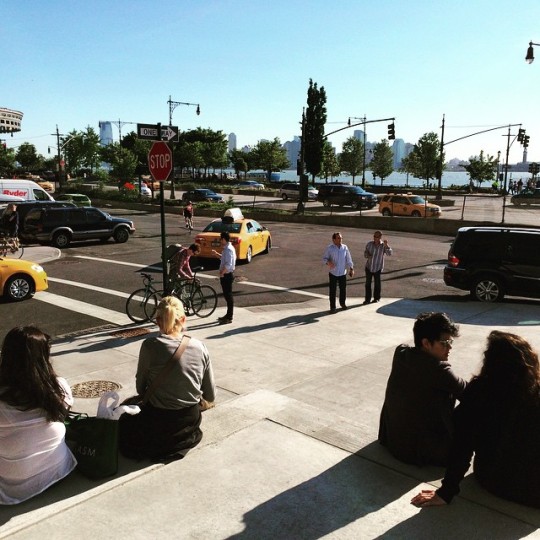
    In case you were wondering, the picture at the top of this post is from the steps at the Whitney Museum. They face the West Side Highway and the water. It’s a great public space, but I’m pretty sure that Renzo Piano wouldn’t have designed it that way (and with that orientation) had there been an elevated highway in front of it.

  • What a Shopify Mafia could mean for Canadian tech

    image

    Yesterday Shopify went public on both the Toronto (SH) and New York Stock Exchanges (SHOP).

    For those of you who aren’t familiar with Shopify, they are a Canadian company that provides e-commerce solutions to small and medium sized businesses. I’ve been a paying customer of Shopify many times before and they offer great products and services.

    But this isn’t an investment blog, so what’s the big deal?

    Well, the big deal is that Shopify – which was started in Ottawa – raised over $120 million of venture capital funding, went public (raising another $131 million), and now sits with a market cap close to $2 billion dollars. And that is a great thing for not only the founders and employees of Shopify, but also for the larger Canadian tech ecosystem.

    Yesterday my friend Evgeny (of 500px) tweeted this out:

    //platform.twitter.com/widgets.js

    What he’s getting at it is that when a successful company goes public it generates a tremendous amount of wealth for a lot of people (the founders, employees, investors, and so on). And invariably many of those people are going to recycle their capital back into the local economy by starting new companies and/or investing in other startups.

    But this isn’t some sort of trickle down economic theory. Startup ecosystems just seem to operate very much in this way. There’s almost a natural cycle: start or join young startup, exit company (sale or IPO), make lots of money, become angel investor in and mentor for new startups. And since this cycle compounds, it’s probably the most important prerequisite for a thriving tech ecosystem.

    So while this IPO has been no doubt a great thing for Shopify, let’s not ignore what a “Shopify Mafia” could mean for Canadian tech.

    Image: Shopify Toronto via Officelovin