Daily insights for city builders, delivered every morning at 6 AM ET. I’m Brandon Donnelly — a Toronto-based real estate developer and founder of Globizen. I’ve been writing here since 2013.

Month: March 2015

  • From suburban houses to downtown condos

    Last Friday the Financial Post published an interesting article talking about Mattamy Homes and the new office that its founder, Peter Gilgan, is in the process of opening up downtown in the Toronto-Dominion Centre (which just so happens to be my favorite office complex in the city).

    At 64 years old, Peter recognizes that his company has changed and the world has changed. He he himself recently moved downtown and now he’s bringing his company with him.

    “Our Oakville office [a western suburb of Toronto] is a reflection of what our business was 25 years ago,” he says. “We were a local, west-end Toronto builder. Now we’re the largest home builder in Canada and we’re the largest private home builder in all of North America.”

    Come September he will move his finance, legal, IT, human resources and strategic marketing team —  about 100 of Mattamy’s 1,100 staff — into the new downtown digs. He wants to attract “the absolute best talent.”

    “The young people seem to really want to work down here. So that’s one reason. The other thing is to make sure the business has the capital to move forward and expand. Well, where’s the capital? It ain’t in Oakville.”

    This of course isn’t a new thing for suburban homebuilders. Many in Toronto have made the switch – or at least expanded – from suburban houses to downtown/urban condos. And I’m assuming that’s what is going to happen here.

    Still, it’s fascinating to see this trend continue. Young people really do want to live and work “down here.”

  • Day 2 in Quebec City

    I’m writing this post on my flight from Quebec City back to Toronto. I promise that I have a bunch of non-personal urbanism posts in the pipeline, but I just haven’t had a chance to sit down and write them. So for now I’m just going to do a quick recap.

    One of the things I try and do when I visit a new place is not just bounce between the requisite tourist spots, but also dig a little deeper and get an understanding of the place. Thanks to some incredible people at Quebec Tourism, the Chateau Laurier Quebec, and to some of the locals I met, I feel like I was able to do exactly that.

    This morning I just wanted to walk the city. I started on Grande Allée and went into the walls of the center city, down to the lower town (La Basse-Ville), along the waterfront, and then back up towards the Saint-Roch neighborhood.
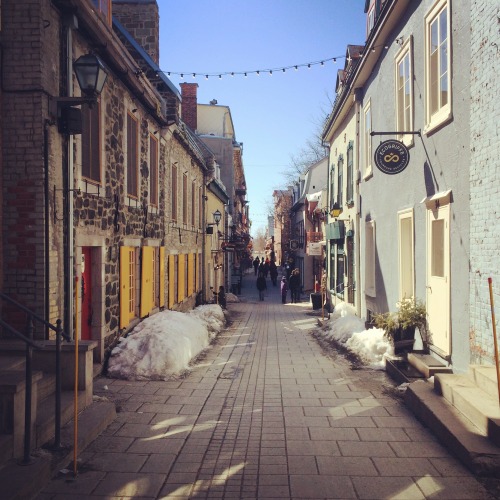
    Along the way I visited the Rue du Petit-Champlain in the lower town (shown above), which is the kind of small intimate urban street that will make you realize that Toronto’s vast network of laneways is hugely under-utilized.

    I was also told that historically the lower town was less wealthy than the upper town. This makes sense since the rich generally like to move upwards. Think about Hong Kong, Los Angeles, and even flat Toronto with neighborhoods like Forest Hill. Being up high is often considered desirable.

    And in a city like Quebec, there’s plenty of opportunity to adjust your altitude. In fact, its location was chosen precisely because it offered a strategic high ground.

    I often wonder how the first person settling a city decides where to setup camp. But in the case of Quebec City it’s clear. Samuel de Champlain chose high ground at the narrowest part of the St. Lawrence River (the name Quebec actually means “where the river narrows”). This was so that they could keep a close eye on aggressors sailing down the river and then defend against them when needed.
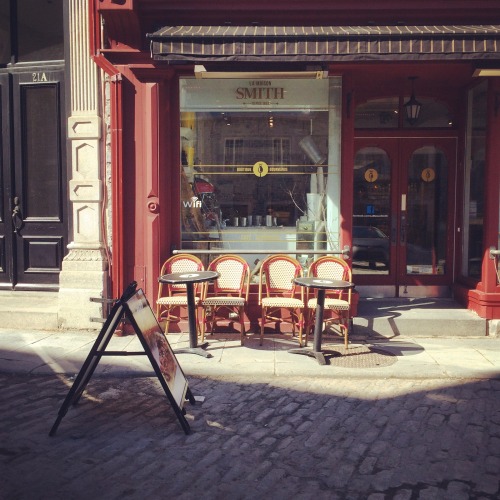
    After Petit-Champlain, I then made by way over to the Saint-Roch neighborhood. Rumor has it that it’s Quebec’s “petit Brooklyn”, so I had to check it out.

    The neighborhood was far more developed than I thought it was going to be. Oracle, Ubisoft, and many others have big offices there. But I did notice a few hipsters on the streets, so I must have been in the right place. The Saint-Roch neighborhood has an interesting history that is definitely worth reading.

    In the afternoon I had a late lunch back on Grande Allée and then popped by La Citadelle. It was fascinating to walk through, but it was equally as exciting to see snowboarders repurposing portions of the city’s fortified walls. Click here for a quick Instagram video of that.

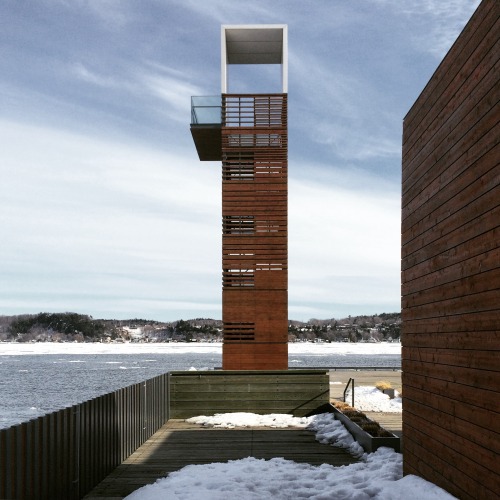
    Before leaving for the airport, I also made a quick stop along the Promenade Samuel-De Champlain to take in some of the views of the river. I stumbled upon the look-out tower below.
    Quebec City is an absolutely stunning city and I’ve always had a soft spot for French Canadian culture. I grew up speaking French, but it has been a long time and I rarely use it these days. 

    Thankfully, Quebec City is the perfect place to get some practice in. In Montreal you can get by and even live there only speaking English. But Quebec City is decidedly French.

    And even though I sound like a real yank when I hobble together French words into occasional sentences, bilingualism is a big part of the Canadian identity for me. I hope that never changes.

    If you’d like to see a summary of all my social media posts from the weekend and/or if you’d like a special deal on your own packaged vacation to Quebec City, click here.

  • Day 1 in Quebec City

    I just checked into the Chateau Laurier Quebec after a busy day touring the city. I don’t have a ton of time to write this post before dinner (though I have a few post ideas brewing). I did however want to share some of the day’s events and some of my photos.

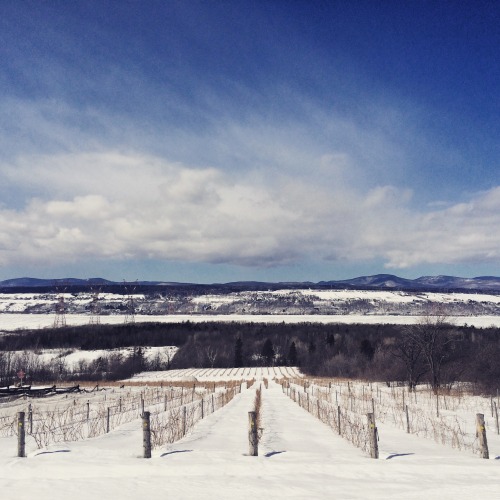
    After I landed I went straight to Île d’Orléans. I had never been there before so I’m glad I got the opportunity. It’s about twice the size of Manhattan and it has a population that hovers somewhere between 7,000 and 10,000 people depending on the season.

    The first stop was a “sugar shack”, which is apparently a big deal in Quebec and in the springtime. The place was packed. Here I had a traditional Quebec lunch (which was great) and I learned that all of the Canadian stereotypes are actually true. We really do put maple syrup on everything.

    After lunch I then asked if we could stop at a few of the local wineries. I love wine and I love wine culture.

    imageimageimage

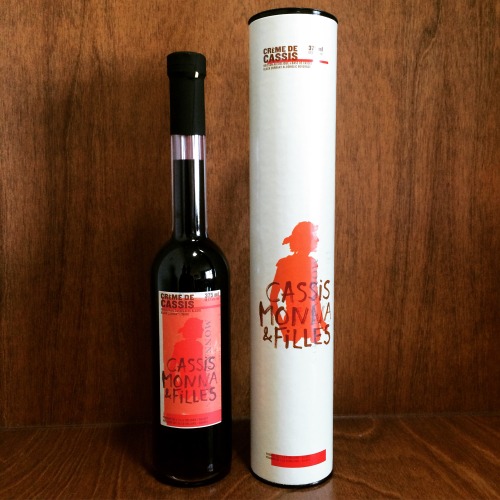
    I picked up one bottle of “wine” from Cassis Monna & Filles. It’s actually made from black currants though, which I was told was illegal to grow in North America for a long time. It’s far more popular in Europe.

    The winery is run by a father and his two daughters. And I thought they did a great job with their brand story and their overall identity.

    After leaving the island, I then went to the Montmorency Falls. I had no idea Quebec had falls, but they do. And the vertical drop is bigger than that of Niagara Falls.

    image

    Finally, I finished the afternoon with a quick tour of downtown and the OMA designed expansion to the fine arts museums. It has one aggressive cantilever.

    Here’s a video of the project. Click here if you can’t see it below. 

    [vimeo 111133943 w=500 h=281]

    If you’re interested, you can also follow my social posts on the Porter Escapes website by clicking here.

  • Architect This City x Porter Escapes (in Québec City)

    Towards the end of last year I received a one line email from a reader asking me what I thought about Porter (the airline that operates out of Toronto’s island airport downtown).

    I followed suit and responded with one line: “I’m a big fan.” I then pasted a few links to posts I had written where I talked about Porter, the island airport, and why I think they are good for Toronto.

    It turns out that was the right answer 😉

    Because today I’m excited to announce a fun collaboration between Architect This City and Porter Escapes. This weekend I get to explore Québec City and do something I love to do, which is photograph cities, think about cities, and write about cities. (And eat poutine.)

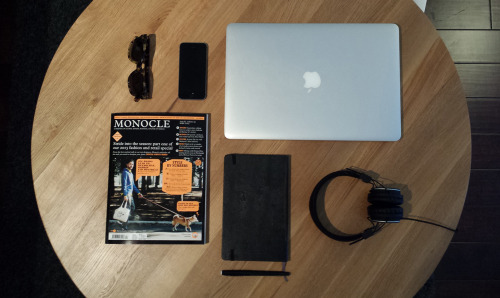
    Here are my travel essentials for the weekend (I wish it was a better photo):

    image

    The first thing I should tell you though is that Porter Escapes is different than simply Porter. Porter Escapes is their “packaged vacation” company, so it’s designed for people who want a simple way to book entire getaways (flight, hotel, activities, and so on).

    In my case, I’m going to be staying at the Château Laurier. I also have a bunch of activities planned out for Saturday during the day. Stay tuned.

    I had initially planned to squeeze in some snowboarding at Le Massif and try out the nicely branded train that goes from Québec City right to the mountain. But my back and shoulder are still tender from my spill in Banff.

    Still, I hope you’ll follow along on Twitter, Instagram, and Snapchat, and using #PorterEscapes. And if you happen to be in Québec City this weekend, let’s grab a pint and poutine.

    I’ve also been told that Porter Escapes will be launching a special promotion over the next few days for escapes specifically to Québec City.

    Note: I’m supposed to tell you that it’ll be at a price point that you should never expect to see again (i.e. it’ll be a steal).

    Happy Friday 🙂

  • Morphosis proposes tallest building in Europe — in the Swiss Alps

    image

    A controversial design proposal for the tallest building in Europe has been making the rounds online over the past few days. Designed by Morphosis Architects, the 381 meter-tall tower is being proposed in Vals in the Swiss Alps. 

    And pretty much everyone seems to hate it.

    When I first came across the design, I truthfully had to do a double take to see if it was actually a real proposal. But it seems to be. Everyone is writing about it.

    Clearly there are some interesting tensions at play here. You have a hyper-urban building typology in a mountain town setting, but with materials that are intended to make it dematerialize into the landscape.

    So I thought we could have a discussion about it in the comments.

    Is a small mountain town the right place for the tallest building in Europe? Could it work as a one-off tower?

    Image: Morphosis Architects via ArchDaily

  • Towards more publicness

    Back when the commercial internet first started to take off it was uncommon to use your real name online. Instead people relied on usernames and other pseudynoms to represent themselves. I honestly can’t remember what I used in those days, but I’m sure it was something ridiculous.

    Over time though that started to change. 

    Blogging started to take off in the late 1990s. And we started to become more comfortable sharing personal information online. Perhaps the biggest shift though, came with the introduction of Facebook in 2004 (over 10 years ago!). All of a sudden people – young college students initially – started sharing lots of personal information online, including photos of themsleves and their friends.

    But this wasn’t an overnight change. When Facebook first launched, privacy was an important component. It still is, but I would argue that it has become less central given how public a lot of other social media platforms are today. Twitter, for instance, is what it is today largely because of its publicness. 

    For my own social media accounts, I have made every single one of them completely public. From Twitter to Facebook to Instagram to Snapchat, nothing I post to social media is restricted in any way. And I do that because I believe we are headed towards a world with more – not less – openness, transparency and publicness.

    Of course, I’m not just talking about social media and tech. I’m talking about open data in general.

    Earlier this year, the Toronto Real Estate Board clamped down on real estate brokers who were publishing historical sales data online. Citing privacy concerns, TREB ordered them to stop or lose their access to the MLS system. 

    For those of you not from familiar with the Toronto real estate market, historical sales data for homes is not open and published online. You generally need to go through a realtor to get access to this data. Some think this is the right approach. And others think it is antiquated.

    But as I explained above, our conception of what should be private can, and will, evolve over time.

    Here are the details on my home:

    I purchased it in September 2012 for exactly $400,000 (Canadian). It’s a 650 square foot condo in the St. Lawrence Market neighborhood of Toronto. It has one bedroom, a 400 square foot terrace, one parking spot, and 10′ ceilings.

    Sooner or later, I believe this information will be freely available online. But since that’s not the case today, I figured I would just tell you. Sharing this information is not a big deal for me.

  • I’m giving away a free Architect This City t-shirt

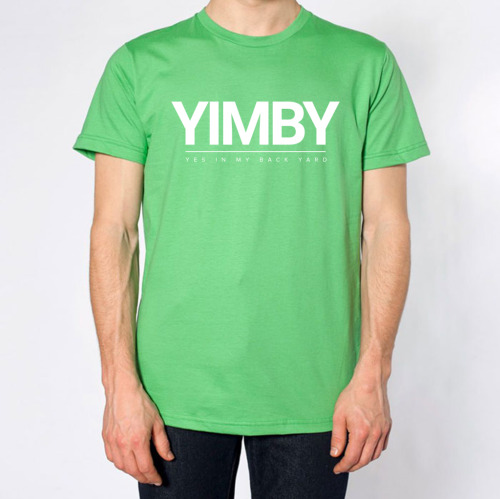
    I’m giving away a free t-shirt on April 1st, 2015 exclusively to Architect This City subscribers. There’s no catch. And no this is not an April Fool’s joke! I just want to say thanks to the people who read ATC on a regular basis. It’s that simple.

    So how does it work?

    1. You need to be an Architect This City email subscriber (either daily or weekly). If you’re not yet a subscriber, you have until midnight on Tuesday, March 31st, 2015 to make that happen. You can do that by clicking here. It’s free.
    2. You need to visit architectthiscity.com and pick the t-shirt you want. There are currently 5 different ones to chose from (the original ATC tee comes in both ATC orange and black).
    3. Finally, you need to leave a comment at the bottom of this post telling the community 2 things: which t-shirt you want and your favorite thing about your own city. That’s it.

    On April 1st I will randomly select somebody from the comments, check to see if they’re a subscriber, and then send them a free t-shirt.

    Simple, right? I’m really looking forward to giving away a t-shirt.

  • Cities without people

    Some people believe that cities are all about bricks and mortar. While other people believe that they are first and foremost about people. Though I wholeheartedly believe that our built environment has a profound affect on our lives, I am in the latter camp. 

    Real estate to me is an outcome. It is the result of people needing space. A new condominium is built because people need a place to live. A new office building is built because somebody built a great company and it needs to house its growing workforce. So at the end of the day, what is a city without people?

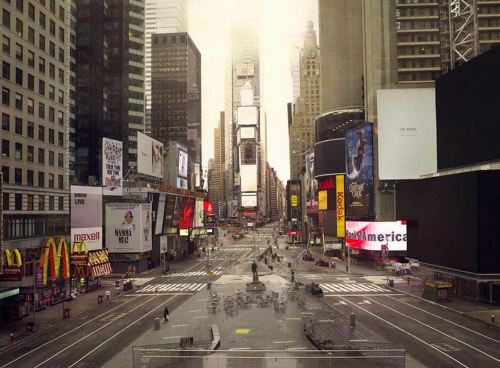
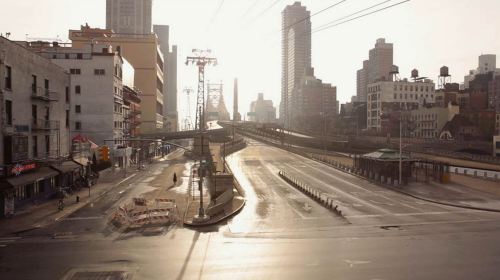
    Perhaps the best way to demonstrate this point is to show you what cities look like without them. This morning I stumbled upon an interesting series of city photographs where almost all of the people have been removed. They are by artists Lucie & Simon and the project is called Silent world.

    The top image is Times Square and the bottom image is Queensbridge in New York.

    Images: Lucie & Simon

  • John Maeda’s #DesignInTech Report from SXSW

    One of the most interesting talks that I attended while I was in graduate school at Penn was by John Maeda

    John operates at the intersection of design, technology, and business, and I find his work fascinating. He’s probably best described as a graphic designer, visual artist, computer scientist, academic, and author. And when I heard him speak in 2008, he was also President of the Rhode Island School of Design.

    More recently though, John has entered the world of venture capital by becoming a “Design Partner” at Kleiner Perkins Caufield & Byers (KPCB) in Silicon Valley. But what’s really interesting about this move is that when he joined KPCB in January 2014, he was the first designer to arrive on Silicon Valley’s legendary Sand Hill Road. No other VC firm had a designer in-house.

    And that’s because design hasn’t, at least historically, been considered that important. In fact, in some cases it was seen as being detrimental. Brian Chesky – cofounder of Airbnb – has gone on record saying that when they were first starting out, Silicon Valley didn’t think that a bunch of designers from RISD could build and run a company. Boy were they wrong.

    So that’s changing. As of this month (March 2015), there are now 6 other designers on Sand Hill Road. The venture capital community has seemingly woken up to the value of great design.

    John Maeda has branded this shift, #DesignInTech. And he recently gave a presentation on the topic at SXSW. It’s a great read, particularly if you’re somebody who cares about design. Click here if you can’t see it below.

    //www.slideshare.net/fullscreen/kleinerperkins/design-in-tech-report-2015

  • Reading between the lines of a midtown triplex

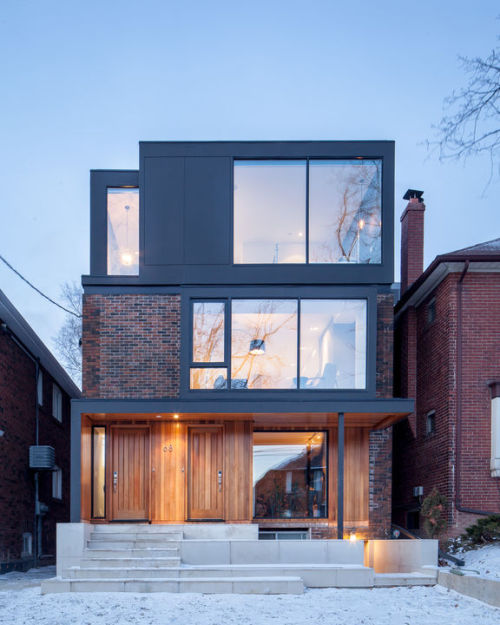
    A few days I retweeted the above home from Dwell Magazine. Then yesterday I was driving through midtown Toronto and I stumbled upon it. And that got me thinking more about this kind of project.

    The house is a triplex with, presumably, one unit in the basement, one unit on the main floor, and one unit across the 2nd and 3rd floor. The existing detached house was only 2 storeys and so a third floor was added to create what is likely the “owner’s suite.”

    It’s not uncommon for many of the houses in central areas of Toronto to be converted into duplexes and triplexes or to flip back into single family homes after being subdivided for rentals. It goes to show how adaptable the single family house can be.

    But it’s not everyday that you see such a high end triplex being built as, what seems to be, a permanent residence and kind of dream home for the owners. Historically, when people built their dream home it has meant a single family home.

    This might not seem like an important distinction, but I think it demonstrates a growing acceptance of intensification within low-rise single family neighborhoods.

    Part of this I’m sure has to do with rising housing costs. But I think it also has to do with valuing location over raw space and with an acceptance of urban density.

    I don’t know about you, but I would have no concerns with permanently laying down roots in a house like this. It’s beautiful.

    Image: Dwell