Daily insights for city builders, delivered every morning at 6 AM ET. I’m Brandon Donnelly — a Toronto-based real estate developer and founder of Globizen. I’ve been writing here since 2013.

Month: February 2015

  • “Great ideas are Obvious in retrospect.”

    Photograph San Francisco Sunset by Nathan Camarillo on 500px

    San Francisco Sunset by Nathan Camarillo on 500px

    The title of this post is a line from a Medium post that Biz Stone wrote back in August 2012. For those of you who might not know, Biz Stone is one of the cofounders of Twitter, as well as the cofounder of something called The Obvious Corporation.

    Obvious is a “company” that I’ve been following on and off for a number of years – I’m fascinated by the model and how it has evolved. It was founded back in 2006 by Biz Stone and Ev Williams (another Twitter cofounder) as a kind of “product lab” for new ideas. But since then it has gone through a number of iterations.

    Though I suspect that most people haven’t heard of Obvious, it was actually the parent company of Twitter before Twitter took off and became independent.

    But even more interesting is the fact that Twitter was actually a side project for a company called Odeo (a failed podcasting startup) that in turn was owned by Obvious. So specifically, Twitter started as a side project of one of the companies within a larger “product lab.” Nobody said innovation was straightforward.

    When Twitter eventually took off, their focus naturally shifted away from Obvious to it. They had a rocket ship of a company to build and run. 

    But in 2011, Ev and Biz, along with Jason Goldman (of Twitter), decided to “reboot Obvious.” The most notable outcome of this reboot has been the creation of writing platform Medium, which I believe still technically sits within Obvious. (Click here if you don’t know what Medium is.)

    Then in December of last year (2014), Ev Williams announced the third chapter of Obvious – now called Obvious Ventures – with this post called: It’s Obvious. Again. In short, they’re a venture capital firm with an approach that they call #worldpositive:

    We’re entrepreneurs. We’ve helped a lot of companies launch, grow, and generate great financial returns. A few of these companies also deliver positive social and environmental benefits with every dollar of revenue they earn. We want to fund and build more of those. That’s what we call #worldpositive venture capital.

    Already they’ve publicly announced investments in 10 companies, one of which I’ve written about before on Architect This City (Flux.io).

    I decided to tell this story today for 3 reasons.

    It shows you how non-linear innovation and careers can be. I love the idea of #worldpositive investing. And finally, because some of the startups that Obvious Ventures has invested in – such as Flux.io and Loup – are directly related to the future of cities.
  • Thoughts on urban renewal and Geary Avenue

    Photograph dupont survivor by Josemaria de Churtichaga on 500px

    dupont survivor by Josemaria de Churtichaga on 500px

    I was on CBC radio this morning talking about the revitalization of Dovercourt Village and Geary Avenue in Toronto. 

    The funny thing about this topic is that it’s one I actually held off writing about. I’ve been thinking about this street and area for probably about 5 years now. However, I do have to keep some secrets to myself 🙂

    But then I started feeling like the cat was already out of the bag. Everyone in my circle was talking about it. So I wrote a post calling Dovercourt Village the next Ossington. I had no idea it would get the traction that it has gotten, but in hindsight it makes total sense. It makes a great headline: “Toronto’s ugliest street to become the next Ossington.” Boom.

    The tough question that Matt Galloway asked me this morning was: What happens to all the blue collar businesses when/if Geary Avenue and the area really takes off? My response – given that it was only a 5 minute radio piece – was that it comes down to preservation vs. progress. 

    This is a topic that I’ve written about with respect to heritage buildings, but the same concept applies to communities as well. How do you allow neighborhoods to receive new investment while at the same time not erasing its past and the things that made it interesting in the first place?

    It’s not easy, that’s for sure.

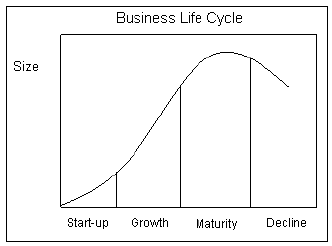
    I absolutely believe that there are things that developers can do to respect the neighborhoods in which they build in. But at the same time there are economics at play. In business school, they teach you this:

    It’s the lifecycle of businesses and industries. 

    The key takeaway here is that the rise and decline of businesses is actually quite healthy for markets. History is littered with examples. The word processor replaced the typewriter. The mobile phone replaced the landline. Air travel replaced rail travel. And the list goes on.

    Today, I think we’re at a moment in time where our relationship to cars is changing dramatically. How we get around and how we own and operate them is being called into question. 

    So just because there’s auto shops on Geary Avenue today, doesn’t mean they’ll be there tomorrow regardless of whether the area takes off or not.

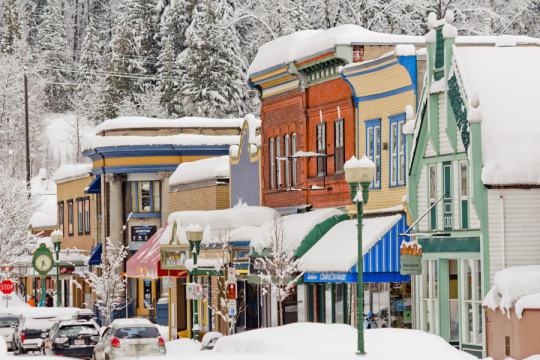
  • Why Revelstoke could become the next…

    Photograph Mackenzie Avenue, Revelstoke by Ian Houghton on 500px

    Mackenzie Avenue, Revelstoke by Ian Houghton on 500px

    Despite being rainy and unusually warm, I had a great time in Revelstoke, BC. I first heard about the city a few years ago when I told a close friend of mine (who is an avid snowboarder) that I was going to Whistler. He told me: “Forget Whistler. Go to Revelstoke.”

    Revelstoke has been on the map for skiers and snowboarders for decades. Some consider it to be the helicopter skiing capital of the world. But there are only so many people who can afford $1,000+ per day skiing, so it wasn’t until 2007 when the first gondola opened up on Mount Mackenzie that people started calling Revelstoke the next Whistler, the next Jackson Hole, the next Zermatt, and so on.

    As both a snowboarder and a real estate developer, this is of course exciting. Everybody wants to be a part of the next big thing and they want to call it before anyone else. That’s how you make money – by being right about things before the masses catch on and/or when everyone else thinks you’re wrong.

    But 2007 happens to come before 2008. And 2008 wasn’t a kind year to the real estate community. Revelstoke was no exception.

    The condos at the base of the mountain weren’t selling (about half of the ones that did sell were sold to Canadians I was told). Expansion plans to become the largest ski resort in the world were scaled back. And the resort teetered on the brink of bankruptcy. But since then, new ownership has taken over the resort and the sentiment on the ground seems to be that Revelstoke – as a real estate play – is somewhere near the bottom.

    But something even more interesting is happening in Revelstoke, beyond just luxury condos at the base of a mountain. And since I was on the disabled list for the second half of my vacation, I had time to explore.

    I was fortunate enough to meet a local entrepreneur (who happened to also be from Toronto) and his message to me was clear: Ontario is moving in. Both talent and capital from Ontario are starting to flock to this small mountain town of almost 8,000 full-time residents (it’s technically classified as a city). And from my experience at the bars and restaurants in town, he appears to be right.

    Now, you might be thinking these people are just ski bums looking for an excuse to live in a mountain town. But is that such a unique and bad thing? Today’s up and coming generation is looking for lifestyle + career. And so if your city or community can offer both, you have a competitive advantage when it comes to attracting talent.

    Revelstoke knows they have the outdoor amenities and the “epic pow”, so now all they need to do is bring the businesses. And that’s exactly what Revelstoke wants to do. If you’re an entrepreneur or business owner, Revelstoke wants you to move there. I’m serious. The vision is to create a sustainable live, work, and play mountain community in the BC interior.

    I hope that happens.

    Drop me a line if you want to talk mountains and business.

    Post Update: The beautiful photo of Revelstoke at the top of this post was taken by Ian Houghton out of BC. This is his business website and this is his Facebook page

  • What are your disciplines?

    Photograph sunset drag by Philippe Clairo on 500px

    sunset drag by Philippe Clairo on 500px

    I’m sitting in Calgary International Airport right now waiting for my flight back to Toronto. This marks the end of the 6th Penn Annual (our annual ski and snowboard trip). We all had an amazing time and I can’t wait until next year’s annual. We’ve already (pretty much) decided that it’s going to be in Park City, Utah.

    As you can probably tell, I like traditions and routines. As boring as that might sound, I think there’s a lot of value in doing the same thing over and over again. 

    It’s why I do an annual ski and snowboard trip every February with some of my closest friends (to a mountain we’ve never been to before). It’s why I write something – no matter how short it might be – every day here on Architect This City. It’s why I lift weights 3-4 times every week. It’s why I’m interested in brand building (creating equity takes consistency and time). It’s why I love the permanence of real estate. And it’s also why I like dollar cost averaging when it comes to investing.

    I guess you could say I like the long game. I enjoy having “disciplines.”

    And that’s because I think there are very few substitutes for hard work and sustained efforts. We all love to talk about those overnight success stories, but in reality they’re often the farthest thing from overnight. I know that it takes time to get great at something. And I also know that I’m not always going to be right. But the simple act of not stopping can take you pretty far.

    In any event, I hope you enjoyed all the mountain town talk (I have a few more ideas I want to write about) and my Snapchat stories (if you followed along). I got really into Snapchat on this trip. And that’s because I think the platform is at a tipping point where brands are going to start thinking of it as a legitimate marketing channel – and not just an app for teens.

    Do you have any routines or disciplines? If so, feel free share them in the comment section below. Or if you hate routines, tell us why.

    See you in Toronto 🙂

  • 8 tips for building better cities

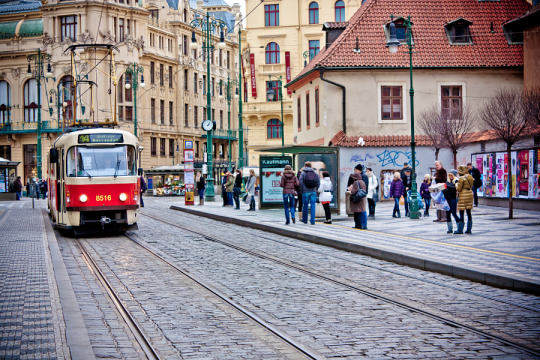
    Photograph Tram by Federico Venuda on 500px

    Tram by Federico Venuda on 500px

    My friend Alex Bozikovic of the Globe and Mail recently wrote a great article called: Expert advice on building the city of the 21st century. It’s a nice tie-in to a post I wrote a few weeks ago talking about the need for an urban agenda.

    For Alex’s article, the Globe asked “prominent urbanists, architects, and scholars” from around the world to comment on what Canadian mayors should be focused on right now as we build the cities of tomorrow.

    Here’s a list of what they said:

    1. Make people, not cars, happy
    2. Decrease speed limits
    3. Empower city governments
    4. Leverage density
    5. Embrace the science of big data
    6. Mix residences and workspace
    7. Turn streets into destinations
    8. Redevelop the inner suburbs

    It’s a great set of recommendations. So I would encourage you to check out the full Globe and Mail article.

  • A long history of ‘rail plus property’

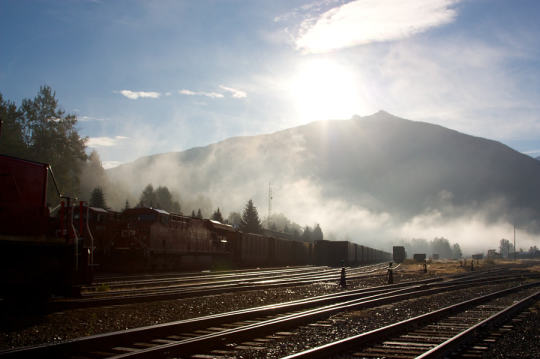
    Photograph morning fog by Familie Pinksterbos on 500px

    morning fog by Familie Pinksterbos on 500px

    Today’s Architect This City post is being brought to you live from the mid-base lodge at Revelstoke Mountain Resort on Mount Mackenzie in British Columbia. 

    It’s currently foggy, rainy, and about 2 degrees celsius — which I’m told is fairly anomalous for this area. It’s unfortunate for my friends on the slopes, but it makes me feel somewhat better about hanging out all day to rest my back and shoulder.

    The town of Revelstoke was founded in the 1880s when the Canadian Pacific Railway connected the area. And traditionally its economy has been closely connected to that rail. However, with amenities like the resort I’m currently sitting in, its economy now increasingly includes tourism.

    One of the most interesting reminders for me on this trip through the Canadian Rockies is how instrumental rail was in unifying and then building this country. But in actuality, it wasn’t just rail. It was rail plus property.

    Within the Canadian Pacific Railway was a division called Canadian Pacific Hotels, which built and operated both urban and rural hotels such as the Banff Springs Hotel and the Chateau Lake Louise (both of which I visited for the first time on this trip). And today, these railway hotels are absolutely some of Canada’s most inspiring landmarks.

    The model at the time was simple. 

    Sir William Cornelius Van Horne — who was president of CPR in 1888 — believed: “If we can’t export the scenery, we’ll import the tourists.” He knew that it was all about moving as many people as possible. And to do that he needed to create accommodations and destinations all along the rail. In other words, rail alone wasn’t going to cut it. It had to be rail plus property.

    This of course is a model that still persists today. Many public transit authorities, such as the MTR in Hong Kong, have been hugely successful by adopting a rail plus property model.

    However as the case study of the Canadian Pacific Railway demonstrates this is not a novel approach. It’s actually a tried a true model. Rail, and infrastructure in general, goes really nicely with property development. 

    So why don’t all transit authorities adopt a rail plus property approach?

  • How unlikely neighborhoods change

    image

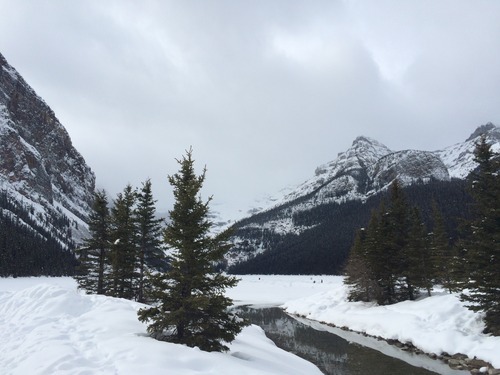
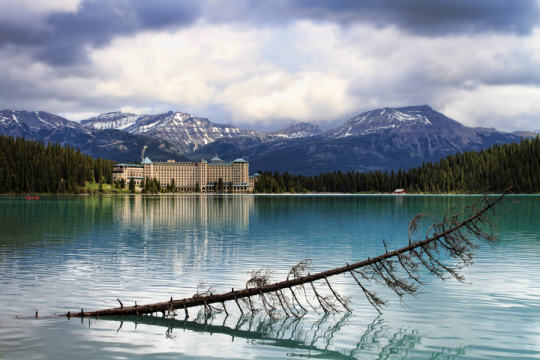
    I’m writing this post from the Lakeview Lounge at the Fairmont Chateau Lake Louise. The view of the (frozen) lake and mountains is absolutely stunning (see above). I can totally see why people move to the Rockies and never leave. Frankly, I’m not sure how I’m going to ever go home 😉

    This Chateau was first built up in the late 19th century by the Canadian Pacific Railway. Developed as a way to encourage ridership and fund railway expansion, its position on the eastern edge of Lake Louise was probably a fairly obvious choice (although only when accompanied by rail). It’s designed to take full advantage of the views of the lake and the mountains.

    Photograph Chateau Lake Louise ~ by Carmen Brown on 500px

    Chateau Lake Louise ~ by Carmen Brown on 500px

    But it’s not always this easy to predict or select where development should happen and will happen next.

    Yesterday I was quoted in a Torontoist article talking about the rise of Dovercourt Village in Toronto – which is a topic I covered here on ATC about a month ago.

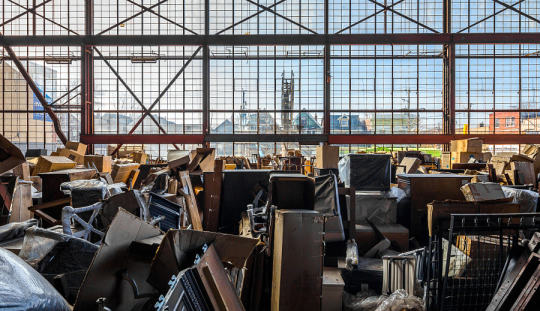
    The interesting thing about Dovercourt Village – and specifically Geary Avenue – is that they seem like unlikely places for new investment. Many of the buildings aren’t particularly beautiful. And there’s a rail line and a set of power lines running through the middle of it.

    But if the buzz around Dovercourt Village proves to be true, then it could very well end up as a new yuppy enclave in the city. I’m not going to debate the merits of gentrification today, but I think it’s interesting how change can seemingly emerge out of nowhere.

    If you rewind 10 years to before Ossington Avenue became the hotspot that it is today, many of you would have probably classified it as an unlikely place for gentrification. Located beside the Centre for Addiction and Mental Health (CAMH), the area wasn’t considered desirable at the time. (CAMH has since undergone a lot of change.)

    But oftentimes change can come out of nowhere. It just takes few enterprising pioneers who see something that nobody else does.

  • Banff’s second floor

    image

    I have good news and bad news.

    The bad news is that I took a gnarly spill yesterday afternoon on the mountains. The nose of my snowboard got stuck in deep snow and I fell forward onto my shoulder and then compressed my back. I tore a shoulder ligament and possibly fractured two ribs. So snowboarding season is over for me this year.

    The good news is that I now have more time to relax and enjoy the town of Banff, and then Revelstoke this weekend.

    Banff is a beautiful town. It’s compact, walkable, and surrounded by snow capped mountains. How could you not love it?

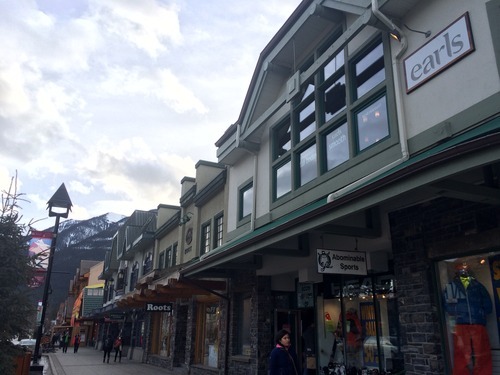
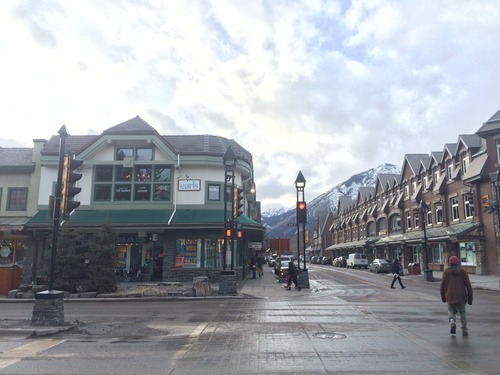
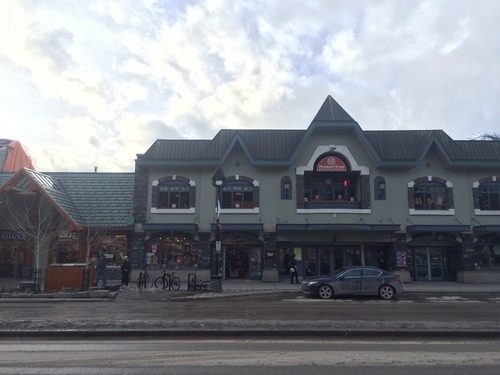
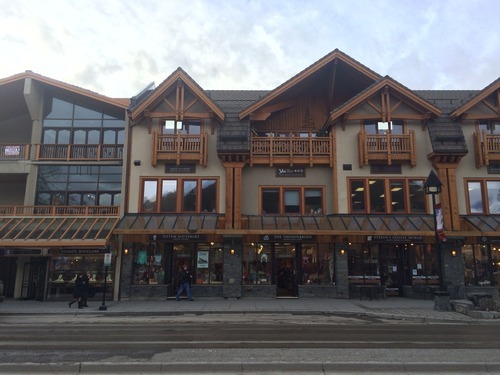
    One of the more subtle things that stands out for me though is the ubiquity of second level retail and restaurants. There’s a lot people in the (North American) real estate industry that will tell you that second floor retail just doesn’t work (you want ground floor). And indeed, it can be hard to pull off. As I’ve said before, getting retail right in general can be difficult.

    But in Banff, many of the bars and restaurants are up top. Here are a few examples (there’s an Earls, Boston Pizza, and a Korean restaurant, respectively):

    image
    image
    image

    So why does it work here?

    Given the town’s small footprint and location within Banff National Park, the market is supply constrained. That’s why Parks Canada imposes a number of restrictions on residency. They’re trying to ensure that the people who actually work in the community can find housing and it all doesn’t become second homes.

    So my gut tells me that in order to get enough retail/commercial space to serve the area and its tourists, they had no choice but to go up. They simply ran out of ground floor space. Because if the town was able to instead sprawl outward, I suspect that’s exactly what it would have done. And then more ground floor space would have been created.

    To be fair, most of the second floor examples I came across were bars and restaurants, which is arguably easier to pull off than straight retail. But it’s still something. 

    If any of you are familiar with real estate and planning in Banff or just have a better hypothesis, I’d love to hear from you in the comment section below.

  • 21 largest venture capital investments in Canada

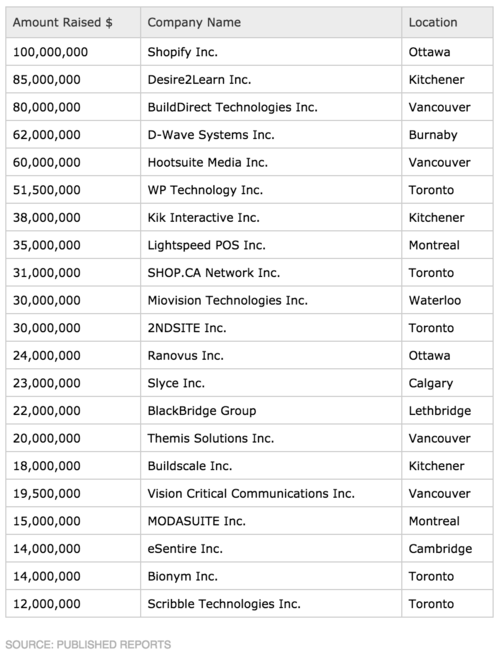
    The Globe and Mail published an interesting article this evening looking at the 21 largest venture capital investments in Canadian tech over the last 18 months. It’s called: Who needs Silicon Valley? Canadian startups scoring bigger deals.

    To put things into perspective, total venture dollars invested in Canada last year (2014) was around $1.9 billion. In the US, that number is estimated to be somewhere around $48 billion. So there’s a big spread here. But the Globe is arguing that there’s a shift towards medium-sized Canadian tech companies raising larger and larger rounds.

    Here are the top 21 largest venture capital investments made in Canada over the last 18 months:

    image

    At the same time, there’s also an attitude change that seems to be taking place. Confidence is growing. Here’s a quote from Mike McDerment of Freshbooks from the same article:

    “Our goal is to be an anchor tenant in Toronto. At Freshbooks, we want to build a global company that really contributes in some meaningful way to the city,” Mr. McDerment said. He touts the local schools and talent pool and downplays the Valley’s head start.

    “The money is shameless – it’ll just go wherever. It wants the opportunities,” Mr. McDerment said. “I don’t see why Toronto can’t beat Silicon Valley.”

    All of this is important because the medium-sized companies of today will hopefully become the large-sized companies of tomorrow. And that’s what you need to build a thriving startup hub. You need big successes. You need those companies going public and generating wealth for their employees and communities.

    Thankfully, that seems to be where we’re headed. The first company on the list above – Shopify – is already preparing for a dual US-Canada IPO.

  • Sliding House

    [youtube https://www.youtube.com/watch?v=ZxmvRDTELy8?rel=0]

    A close friend of mine (from Urban Capital) sent me the above video this morning. It’s of the “Sliding House” in Suffolk, UK. If you can’t see it above, click here. You have to watch the video to fully appreciate the house.

    Built as a place to retire, the Sliding House consists of a building envelope with fairly typical punched windows that physically slides overtop of a minimal glass structure. This allows the building to adapt to the changing seasons (or to the moods of its occupants).

    This concept of adaptable architecture is incredibly interesting to me. Because for a lot of climates — where the temperatures can swing dramatically from hot to cold and vice versa — it can actually be incredibly difficult to design an efficient building.

    When it’s cold, you’re trying to trap heat inside the house. And when it’s hot, you’re trying to exhaust heat to the outside. So by default, the building has to be adaptable. 

    In its simplest form, this could mean an operable window. But in a more elaborate form — like in the case of the Sliding House — the entire skin of the building might adapt.

    And if it means having to rely less on active mechanical systems then I think it’s a step in the right direction.